Canvas Makeup Bag
CN → US| HS Code | Tariff Rate | Origin | Destination | Doc |
|---|---|---|---|---|
| 4205006000 | 39.9% | CN | US | Official Doc |
| 4202329300 | 52.6% | CN | US | Official Doc |
| 4205008000 | 35.0% | CN | US | Official Doc |
| 4202329900 | 52.6% | CN | US | Official Doc |
| 4202329300 | 52.6% | CN | US | Official Doc |
Product Images
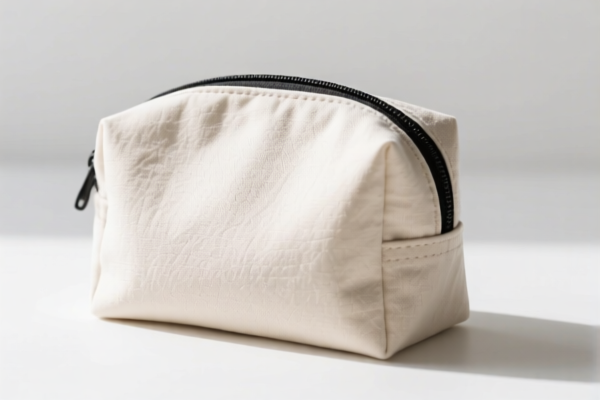
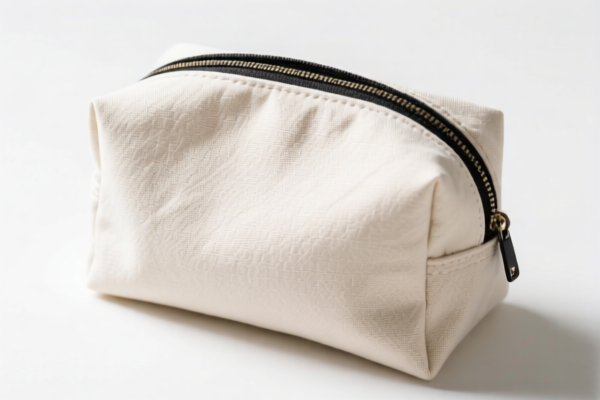
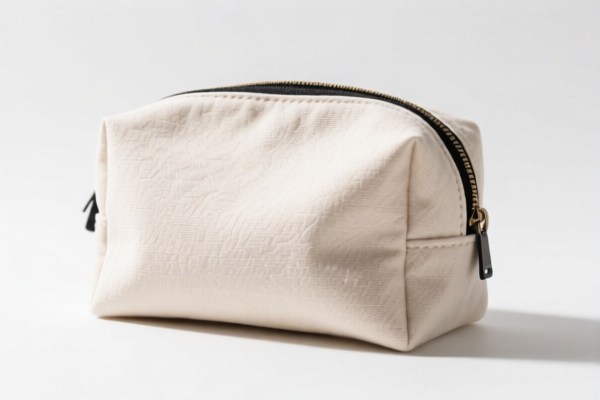
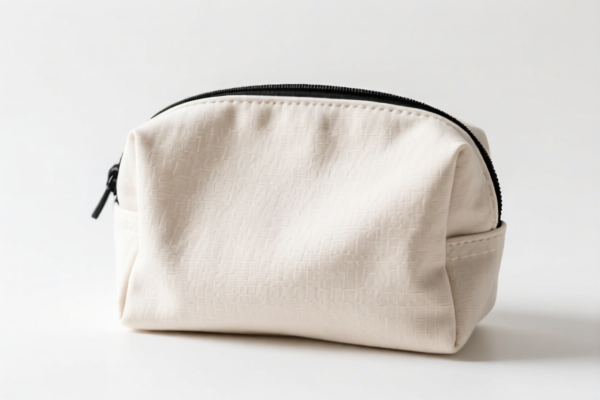
AI Analysis
👜 Canvas Makeup Bag (化妆包)
🌐 HS Code Reference & Clearance Guide | 2026 Latest Tariff Analysis | Professional Customs Strategy
📌 I. Product Definition & Classification: Do You Really Understand "Canvas Bags"?
A Canvas Makeup Bag is a portable container used for storing cosmetics, toiletries, and personal care items. In international trade, the classification heavily depends on the material composition and form factor.
Canvas is technically a textile material (woven fabric). Therefore, it generally falls under Chapter 42 (Articles of leather; saddlery and harness; travel goods, handbags...). The key distinction lies in whether it is classified as a "handbag/satchel" type (Ch 42.02) or a "leather article" (Ch 42.05, if treated as a general leather-like item, though less common for pure canvas).
⚠️ Key Distinction:
- If the outer surface is textile material (Canvas), it belongs to Heading 42.02 (Travel goods, handbags, etc.).
- If the material is considered "other leather articles" (rare for canvas unless heavily coated/treated as leather substitute in specific interpretations), it might fall under Heading 42.05.
📦 II. HS Code Classification Details (2026 Latest Tariff Authority Comparison)
| HS Code | Product Description | Applicable Scenario | Material Basis |
|---|---|---|---|
4202.32.93.00 |
Satchels (including whether or not with shoulder strap), with outer surface of textile materials, other than those of heading 42.01, other | Mainstream canvas makeup bags, toiletry bags with textile exterior | ✅ Textile (Canvas) |
4202.32.99.00 |
Other satchels with outer surface of textile materials | Generic canvas bags not specified in other sub-headings | ✅ Textile (Canvas) |
4205.00.60.00 |
Other articles of leather or composition leather | Misclassification Risk: If declared as "Leather" but is canvas | ⚠️ Leather/Comp. Leather |
4205.00.80.00 |
Other articles of leather or composition leather | Misclassification Risk: "Other" category for non-travel leather goods | ⚠️ Leather/Comp. Leather |
🔍 Key Reminder:
- Canvas = Textile. The most accurate classification for a standard canvas makeup bag is under 4202.32 (Satchels with outer surface of textile materials).
- Codes under 4205 refer to "Other articles of leather." While some synthetic leathers are included, pure canvas should ideally be classified under 42.02 to avoid disputes. However, due to broad "catch-all" interpretations, some classifiers may use 4205 if the bag is small and not clearly a "satchel."
💰 III. 2026 Latest Tariff Rate Details (Including Surcharges, Policy Add-ons)
✅ Applicable Country: United States (US)
✅ Origin: China (CN)
✅ Effective Date: November 10, 2025 (and subsequent imports)
🎯 1. 4202.32.93.00 / 4202.32.99.00 —— Satchels/Makeup Bags (Textile Material)
| Item | Content |
|---|---|
| Base Tariff | 17.6% (ad valorem) |
| Section 301 Surcharge | +25.0% (From USITC Footnote 9903.88.01) |
| Section 122 Tariff | +10.0% (Specific add-on for certain textile/apparel goods from China) |
| Total Rate | 52.6% |
| Tax Calculation | CIF Value × 52.6% |
| De Minimis Eligibility | ❌ No (deny_de_minimis) |
| Legal Basis Path | USITC:4202.32.93.00 → 301 Footnote 9903.88.01 → 122 Clause |
📌 Explanation:
- 17.6% is the standard Most Favored Nation (MFN) duty for textile-based satchels.
- 25% is the heavy penalty under Section 301 for Chinese goods.
- 10% is an additional tariff under Section 122 (often applied to specific textile categories or as a supplementary duty).
- Total: 52.6%. This is a high-cost category.
🎯 2. 4205.00.60.00 / 4205.00.80.00 —— Other Leather Articles (Misclassification/Catch-All)
| Item | Content |
|---|---|
| Base Tariff | 0.0% (for 4205.00.80.00) / 4.9% (for 4205.00.60.00) |
| Section 301 Surcharge | +25.0% |
| Section 122 Tariff | +10.0% |
| Total Rate | 35.0% (for 4205.00.80) / 39.9% (for 4205.00.60) |
| Tax Calculation | CIF Value × 35.0% / 39.9% |
| De Minimis Eligibility | ❌ No (deny_de_minimis) |
| Legal Basis Path | USITC:4205.00.80.00 → 301 Footnote → 122 Clause |
📌 Explanation:
- These codes are typically for "other leather articles." If a customs officer classifies the canvas bag as a "leather-like article" (composition leather), the base rate drops to 0% or 4.9%.
- However, the 301 (25%) and 122 (10%) surcharges still apply.
- Total: 35.0% or 39.9%. This is significantly lower than the textile classification (52.6%), creating a strong incentive for importers to argue for this classification, though it carries high compliance risk if the product is clearly textile.
🛠️ IV. Clearance Practical Advice (Real-World Pitfall Avoidance Guide)
✅ 1. Preparation Checklist (All Mandatory)
| Document | Required? | Explanation |
|---|---|---|
| ✅ Product Specifications | ✔️ | Must clearly state "Canvas" or "Textile" material. |
| ✅ Material Composition Proof | ✔️ | Certificate of Origin or Material Test Report confirming % of textile. |
| ✅ Product Photos | ✔️ | Show outer surface texture (woven fabric) vs. leather grain. |
| ✅ Commercial Invoice | ✔️ | Describe as "Canvas Makeup Bag" or "Textile Cosmetic Pouch." |
| ✅ Packing List | ✔️ | Detail quantity and weight. |
| ✅ HS Code Pre-ruling | ✔️ | Strongly Recommended due to the 52.6% vs 35% variance. |
✅ 2. Declaration Strategy (Key Mnemonics)
🔥 “Canvas is Textile, 4202 is Safe, 4205 is Risk, 52% is Pain!”
| Scenario | Correct Declaration | Incorrect Action |
|---|---|---|
| Standard Canvas Bag | 4202.32.93.00 / 4202.32.99.00 |
Declare as "Leather Bag" → Customs Rejection/Fine |
| Highly Coated "Leather-Look" Canvas | 4205.00.80.00 (with proof) |
Declare as "Textile" → Overpay 17.6% base duty |
| Small Zipper Pouch | 4205.00.80.00 (if argued as accessory) |
Declare as "Travel Good" → Complexity Increase |
📌 Note:
- If you declare4202.32..., you pay 52.6%.
- If you declare4205.00.80..., you pay 35.0%.
- Strategy: If the canvas is heavily coated, rubberized, or treated to mimic leather, consider using4205to save ~17% in base duties. However, you must have solid evidence (material tests) to support this, or face penalties for misdeclaration.
✅ 3. Special Cases
| Situation | Handling Advice |
|---|---|
| Mixed Materials (Canvas + Leather Trim) | If leather part is significant (>50% value/weight), may shift to leather heading. Consult expert. |
| OEM/White Label | Provide manufacturer’s material breakdown. Avoid generic "Bag" descriptions. |
| De Minimis (Section 321) | ❌ Not Eligible. Both textile and leather categories are denied de minimis entry from China. All shipments must undergo formal entry. |
🌍 V. Global Market Clearance Comparison (2026 Latest)
| Country/Region | Recommended HS Code | Tariff Rate (China Origin) | Certification | Notes |
|---|---|---|---|---|
| 🇺🇸 USA | 4202.32.93.00 |
52.6% | None specific | High tariff due to 301 + 122 |
| 🇺🇸 USA | 4205.00.80.00 |
35.0% | None specific | Lower rate, but high audit risk |
| 🇨🇳 China | 4202.32.93.00 |
12-15% | N/A | Lower import duty for export-rework |
| 🇪🇺 EU | 4202.32.99 |
4.5% | CE (if electronic components present) | No Section 301/122 equivalents |
| 🇬🇧 UK | 4202.32.99 |
4.5% | N/A | Post-Brexit tariff aligned with EU |
📌 Conclusion:
- USA is the most expensive market due to the combination of MFN, Section 301, and Section 122.
- EU/UK are far more competitive with ~4.5% duties.
- For US imports, cost optimization is critical. Consider supply chain diversification (e.g., manufacturing in Vietnam or Thailand) to avoid Section 301/122 surcharges entirely.
📌 VI. Common Mistakes & Pitfalls (Blood-Learning Lessons)
❌ Mistake 1: Declaring a Canvas Bag as "Leather Bag" without proof
👉 Consequence: Customs Audit → Back Taxes + Fines. If caught misclassifying to save 17% base duty, penalties can be 2-3x the duty difference.
❌ Mistake 2: Ignoring Section 122 Tariff
👉 Consequence: Calculating only 301 (25%) + MFN (17.6%) = 42.6%. Actual is 52.6%. Underpayment leads to liability at arrival.
❌ Mistake 3: Assuming De Minimis ($800) applies
👉 Consequence: Package Seized. Section 301 and 122 explicitly deny de minimis entry for Chinese-origin goods.
✅ Correct Action:
“Canvas Cosmetic Pouch, 100% Cotton Canvas, Zipper Closure, Model XYZ, Made in China”
- Use4202.32.93.00for compliance safety.
- Or use4205.00.80.00ONLY if you have material tests showing it qualifies as "composition leather" or if you accept the audit risk for the 17.6% savings.
🎯 VII. Conclusion: Professional Declaration, Cost Control & Efficiency!
🎯 Remember the Rules:
🔹 “Canvas = Textile = 52.6%” (Safe but expensive)
🔹 “Leather-like = 35.0%” (Risky but cheaper)
🔹 “No De Minimis for China” (All formal entry required)
📌 Pro Tip:
If your volume is high, apply for a Section 301 Exclusion (if applicable) or restructure supply chain to avoid China origin. Even a small percentage reduction in tariff can mean huge profits.
📣 Immediate Action:
📞 Contact a licensed customs broker
📄 Prepare Material Composition Certificate
🚀 Clear customs smoothly, control costs, maximize margin!
✨ Professional Clearance Starts with Accurate Classification!
💼 Your every cent of cost deserves precise calculation!
Customer Reviews
About HS Code Classification
The Harmonized System (HS) is an internationally standardized nomenclature developed by the World Customs Organization (WCO) to classify traded products. Over 200 countries use the HS system as the basis for customs tariffs, trade statistics, and import/export regulations.
Each HS code follows a hierarchical structure:
- Chapter (2 digits) — Broad category of goods (e.g., Chapter 84: Machinery and Mechanical Appliances)
- Heading (4 digits) — More specific grouping within the chapter
- Subheading (6 digits) — Internationally standardized breakdown, used by all WCO member countries
- National subdivisions (8-10 digits) — Country-specific extensions for further classification, such as US HTSUS 10-digit codes
Correct HS code classification is essential for smooth customs clearance, accurate duty payment, and compliance with trade regulations. Misclassification can lead to customs delays, overpayment of duties, or penalties.
When importing from CN to US, the applicable tariff rates may include:
- Most-Favored-Nation (MFN) rate — The standard duty rate applied to WTO members
- General rate — Applied to countries without trade agreements
- Trade remedy duties — Additional tariffs such as Section 301 (anti-dumping), Section 232 (national security), or countervailing duties
The information provided on this page is for reference purposes only. For official classification, please consult with your local customs authority or a licensed customs broker.