Canvas Pliers and Staple Remover
CN → US| HS Code | Tariff Rate | Origin | Destination | Doc |
|---|---|---|---|---|
| 8203206030 | 0.0% | CN | US | Official Doc |
| 8203406000 | 38.3% | CN | US | Official Doc |
Product Images
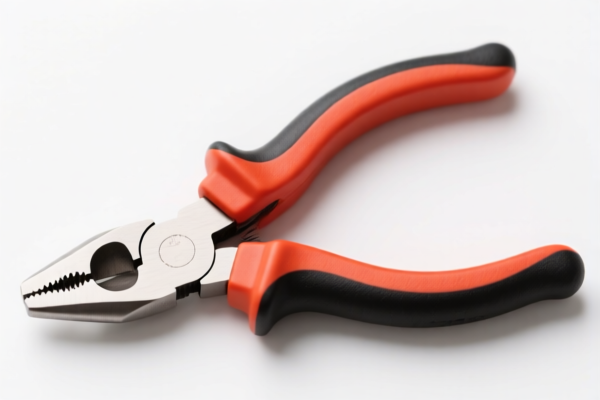
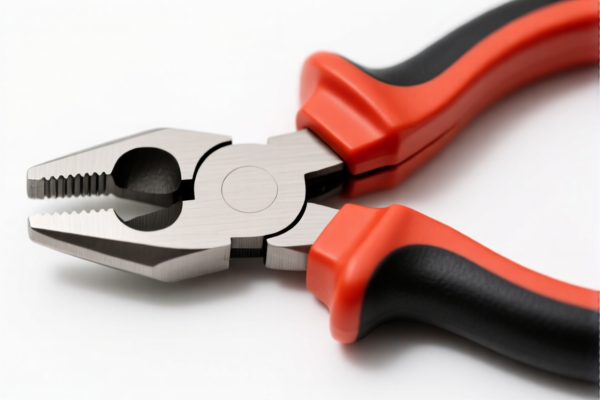
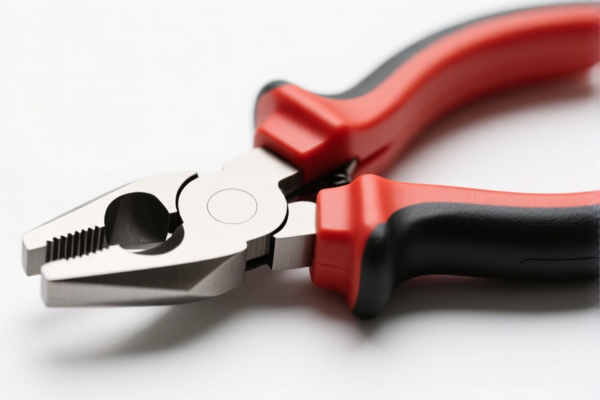
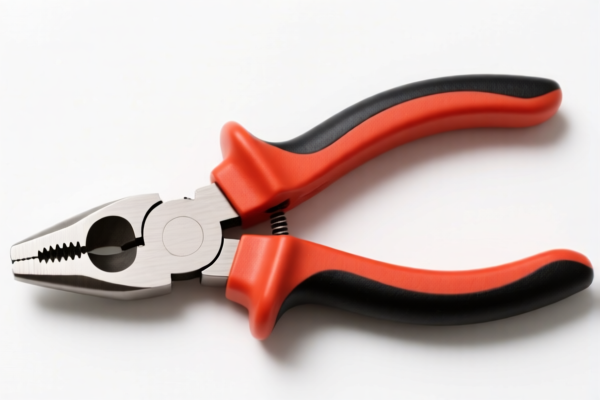
AI Analysis
🛠️ Canvas Pliers & Staple Remover (Hand Tools)
🌐 HS Code Classification & Customs Clearance Guide | 2026 Latest Tariff Analysis | Professional Logistics Strategy
📌 I. Product Definition & Classification: Are You Handling "Plates" or "Pliers"?
Canvas pliers and staple removers fall under the broad category of Base Metal Hand Tools. Specifically, they are classified under Heading 82.03, which covers "Files, rasps, pliers (including cutting pliers), pincers, tweezers, metal cutting shears, pipe cutters, bolt cutters, perforating punches and similar handtools, and base metal parts thereof."
The critical distinction lies in the specific function and structure: * Canvas Pliers (e.g., Duckbill Pliers): These are gripping pliers with flat jaws, often used for plumbing or general holding. They fall under "Pliers." * Staple Removers: These are typically single-handed or double-handed plier-like tools designed to extract staples. Functionally, they act as pincers or similar gripping tools.
⚠️ Key Classification Point:
- Both items are hand tools made of base metal (often steel with plastic/rubber grips).
- They are not automatic mechanical devices (Chapter 84) nor power tools (Chapter 82/84 if electric).
- They belong to 8203.20 (Pliers, pincers, tweezers) or 8203.40 (Other tools like bolt cutters, pipe cutters), but for standard canvas/staple pliers, 8203.20 is the primary route.
📦 II. HS Code Classification Details (2026 Latest Tariff Reference)
Based on the provided <DATA>, the relevant HS Codes are:
| HS Code | Product Description | Applicability | Tax Rate (Total) |
|---|---|---|---|
8203.20.60.30 |
Pliers (including cutting pliers), pincers, tweezers and similar tools, and parts thereof: Other: Other (except parts) Pliers | Canvas Pliers, General-Purpose Gripping Pliers, Staple Removers (if classified as pliers/pincers) | 0.0% |
8203.40.60.00 |
Pipe cutters, bolt cutters, perforating punches and similar tools, and parts thereof: Other (including parts) | Specific cutting/splitting tools like Bolt Cutters or Pipe Cutters. Note: Standard staple removers are usually not classified here unless they are specialized heavy-duty cutting tools, but 8203.20 is safer for general pliers. |
0.0% |
🔍 Clarification on
8203.40.60.00:
- This code is primarily for Bolt Cutters, Pipe Cutters, and Perforating Punches.
- Canvas Pliers and Staple Removers are generally not bolt cutters or pipe cutters. Therefore,8203.20.60.30is the most accurate classification for both Canvas Pliers and most Staple Removers, as they function as pliers or pincers.
- Use8203.40.60.00only if the staple remover is a heavy-duty, lever-action tool specifically designed for cutting bolts or pipes (which is rare for standard staple removers).
💰 III. 2026 Latest Tariff Rate Details
✅ Applicable Market: United States (US)
✅ Origin: China (CN) or Other (Based on0.0%tax detail in<DATA>)
✅ Effective Time: Current Tariff Schedule
🎯 1. 8203.20.60.30 —— Pliers (Including Canvas Pliers & Staple Removers)
| Item | Content |
|---|---|
| HS Code | 8203.20.60.30 |
| Description | Pliers (including cutting pliers), pincers, tweezers and similar tools: Other: Other (except parts) |
| Base Tariff | 0.0% |
| Section 301 / IEEPA Additional Tariff | 0.0% (As per <DATA>: 加征关税: 0.0%) |
| Total Effective Tax Rate | 0.0% |
| Tax Calculation | CIF Value × 0.0% = $0 |
| De Minimis Eligibility | ✅ Yes (For shipments under $800, no duty or taxes are typically due) |
| Legal Basis | HTSUS 8203.20.60.30 |
📌 Interpretation:
- Zero Duty: These hand tools enjoy a 0% duty rate in the US market according to the provided data.
- No Section 301 Penalty: Unlike many steel products or electronics, general base metal hand tools like pliers often do not attract the 25% or 7.5% Section 301 tariffs, or they may have been excluded/reclassified to 0%.
- Cost Advantage: This is a highly favorable classification for importers, as there are no additional tariffs to worry about.
🎯 2. 8203.40.60.00 —— Pipe Cutters, Bolt Cutters, etc.
| Item | Content |
|---|---|
| HS Code | 8203.40.60.00 |
| Description | Pipe cutters, bolt cutters, perforating punches and similar tools: Other |
| Base Tariff | 0.0% |
| Section 301 / IEEPA Additional Tariff | 0.0% |
| Total Effective Tax Rate | 0.0% |
📌 Interpretation:
- Even if misclassified as a "bolt cutter" type tool, the duty remains 0%.
- However, for Canvas Pliers and Staple Removers,8203.20.60.30is the correct classification. Misclassifying pliers as bolt cutters (8203.40) may raise red flags during customs inspection if the product description doesn't match "bolt cutter" functionality.
🛠️ IV. Customs Clearance Practical Advice
✅ 1. Required Documentation Checklist
| Document | Required | Notes |
|---|---|---|
| Commercial Invoice | ✔️ | Must clearly state: "Canvas Pliers" or "Staple Remover", HS Code 8203.20.60.30, Country of Origin. |
| Packing List | ✔️ | Detail quantity, weight, and packaging dimensions. |
| Product Photos | ✔️ | Show the tool clearly (grip type, jaw shape) to prove it is a "plier" and not a power tool. |
| Material Composition | ✔️ | Specify "Base Metal (Steel)" and "Plastic/Rubber Handles". |
| Bill of Lading (B/L) | ✔️ | Ensure consignment details match invoice. |
✅ 2. Declaration Tips (Key Mnemonics)
🔥 "Pliers are Pliers, Not Cutters: Use 8203.20, Keep 0% Duty!"
| Scenario | Correct HS Code | Incorrect HS Code | Consequence |
|---|---|---|---|
| Canvas Pliers (Flat jaw, gripping) | 8203.20.60.30 |
8203.40.60.00 (Bolt Cutters) |
Minor classification error, but both are 0% duty. However, 8203.20 is more accurate. |
| Staple Remover (Pincer action) | 8203.20.60.30 |
8217.90.00.00 (Other articles of base metal) |
Risk of higher scrutiny; 8203.20 is the specific hand tool category. |
| Electric Staple Gun | ❌ NOT 8203 | 8207.90 or 8467 |
Major Error! Electric tools are NOT base metal hand tools. They fall under different chapters with different duties. |
📌 Critical Warning:
- Do NOT classify electric staple guns or power pliers under8203. They are power tools or mechanical appliances and require different HS codes (e.g.,8467or8207).
- Ensure the product is manual/hand-operated. If it has a battery or plugs into an outlet, it is not8203.20.60.30.
✅ 3. Special Considerations
| Case | Handling Advice |
|---|---|
| Plastic/Grip Coating | Still classified under 8203.20. The base metal nature dominates. |
| Sets of Tools | If sold as a "Tool Set" including pliers and a screwdriver, the essential character determines classification. If pliers dominate, use 8203.20.60.30. |
| De Minimis Shipment | For shipments < $800 (Section 321), no duty or tax is due regardless of HS code. However, correct classification is still required for record-keeping. |
🌍 V. Global Market Comparison (2026 Latest)
| Country/Region | Recommended HS Code | Duty Rate | Certification | Notes |
|---|---|---|---|---|
| 🇺🇸 USA | 8203.20.60.30 |
0.0% | None | Zero duty; easy clearance. |
| 🇨🇳 China | 8203.20.60.30 |
~7-10% | CCC (if applicable) | Export from China may have different rates. |
| 🇪🇺 EU | 8203 20 00 |
~4-6% | CE (if electrical) | Standard import duty for hand tools. |
| 🇨🇦 Canada | 8203.20.00.00 |
~5% | None | Low duty for hand tools. |
📌 Conclusion:
- The US is the most favorable market for these items with 0% duty.
- Always verify that the product is manual. Electric versions will face higher duties and different regulations.
📌 VI. Common Errors & Pitfalls (Lessons Learned)
❌ Error 1: Classifying Electric Staple Guns as 8203.20.60.30
👉 Consequence: Customs will reclassify to 8467 or 8207, potentially leading to higher duties and penalties for misdeclaration.
❌ Error 2: Using "Hand Tools" as a generic description without specifying "Pliers"
👉 Consequence: Customs may request further clarification, causing delays.
❌ Error 3: Ignoring the "Base Metal" requirement
👉 Consequence: If the tool is made of plastic or ceramic, it does not fall under 8203.
✅ Correct Practice:
"Manual Canvas Pliers, Steel with Plastic Grips, No Power Source, Model XYZ"
🎯 VII. Conclusion: Smart Classification, Zero Duty!
🎯 Remember the Key Takeaways:
🔹 "Manual Only! If it plugs in, it’s NOT 8203."
🔹 "Canvas Pliers & Staple Removers = 8203.20.60.30 → 0% Duty!"
🔹 "Keep Documentation Clear: 'Pliers' not 'Power Tool'."
📌 Pro Tip:
For bulk imports, ensure the supplier provides a product specification sheet confirming the tool is manual and made of base metal. This will streamline customs clearance and guarantee the 0% duty benefit.
📣 Action Step:
📞 Confirm with your supplier: "Is this tool manual or electric?"
📄 Prepare Invoice with HS Code8203.20.60.30and description "Canvas Pliers" or "Staple Remover".
🚀 Enjoy 0% Duty and Smooth Clearance!
✨ Precise Classification Saves Money!
💼 Every Hand Tool Counts – Classify Correctly, Pay Less!
Customer Reviews
About HS Code Classification
The Harmonized System (HS) is an internationally standardized nomenclature developed by the World Customs Organization (WCO) to classify traded products. Over 200 countries use the HS system as the basis for customs tariffs, trade statistics, and import/export regulations.
Each HS code follows a hierarchical structure:
- Chapter (2 digits) — Broad category of goods (e.g., Chapter 84: Machinery and Mechanical Appliances)
- Heading (4 digits) — More specific grouping within the chapter
- Subheading (6 digits) — Internationally standardized breakdown, used by all WCO member countries
- National subdivisions (8-10 digits) — Country-specific extensions for further classification, such as US HTSUS 10-digit codes
Correct HS code classification is essential for smooth customs clearance, accurate duty payment, and compliance with trade regulations. Misclassification can lead to customs delays, overpayment of duties, or penalties.
When importing from CN to US, the applicable tariff rates may include:
- Most-Favored-Nation (MFN) rate — The standard duty rate applied to WTO members
- General rate — Applied to countries without trade agreements
- Trade remedy duties — Additional tariffs such as Section 301 (anti-dumping), Section 232 (national security), or countervailing duties
The information provided on this page is for reference purposes only. For official classification, please consult with your local customs authority or a licensed customs broker.