Canvas Tool Bag
CN → US| HS Code | Tariff Rate | Origin | Destination | Doc |
|---|---|---|---|---|
| 6307909891 | 24.5% | CN | US | Official Doc |
| 3923900080 | 38.0% | CN | US | Official Doc |
| 4202926091 | 41.3% | CN | US | Official Doc |
| 4202923900 | 52.6% | CN | US | Official Doc |
| 4202329300 | 52.6% | CN | US | Official Doc |
Product Images
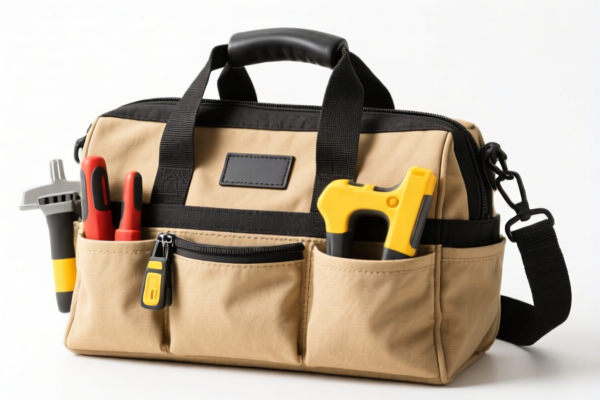
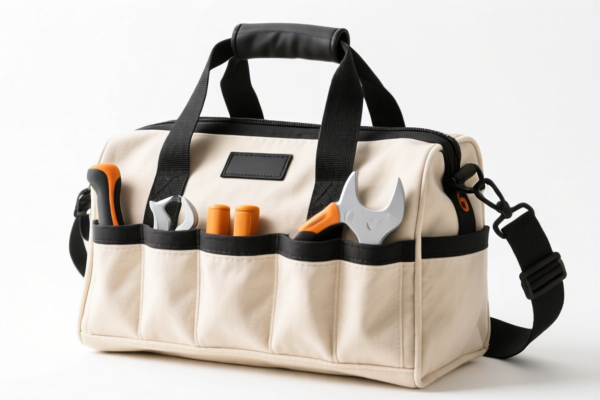
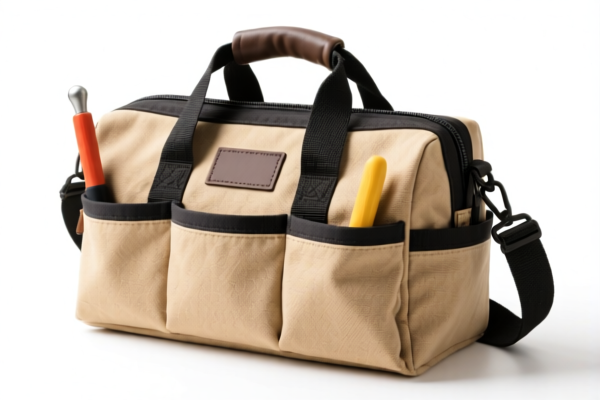
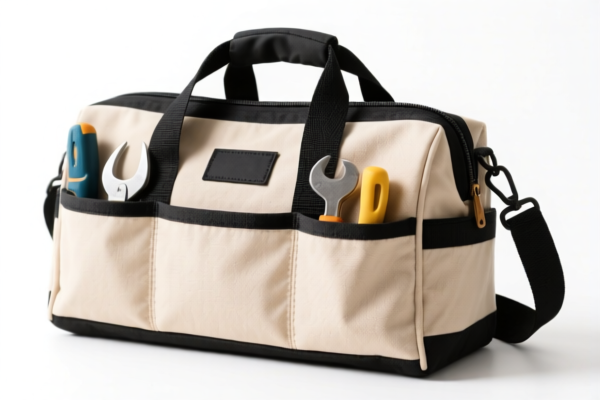
AI Analysis
🎒 Canvas Tool Bag (Fabric Tool Organizer)
🌐 HS Code Reference & Clearance Guide | 2026 Latest Tariff Analysis | Professional Customs Strategy
📌 I. Product Definition: What Exactly is a "Canvas Tool Bag"?
A Canvas Tool Bag is a storage container designed to carry tools, hardware, or small items. In international trade, the classification hinges on two critical factors:
1. Material Composition: Is it pure textile (cotton/linen), synthetic fiber, or plastic-coated?
2. Specific Design/Function: Is it a generic "bag" (Chapter 42), a generic "sack/pouch" (Chapter 63), or a "packaging article" (Chapter 39)?
⚠️ Key Distinction Point:
- If it is a generic fabric pouch/sack without specific bag hardware (like zippers, handles for carrying like a purse), it may fall under Chapter 63 (Other made-up textile articles).
- If it has handles, zippers, and a structure resembling a bag/purse, it often falls under Chapter 42 (Articles of leather or similar materials; trunks, suitcases, handbags).
- If it is primarily plastic/polyester film used for packing, it falls under Chapter 39 (Plastics and articles thereof).
📦 II. HS Code Classification Details (2026 Latest Tariff Authority Cross-Reference)
Based on the provided data, here are the four possible classifications for a "Canvas Tool Bag," ranging from lowest to highest duty.
| HS Code | Product Description | Logic for Classification | Key Characteristics |
|---|---|---|---|
6307.90.98.91 |
Canvas Tool Organizer | Generic made-up textile article. Fits the "other made-up textile articles" catch-all category. | Lowest Duty. Implies it is not a specific type of bag (like a handbag) but a generic tool pouch/sack. |
3923.90.00.80 |
Plastic/Synthetic Packaging | Inferred material is plastic or synthetic fiber film. Fits "articles for the conveyance or packaging of goods" made of plastics. | Medium-High Duty. Applies if the "canvas" is actually a plastic-coated fabric or the primary material is plastic film. |
4202.92.60.91 |
Canvas Bag (Cotton-Based) | Canvas is deemed cotton. Fits "trunks, suitcases, handbags, backpacks" made of cotton. | High Duty. Classifies it as a specific type of bag (Chapter 42) made of cotton textile. |
4202.92.39.00 |
Canvas Travel/Sports Bag | Canvas is deemed textile. Fits "travel, sports, or similar bags" made of other textile materials. | Highest Duty. Often used for bags that look like duffel bags or specialized sports gear. |
🔍 Critical Reminder:
- Chapter 42 (4202) generally carries higher duties because it treats the item as a "bag" (consumer good) rather than a "tool accessory" (industrial good).
- Chapter 63 (6307) is often preferred for industrial tool pouches if they lack the complex hardware of a handbag.
- Misclassification Risk: Declaring a plastic-coated bag as "Canvas" to get Chapter 63 duties can lead to severe penalties.
💰 III. 2026 Latest Tariff Rate Breakdown (Including Surcharges & Policy Add-ons)
✅ Applicable Country: United States (US)
✅ Origin: China (CN)
✅ Effective Date: From November 10, 2025 (including subsequent imports)
🎯 1. 6307.90.98.91 —— Canvas Tool Organizer (Textile Catch-All)
| Item | Content |
|---|---|
| Base Tariff | 7.0% (ad valorem) |
| Section 301 Surcharge | +7.5% |
| Section 122 Surcharge | +10.0% |
| Total Rate | 24.5% |
| Tax Calculation | CIF Value × 24.5% |
| De Minimis Exemption? | ❌ No (Denied) |
| Legal Path | Base Tariff → Section 301 → Section 122 |
📌 Explanation:
- This is the most favorable classification for a generic tool pouch.
- Section 122 (10%) is a specific surcharge often applied to certain textile/apparel items to protect domestic manufacturing.
- Section 301 (7.5%) is the standard additional tariff on Chinese textile goods.
🎯 2. 3923.90.00.80 —— Plastic/Synthetic Packaging Article
| Item | Content |
|---|---|
| Base Tariff | 3.0% |
| Section 301 Surcharge | +25.0% |
| Section 122 Surcharge | +10.0% |
| Total Rate | 38.0% |
| Tax Calculation | CIF Value × 38.0% |
| De Minimis Exemption? | ❌ No (Denied) |
| Legal Path | Base Tariff → Section 301 → Section 122 |
📌 Explanation:
- If the "canvas" is actually plastic-coated or made of synthetic fibers (polyester/nylon), it may be classified here.
- The 25% Section 301 surcharge is significantly higher than the 7.5% for cotton/textile categories, making this a costly classification.
🎯 3. 4202.92.60.91 —— Canvas Bag (Cotton Material)
| Item | Content |
|---|---|
| Base Tariff | 6.3% |
| Section 301 Surcharge | +25.0% |
| Section 122 Surcharge | +10.0% |
| Total Rate | 41.3% |
| Tax Calculation | CIF Value × 41.3% |
| De Minimis Exemption? | ❌ No (Denied) |
| Legal Path | Base Tariff → Section 301 → Section 122 |
📌 Explanation:
- Once classified as a Chapter 42 bag (even if made of cotton), the Section 301 surcharge jumps to 25%.
- This is a common pitfall: Importers often think "cotton = lower duty," but the product form (bag) triggers the higher 301 rate.
🎯 4. 4202.92.39.00 —— Canvas Travel/Sports Bag (Other Textile)
| Item | Content |
|---|---|
| Base Tariff | 17.6% |
| Section 301 Surcharge | +25.0% |
| Section 122 Surcharge | +10.0% |
| Total Rate | 52.6% |
| Tax Calculation | CIF Value × 52.6% |
| De Minimis Exemption? | ❌ No (Denied) |
| Legal Path | Base Tariff → Section 301 → Section 122 |
📌 Explanation:
- This is the highest duty rate.
- It applies to bags that are explicitly identified as travel, sports, or similar bags made of other textile materials (not cotton).
- Avoid this classification if possible; it offers no cost advantage over the cotton bag classification.
🛠️ IV. Clearance Practical Advice (Battle-Tested Pitfall Guide)
✅ 1. Preparation Checklist (Mandatory)
| Document | Required | Notes |
|---|---|---|
| ✅ Product Specifications | ✔️ | Detailed description: Is it lined? Does it have zippers? Are there handles? |
| ✅ Material Composition | ✔️ | Exact % of Cotton, Polyester, Nylon, or Plastic coating. |
| ✅ Product Photos | ✔️ | Front, back, inside, and close-up of hardware (zippers/buckles). |
| ✅ Commercial Invoice | ✔️ | Must accurately describe the item (e.g., "Canvas Tool Pouch" vs. "Canvas Handbag"). |
| ✅ Origin Certificate | ✔️ | To prove origin for Section 301 applicability. |
| ✅ Structure Diagram | ✔️ | Helps customs decide if it's a "bag" (Ch 42) or "sack" (Ch 63). |
✅ 2. Declaration Strategy (Key Mnemonics)
🔥 "Structure Determines Duty, Material Determines Base, 301 Adds the Pain!"
| Scenario | Correct Declaration | Wrong Practice |
|---|---|---|
| Generic Tool Pouch (no complex handles) | 6307.90.98.91 (24.5%) |
Declaring as 4202 → 41.3%+ |
| Plastic-Coated Canvas | 3923.90.00.80 (38.0%) |
Declaring as pure cotton → Risk of penalty |
| Cotton Tool Bag (with handles/zippers) | 4202.92.60.91 (41.3%) |
Declaring as 6307 → Risk of reclassification |
| Sports Duffel Style | 4202.92.39.00 (52.6%) |
Avoid this unless necessary! |
✅ 3. Special Case Handling
| Case | Handling Suggestion |
|---|---|
| OEM Custom Tool Bags | Provide client order + design specs. If it's unique to a tool brand, emphasize "Tool Accessory" not "Fashion Bag." |
| Mixed Material Bags | If >50% cotton, 4202.92.60.91 is likely. If >50% synthetic/plastic, 3923.90.00.80 may apply. |
| Bags with Metal Hardware | Hardware doesn't change classification from textile to leather, but it confirms "Bag" status (Ch 42) over "Sack" status (Ch 63). |
| Low-Value Shipments | No De Minimis Exemption! All these codes are denied de minimis (under $800). You must pay duties on every single shipment. |
🌍 V. Global Market Clearance Comparison (2026 Latest)
| Country/Region | Recommended HS Code | Duty Rate | Certification | Notes |
|---|---|---|---|---|
| 🇺🇸 USA | 6307.90.98.91 |
24.5% | None | Lowest US duty for tool bags. |
| 🇺🇸 USA | 4202.92.60.91 |
41.3% | None | Higher duty for "bags." |
| 🇨🇳 China | 6307.90.98.91 |
~7% | CCC (if applicable) | No Section 301/122. |
| 🇪🇺 EU | 6307.90.98 |
4-6% | CE/RoHS (if electronic tools) | No Section 301 equivalent. |
| 🇦🇺 Australia | 6307.90.98 |
5% | None | GST applies on top. |
📌 Conclusion:
- The USA is the most challenging market due to the叠加 (stacking) of Section 301 (25% or 7.5%) and Section 122 (10%).
- Strategic Tip: Try to classify as6307.90.98.91(Generic Textile Article) to save ~17% in duties compared to Chapter 42 bags. This requires proving the item is a "pouch" or "sack" rather than a "handbag" or "duffel."
📌 VI. Common Errors & Pitfall Guide (Lessons Learned)
❌ Error 1: Declaring a plastic-coated bag as "100% Cotton Canvas"
👉 Consequence: Customs audit finds plastic → Re classified to 3923.90.00.80 (38%) + Penalty for fraud.
❌ Error 2: Declaring a structured bag with zippers/handles as 6307
👉 Consequence: Customs argues it's a "bag" → Re classified to 4202.92.60.91 (41.3%) + Back taxes.
❌ Error 3: Ignoring Section 122
👉 Consequence: Even if base + 301 is low, the 10% Section 122 applies to many textile/textile-like goods. Always include it in calculations.
❌ Error 4: Assuming "Tool Bag" = "Tool Accessory"
👉 Consequence: If it's a generic storage bag, it's still a textile article. But if it's specialized for power tools (e.g., drill holster), it might qualify for different subheadings. Document carefully!
✅ Correct Practice:
"Canvas Tool Pouch, Unlined, No Zippers, Open Top, Cotton 100%, For Industrial Hand Tools"
(Aims for6307.90.98.91)
🎯 VII. Conclusion: Precision Classification Saves Money!
🎯 Remember the Mnemonic:
🔹 "Pouch = 24.5%, Bag = 41.3%, Plastic = 38%, Sport = 52.6%!"
🔹 "Section 301 is the killer, Section 122 is the finisher!"
🔹 "Structure matters: Zippers/Handles push you to Chapter 42!"
📌 Pro Tip:
If your product is imported from Vietnam, Mexico, or Thailand, you may Exempt from IEEPA/Section 301.
- Vietnam/Thailand: Potential for 0%~5% total duty if properly documented.
- Recommendation: Apply for Pre-Ruling (Advance Ruling) with US CBP if possible to lock in the 6307.90.98.91 classification before shipment.
📣 Immediate Action:
📞 Contact a professional customs broker + Provide detailed structure photos + Request HS Code Pre-Ruling
🚀 Ensure your Canvas Tool Bag clears customs smoothly, minimizes tax, and maximizes profit!
✨ Professional Clearance Starts with Accurate Classification!
💼 Every penny of tax saved is pure profit!
Customer Reviews
About HS Code Classification
The Harmonized System (HS) is an internationally standardized nomenclature developed by the World Customs Organization (WCO) to classify traded products. Over 200 countries use the HS system as the basis for customs tariffs, trade statistics, and import/export regulations.
Each HS code follows a hierarchical structure:
- Chapter (2 digits) — Broad category of goods (e.g., Chapter 84: Machinery and Mechanical Appliances)
- Heading (4 digits) — More specific grouping within the chapter
- Subheading (6 digits) — Internationally standardized breakdown, used by all WCO member countries
- National subdivisions (8-10 digits) — Country-specific extensions for further classification, such as US HTSUS 10-digit codes
Correct HS code classification is essential for smooth customs clearance, accurate duty payment, and compliance with trade regulations. Misclassification can lead to customs delays, overpayment of duties, or penalties.
When importing from CN to US, the applicable tariff rates may include:
- Most-Favored-Nation (MFN) rate — The standard duty rate applied to WTO members
- General rate — Applied to countries without trade agreements
- Trade remedy duties — Additional tariffs such as Section 301 (anti-dumping), Section 232 (national security), or countervailing duties
The information provided on this page is for reference purposes only. For official classification, please consult with your local customs authority or a licensed customs broker.