Capacitor Insulation Material
CN → US| HS Code | Tariff Rate | Origin | Destination | Doc |
|---|---|---|---|---|
| 4823908000 | 35.0% | CN | US | Official Doc |
| 6806900090 | 35.0% | CN | US | Official Doc |
| 4823906000 | 35.0% | CN | US | Official Doc |
| 6806100090 | 38.9% | CN | US | Official Doc |
Product Images
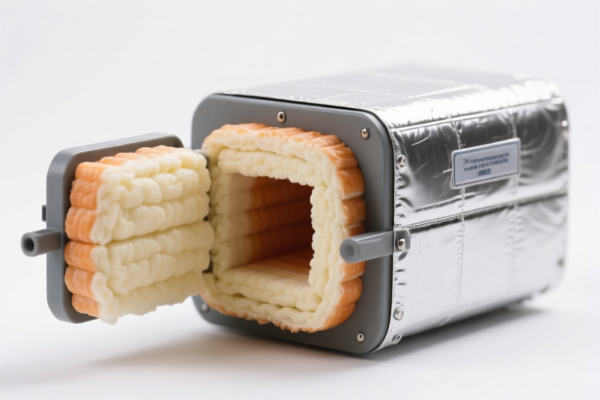
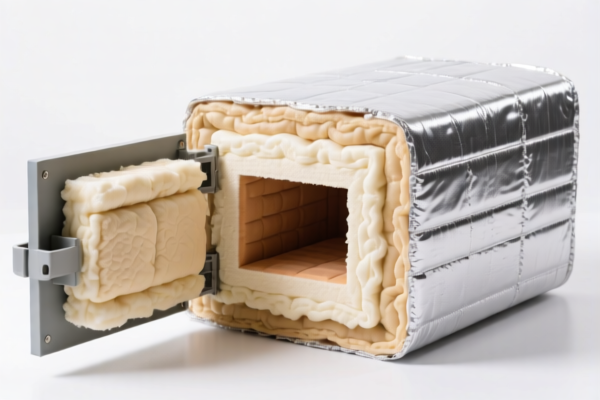
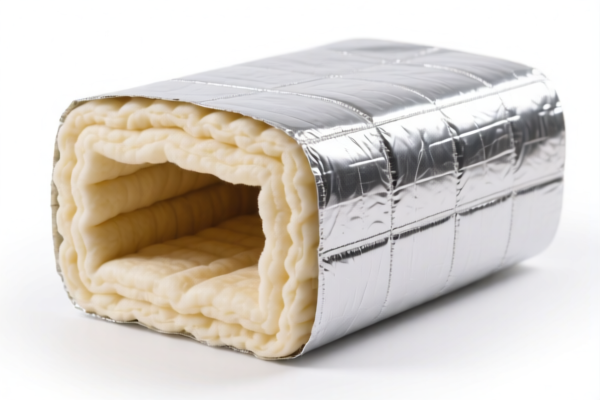
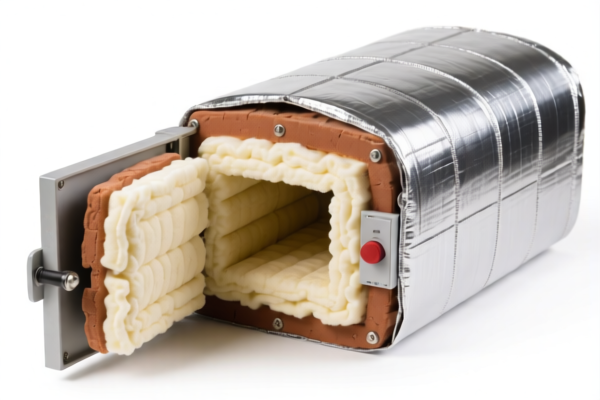
AI Analysis
⚡ Capacitor Insulation Material (The Unsung Hero of Electronics)
🌐 HS Code Reference & Customs Clearance Guide | 2026 Latest Tariff Analysis | Strategic Compliance Strategy
📌 I. Product Definition & Classification: What Exactly Is "Capacitor Insulation Material"?
Capacitor insulation materials are critical components used in electrical capacitors to separate conductive plates, prevent short circuits, and maintain dielectric strength. In international trade, these materials are diverse and often classified based on their base material composition and physical form, rather than their end-use alone.
Because "Capacitor Insulation Material" is a functional description rather than a specific material type, customs authorities require precise identification of the raw material (e.g., paper, mineral wool, plastic) and shape (e.g., film, sheet, powder, molded part).
⚠️ Key Classification Logic:
- If the material is cellulosic/paper-based → Look to Chapter 48 (Paper/Cardboard);
- If the material is mineral/fibrous (rock wool, slag wool) → Look to Chapter 68 (Miscellaneous articles of stone/plaster/cement);
- If it is a specific composite or generic insulating sheet → May fall under Chapter 85 or Chapter 39, depending on specific composition.
📦 II. HS Code Classification Details (2026 Latest Tariff Authority Comparison)
Based on common material inferences for capacitor insulation, here are the four most likely HS Code categories derived from your data:
| HS Code | Product Description | Material Inference | Application Context |
|---|---|---|---|
4823.90.80.00 |
Other paper, cardboard, cellulose wadding and webs of cellulose fibers, cut to size or shape; other articles of paper pulp, paper, cardboard, cellulose wadding or webs of cellulose fibers | Paper/Cellulose-based (e.g., capacitor paper, cellulose film) | Sealing gaskets, insulating sheets, or dielectric layers made from treated paper or cellulose |
6806.90.00.90 |
Expanded clay aggregates; slag wool, rock wool (including interblends thereof) and similar mineral wools, including interblends of them; vermiculite, perlite, magnesia bricks; articles of natural or artificial abrasives | Mineral/Fiber-based (e.g., mineral fiber boards, non-soundproofing mineral insulation) | General mineral insulation, excluding acoustic panels or specific molded silicate products |
4823.90.60.00 |
Cut to size or shape; other articles of paper pulp, paper, cardboard, cellulose wadding or webs of cellulose fibers | Paper/Cardboard/Fibers (e.g., cellulose dielectric films) | Sealing/insulating products made from paper or cellulose, fitting the "other paper articles" category |
6806.10.00.90 |
Expanded clay aggregates; slag wool, rock wool (including interblends thereof) and similar mineral wools, including interblends of them; vermiculite, perlite, magnesia bricks; articles of natural or artificial abrasives | Mineral Wool (e.g., slag wool, rock wool, similar mineral fibers) | Insulation materials with dielectric properties, specifically mineral wool types |
🔍 Critical Distinction:
- Paper vs. Mineral: The biggest risk is misclassifying cellulose-based insulation (Ch 48) as mineral-based (Ch 68) or vice versa.
- Generic "Other" Categories: Both4823.90and6806.90are "catch-all" categories. Customs may scrutinize these heavily to ensure the product doesn’t fit a more specific subheading.
- No Conflict with Metal/Plastic: The summaries indicate no obvious conflict with metals or plastics, meaning non-composite mineral or paper materials are the primary candidates.
💰 III. 2026 Latest Tariff Rate Breakdown (Including Surcharges & Policy Add-ons)
✅ Applicable Country: United States (US)
✅ Origin: China (CN)
✅ Effective Date: From November 10, 2025 (including subsequent imports)
🎯 1. 4823.90.80.00 & 4823.90.60.00 —— Paper/Cellulose Insulation Materials
| Item | Content |
|---|---|
| Base Tariff | 0% (ad valorem) |
| USITC Surcharge | +25% (from USITC Footnote 9903.88.01) |
| IEEPA Surcharge | +10% (targeting China/HK products, effective from Nov 10, 2025) |
| Total Tax Rate | 35.0% |
| Tax Calculation | CIF Value × 35% |
| De Minimis Eligibility | ❌ Not Eligible (deny_de_minimis) |
| Legal Authority Path | IEEPA:9903.01.25 → IEEPA:9903.01.24 → USITC:4823.90.80.00 → FOOTNOTE:9903.88.01 |
📌 Explanation:
- "USITC Surcharge 25%": Comes from Section 301 of the Trade Act, imposing additional tariffs on Chinese goods.
- "IEEPA 10%": The International Emergency Economic Powers Act surcharge on Chinese products.
- Total 35%: This is a high tariff rate. For capacitor insulation, this significantly impacts cost competitiveness.
- No De Minimis: Cannot use the $800 de minimis exemption; full duty applies.
🎯 2. 6806.90.00.90 —— Mineral Fiber Insulation (Non-Specific)
| Item | Content |
|---|---|
| Base Tariff | 0% |
| USITC Surcharge | +25% |
| IEEPA Surcharge | +10% |
| Total Tax Rate | 35.0% |
| Tax Calculation | CIF Value × 35% |
| De Minimis Eligibility | ❌ Not Eligible |
| Legal Authority Path | IEEPA:9901.25 → IEEPA:9903.01.24 → USITC:6806.90.00.90 → FOOTNOTE:9903.88.01 |
📌 Note:
- Same tariff structure as paper-based insulation.
- Applies to general mineral fiber insulation not classified as acoustic panels or specific molded silicates.
🎯 3. 6806.10.00.90 —— Mineral Wool (Slag Wool/Rock Wool)
| Item | Content |
|---|---|
| Base Tariff | 3.9% |
| USITC Surcharge | +25% |
| IEEPA Surcharge | +10% |
| Total Tax Rate | 38.9% |
| Tax Calculation | CIF Value × 38.9% |
| De Minimis Eligibility | ❌ Not Eligible |
| Legal Authority Path | IEEPA:9901.25 → IEEPA:9903.01.24 → USITC:6806.10.00.90 → FOOTNOTE:9903.88.01 |
📌 Caution:
- This is the highest tariff bracket among the four.
- Only applies if the material is specifically identified as mineral wool (slag wool, rock wool) and not a general mineral fiber or paper product.
- The 3.9% base duty makes it more expensive than the 0% base duty categories.
🛠️ IV. Customs Clearance Practical Advice (Battle-Tested Pitfall Avoidance)
✅ 1. Documentation Checklist (Non-Negotiable)
| Document | Mandatory? | Description |
|---|---|---|
| ✅ Material Safety Data Sheet (MSDS) | ✔️ | To prove chemical composition and confirm no hazardous restrictions |
| ✅ Product Specification Sheet | ✔️ | Must clearly state: Base Material (e.g., "Treated Cellulose Paper", "Rock Wool"), Dielectric Strength, Thickness, Dimensions |
| ✅ Product Photos (Clear & Detailed) | ✔️ | Show texture, form (film, sheet, pellet), and any branding/packaging |
| ✅ Third-Party Test Report | ✔️ | Dielectric strength test, thermal stability, flammability rating (UL94) |
| ✅ Commercial Invoice | ✔️ | Description must match HS code logic: e.g., "Cellulose-based capacitor insulation paper, 0.1mm thick" |
| ✅ Packing List | ✔️ | Include net/gross weight, dimensions, and number of packages |
| ✅ Certificate of Origin (CO) | ✔️ | If not from China, to claim preferential rates (if applicable) |
✅ 2. Declaration Tips (Key Mnemonic)
🔥 "Material First, Form Second, Name Specific, Tariff Accurate!"
| Scenario | Correct Declaration | Wrong Practice |
|---|---|---|
| Paper-based Insulation | "Capacitor Insulation Paper, Cellulose-based, Dielectric Film" | Vague term: "Insulation Material" → Leads to arbitrary classification |
| Mineral Wool Insulation | "Mineral Wool Insulation Board, Rock Wool Type" | Misclassify as "Plastic Insulation" → High penalty risk |
| Composite Material | Break down by dominant material or use "Other" with detailed specs | Claiming "Electronic Component" → Wrong Chapter entirely |
| Cut-to-Size Sheets | Specify "Cut to Size" in description | Declaring as "Raw Rolls" if cut → Discrepancy in HS subheading |
✅ 3. Special Circumstances Handling
| Situation | Handling Advice |
|---|---|
| OEM Custom Insulation | Provide client design specs + material certs to prove specific composition |
| Mixed Shipments | Declare each material type separately with its own HS Code |
| High-Temperature Insulation | Highlight thermal properties to distinguish from general paper/plastic |
| Recycled Material | Disclose if recycled content exceeds thresholds, as it may affect environmental compliance |
🌍 V. Global Market Customs Comparison (2026 Latest)
| Country/Region | Recommended HS Code | Tariff | Certification Requirements | Notes |
|---|---|---|---|---|
| 🇺🇸 USA | 4823.90.80.00 / 6806.10.00.90 |
35% - 38.9% (China Origin) | No specific US certs, but safety data required | High tariffs apply due to 301/IEEPA |
| 🇨🇳 China | 4823.90.80.00 / 6806.10.00.90 |
~5% (Import) | CCC (if applicable to final product) | No additional surcharges |
| 🇪🇺 EU | 4823.90.80.00 / 6806.10.00.90 |
~0-6.5% | REACH Compliance, RoHS | No major surcharges |
| 🇦🇺 Australia | 4823.90.80.00 |
~5% | RCM (if part of electrical gear) | Moderate tariffs |
| 🇯🇵 Japan | 4823.90.80.00 |
~0-5% | PSE (if final product is electrical) | Low tariffs |
📌 Conclusion:
- USA is the most challenging market for capacitor insulation materials due to 35-38.9% total tariffs.
- EU and Japan are more favorable, with lower base duties and no US-style surcharges.
- Supply Chain Strategy: Consider sourcing insulation materials from Vietnam, Mexico, or Thailand to leverage IEEPA exemptions or lower tariff regimes, if feasible.
📌 VI. Common Mistakes & Pitfall Avoidance (Lessons Learned)
❌ Mistake 1: Using generic term "Insulation Material" on Invoice
👉 Consequence: Customs cannot determine material → 10-30 day delay, possible reclassification to highest duty rate.
❌ Mistake 2: Classifying Mineral Wool as Paper-based (or vice versa)
👉 Consequence: Incorrect HS Code → Penalty + Back Taxes (e.g., paying 35% when 38.9% is due, or vice versa).
❌ Mistake 3: Ignoring "Cut-to-Size" vs. "Raw Rolls" distinction
👉 Consequence: 4823 subheadings differ based on form → Additional scrutiny.
❌ Mistake 4: Assuming "De Minimis" applies
👉 Consequence: Packages under $800 are still subject to full 35%+ tariffs → Surprise fees at border.
✅ Correct Approach:
"Capacitor Insulation Paper, Treated Cellulose, Dielectric Strength >10kV/mm, 0.1mm Thickness, Cut to 100x100mm Sheets, No Metal Components"
🎯 VII. Conclusion: Precise Classification Saves Millions!
🎯 Remember the Mantra:
🔹 "Material Defines Code, Form Refines it, Name Specifies it!"
🔹 "US Tariffs Hit Hard at 35-38.9%, Plan Supply Chain Early!"
📌 Pro Tip:
If your capacitor insulation materials are sourced from Vietnam, Mexico, Thailand, or Malaysia, you may be eligible for IEEPA Exemption, reducing rates to 0-5%.
👉 Recommendation: Apply for an Advance Ruling from US Customs (CBP) before shipment to lock in the correct HS Code and avoid disputes.
📣 Take Action Now:
📞 Consult a licensed customs broker + Provide Material Specs + Request HS Code Advance Ruling
🚀 Ensure your capacitor insulation materials clear customs smoothly, legally, and profitably!
✨ Professional Customs Clearance Starts with Accurate Classification!
💼 Every Percent Saved in Tariffs is Pure Profit!
Customer Reviews
About HS Code Classification
The Harmonized System (HS) is an internationally standardized nomenclature developed by the World Customs Organization (WCO) to classify traded products. Over 200 countries use the HS system as the basis for customs tariffs, trade statistics, and import/export regulations.
Each HS code follows a hierarchical structure:
- Chapter (2 digits) — Broad category of goods (e.g., Chapter 84: Machinery and Mechanical Appliances)
- Heading (4 digits) — More specific grouping within the chapter
- Subheading (6 digits) — Internationally standardized breakdown, used by all WCO member countries
- National subdivisions (8-10 digits) — Country-specific extensions for further classification, such as US HTSUS 10-digit codes
Correct HS code classification is essential for smooth customs clearance, accurate duty payment, and compliance with trade regulations. Misclassification can lead to customs delays, overpayment of duties, or penalties.
When importing from CN to US, the applicable tariff rates may include:
- Most-Favored-Nation (MFN) rate — The standard duty rate applied to WTO members
- General rate — Applied to countries without trade agreements
- Trade remedy duties — Additional tariffs such as Section 301 (anti-dumping), Section 232 (national security), or countervailing duties
The information provided on this page is for reference purposes only. For official classification, please consult with your local customs authority or a licensed customs broker.