Capacitor Parts
CN → US| HS Code | Tariff Rate | Origin | Destination | Doc |
|---|---|---|---|---|
| 8542900000 | 60.0% | CN | US | Official Doc |
| 8542390090 | 60.0% | CN | US | Official Doc |
| 8532900000 | 35.0% | CN | US | Official Doc |
| 8532290040 | 35.0% | CN | US | Official Doc |
| 8538903000 | 38.5% | CN | US | Official Doc |
Product Images
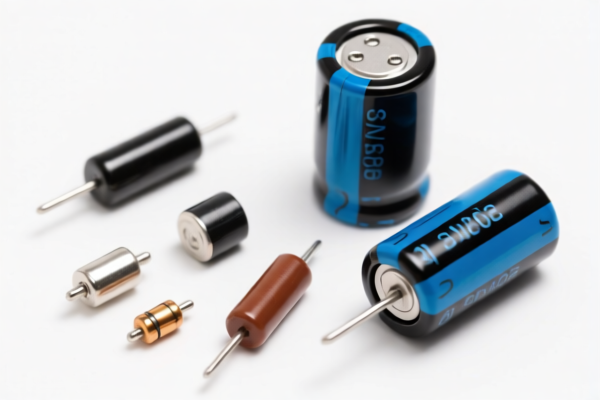
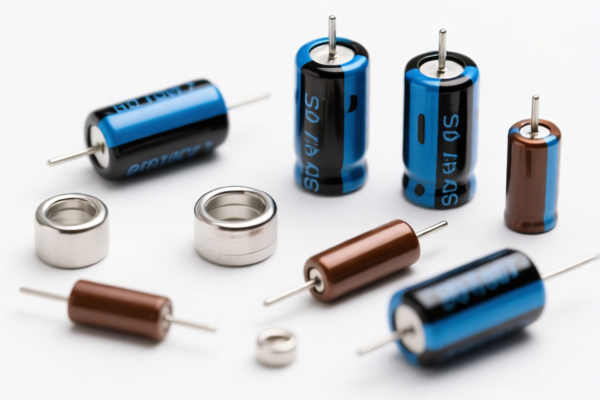
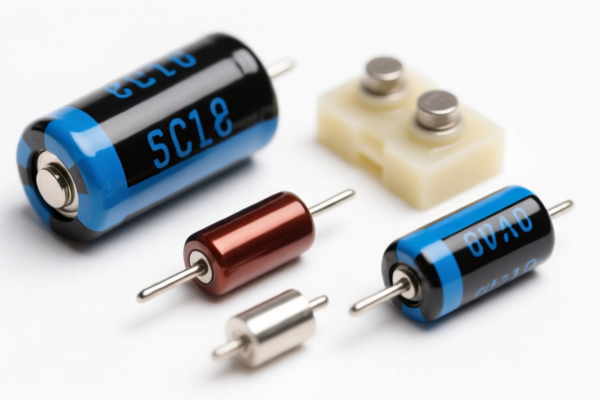
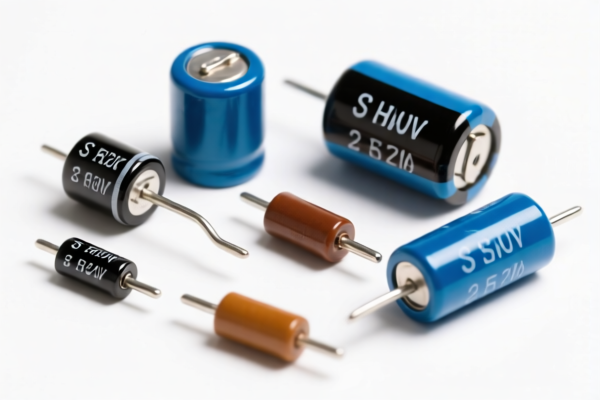
AI Analysis
🌟 Capacitor Parts (电容元件/零件)
🌐 HS Code Classification & Clearance Guide | 2026 Latest Tariff Analysis | Professional Customs Strategy
📌 I. Product Definition & Classification: What Exactly Are "Capacitor Parts"?
In international trade, "Capacitor Parts" is a broad term that can refer to two distinct categories based on function and structural integration:
- Passive Electronic Components (Active Integrated Circuits/Passive Modules): Capacitors that are integral parts of semiconductor assemblies or treated as components of electronic integrated circuits.
- Stand-alone Capacitors: Discrete electronic components used for energy storage, filtering, or coupling in circuits.
- Accessories/Parts for Other Devices: Components specifically designed as spare parts for batteries or other machinery, lacking independent functionality.
⚠️ Key Distinction Point:
- If the capacitor is integral to an IC or treated as a passive component within a complex electronic assembly → It often falls under Chapter 85 (Electrical Machinery/Equipment) related to parts of ICs or general electrical parts.
- If it is a stand-alone capacitor (fixed, variable, etc.) → It falls under 8532 (Capacitors).
- If it is a spare part for a battery or non-capacitor device → It may fall under 8538 (Parts of Electrical Machinery).
📦 II. HS Code Classification Matrix (2026 Latest Tariff Authority Mapping)
Based on the provided data, here is the precise mapping of HS Codes, summaries, and tax implications for "Capacitor Parts."
| HS Code | Classification Summary | Key Attribute / Logic | Total Tax Rate |
|---|---|---|---|
| 8542.90.00.00 | Parts of Electronic Integrated Circuits | Default tendency for "parts" classification when material/morphology doesn't conflict. Treated as a component of an IC assembly. | 60.0% |
| 8542.39.00.90 | Other Electronic Integrated Circuits | Capacitors classified as passive components within electronic integrated circuits. Fits the "other" category bottom-line logic. | 60.0% |
| 8532.90.00.00 | Other Capacitors | Standard capacitors. Follows the attribute definition of capacitors in classification explanations. | 35.0% |
| 8532.29.00.40 | Other Fixed Capacitors | Specific to fixed capacitors. No conflict in material or form detected. | 35.0% |
| 8538.90.30.00 | Parts of Other Electrical Machinery | Specifically mentioned as "Battery Accessories" in the data. Default match for parts when no material conflict exists. | 38.5% |
🔍 Critical Insight:
- High Tax Risk (60%): If classified under 8542 (IC Parts/ICs), the rate is 60% due to aggressive additional tariffs. This is the highest risk classification. - Moderate Tax Risk (35-38.5%): If classified under 8532 (Capacitors) or 8538 (Parts of Electrical Machinery), the rate is significantly lower (35% or 38.5%). - Why the Difference? The US Customs and Border Protection (CBP) often scrutinizes whether a component is a "stand-alone" part (8532/8538) or an "integrated circuit part" (8542). Misclassification can lead to massive tariff shocks.
💰 III. 2026 Detailed Tariff Rate Breakdown (Including Surcharges & Policy Add-ons)
✅ Applicable Country: United States (US)
✅ Origin: China (CN)
✅ Effective Time: From November 10, 2025 (and subsequent imports)
🎯 1. 8542.90.00.00 & 8542.39.00.90 —— IC Parts / ICs (High Risk)
| Item | Content |
|---|---|
| Base Tariff | 0.0% (ad valorem) |
| Section 301 Surcharge | +50.0% (From USITC Footnote 9903.88.01 / Section 301) |
| IEEPA Surcharge | +10.0% (Targeting China/HK products, effective Nov 10, 2025) |
| Total Tax Rate | 60.0% |
| Tax Calculation | CIF Value × 60% |
| De Minimis Exemption | ❌ Not Available (deny_de_minimis) |
| Legal Basis Path | IEEPA:9903.01.25 → IEEPA:9903.01.24 → USITC:8542.90.00.00 / 8542.39.00.90 |
📌 Explanation:
- The 50% is the standard Section 301 tariff for electronic components. - The 10% is the additional IEEPA tariff for Chinese origin. - Combined 60% is extremely high. This classification applies if the capacitor is deemed an integral part of an IC or a specific electronic assembly component falling under Chapter 8542.
🎯 2. 8532.90.00.00 & 8532.29.00.40 —— Stand-alone Capacitors (Moderate Risk)
| Item | Content |
|---|---|
| Base Tariff | 0.0% (ad valorem) |
| Section 301 Surcharge | +25.0% (Standard Section 301 for certain electrical goods) |
| IEEPA Surcharge | +10.0% (Targeting China/HK products, effective Nov 10, 2025) |
| Total Tax Rate | 35.0% |
| Tax Calculation | CIF Value × 35% |
| De Minimis Exemption | ❌ Not Available (deny_de_minimis) |
| Legal Basis Path | IEEPA:9903.01.24 → USITC:8532.90.00.00 / 8532.29.00.40 |
📌 Note:
- These codes cover fixed capacitors (e.g., ceramic, film, electrolytic) that are stand-alone components. - The 25% Section 301 rate is lower than the 50% applied to some IC-related codes, making this a preferred classification if technically justifiable.
🎯 3. 8538.90.30.00 —— Parts of Other Electrical Machinery (Battery Accessories)
| Item | Content |
|---|---|
| Base Tariff | 3.5% |
| Section 301 Surcharge | +25.0% |
| IEEPA Surcharge | +10.0% |
| Total Tax Rate | 38.5% |
| Tax Calculation | CIF Value × 38.5% |
| De Minimis Exemption | ❌ Not Available (deny_de_minimis) |
| Legal Basis Path | IEEPA:9903.01.24 → USITC:8538.90.30.00 |
📌 Specific Case:
- This code is specifically mentioned for "Battery Accessories". If the "capacitor part" is actually a component used in or with a battery system (not a general electronic capacitor), this may apply. - The base rate of 3.5% makes it slightly more expensive than pure capacitors (0% base), but the surcharges are similar.
🛠️ IV. Clearance Practical Advice (Real-World Pitfall Avoidance)
✅ 1. Required Documentation Checklist (Non-negotiable)
| Document | Required | Purpose |
|---|---|---|
| ✅ Product Specification Sheet | ✔️ | Must detail: Type (Fixed/Variable), Material (Ceramic/Film/Electrolytic), Capacity, Voltage, Dimensions. |
| ✅ Circuit Diagram / Schematic | ✔️ | CRITICAL: To prove whether the component is a stand-alone capacitor (8532) or part of an IC assembly (8542). |
| ✅ Product Photos (With Label) | ✔️ | Clear view of markings, part numbers, and physical form factor. |
| ✅ Third-Party Test Reports | ✔️ | UL, CE, RoHS, FCC (if applicable) to verify safety standards. |
| ✅ Commercial Invoice | ✔️ | Must clearly state "Capacitor Part" or "Electronic Component," not vague terms like "Part." |
| ✅ Packing List | ✔️ | Clearly separate parts from main goods to avoid "split shipment" issues. |
✅ 2. Declaration Strategy (Key Mantras)
🔥 "Clarify Function, Prove Stand-alone, Avoid 'IC Part' Trap!"
| Scenario | Correct Declaration | Incorrect Practice |
|---|---|---|
| Stand-alone Capacitor | 8532.29.00.40 or 8532.90.00.00 |
Declaring as "IC Part" → 60% Tax |
| Capacitor on a Board | If part of a larger module, consider the module's HS Code first. Do not separate unless sold independently. | Separating parts incorrectly → Audit Risk |
| Battery Component | 8538.90.30.00 if specifically for batteries. |
Declaring as "General Capacitor" → Misclassification |
| Mixed Shipment | Separate invoices for ICs and Capacitors. | Mixing ICs and Capacitors on one line → Customs Delay/Fines |
✅ 3. Special Situation Handling
| Situation | Handling Advice |
|---|---|
| OEM Custom Capacitors | Provide customer drawings + BOM (Bill of Materials) to prove stand-alone nature. |
| Capacitors in Kits | If sold with other electronic parts, declare separately if possible to optimize tax rates. |
| "Parts of IC" Claim | If CBP questions 8532, provide engineering analysis proving it is not an integral part of an IC. |
| Origin Documentation | Ensure Certificate of Origin (CO) matches the declared value. Discrepancies trigger audits. |
🌍 V. Global Market Comparison (2026 Latest)
| Country/Region | Recommended HS Code | Tariff Rate (China Origin) | Certification Requirements | Notes |
|---|---|---|---|---|
| 🇺🇸 USA | 8532.29.00.40 / 8532.90.00.00 |
35% (Capacitors) 60% (If 8542) |
FCC, RoHS, UL (if power) | Highest Risk: Misclassification to 8542 doubles tax. |
| 🇨🇳 China | 8532.29.00.40 |
0% - 5% (Import Duty) | CCC (if applicable) | Low duty, but strict quality control. |
| 🇪🇺 EU | 8532.10.00 / 8532.24 |
0% - 2.5% | CE, RoHS, REACH | No Section 301 or IEEPA surcharges. |
| 🇬🇧 UK | 8532.29 |
0% - 2.5% | UKCA, RoHS | Post-Brexit rules apply. |
| 🇯🇵 Japan | 8532.29 |
0% | PSE (if applicable) | Low tariff, high quality standards. |
📌 Conclusion:
- USA is the most complex market due to Section 301 and IEEPA surcharges. - EU, Japan, and China offer significantly lower tariffs but have different certification requirements. - Strategy for US: If technically possible, always aim for 8532 (35%) instead of 8542 (60%). Provide robust engineering documentation to support "stand-alone" status.
📌 VI. Common Errors & Pitfall Avoidance (Blood & Tears Lessons)
❌ Error 1: Declaring a stand-alone capacitor as an "IC Part" (8542)
👉 Consequence: Tax jumps from 35% to 60% → 25% extra cost per unit!
❌ Error 2: Using vague descriptions like "Electronic Part" or "Component"
👉 Consequence: Customs may assign a duty-dumping code or 89.5% penalty rate due to lack of specificity.
❌ Error 3: Mixing Battery Accessories with General Capacitors
👉 Consequence: 8538.90.30.00 (38.5%) vs 8532.29.00.40 (35%). Small difference, but inconsistency leads to audits.
❌ Error 4: Ignoring IEEPA 10% Surcharge
👉 Consequence: Unexpected cost increase for all Chinese-origin electronic components post-Nov 2025.
✅ Correct Approach:
"Ceramic Chip Capacitor, 100nF, 50V, Surface Mount, Stand-alone Component, Model XYZ, RoHS Compliant"
🎯 VII. Conclusion: Precision in Classification Saves Thousands!
🎯 Remember the Mantra:
🔹 "Capacitor = 35%, IC Part = 60%. Prove it's stand-alone!"
🔹 "Don't let 'Part' become a 60% tax trap. Use 8532 if possible."
🔹 "Documentation is King: Schematics, Specs, and Photos save your shipment."
📌 Pro Tip:
If your capacitors are originating from Vietnam, Malaysia, or Thailand, you may qualify for IEEPA exemptions or lower Section 301 rates.
Recommendation: Apply for an Advance Ruling with US CBP if your shipment volume is high. This provides legal certainty and prevents surprise audits.
📣 Immediate Action:
📞 Consult a Licensed Customs Broker + Provide Engineering Schematics + Apply for Advance Ruling
🚀 Ensure your Capacitor Parts clear customs smoothly, efficiently, and cost-effectively!
✨ Professional Clearance Starts with Accurate Classification!
💼 Every Percent of Tax Saved is Pure Profit!
Customer Reviews
About HS Code Classification
The Harmonized System (HS) is an internationally standardized nomenclature developed by the World Customs Organization (WCO) to classify traded products. Over 200 countries use the HS system as the basis for customs tariffs, trade statistics, and import/export regulations.
Each HS code follows a hierarchical structure:
- Chapter (2 digits) — Broad category of goods (e.g., Chapter 84: Machinery and Mechanical Appliances)
- Heading (4 digits) — More specific grouping within the chapter
- Subheading (6 digits) — Internationally standardized breakdown, used by all WCO member countries
- National subdivisions (8-10 digits) — Country-specific extensions for further classification, such as US HTSUS 10-digit codes
Correct HS code classification is essential for smooth customs clearance, accurate duty payment, and compliance with trade regulations. Misclassification can lead to customs delays, overpayment of duties, or penalties.
When importing from CN to US, the applicable tariff rates may include:
- Most-Favored-Nation (MFN) rate — The standard duty rate applied to WTO members
- General rate — Applied to countries without trade agreements
- Trade remedy duties — Additional tariffs such as Section 301 (anti-dumping), Section 232 (national security), or countervailing duties
The information provided on this page is for reference purposes only. For official classification, please consult with your local customs authority or a licensed customs broker.