Capacitors
CN → US| HS Code | Tariff Rate | Origin | Destination | Doc |
|---|---|---|---|---|
| 8532220020 | 35.0% | CN | US | Official Doc |
| 8532210020 | 35.0% | CN | US | Official Doc |
| 8548000000 | 35.0% | CN | US | Official Doc |
Product Images
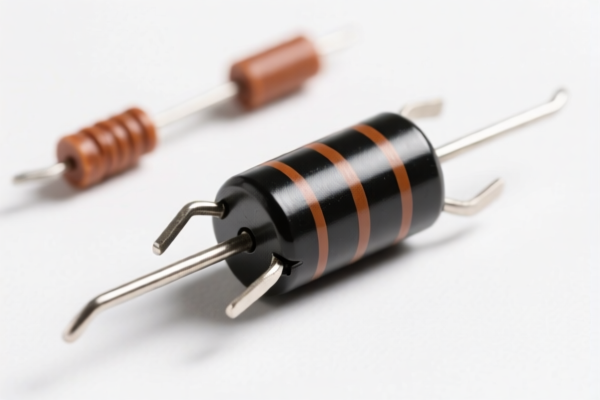
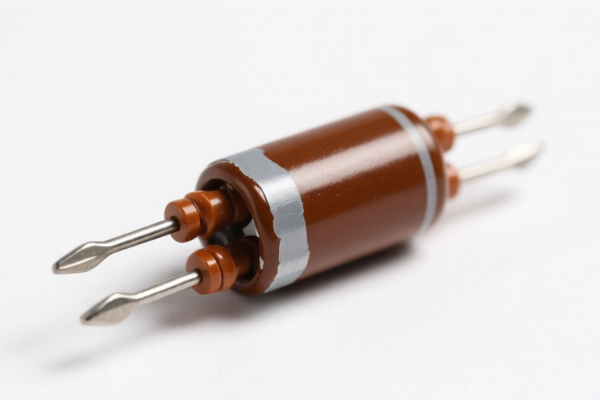
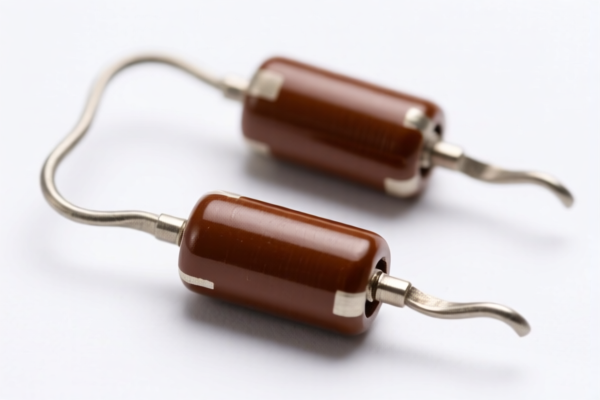
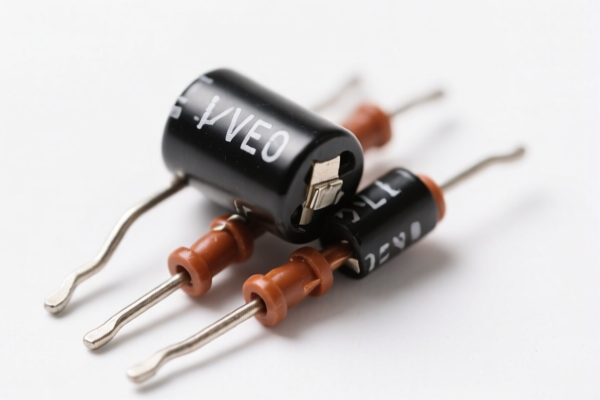
AI Analysis
⚡ Capacitors (Electrical Components)
🌐 HS Code Reference & Customs Clearance Guide | 2026 Latest Tariff Analysis | Professional Clearance Strategy
📌 I. Product Definition & Classification: What Are "Capacitors" in International Trade?
In international trade, capacitors are fundamental passive electronic components used to store electrical energy in an electric field. They are ubiquitous in everything from consumer electronics to industrial power grids. However, their HS Code classification is highly sensitive to physical construction, dielectric material, and intended use.
Key Distinctions for Classification: * Fixed Capacitors (e.g., Ceramic, Film, Electrolytic): These are typically classified under Chapter 85 (Electrical Machinery and Equipment), specifically Heading 8532. * Electrical Parts/Materials: If the capacitor is considered a generic part or does not fit specific subheadings, it may fall under 8548 (Waste and scrap of electrical and electronic assemblies; electrical parts of machinery) or other residual categories.
⚠️ Critical Distinction Point:
- 8532 Series: Specifically for "Electrolytic" or "Fixed capacitors." This is the most common category for standard commercial capacitors.
- 8548.00: A residual/category for electrical parts that do not fit more specific headings. This is often used if the description is vague or if it's a specialized part.
- Classification Logic: If the description is missing specific details (like dielectric type), customs may default to the most general "electrical part" or "capacitor" category based on the provided summary.
📦 II. HS Code Classification Details (2026 Latest Tariff Authority Comparison)
Based on the provided data, the following HS Codes are applicable. Note that all listed codes carry the same tariff structure in this specific dataset.
| HS Code | Product Description | Applicability | Reason for Classification (Based on Data) |
|---|---|---|---|
8532.21.00.20 |
Capacitors, Electrolytic | Standard commercial capacitors | Primary Match: Based on general "Capacitors" category matching principles. |
8532.22.00.20 |
Capacitors, Fixed, Non-Electrolytic | General capacitors | Default Match: Applied when description lacks specific dielectric details (Default Tendency Rule). |
8548.00.00.00 |
Electrical Parts | General electrical components | Functional Match: Classified as an electrical component/parts with no material conflict. |
🔍 Key Reminder:
- 8532.2x codes are specific to capacitors.
- 8548.00 is a broader "parts" category.
- All three codes in the provided dataset share the exact same tax liability. This suggests a scenario where specific differentiation might be limited by the input data, or all potential classifications result in the same trade policy outcome (e.g., subject to Section 301 and IEEPA tariffs).
💰 III. 2026 Latest Tariff Rate Breakdown (Including Surtaxes & Policy Surcharges)
✅ Applicable Country: United States (US)
✅ Origin: China (CN) (Implied by the "Section 122" and "25%" surtax context typical for US-China trade)
✅ Effective Date: 2025-11-10 onwards (and subsequent imports)
🎯 1. 8532.21.00.20 — Electrolytic Capacitors
| Item | Content |
|---|---|
| Base Duty Rate | 0.0% (Ad Valorem) |
| Section 301 Surtax | +25.0% (USITC Footnote 9903.88.01 context) |
| IEEPA Section 122 Surcharge | +10.0% (针对中国/香港产品,自2025年11月10日起) |
| Total Tax Rate | 35.0% |
| Tax Calculation | CIF Value × 35% |
| De Minimis Exemption Eligibility | ❌ Not Eligible (deny_de_minimis) |
| Legal Basis Path | Section 301: 25% → IEEPA Sec 122: 10% → HS: 8532.21.00.20 |
📌 Explanation:
- The 0% base rate is standard for many electrical parts under GATT.
- The 25% Section 301 tariff is a long-standing punitive tariff on Chinese goods under US Trade Law.
- The 10% IEEPA Section 122 tariff is a specific additional surcharge effective from Nov 2025, targeting Chinese electrical components.
- Total 35% is a significant cost factor that must be factored into pricing strategies.
🎯 2. 8532.22.00.20 — Fixed Capacitors (Non-Electrolytic)
| Item | Content |
|---|---|
| Base Duty Rate | 0.0% |
| Section 301 Surtax | +25.0% |
| IEEPA Section 122 Surcharge | +10.0% |
| Total Tax Rate | 35.0% |
| Tax Calculation | CIF Value × 35% |
| De Minimis Exemption Eligibility | ❌ Not Eligible |
| Legal Basis Path | Section 301: 25% → IEEPA Sec 122: 10% → HS: 8532.22.00.20 |
📌 Note:
- Despite being a different subtype (Non-Electrolytic vs. Electrolytic), the tariff outcome is identical.
- This code applies if the capacitor is not electrolytic (e.g., ceramic, film) but still falls under the general capacitor heading 8532.
🎯 3. 8548.00.00.00 — Electrical Parts
| Item | Content |
|---|---|
| Base Duty Rate | 0.0% |
| Section 301 Surtax | +25.0% |
| IEEPA Section 122 Surcharge | +10.0% |
| Total Tax Rate | 35.0% |
| Tax Calculation | CIF Value × 35% |
| De Minimis Exemption Eligibility | ❌ Not Eligible |
| Legal Basis Path | Section 301: 25% → IEEPA Sec 122: 10% → HS: 8548.00.00.00 |
📌 Note:
- This code is used if the capacitor is classified broadly as an "electrical part" rather than a specific capacitor type.
- No material conflict exists, meaning it’s a safe fallback if specific capacitor details are unclear, but it does not reduce the tax burden.
🛠️ IV. Customs Clearance Practical Advice (Battle-Tested Pitfall Guide)
✅ 1. Required Documentation Checklist (Non-Negotiable)
| Document | Mandatory? | Notes |
|---|---|---|
| ✅ Product Specification Sheet | ✔️ | Must include capacitance (µF), voltage rating, tolerance, dielectric type, and temperature rating. |
| ✅ Circuit Diagram / Schematic | ✔️ | To prove it’s a standard component and not part of a larger assembly. |
| ✅ Product Photos (Clear) | ✔️ | Show markings, model number, and physical form factor. |
| ✅ Commercial Invoice | ✔️ | Clearly state "Capacitor" and specify type (e.g., "Ceramic Chip Capacitor"). |
| ✅ Packing List | ✔️ | Detail quantities, weights, and HS Code. |
| ✅ Country of Origin Certificate | ✔️ | Critical for proving Chinese origin (triggers the 35% rate). |
✅ 2. Declaration Tips (Key Mantras)
🔥 "Be Specific, Be Accurate, Avoid Residual!"
| Scenario | Correct Declaration | Incorrect Practice |
|---|---|---|
| Standard Electrolytic Capacitor | 8532.21.00.20 + "Electrolytic Capacitor, Aluminum" |
Vague: "Electrical Part" → Still 35%, but higher risk of audit. |
| Ceramic/Film Capacitor | 8532.22.00.20 + "Fixed Ceramic Capacitor" |
Vague: "Capacitor" → May default to 8548, no benefit. |
| Mixed Shipment (Capacitors + PCBs) | Declare separately | Lump all into one HS Code → High Risk of Misclassification Penalty. |
| OEM/White Label Parts | Provide Client Order + Design File | No documentation → Delays, potential rejection. |
✅ 3. Special Cases & Handling
| Situation | Handling Advice |
|---|---|
| High-Value Industrial Capacitors | Ensure voltage and capacitance are clearly stated. Misclassification can lead to larger back-taxes. |
| Capacitors as Part of a Larger Assembly | If shipped with a PCB, the assembly may have a different HS Code. Do not declare capacitors separately if they are integral to a machine. |
| Small Lots (De Minimis) | Caution: The data indicates no de minimis exemption (deny_de_minimis). Even small shipments are subject to the 35% tariff and formal entry procedures. |
| Origin Change (e.g., Vietnam) | If capacitors are substantially transformed in Vietnam/Mexico/Thailand, they may qualify for IEEPA Exemptions. Provide full supply chain proof. |
🌍 V. Global Market Comparison (2026 Latest)
| Country/Region | Recommended HS Code | Tariff (China Origin) | Certification Requirements | Notes |
|---|---|---|---|---|
| 🇺🇸 USA | 8532.2x.00.20 or 8548.00.00.00 |
35% (25% + 10%) | FCC (if RF), UL (if safety-critical) | Highest Tariff Barrier. |
| 🇨🇳 China | 8532.21.00.00 / 8532.22.00.00 |
0% - 5% (MFN) | CCC (if listed) | Domestic trade has low barriers. |
| 🇪🇺 EU | 8532.21.00 / 8532.22.00 |
0% (General) | CE, RoHS, REACH | No punitive tariffs, but strict environmental compliance. |
| 🇬🇧 UK | 8532.21.00 / 8532.22.00 |
0% | UKCA, RoHS | Post-Brexit alignment with EU standards. |
| 🇯🇵 Japan | 8532.21.00 / 8532.22.00 |
0% | PSE (if safety) | Favorable for electronics components. |
📌 Conclusion:
- The USA is the only market with punitive 35% tariffs on these Chinese-made capacitors.
- EU, UK, Japan, and China offer 0% to 5% duties, making them more cost-effective for import/export.
- Strategy: If exporting to the US, consider supply chain diversification (e.g., assembly in Southeast Asia) to mitigate the 10% IEEPA + 25% Section 301 burden.
📌 VI. Common Mistakes & Pitfall Guide (Lessons Learned)
❌ Mistake 1: Declaring "Capacitors" generically without specifying type
👉 Consequence: Customs may apply the residual 8548.00.00.00 code, which has the same 35% rate but triggers more scrutiny and potential delays.
❌ Mistake 2: Assuming small shipments are tax-free
👉 Consequence: The data explicitly states no de minimis exemption. Small shipments are still subject to 35% tariff and formal entry fees.
❌ Mistake 3: Misidentifying electrolytic vs. fixed capacitors
👉 Consequence: While the rate is the same in this dataset, misclassification can lead to regulatory compliance issues (e.g., environmental regulations differ for electrolytic capacitors).
✅ Correct Approach:
"Aluminum Electrolytic Capacitor, 100µF, 25V, Radial Leaded, Model XYZ, Made in China"
🎯 VII. Conclusion: Professional Declaration, Cost Optimization!
🎯 Remember Mantras:
🔹 "Specify Type, Avoid Residual, Pay 35% in US, 0% in EU!"
🔹 "No De Minimis! Every Shipment Counts!"
🔹 "IEEPA 10% + Section 301 25% = 35% Total Pain!"
📌 Pro Tip:
If your capacitors are originating from Vietnam, Mexico, or Thailand, you may qualify for IEEPA exemptions.
Action:
1. Request Advance Rulings from US Customs (CBP).
2. Document Substantial Transformation (if any).
3. Work with a Licensed Customs Broker to ensure accurate HS Code selection.
📣 Immediate Action:
📞 Contact a Licensed Customs Broker
📄 Prepare Product Specs + Origin Docs
🚀 Clear Customs Smoothly, Control Costs, Maximize Profit!
✨ Professional Customs Clearance Starts with Accurate Classification!
💼 Every Percent of Tax Matters!
Customer Reviews
About HS Code Classification
The Harmonized System (HS) is an internationally standardized nomenclature developed by the World Customs Organization (WCO) to classify traded products. Over 200 countries use the HS system as the basis for customs tariffs, trade statistics, and import/export regulations.
Each HS code follows a hierarchical structure:
- Chapter (2 digits) — Broad category of goods (e.g., Chapter 84: Machinery and Mechanical Appliances)
- Heading (4 digits) — More specific grouping within the chapter
- Subheading (6 digits) — Internationally standardized breakdown, used by all WCO member countries
- National subdivisions (8-10 digits) — Country-specific extensions for further classification, such as US HTSUS 10-digit codes
Correct HS code classification is essential for smooth customs clearance, accurate duty payment, and compliance with trade regulations. Misclassification can lead to customs delays, overpayment of duties, or penalties.
When importing from CN to US, the applicable tariff rates may include:
- Most-Favored-Nation (MFN) rate — The standard duty rate applied to WTO members
- General rate — Applied to countries without trade agreements
- Trade remedy duties — Additional tariffs such as Section 301 (anti-dumping), Section 232 (national security), or countervailing duties
The information provided on this page is for reference purposes only. For official classification, please consult with your local customs authority or a licensed customs broker.