Cape Raincoat
CN → US| HS Code | Tariff Rate | Origin | Destination | Doc |
|---|---|---|---|---|
| 6201201110 | 0.0% | CN | US | Official Doc |
| 6202201110 | 0.0% | CN | US | Official Doc |
| 6202201120 | 0.0% | CN | US | Official Doc |
| 6201201120 | 0.0% | CN | US | Official Doc |
| 6210503500 | 13.8% | CN | US | Official Doc |
Product Images
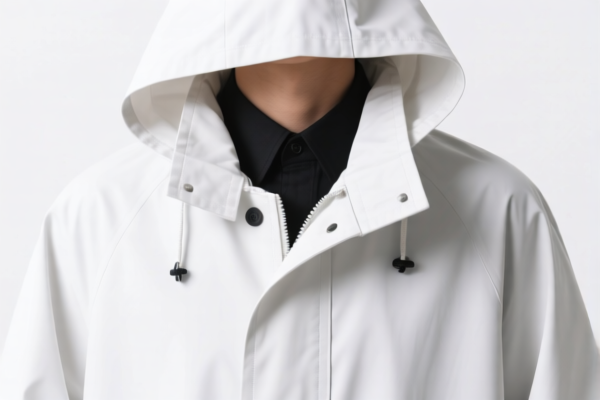
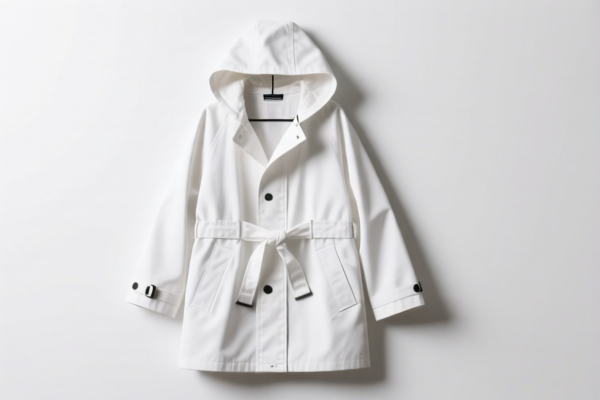
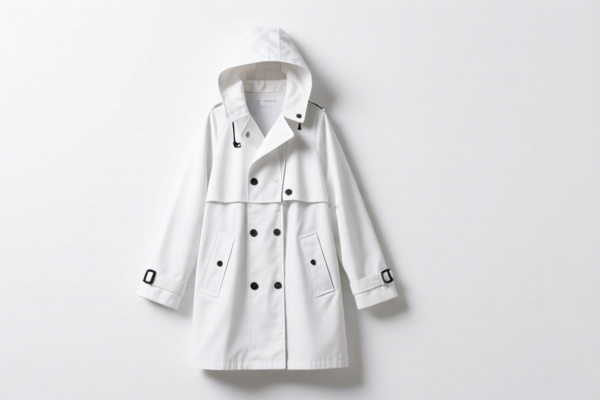

AI Analysis
🌧️ Cape Raincoat (Capes, Anoraks, and Similar Articles)
🌐 HS Code Reference & Clearance Guide | 2026 Latest Tariff Breakdown | Professional Clearance Strategy
📌 1. Product Definition: What Exactly is a "Cape Raincoat"?
A Cape Raincoat is a specific outerwear garment characterized by its cape-like shape (often open at the bottom or side slits) and waterproof function. In international trade, it is primarily classified under Chapter 62 (Articles of Apparel and Clothing Accessories, Not Knitted or Crocheted).
The exact HS Code depends on two critical factors: 1. Gender: Is it designed for Women/Girls (Chapter 62, heading 6202) or Men/Boys (Chapter 62, heading 6201)? 2. Material: Is it made from Wool/Animal Hair or Artificial Fibers (e.g., Polyester, Nylon)?
⚠️ Key Classification Points:
- Shape: "Cape morphology" (斗篷形态) is explicitly mentioned in customs rulings. It must not be confused with standard jackets.
- Function: "Raincoat" implies waterproof functionality (防水功能). If it lacks this, it may not qualify for specific waterproof subheadings.
- Material: Determining the fiber content is the biggest hurdle in classification.
📦 2. HS Code Classification Details (2026 Latest Tariff Authority)
Based on the provided data, here are the 5 possible HS Codes with their specific tax structures:
| HS Code | Product Description & Material Inference | Total Tax Rate | Tax Breakdown |
|---|---|---|---|
| 6202.20.11.10 | Women’s/Girl’s Capes: Shape matches, Material Unspecified (Tentative Outerwear). | 41¢/kg + 16.3% + 17.5% | Base: 41¢/kg + 16.3% Add-on: 7.5% Section 122: 10% |
| 6202.20.11.20 | Women’s/Girl’s Capes: Shape matches, Material Inferred as Wool/Fine Animal Hair. | 41¢/kg + 16.3% + 17.5% | Base: 41¢/kg + 16.3% Add-on: 7.5% Section 122: 10% |
| 6201.20.11.10 | Men’s/Boys’ Capes: Shape & Use match, Material Inferred as Wool/Fine Animal Hair. | 41¢/kg + 16.3% + 17.5% | Base: 41¢/kg + 16.3% Add-on: 7.5% Section 122: 10% |
| 6201.20.11.20 | Men’s/Boys’ Capes: Shape matches, Material Unconfirmed (General Apparel Category). | 41¢/kg + 16.3% + 17.5% | Base: 41¢/kg + 16.3% Add-on: 7.5% Section 122: 10% |
| 6210.50.35.00 | Raincoats (Artificial Fibers): Shape matches, Material Inferred as Artificial Fibers, Waterproof Function Confirmed. | 13.8% | Base: 3.8% Add-on: 0.0% Section 122: 10% |
🔍 Critical Observation:
- The Wool/Fine Animal Hair categories (6202.20.11.x and 6201.20.11.x) carry a Complex High Tax:41¢/kg + 16.3% + 7.5% + 10%.
- The Artificial Fiber Waterproof category (6210.50.35.00) has a Simpler Low Tax:3.8% + 10% = 13.8%(No specific $/kg charge mentioned, just ad valorem).
💰 3. 2026 Latest Tariff Rate Detailed Explanation
✅ Applicable Country: United States (US)
✅ Origin: China (CN) (Inferred from Section 122 and Add-on Tariffs)
🎯 1. High-Tariff Path: Wool / Fine Animal Hair (HS 6202.20.11.x & 6201.20.11.x)
If the raincoat is made of wool or fine animal hair, or if the material is unconfirmed, it falls into this high-cost bracket.
| Item | Content |
|---|---|
| Base Tariff | 41¢/kg + 16.3% (Ad Valorem) |
| Add-on Tariff | +7.5% |
| Section 122 Tariff | +10% |
| Total Effective Rate | Complex Calculation: (Weight × 0.41) + (CIF Value × 16.3%) + (CIF Value × 7.5%) + (CIF Value × 10%) |
| Total Percentage | 16.3% + 7.5% + 10% = 33.8% (Ad Valorem) + 41¢/kg |
| Legal Basis | Standard HTS + Section 122 (USMCA/CUSMA related tariffs often applied to specific textile categories) |
📌 Explanation:
- 41¢/kg: A specific duty applied per kilogram of wool/fine animal hair apparel.
- 16.3%: The standard ad valorem duty for this subheading.
- 7.5% Add-on: Likely a specific trade remedy or historical add-on tariff for certain apparel origins.
- Section 122: A specific US tariff provision (often related to Mexico/Canada relations or specific textile rules) adding 10%.
- Warning: This structure is very expensive for bulky items due to the41¢/kgcharge.
🎯 2. Low-Tariff Path: Artificial Fibers (HS 6210.50.35.00)
If the raincoat is made of artificial fibers (e.g., polyester, nylon) and has proven waterproof functionality, it qualifies for a significantly lower rate.
| Item | Content |
|---|---|
| Base Tariff | 3.8% (Ad Valorem) |
| Add-on Tariff | 0.0% |
| Section 122 Tariff | +10% |
| Total Effective Rate | 3.8% + 10% = 13.8% |
| Specific Duty | None (No $/kg charge) |
| Legal Basis | HTS 6210.50.35.00 (Articles cut and sewn from fabrics of heading 5602, 5603, 5903, 5906, or 5911) |
📌 Advantage:
- No $/kg charge: Cost-effective for heavy or bulky capes.
- Lower Percentage: 13.8% vs. ~33.8% (plus weight charge).
- Requirement: Must prove waterproof function and artificial fiber material.
🛠️ 4. Customs Clearance Practical Advice
✅ 1. Preparation Checklist (Non-negotiable)
| Document | Required | Explanation |
|---|---|---|
| ✅ Product Photos | ✔️ | Must clearly show Cape Shape (斗篷形态). Standard jacket photos will cause misclassification. |
| ✅ Material Composition Label | ✔️ | Must explicitly state "100% Polyester" (or other artificial fiber) to qualify for 6210.50.35.00. If it says "Wool," you pay the high tax. |
| ✅ Waterproof Test Report | ✔️ | Critical for 6210.50.35.00. Must prove water resistance (e.g., AATCC 22, ISO 811). Without this, customs may reject the 6210 classification. |
| ✅ Commercial Invoice | ✔️ | Description must include: "Cape-style Raincoat, [Gender], [Material], Waterproof." |
| ✅ Packing List | ✔️ | Include Net Weight (for the 41¢/kg calculation if misclassified). |
✅ 2. Declaration Strategy (Key Mantra)
🔥 "Shape First, Material Second, Waterproof Key!"
| Scenario | Correct HS Code | Risk if Wrong |
|---|---|---|
| Artificial Fiber + Waterproof | 6210.50.35.00 |
Best Choice. Low tax (13.8%), no $/kg. |
| Wool/Fine Animal Hair | 6202.20.11.10/20 or 6201.20.11.10/20 |
High Tax. 41¢/kg + 33.8%. |
| Material Unknown | 6202.20.11.10 or 6201.20.11.20 |
High Tax. Customs may default to wool/fine hair if not proven otherwise. |
| Not Waterproof | 6210 might be rejected. | Could be reclassified to general outerwear, potentially higher tax. |
✅ 3. Special Handling Tips
| Situation | Recommendation |
|---|---|
| OEM Custom Cape | Provide design specs showing the cape cut (no sleeves or side slits). |
| Mixed Materials | If it has wool trim but main body is polyester, declare Main Body Material. If wool >50%, declare Wool. |
| Sample vs. Bulk | Ensure bulk production material matches the test report used for clearance. |
| Section 122 Applicability | Verify if the product origin qualifies for Section 122 (often applies to specific textile imports). |
🌍 5. Global Market Clearance Comparison (2026)
| Country/Region | Recommended HS Code | Est. Tariff | Notes |
|---|---|---|---|
| 🇺🇸 USA | 6210.50.35.00 (If Artificial) |
13.8% | Lowest Cost. Must prove waterproof. |
| 🇺🇸 USA | 6202/6201 (If Wool) |
~33.8% + 41¢/kg | High Cost. Avoid if possible. |
| 🇪🇺 EU | 6202/6201 (General) |
~12% + VAT | VAT varies by country (19-27%). |
| 🇨🇳 China | 6202/6201 (General) |
~10-15% | Import VAT 13%. |
| 🇯🇵 Japan | 6202/6201 (General) |
~10-15% | Consumption Tax 10%. |
📌 Conclusion:
- USA is the most complex due to Section 122 and specific duties.
- Artificial Fiber + Waterproof is the Golden Key to lower US tariffs (13.8% vs. 33.8%+).
- Wool/Auto Hair carries a heavy weight-based penalty (41¢/kg).
📌 6. Common Mistakes & Pitfalls (Lessons Learned)
❌ Mistake 1: Declaring as "Jacket" instead of "Cape"
👉 Consequence: Customs may reject the HS Code if shape doesn't match. Use "Cape" in description.
❌ Mistake 2: Missing Waterproof Test Report for 6210.50.35.00
👉 Consequence: Customs reclassifies to higher tariff (e.g., general outerwear), leading to back taxes + penalties.
❌ Mistake 3: Not specifying Material Composition
👉 Consequence: Customs defaults to Wool/Fine Animal Hair classification (6202.20.11.20), applying the highest tax (41¢/kg + 16.3% + 17.5%).
❌ Mistake 4: Ignoring Section 122 (10%)
👉 Consequence: Underestimating total landed cost. Remember, 10% is added to ALL listed HS Codes in the data.
✅ Correct Declaration Example:
"Women’s Cape-Style Raincoat, 100% Polyester, Waterproof, Model XYZ, Section 122 Applicable"
🎯 7. Conclusion: Professional Declaration Saves Money!
🎯 Remember the Mantra:
🔹 "Artificial + Waterproof = 13.8% (Best!)"
🔹 "Wool = 41¢/kg + 33.8% (Expensive!)"
🔹 "Unspecified Material = High Risk (Default to Wool Tax)"
📌 Pro Tip:
- Always provide a Waterproof Test Report to qualify for 6210.50.35.00.
- Clearly state "Cape Shape" to avoid confusion with jackets.
- Confirm Material Composition on labels and invoices to avoid default wool classification.
📣 Immediate Action:
📞 Contact your broker with:
1. Product Photos (Show cape shape)
2. Material Label (Proof of artificial fiber)
3. Waterproof Test Report
🚀 Goal: Secure HS Code 6210.50.35.00 for 13.8% tax instead of the higher wool-based rates.
✨ Professional Clearance, Start with Accurate Classification!
💼 Every Cent Counts – Don’t Let Misclassification Eat Your Profit!
Customer Reviews
About HS Code Classification
The Harmonized System (HS) is an internationally standardized nomenclature developed by the World Customs Organization (WCO) to classify traded products. Over 200 countries use the HS system as the basis for customs tariffs, trade statistics, and import/export regulations.
Each HS code follows a hierarchical structure:
- Chapter (2 digits) — Broad category of goods (e.g., Chapter 84: Machinery and Mechanical Appliances)
- Heading (4 digits) — More specific grouping within the chapter
- Subheading (6 digits) — Internationally standardized breakdown, used by all WCO member countries
- National subdivisions (8-10 digits) — Country-specific extensions for further classification, such as US HTSUS 10-digit codes
Correct HS code classification is essential for smooth customs clearance, accurate duty payment, and compliance with trade regulations. Misclassification can lead to customs delays, overpayment of duties, or penalties.
When importing from CN to US, the applicable tariff rates may include:
- Most-Favored-Nation (MFN) rate — The standard duty rate applied to WTO members
- General rate — Applied to countries without trade agreements
- Trade remedy duties — Additional tariffs such as Section 301 (anti-dumping), Section 232 (national security), or countervailing duties
The information provided on this page is for reference purposes only. For official classification, please consult with your local customs authority or a licensed customs broker.