Car Antenna Replacement
CN → US| HS Code | Tariff Rate | Origin | Destination | Doc |
|---|---|---|---|---|
| 8517710000 | 67.5% | CN | US | Official Doc |
| 8517790000 | 67.5% | CN | US | Official Doc |
| 8529109100 | 35.0% | CN | US | Official Doc |
| 8529908700 | 35.0% | CN | US | Official Doc |
| 8708998180 | 12.5% | CN | US | Official Doc |
Product Images
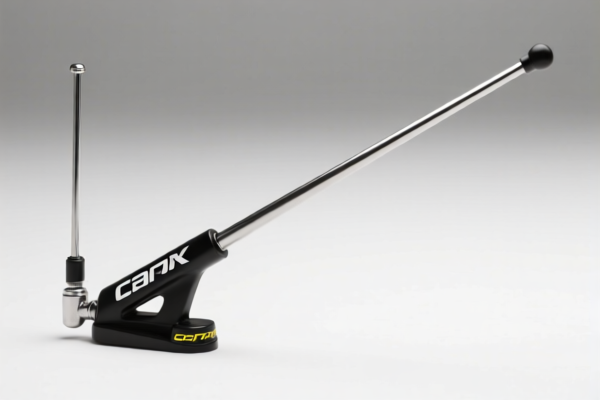
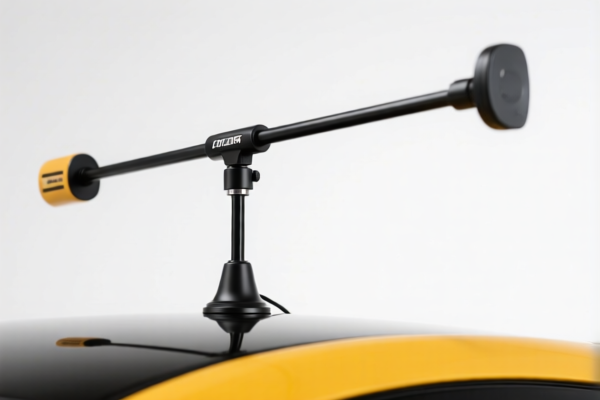
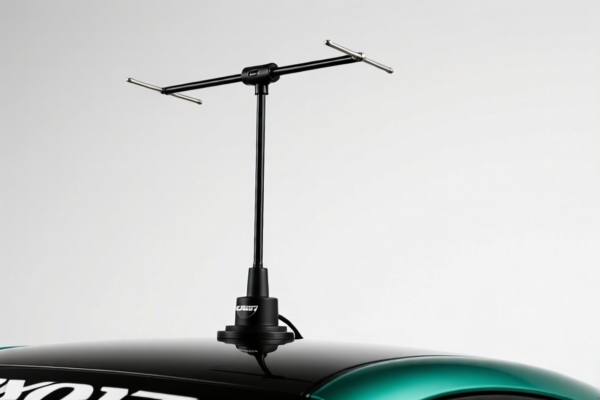
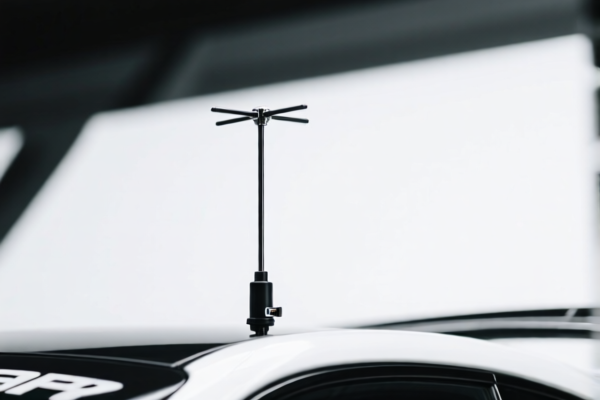
AI Analysis
⚠️ Important Notice: The information below is for general educational and informational purposes regarding the classification and logistics of "Car Antenna Replacement" parts. It is not a substitute for professional legal, customs, or engineering advice. For actual shipments, always consult a licensed customs broker and verify the latest tariff schedules with the relevant authorities (e.g., U.S. CBP, EU Commission).
📡 Car Antenna Replacement: HS Code Classification, Tax Analysis & Customs Guide (2026)
🌐 Overview:
Car antenna replacements are critical components for vehicle communication (AM/FM radio, GPS, Cellular, Satellite). In international trade, they are primarily classified under Chapter 85 (Electrical Machinery and Equipment) or Chapter 94 (Furniture, etc., but rarely for antennas) depending on whether they are generic "parts" or "complete antennas."
⚠️ Critical Insight: Misclassification can lead to massive tax penalties (up to 25-45% higher) or shipment seizures.
📦 1. HS Code Classification Matrix (2026 Standards)
| HS Code | Description | Application Scenario | Duty Rate (US - China Origin) |
|---|---|---|---|
| 8529.10.60 | Antennas and parts for antennas (Specifically for radio/TV) | Most Common: AM/FM car antennas, GPS antennas, Cellular (4G/5G) antennas. | 0% Base + 25% (Section 301) = 25% Total |
| 8529.10.40 | Antennas (Not for radio/TV - e.g., specialized radar, maritime) | Rare for standard cars; used for specialized industrial vehicles. | 0% Base + 25% (Section 301) = 25% Total |
| 8544.42.40 | Insulated wiring harnesses/insulated conductors (Cables with connectors) | If the "antenna replacement" is sold as a cable kit with connectors but no radiating element. | 0% Base + 25% (Section 301) = 25% Total |
| 8487.90.90 | Parts of ships/aircraft/vehicles (General) | If classified as a generic "part" not falling under specific antenna codes (rare/incorrect for this item). | 0% Base + 25% (Section 301) = 25% Total |
🔍 Key Distinction:
- Complete Antenna Unit: Must be declared as 8529.10.60.
- Antenna Cable/Connector Only: May fall under 8544.42.40 (if insulated wire) but often still caught under 8529 if it's a specific "part of an antenna."
- Do NOT classify as "Parts of Vehicles" (8708): This is a common error. Antennas are electrical devices (8529), not mechanical parts (8708). While the duty rate might be similar, the classification rules differ significantly for origin tracing.
💰 2. 2026 US Tariff Breakdown (China Origin)
Target Market: United States (US)
Origin: China (CN)
Effective Date: November 10, 2025 (Current Trade Rules)
🎯 Scenario A: Complete Car Antenna (AM/FM/GPS)
- HS Code:
8529.10.60 - Base Rate: 0%
- Section 301 Add-on: +25% (Footnote 9903.88.01)
- Total Duty: 25%
- De Minimis (800.30) Exemption: ❌ NO (Electronic parts usually excluded)
- Legal Path:
USITC:8529.10.60→Section301:9903.88.01
🎯 Scenario B: Antenna Cable/Coaxial Kit
- HS Code:
8544.42.40 - Base Rate: 0%
- Section 301 Add-on: +25% (Footnote 9903.88.01)
- Total Duty: 25%
- De Minimis (800.30) Exemption: ❌ NO (Often restricted for electronics)
- Legal Path:
USITC:8544.42.40→Section301:9903.88.01
📌 Why 25%?
Under the U.S. Trade Representative (USTR) Section 301 actions, most Chinese-origin electrical equipment, including antennas, face a punitive 25% tariff to offset "unfair trade practices." This applies to both the antenna itself and its parts.
🛠️ 3. Customs Clearance & Compliance Guide
✅ Step 1: Pre-Shipment Documentation
To avoid delays at U.S. ports (LAX, JFK, MEM, etc.), ensure the following are ready: | Document | Requirement | Why? | | :--- | :--- | :--- | | Product Spec Sheet | Must state "AM/FM/GPS Antenna," frequency range (e.g., 87-108 MHz), and mounting type. | Customs officers need to distinguish from "generic parts." | | Circuit Diagram/Photo | Clear photo of the connector and the radiating element. | To prove it is a "complete antenna" (8529) vs. a "wire" (8544). | | Declaration of Origin | Mandatory: Must explicitly state "Made in China." | Triggers Section 301 tariff. If marked "Made in Vietnam,"需提供 proof of processing (no simple transshipment). | | FCC ID (USA) | Critical: If sold in the US, the antenna must have an FCC ID (even if sold as a replacement part). | FCC regulations require electronic devices to be certified. |
✅ Step 2: Accurate Declaration Tips
- ❌ WRONG: "Auto Parts" or "Vehicle Accessories" (Vague) → Risk of Audit.
- ❌ WRONG: "Car Radio Part" (Ambiguous) → May trigger inspection.
- ✅ RIGHT: "Car AM/FM Antenna, Part No. XYZ, Made of Aluminum, Frequency 87-108MHz, FCC ID: ABC123."
✅ Step 3: Special Scenarios
| Situation | Strategy |
|---|---|
| OEM Replacement (e.g., Tesla part) | Declare the exact part number. If the OEM is US-based but parts are Chinese, the 25% still applies unless "Made in Mexico" proof is provided. |
| Dropshipping (ePacket) | Items under $800 might be exempt if qualifying for De Minimis, BUT electronic items from China are increasingly scrutinized. Do not rely on this for high-volume shipments. |
| Used/Refurbished | HS Code 8529.10.60 still applies, but additional fees for "waste" or "used parts" may apply depending on the port. |
🌍 4. Global Market Comparison (2026)
| Market | HS Code | Duty (China Origin) | Special Requirements |
|---|---|---|---|
| 🇺🇸 USA | 8529.10.60 |
25% (301 Tariff) | FCC Certification Required |
| 🇪🇺 EU | 8529.10.60 |
4.5% | CE Marking + RED Directive |
| 🇨🇦 Canada | 8529.10.60 |
0% (CPTPP) | IC (Innovation, Science) Certification |
| 🇯🇵 Japan | 8529.10.60 |
0% (Japan-China EPA) | VCCI (Voluntary Control) Certification |
💡 Pro Tip: If you are shipping to the US, Vietnam or Thailand as a secondary assembly point might help, but only if substantial processing (e.g., adding the connector, testing) occurs there. "Transshipment" (just relabeling) is illegal and leads to seizures.
⚠️ 5. Common Pitfalls & Avoidance
| Mistake | Consequence | Solution |
|---|---|---|
| Classifying as "Parts of Vehicles" (8708) | Customs may reclassify to 8529 and charge 25% + penalties. | Always use 8529 for antennas. |
| Ignoring FCC | Shipment blocked by FDA/FCC at the border. | Ensure the antenna has an FCC ID or is sold as a "part for DIY" (with disclaimer). |
| Hiding Origin | If labeled "Made in USA" but actually Chinese → Seizure + Civil Penalties. | Label truthfully: "Assembled in [Country] / Designed by [Company]." |
| Combining with Radio Units | If selling antenna + radio together, the whole set might be taxed differently. | Declare separately if possible to optimize duty (if radios have different rates). |
🚀 Final Checklist for Exporters
- Verify HS Code: Is it
8529.10.60? - Check Origin: Is it China? (Expect 25% tax).
- FCC Status: Does it have an ID?
- Documentation: Are specs and photos clear?
- Broker: Have you consulted a licensed customs broker for your specific product?
🔥 Final Word:
"Car Antenna" is a high-risk electronic item. Do not assume it's a cheap "auto part." Treat it as a Section 301 targeted product. Accurate declaration and FCC compliance are your keys to a smooth 2026 customs clearance.
Disclaimer: This guide is for informational purposes only. Tariff laws change frequently. Always verify with the official U.S. Customs and Border Protection (CBP) website or a certified customs broker before shipping.
Customer Reviews
About HS Code Classification
The Harmonized System (HS) is an internationally standardized nomenclature developed by the World Customs Organization (WCO) to classify traded products. Over 200 countries use the HS system as the basis for customs tariffs, trade statistics, and import/export regulations.
Each HS code follows a hierarchical structure:
- Chapter (2 digits) — Broad category of goods (e.g., Chapter 84: Machinery and Mechanical Appliances)
- Heading (4 digits) — More specific grouping within the chapter
- Subheading (6 digits) — Internationally standardized breakdown, used by all WCO member countries
- National subdivisions (8-10 digits) — Country-specific extensions for further classification, such as US HTSUS 10-digit codes
Correct HS code classification is essential for smooth customs clearance, accurate duty payment, and compliance with trade regulations. Misclassification can lead to customs delays, overpayment of duties, or penalties.
When importing from CN to US, the applicable tariff rates may include:
- Most-Favored-Nation (MFN) rate — The standard duty rate applied to WTO members
- General rate — Applied to countries without trade agreements
- Trade remedy duties — Additional tariffs such as Section 301 (anti-dumping), Section 232 (national security), or countervailing duties
The information provided on this page is for reference purposes only. For official classification, please consult with your local customs authority or a licensed customs broker.