Car Bag
CN → US| HS Code | Tariff Rate | Origin | Destination | Doc |
|---|---|---|---|---|
| 3923900080 | 38.0% | CN | US | Official Doc |
| 4202923120 | 52.6% | CN | US | Official Doc |
| 6307909891 | 24.5% | CN | US | Official Doc |
| 4202923131 | 52.6% | CN | US | Official Doc |
| 6307909875 | 24.5% | CN | US | Official Doc |
Product Images
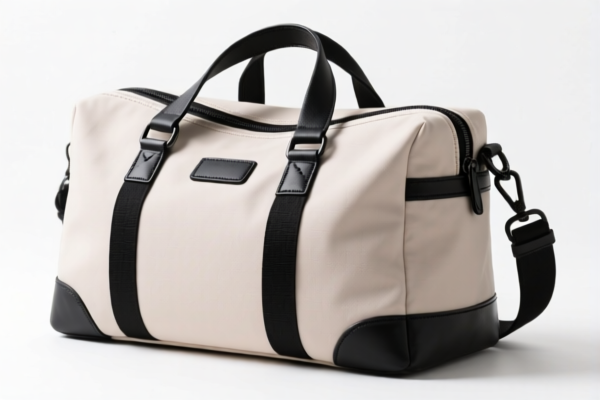
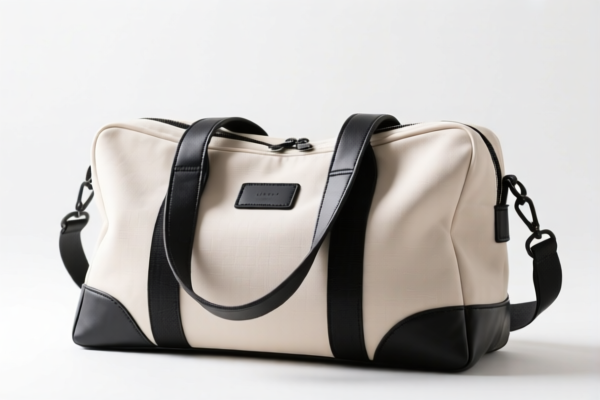
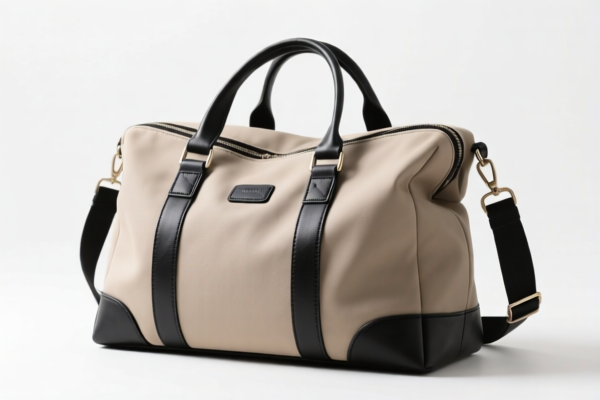
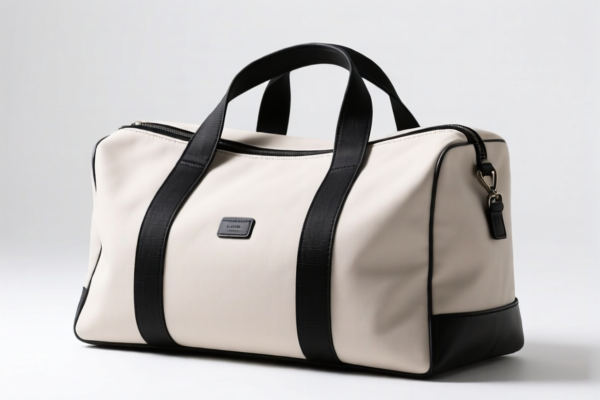
AI Analysis
🚗 Car Bag (Travel & Storage Solutions)
🌐 HS Code Reference & Customs Clearance Guide | 2026 Latest Tariff Analysis | Professional Clearance Strategy
📌 I. Product Definition & Classification: What Exactly is a "Car Bag"?
In the context of international trade, "Car Bag" is a broad term that often causes classification ambiguity. It generally refers to storage solutions used for organizing items within a vehicle (trunk, seat pockets) or travel organizers designed to fit in a car. The crucial factor for customs classification is Material and Function.
Key Distinction Logic: 1. Packaging/Container vs. Personal Accessory: Is it a protective pouch for goods (plastic/woven) or a fashion/lifestyle item (fabric/leather)? 2. Material Composition: * If made primarily of plastic sheets or woven synthetic fibers used for containment → Often classified under Chapter 39 (Plastics) or Chapter 63 (Other Made-up Textile Articles). * If made primarily of textile materials (nylon, polyester, canvas) and structured like a bag → Often classified under Chapter 42 (Articles of Leather; Saddle Harness; Travel Goods).
⚠️ Critical Note for "Car Bag":
- If it is a simple plastic organizer or woven storage sack → HS 3923 / 6307.
- If it is a structured fabric organizer with handles, zippers, and compartments resembling a travel bag → HS 4202.
📦 II. HS Code Classification Details (2026 Latest Tariff Authority对照)
Below are the specific HS Codes derived from the provided data, categorized by material inference and functional summary.
| HS Code | Product Description & Inference | Material Inference | Tax Profile (China to US) |
|---|---|---|---|
3923.90.00.80 |
Packaging/Container Category: Travel storage bag considered a general packaging item or container. | Plastic or Synthetic Fiber | Total: 38.0% |
4202.92.31.20 |
Travel/Luggage Category: Travel-like bag, structured as a personal accessory. | Textile Material or Plastic Film | Total: 52.6% |
6307.90.98.91 |
Finished Consumer Good (Textile): Other made-up textile articles, classified as a finished consumer product. | Textile Material | Total: 24.5% |
4202.92.31.31 |
Travel Bag Category: Specifically identified as a travel bag with textile outer surface. | Textile Material | Total: 52.6% |
6307.90.98.75 |
Finished Consumer Good (Fallback): Other made-up articles, classified via "catch-all" logic for textiles. | Textile Material | Total: 24.5% |
🔍 Key Insight:
- The highest tax burden (52.6%) applies to bags classified under Chapter 42 (Travel Goods), specifically if they are deemed "structured" luggage items.
- The lowest tax burden (24.5%) applies to bags classified under Chapter 63 (Other Made-up Textile Articles), often interpreted as general household or automotive storage accessories rather than "travel goods."
- The 38.0% rate under Chapter 39 suggests a plastic-heavy or composite packaging classification.
💰 III. 2026 Latest Tariff Rate Details (Including Additional Taxes)
✅ Applicable Country: United States (US)
✅ Origin: China (CN)
✅ Effective Date: Current 2026 Tariff Structure (Including Section 301 & IEEPA)
🎯 1. 3923.90.00.80 – Plastic/Synthetic Packaging Bag
| Item | Detail |
|---|---|
| Base Tariff | 3.0% (Ad Valorem) |
| Section 301 Additional Tariff | 25.0% (Trade Remedy Duty) |
| IEEPA Additional Tariff | 10.0% (Targeting China/HK origin goods) |
| Total Rate | 38.0% |
| Calculation Basis | CIF Value × 38.0% |
| De Minimis Eligibility | ❌ No (High total rate usually blocks de minimis; verify specific carrier policies) |
| Legal Path | USITC:3923.90.00.80 → 301:Footnote 9903.88.01 → IEEPA:9903.01.25 |
📌 Explanation:
- This classification treats the car bag as a plastic container or packaging material.
- While the base duty is low (3%), the heavy附加税 (35% combined) makes it expensive.
- Ideal if the bag is primarily a plastic organizer or woven plastic sack.
🎯 2. 4202.92.31.20 & 4202.92.31.31 – Textile/Plastic Travel Bags
| Item | Detail |
|---|---|
| Base Tariff | 17.6% (Ad Valorem) |
| Section 301 Additional Tariff | 25.0% (Trade Remedy Duty) |
| IEEPA Additional Tariff | 10.0% (Targeting China/HK origin goods) |
| Total Rate | 52.6% |
| Calculation Basis | CIF Value × 52.6% |
| De Minimis Eligibility | ❌ No (High rate applies) |
| Legal Path | USITC:4202.92.31.xx → 301:Footnote 9903.88.01 → IEEPA:9903.01.25 |
📌 Explanation:
- These codes fall under Chapter 42 (Travel Goods).
- The high base tariff (17.6%) reflects the duty on structured textile/leather-like bags.
- Warning: If your "Car Bag" is structured, has handles, and is marketed as a "Travel Organizer," customs may insist on this classification, leading to the highest cost.
🎯 3. 6307.90.98.91 & 6307.90.98.75 – Other Made-up Textile Articles
| Item | Detail |
|---|---|
| Base Tariff | 7.0% (Ad Valorem) |
| Section 301 Additional Tariff | 7.5% (Reduced Section 301 rate for some textile accessories) |
| IEEPA Additional Tariff | 10.0% (Targeting China/HK origin goods) |
| Total Rate | 24.5% |
| Calculation Basis | CIF Value × 24.5% |
| De Minimis Eligibility | ❌ No (Still subject to additional duties) |
| Legal Path | USITC:6307.90.98.xx → 301:Footnote 9903.88.01 (Special Sub-category) → IEEPA:9903.01.25 |
📌 Explanation:
- These codes fall under Chapter 63 (Other Made-up Textile Articles).
- This is the most cost-effective classification for textile car bags.
- Condition: The product must be classified as a "finished consumer good" or "accessory" rather than a "travel bag." It often applies to seat back organizers, trunk mats with pockets, or soft storage sacks that do not mimic the form factor of luggage.
🛠️ IV. Customs Clearance Practical Advice (Pitfall Avoidance Guide)
✅ 1. Preparation Checklist (Non-negotiable)
| Document | Required | Purpose |
|---|---|---|
| ✅ Product Specifications | ✔️ | Must explicitly state material composition (e.g., "100% Polyester," "PVC Plastic"). |
| ✅ Photos | ✔️ | Clear images of the bag from all angles. Does it look like a suitcase (4202) or a storage sack (6307)? |
| ✅ Commercial Invoice | ✔️ | Describe as "Automotive Storage Organizer" or "Car Trunk Bag," NOT "Travel Luggage." |
| ✅ Origin Certificate | ✔️ | Proves Chinese origin, triggering specific IEEPA tariffs. |
| ✅ Material Test Report | ✔️ | Optional but helpful if disputed. Proves it's not leather or structured luggage material. |
✅ 2. Classification Strategy (The "Save Money" Logic)
🔥 Core Mantra:
"If it holds stuff, call it Storage. If it looks like a suitcase, it’s Luggage. Storage is cheaper."
| Scenario | Recommended HS Code | Tax Rate | Why? |
|---|---|---|---|
| Soft, unstructured bag (e.g., seat back organizer, foldable trunk bin) | 6307.90.98.91 / 6307.90.98.75 |
24.5% | Classified as "Other Made-up Textile Article." Lower base duty (7%). |
| Plastic/Woven Plastic Bag (e.g., shoe bag, plastic organizer) | 3923.90.00.80 |
38.0% | Classified as "Plastic Packaging/Container." Base duty is low (3%), but 301+IEEPA add 35%. |
| Structured Bag (e.g., hard-sided, handles, zippers, looks like a briefcase/tote) | 4202.92.31.20 / 4202.92.31.31 |
52.6% | Classified as "Travel Bag." High base duty (17.6%) + full additional taxes. Avoid if possible. |
✅ 3. Special Handling Tips
| Situation | Recommendation |
|---|---|
| Mixed Materials | If the bag is 50% plastic, 50% textile, Customs may classify based on essential character. For storage, they often lean towards 6307 (Textile) or 3923 (Plastic) rather than 4202. |
| Marketing Claims | Do NOT use terms like "Travel," "Luggage," or "Carry-on" in your invoice or marketing. Use "Car Organizers," "Trunk Storage," "Auto Accessories." |
| Bundle Sales | If selling with a car mat, ensure the invoice separates the values. If bundled as a single "Kit," the entire kit may be classified under the highest duty item. |
| De Minimis ($800) | With total rates of 24.5% to 52.6%, de minimis is generally not available for China-origin goods due to Section 301 and IEEPA exclusions. Plan for full duty payment. |
🌍 V. Global Market Comparison (2026 Update)
| Market | Recommended HS Code | Est. Total Tax | Note |
|---|---|---|---|
| 🇺🇸 USA | 6307.90.98.91 |
24.5% | Best option for textile car bags. Avoid 4202. |
| 🇨🇳 China | 6307.90.98.91 |
~7-10% | Lower duty, but focus on US export strategy. |
| 🇪🇺 EU | 6307.90.98 |
~4-6% | No Section 301/IEEPA equivalent. Generally lower tariffs. |
| 🇨🇦 Canada | 6307.90.98.00 |
~0-5% (MFN) | Check for CUSMA rules if sourced from US/Mexico. |
📌 Conclusion:
- The US market is the most challenging due to the layered tariffs (Base + 301 + IEEPA).
- Classification Strategy is key: Push for6307(Textile Storage) rather than4202(Travel Bag) to save ~28% in taxes.
📌 VI. Common Errors & Pitfalls (Blood & Tears Lessons)
❌ Mistake 1: Labeling a simple fabric trunk organizer as "Travel Bag."
👉 Consequence: Customs may reclassify to 4202 → Tax jumps from 24.5% to 52.6%.
❌ Mistake 2: Declaring "Car Bag" without material details.
👉 Consequence: Customs will apply the highest reasonable duty or hold the shipment for inspection.
❌ Mistake 3: Ignoring IEEPA 10% tariff.
👉 Consequence: Even if base duty is low, forgetting to account for the 10% IEEPA tariff leads to underpayment penalties.
❌ Mistake 4: Using "Plastic" description for a textile bag.
👉 Consequence: Misdeclaration of material can lead to fraud allegations and seizure.
✅ Correct Declaration Example:
"Automotive Storage Organizer, Made of Polyester Textile, for Trunk/Seat Use, Model #XYZ, Origin: China"
🎯 VII. Conclusion: Smart Classification, Higher Margins!
🎯 Remember the Mantra:
🔹 "Storage > Luggage. Textile > Plastic. 24.5% < 52.6%."
🔹 "Don't let your bag become a 'Travel Good'—keep it 'Other Made-Up Article' to save thousands!"
📌 Pro Tip:
If your product is unstructured, soft, and purely functional (no rigid handles, no fashion branding), explicitly argue for HS 6307 in your commercial invoice and provide photos proving it lacks the characteristics of a "travel bag" (Chapter 42). This is your strongest lever to reduce duty from 52.6% to 24.5%.
📣 Immediate Action Required:
📞 Consult a Customs Broker for a Pre-Ruling (if volume is high).
📝 Update Product Listings to emphasize "Storage/Organizer" over "Travel."
🚀 Audit Your Supply Chain to ensure material tags match the HS Code declaration (Textile vs. Plastic).
✨ Precision in Classification is Profit in Your Pocket!
💼 Don't pay 52.6% when you could be paying 24.5%.
Customer Reviews
About HS Code Classification
The Harmonized System (HS) is an internationally standardized nomenclature developed by the World Customs Organization (WCO) to classify traded products. Over 200 countries use the HS system as the basis for customs tariffs, trade statistics, and import/export regulations.
Each HS code follows a hierarchical structure:
- Chapter (2 digits) — Broad category of goods (e.g., Chapter 84: Machinery and Mechanical Appliances)
- Heading (4 digits) — More specific grouping within the chapter
- Subheading (6 digits) — Internationally standardized breakdown, used by all WCO member countries
- National subdivisions (8-10 digits) — Country-specific extensions for further classification, such as US HTSUS 10-digit codes
Correct HS code classification is essential for smooth customs clearance, accurate duty payment, and compliance with trade regulations. Misclassification can lead to customs delays, overpayment of duties, or penalties.
When importing from CN to US, the applicable tariff rates may include:
- Most-Favored-Nation (MFN) rate — The standard duty rate applied to WTO members
- General rate — Applied to countries without trade agreements
- Trade remedy duties — Additional tariffs such as Section 301 (anti-dumping), Section 232 (national security), or countervailing duties
The information provided on this page is for reference purposes only. For official classification, please consult with your local customs authority or a licensed customs broker.