Car Body
CN → US| HS Code | Tariff Rate | Origin | Destination | Doc |
|---|---|---|---|---|
| 8714100050 | 17.5% | CN | US | Official Doc |
| 8707100020 | 37.5% | CN | US | Official Doc |
| 8708295160 | 0.0% | CN | US | Official Doc |
| 8714998000 | 27.5% | CN | US | Official Doc |
| 8714998000 | 27.5% | CN | US | Official Doc |
Product Images
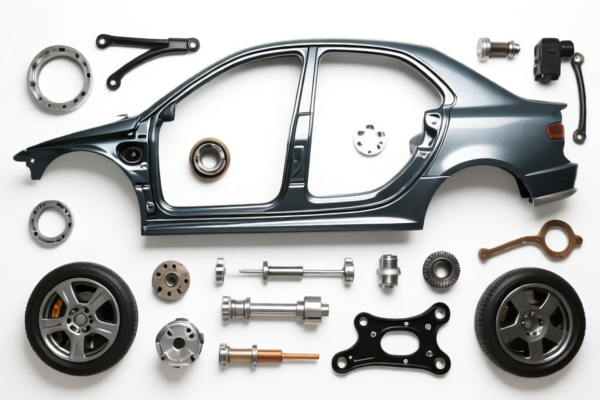
AI Analysis
🚗 Car Body (Chassis/Superstructure)
🌐 HS Code Reference & Customs Clearance Guide | 2026 Latest Tariff Analysis | Professional Level Strategy
📌 I. Product Definition & Classification: What Exactly Is a "Car Body"?
The term "Car Body" is a broad designation that can refer to different structural components depending on the vehicle type and manufacturing stage. In international trade, it is critical to distinguish between:
- Complete Body Assemblies (e.g., Passenger Car Bodies): Fully formed structures including the cabin, hood, trunk, and doors, intended for passenger vehicles.
- Motorcycle/Other Vehicle Body Parts: Structural frames or shells for motorcycles, bicycles, or other vehicles, often treated as "parts and accessories."
- Body Parts/Accessories: Specific sub-components like doors, hoods, or fenders that form part of the body but are not the entire assembly.
⚠️ Key Distinction Point:
- If the item is a complete body structure for a passenger car → It falls under Chapter 87 (Vehicles), specifically 8707.
- If the item is a body structure or part for a motorcycle → It falls under Chapter 87, specifically 8714 (Parts and Accessories).
- If the item is a body part/panel (like a door or fender) → It may fall under 8708 (Parts and Accessories of Motor Vehicles).
📦 II. HS Code Classification Details (2026 Latest Tariff Authority Comparison)
Based on the provided data, here are the possible HS Codes for "Car Body" products, their summaries, and tax implications.
| HS Code | Product Description & Summary | Applicable Scenario | Tax Rate (Total) |
|---|---|---|---|
8714.10.00.50 |
Motorcycle Body Structures: The body is considered a structural component of a motorcycle. It is classified as a part/accessory other than wheels or seats. | Motorcycle frames, motorcycle body shells (excluding wheels/seats). | 17.5% |
8707.10.00.20 |
Complete Passenger Car Bodies: The product name "Car Body" including the cab/chassis structure matches the definition in code 8707.10.00.20 for passenger car bodies. | Complete bodies for passenger cars (SUVs, sedans, etc.). | 37.5% |
8708.29.51.60 |
Body Parts & Accessories: The product name "Car Body" including the cab directly corresponds to the core use and form in the classification, falling under the category of car body parts. | Specific body parts (e.g., doors, hoods, fenders) made of steel, aluminum, or copper. | 2.5% + 85.0% |
8714.99.80.00 |
Vehicle Structural Components (General): The body is a vehicle structural component that fits the use definition of vehicle parts and accessories in the classification explanation. | General vehicle structural bodies or parts not specifically listed elsewhere (e.g., trucks, trailers, or non-passenger/motorcycle specific bodies). | 27.5% |
8714.99.80.00 |
Material-Based Vehicle Parts: The product is a vehicle structural component fitting the definition in 8714.99.80.00 for vehicle parts and accessories. Typically made of metal or composite materials. | Similar to above, emphasizing material (metal/composite) for general vehicle parts. | 27.5% |
🔍 Important Note:
- "Car Body" is ambiguous. You must determine if it is for a Passenger Car (8707), Motorcycle (8714), or a General Part (8708/8714). - 8707.10.00.20 is for complete bodies of passenger vehicles. - 8708.29.51.60 is for specific body parts (not the whole body) and attracts very high additional tariffs due to material (steel/aluminum/copper). - 8714.10.00.50 and 8714.99.80.00 are for motorcycle or general vehicle parts.
💰 III. 2026 Latest Tariff Rate Details (Including Additional Taxes, Policy Surcharges)
✅ Applicable Country: United States (US)
✅ Origin: China (CN)
✅ Effective Time: 2025/2026 (Current Trade Policy)
🎯 1. 8714.10.00.50 —— Motorcycle Body Structures
| Item | Detail |
|---|---|
| Base Tariff | 0.0% |
| Section 301 Tariff | +7.5% |
| Section 122 Tariff | +10.0% |
| Total Tariff | 17.5% |
| Calculation | CIF Value × 17.5% |
| De Minimis Exemption | ❌ Not Eligible (Due to Section 301/122) |
| Legal Basis Path | USITC:8714.10.00.50 → Section 301: 7.5% → Section 122: 10% |
📌 Explanation:
- This code applies to motorcycle bodies or structural frames. - Base tariff is 0%, but Section 301 (7.5%) and Section 122 (10%) are added. - Total 17.5% is moderate but still significant.
🎯 2. 8707.10.00.20 —— Complete Passenger Car Bodies
| Item | Detail |
|---|---|
| Base Tariff | 2.5% |
| Section 301 Tariff | +25.0% |
| Section 122 Tariff | +10.0% |
| Total Tariff | 37.5% |
| Calculation | CIF Value × 37.5% |
| De Minimis Exemption | ❌ Not Eligible |
| Legal Basis Path | USITC:8707.10.00.20 → Section 301: 25% → Section 122: 10% |
📌 Explanation:
- This code is for complete bodies of passenger cars. - Base tariff is 2.5%, but Section 301 (25%) and Section 122 (10%) are added. - Total 37.5% is high. This is a major cost driver for EV or car body imports.
🎯 3. 8708.29.51.60 —— Body Parts (Steel, Aluminum, Copper)
| Item | Detail |
|---|---|
| Base Tariff | 2.5% |
| Section 301 Tariff | +25.0% |
| Section 122 Tariff | +10.0% |
| Steel/Aluminum/Copper Surcharge | +50.0% |
| Total Tariff | 2.5% + 85.0% |
| Calculation | CIF Value × (2.5% + 85.0%) |
| De Minimis Exemption | ❌ Not Eligible |
| Legal Basis Path | USITC:8708.29.51.60 → Section 301: 25% → Section 122: 10% → Steel/Alu Surcharge: 50% |
📌 Explanation:
- This code is for body parts (like doors, hoods) made of steel, aluminum, or copper. - HUGE SURCHARGE: A 50% additional tariff applies specifically for these materials. - Total Effective Rate: 87.5% (2.5% base + 85% additional). - Warning: This is the most expensive classification. If you are importing body panels, expect massive duties.
🎯 4. 8714.99.80.00 —— General Vehicle Parts/Structures
| Item | Detail |
|---|---|
| Base Tariff | 10.0% |
| Section 301 Tariff | +7.5% |
| Section 122 Tariff | +10.0% |
| Total Tariff | 27.5% |
| Calculation | CIF Value × 27.5% |
| De Minimis Exemption | ❌ Not Eligible |
| Legal Basis Path | USITC:8714.99.80.00 → Section 301: 7.5% → Section 122: 10% |
📌 Explanation:
- This code applies to general vehicle parts or structures not covered by more specific codes (e.g., motorcycle frames, truck bodies, or composite bodies). - Base tariff is 10%, plus Section 301 (7.5%) and Section 122 (10%). - Total 27.5% is moderate-high.
🛠️ IV. Customs Clearance Practical Advice (Real-World Pitfall Avoidance Guide)
✅ 1. Preparation Checklist (Must-Haves)
| Document | Required | Description |
|---|---|---|
| ✅ Product Specifications | ✔️ | Detailed dimensions, weight, material (Steel/Alu/Composite), vehicle type (Car/Motorcycle). |
| ✅ Technical Drawings | ✔️ | Show if it’s a complete body (8707) or a part (8708/8714). |
| ✅ Product Photos (Labeled) | ✔️ | Clear images of the item, including any labels indicating vehicle compatibility. |
| ✅ Commercial Invoice | ✔️ | Must clearly state "Car Body," "Motorcycle Frame," or "Body Part" and specify material. |
| ✅ Packing List | ✔️ | Indicate if items are packed as complete units or separate parts. |
✅ 2. Declaration Tips (Key Mantras)
🔥 "Whole Body is 8707, Parts are 8708, Motorcycle is 8714!"
| Scenario | Correct HS Code | Incorrect Practice | Consequence |
|---|---|---|---|
| Complete Passenger Car Body | 8707.10.00.20 |
Misclassified as "Part" (8708) | Under-declaration → Penalty + Back Taxes |
| Motorcycle Body/Frame | 8714.10.00.50 |
Misclassified as "Car Part" | Misclassification → Delay or Rejection |
| Steel/Alu Body Panel (Door) | 8708.29.51.60 |
Declared as "Plastic Part" | Huge Duty Shock (87.5% vs. lower rate) |
| General Vehicle Structure | 8714.99.80.00 |
Vague description "Body" | Customs Query → Delay in Clearance |
✅ 3. Special Case Handling
| Scenario | Handling Advice |
|---|---|
| EV Car Bodies | Ensure they are declared as 8707.10.00.20 if complete bodies. If parts, use 8708. Be aware of Section 301/122. |
| Composite Body Parts | If made of carbon fiber or plastic, they may not qualify for the 50% Steel/Alu surcharge (8708.29.51.60). Check if a different 8708 code applies (e.g., 8708.29.90) with lower surcharge. |
| Motorcycle Frames | Clearly declare as Motorcycle Parts (8714). Do not use car body codes. |
| Kit Cars | If sold as a "kit" with a body, consult a customs broker. May be classified as a vehicle (8703) or parts (8707/8708). |
🌍 V. Global Main Market Comparison (2026 Latest)
| Country/Region | Recommended HS Code | Tariff (Est.) | Certification | Note |
|---|---|---|---|---|
| 🇺🇸 USA | 8707.10.00.20 / 8708.29.51.60 |
37.5% / 87.5% | NHTSA, EPA (if complete) | Highest tariffs due to Section 301/122. |
| 🇨🇳 China | 8707.10.00.20 / 8708.29.51.60 |
10-15% | CCC | No Section 301/122. |
| 🇪🇺 EU | 8707.10.00 / 8708.29 |
0-4.5% | WMI, ECE | No additional trade tariffs (mostly). |
| 🇦🇺 Australia | 8707.10.00 / 8708.29 |
5% | ADR | Moderate tariff. |
| 🇯🇵 Japan | 8707.10.00 / 8708.29 |
0% | JIS | No additional tariffs. |
📌 Conclusion:
- USA is the most expensive market for "Car Body" imports due to Section 301 (25%) and Section 122 (10%) tariffs. - Body Parts (Steel/Alu) in USA face a catastrophic 87.5% tariff (8708.29.51.60). - Alternative Strategy: Consider importing kits or assembled vehicles if possible, or source from non-China countries to avoid Section 301/122 (though Section 122 may still apply depending on current policy).
📌 VI. Common Errors & Pitfall Guide (Blood & Tears Lessons)
❌ Error 1: Declaring a Complete Car Body as a "Part" (e.g., 8708.29.51.60)
👉 Consequence: Under-declaration of value/tax? No, actually, if you declare a complete body as a part, you might try to avoid the 37.5% tariff, but if caught, you face penalties for misclassification. Conversely, if you declare a part as a complete body, you pay more.
Wait, let’s correct: If you declare a Steel Body Panel as a Complete Body, you might try to avoid the 50% surcharge? No, 8707 has 37.5%, 8708.29.51.60 has 87.5%. So, declaring a part as a complete body saves money but is illegal if the item is clearly a part.
Correction: The biggest risk is misclassifying a Steel/Alu part. If you declare a steel door as a "Plastic Part," you avoid the 50% surcharge. Customs will check materials. → Penalty + Back Taxes.
❌ Error 2: Not specifying Material (Steel/Alu/Composite)
👉 Consequence: If material is not declared, Customs may assume Steel and apply the 50% surcharge to 8708.29.51.60.
❌ Error 3: Using "Car Body" as a generic description without HS Code context
👉 Consequence: Customs cannot determine if it’s 8707 (Car), 8714 (Motorcycle), or 8708 (Part). → Delay, Inspection, Potential Rejection.
✅ Correct Practice:
"Complete Passenger Car Body Assembly, Steel, Model XYZ, for Use in Sedan" →
8707.10.00.20
"Motorcycle Frame, Steel, Model ABC" →8714.10.00.50
"Car Door, Aluminum, Model DEF" →8708.29.51.60(Be prepared for 87.5% tariff)
🎯 VII. Conclusion: Professional Declaration, Save Money, Avoid Risk!
🎯 Remember the Mantras:
🔹 "Complete Body is 8707, Parts are 8708, Motorcycle is 8714!"
🔹 "Steel/Alu Parts in USA? Brace for 87.5% Tariff!"
🔹 "Section 301 & 122 Apply to All Vehicle Parts from China!"
📌 Pro Tip:
If you are importing Car Bodies or Body Parts to the USA, consult a customs broker immediately. The difference between 8707 (37.5%) and 8708.29.51.60 (87.5%) is massive. Also, check if your product qualifies for any exclusions (if available) or if you can reclassify based on material (e.g., plastic vs. steel).
📣 Take Action Now:
📞 Contact a professional customs broker + Provide Product Photos + Request HS Code Pre-Ruling
🚀 Let your Car Body imports clear customs smoothly, reduce costs, and boost profits!
✨ Professional Customs Clearance Starts with Accurate Classification!
💼 Every Dollar of Duty Counts!
Customer Reviews
About HS Code Classification
The Harmonized System (HS) is an internationally standardized nomenclature developed by the World Customs Organization (WCO) to classify traded products. Over 200 countries use the HS system as the basis for customs tariffs, trade statistics, and import/export regulations.
Each HS code follows a hierarchical structure:
- Chapter (2 digits) — Broad category of goods (e.g., Chapter 84: Machinery and Mechanical Appliances)
- Heading (4 digits) — More specific grouping within the chapter
- Subheading (6 digits) — Internationally standardized breakdown, used by all WCO member countries
- National subdivisions (8-10 digits) — Country-specific extensions for further classification, such as US HTSUS 10-digit codes
Correct HS code classification is essential for smooth customs clearance, accurate duty payment, and compliance with trade regulations. Misclassification can lead to customs delays, overpayment of duties, or penalties.
When importing from CN to US, the applicable tariff rates may include:
- Most-Favored-Nation (MFN) rate — The standard duty rate applied to WTO members
- General rate — Applied to countries without trade agreements
- Trade remedy duties — Additional tariffs such as Section 301 (anti-dumping), Section 232 (national security), or countervailing duties
The information provided on this page is for reference purposes only. For official classification, please consult with your local customs authority or a licensed customs broker.