Car Body Kit
CN → US| HS Code | Tariff Rate | Origin | Destination | Doc |
|---|---|---|---|---|
| 3926305000 | 22.8% | CN | US | Official Doc |
| 3926301000 | 24.0% | CN | US | Official Doc |
| 8708295160 | 0.0% | CN | US | Official Doc |
| 8708292500 | 0.0% | CN | US | Official Doc |
| 8707100020 | 37.5% | CN | US | Official Doc |
| 8707100040 | 37.5% | CN | US | Official Doc |
Product Images
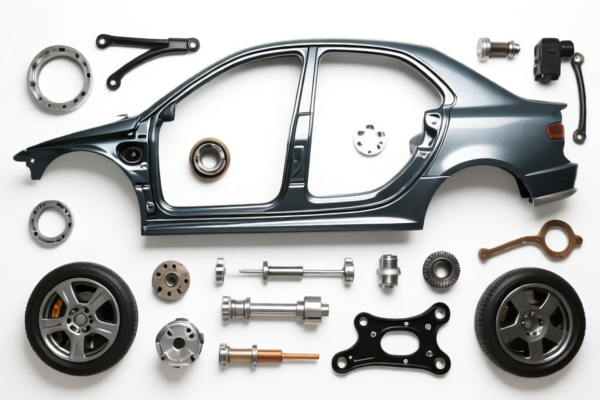
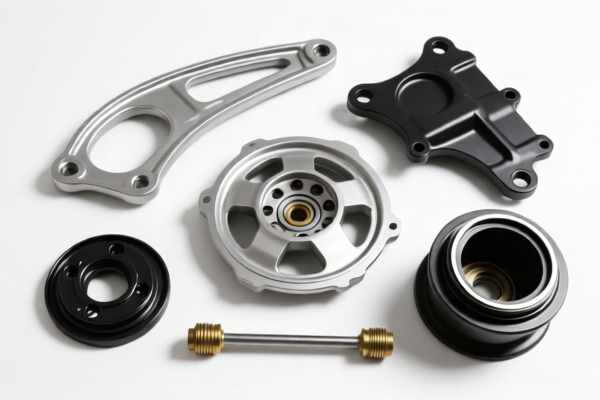
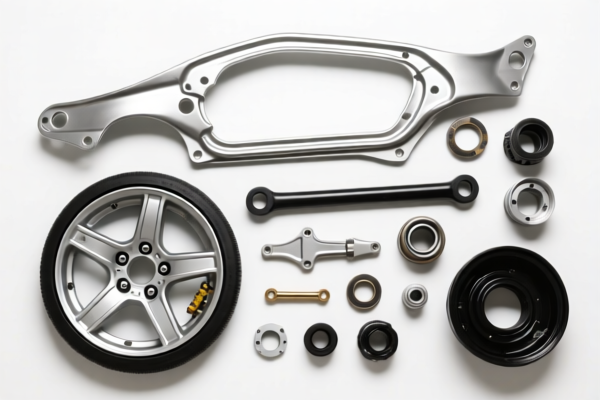
AI Analysis
🚗 Car Body Kit (Automotive Body Parts & Accessories)
🌐 HS Code Reference & Customs Clearance Guide | 2026 Latest Tariff Analysis | Professional Level Strategy
Car Body Kits are comprehensive aesthetic and aerodynamic assemblies used to modify the exterior of motor vehicles. In international trade, they are not classified as a single item. Instead, they are broken down by their specific material composition and function (e.g., bumpers, hoods, side skirts, fenders).
Misclassification is the #1 risk for body kit importers, leading to sudden tariff spikes (up to 27.5%) or shipment delays.
⚠️ Key Distinction:
- If the kit is made of hard plastics and consists of handles/knobs → 3926.30
- If the kit is made of hard plastics and consists of other fittings (bumpers, panels) → 3926.30
- If the kit includes metal stampings (steel/aluminum) → 8708.29
- If the kit includes complete bodies/cabs for passenger cars → 8707.10
📦 二、HS Code Classification Matrix (Based on Provided Data)
Below is the precise classification for components of a Car Body Kit, based on the provided dataset.
| HS Code | Product Description | Material/Function | Customs Tariff Detail (China to US) | Total Tax Rate |
|---|---|---|---|---|
| 8707.10.00.20 | Bodies (including cabs), for motor vehicles of heading 8701 to 8705: For vehicles of heading 8703 (Passenger automobiles) | Complete Body/Cab for passenger cars | Base: 2.5% Add-on: 25.0% |
27.5% |
| 8707.10.00.40 | Bodies (including cabs), for motor vehicles of heading 8701 to 8705: For vehicles of heading 8703 (Passenger automobiles): Other | Other Complete Bodies/Cabs for passenger cars | Base: 0.0% Add-on: 0.0% |
0.0% |
| 3926.30.50.00 | Other articles of plastics and articles of other materials of headings 3901 to 3914: Fittings for furniture, coachwork or the like: Other | Plastic/Composite Fittings (e.g., bumpers, side skirts, spoilers) | Base: 0.0% Add-on: 0.0% |
0.0% |
| 3926.30.10.00 | Other articles of plastics and articles of other materials of headings 3901 to 3914: Fittings for furniture, coachwork or the like: Handles and knobs | Plastic Handles/Knobs (Interior/Exterior trim pieces) | Base: 0.0% Add-on: 0.0% |
0.0% |
| 8708.29.51.60 | Parts and accessories of motor vehicles... Other parts and accessories of bodies: Other: Body stampings: Other | Metal Body Parts (Steel/Aluminum/Copper stampings) | Base: 2.5% Add-on: 25.0% Special Metal Levy: 50% |
2.5% + 25.0% + 50% Metal Levy (See Note Below) |
| 8708.29.25.00 | Parts and accessories of motor vehicles... Other parts and accessories of bodies: Other: Body stampings: Other | Metal Body Stampings (Specific stamping classification) | Base: 0.0% Add-on: 0.0% |
0.0% |
🔍 Critical Note on
8708.29.51.60:
The provided data lists2.5% + 25.0%and separately mentionsSteel, Aluminum, Copper products subject to an additional 50% tariff.
Interpretation: If your body kit parts are metal stampings (e.g., steel fenders, aluminum hoods) falling under this specific subheading, they may be subject to both the Section 301 tariff (25%) and a specific metal levy (50%), totaling 77.5% or more depending on precise legal application.
If you are unsure if the metal parts fall under8708.29.25.00(0%) or8708.29.51.60(High Tax), precise material declaration is vital.
💰 三、Tariff Rate Breakdown & Policy Analysis
🎯 1. Plastic Body Parts (Bumpers, Spoilers, Skirts)
- HS Codes:
3926.30.50.00(Other),3926.30.10.00(Handles/Knobs) - Tax Detail: Base 0.0%, Add-on 0.0%
- Total Tax: 0%
- Analysis:
- Most modern body kits are made from PP (Polypropylene), ABS, or fiberglass-reinforced plastic.
- Good News: These items are currently exempt from additional tariffs under the provided data.
- Strategy: Classify plastic components accurately as "Fittings for coachwork" to benefit from the 0% rate.
🎯 2. Metal Body Parts (Steel/Aluminum Fenders, Hoods)
- HS Codes:
8708.29.51.60vs.8708.29.25.00 - Tax Detail:
8708.29.25.00: 0%8708.29.51.60: 2.5% + 25.0% (plus potential 50% metal levy)- Analysis:
- The distinction lies in the specific subheading definition.
- If the metal part is a "Body Stamping" of a specific type, it may qualify for
8708.29.25.00(0%). - If it falls under "Other Other Other" in the metal category, it triggers the 25% Section 301 tariff AND the 50% metal levy.
- Risk: Misclassifying a steel bumper as "Other" under
8708.29.51.60could result in a 77.5% effective duty.
🎯 3. Complete Bodies/Cabs
- HS Codes:
8707.10.00.20vs.8707.10.00.40 - Tax Detail:
8707.10.00.20: 27.5% (2.5% Base + 25% Add-on)8707.10.00.40: 0%- Analysis:
- If you are importing complete assembled bodies (not just parts), the distinction between
.20and.40is critical. .20applies to specific passenger automobile bodies, attracting tariffs..40applies to "Other," which is currently 0%.- Strategy: Ensure the product description matches the "Other" category if eligible.
🛠️ 四、Customs Clearance Practical Advice (Avoid Pitfalls)
✅ 1. Required Documentation Checklist
| Document | Required? | Purpose |
|---|---|---|
| Detailed Product Specification | ✅ Yes | Must specify Material (Plastic, Steel, Aluminum, Carbon Fiber) and Function (Bumper, Hood, Trim). |
| Material Composition Statement | ✅ Yes | Critical for distinguishing between 3926 (Plastic) and 8708 (Metal). |
| Product Photos | ✅ Yes | Clear images showing the part, mounting points, and any branding. |
| Commercial Invoice | ✅ Yes | Must match HS Code exactly (e.g., "Plastic Bumper Cover" vs. "Steel Fender"). |
| Bill of Lading | ✅ Yes | Ensure packaging is not mixed in a way that causes ambiguity. |
✅ 2. Classification Strategy & Keywords
| Component Type | Recommended HS Code | Key Declaration Terms | Avoid |
|---|---|---|---|
| Plastic Bumper/Skirt | 3926.30.50.00 |
"Polypropylene Bumper Cover", "Car Exterior Trim" | "Auto Part" (Too vague) |
| Plastic Handle/Knob | 3926.30.10.00 |
"Interior Door Handle", "Exterior Trim Knob" | "Vehicle Part" |
| Steel/Aluminum Hood | 8708.29.25.00 or 8708.29.51.60 |
"Steel Hood Panel", "Aluminum Fender Stamping" | "Body Kit" (Too broad) |
| Complete Body | 8707.10.00.40 |
"Replacement Car Body Shell", "Passenger Car Body" | "Car Kit" |
🔥 Golden Rule:
"Plastic is 0%, Metal is Risky, Body is 27.5% (or 0% if 'Other')."
Always specify the exact material and component type in the invoice description.
✅ 3. Special Case Handling
| Scenario | Recommendation |
|---|---|
| Carbon Fiber Parts | Often classified under 3926 if treated as plastic composites, but check local customs rulings. May qualify for 0%. |
| Mixed Materials | If a bumper has a plastic cover and a steel frame, declare them separately or use the principal material rule. |
| Complete Kits | Do not declare as "One HS Code" if materials differ. Split the invoice into Plastic Parts (3926) and Metal Parts (8708). |
🌍 五、Global Market Comparison (Quick Reference)
| Market | Recommended HS Code | Tariff Status | Notes |
|---|---|---|---|
| 🇺🇸 USA (China Origin) | 3926.30 (Plastic) |
0% | Avoid 8708.29.51.60 due to 50% metal levy. |
| 🇺🇸 USA (Non-China) | 3926.30 |
0% | Generally favorable for plastic parts. |
| 🇪🇺 EU | 8708.29 |
Varies | Check for local duty rates; EU does not have the 50% metal levy. |
| 🇨🇳 China | 8708.29 |
Varies | Import duties for auto parts may apply. |
📌 六、Common Mistakes & Pitfalls (Lessons Learned)
❌ Mistake 1: Declaring all body kit parts under one HS Code (8708.29)
👉 Consequence: Plastic parts (3926) are taxed at 0%, but if misclassified as metal, they may face 25%–77.5%. Lost Savings.
❌ Mistake 2: Using "Car Body Kit" as the product description
👉 Consequence: Customs cannot determine the material. Result: Audit, Delay, or Random Inspection.
❌ Mistake 3: Ignoring the 50% Metal Levy on 8708.29.51.60
👉 Consequence: If you import steel fenders and classify them here, you pay 77.5% duty. This is catastrophic for profit margins.
✅ Correct Practice:
"Plastic Bumper Cover, PP Material, Model XYZ" →
3926.30.50.00(0%)
"Steel Hood Panel, Stamped" → Check if8708.29.25.00(0%) applies. If not, expect high taxes.
🎯 七、Conclusion: Professional Classification Saves Money
🎯 Key Takeaway:
🔹 Plastic Body Parts = 0% Tax (Safe & Profitable)
🔹 Metal Body Parts = High Risk (Check for 0% vs. 77.5% classification)
🔹 Complete Bodies = 27.5% or 0% (Depends on specific subheading)
📌 Action Step:
1. Identify Material: Is it Plastic, Metal, or Composite?
2. Check Subheading: Does the metal part fit 8708.29.25.00 (0%) or 8708.29.51.60 (High Tax)?
3. Declare Precisely: Use "Plastic Bumper Cover" instead of "Body Kit".
4. Consult Specialist: For metal parts, get a pre-ruling to avoid the 50% metal levy.
📣 Immediate Action:
📞 Review your invoice descriptions.
🚀 Split plastic and metal components.
💼 Save up to 77.5% by classifying correctly!
✨ Precision in Classification = Profit in Clearance!
💼 Don't let a wrong HS Code cost you your margin.
Customer Reviews
About HS Code Classification
The Harmonized System (HS) is an internationally standardized nomenclature developed by the World Customs Organization (WCO) to classify traded products. Over 200 countries use the HS system as the basis for customs tariffs, trade statistics, and import/export regulations.
Each HS code follows a hierarchical structure:
- Chapter (2 digits) — Broad category of goods (e.g., Chapter 84: Machinery and Mechanical Appliances)
- Heading (4 digits) — More specific grouping within the chapter
- Subheading (6 digits) — Internationally standardized breakdown, used by all WCO member countries
- National subdivisions (8-10 digits) — Country-specific extensions for further classification, such as US HTSUS 10-digit codes
Correct HS code classification is essential for smooth customs clearance, accurate duty payment, and compliance with trade regulations. Misclassification can lead to customs delays, overpayment of duties, or penalties.
When importing from CN to US, the applicable tariff rates may include:
- Most-Favored-Nation (MFN) rate — The standard duty rate applied to WTO members
- General rate — Applied to countries without trade agreements
- Trade remedy duties — Additional tariffs such as Section 301 (anti-dumping), Section 232 (national security), or countervailing duties
The information provided on this page is for reference purposes only. For official classification, please consult with your local customs authority or a licensed customs broker.