Car Body Mold
CN → US| HS Code | Tariff Rate | Origin | Destination | Doc |
|---|---|---|---|---|
| 8479300000 | 35.0% | CN | US | Official Doc |
| 8466948585 | 39.7% | CN | US | Official Doc |
| 8466948540 | 39.7% | CN | US | Official Doc |
Product Images
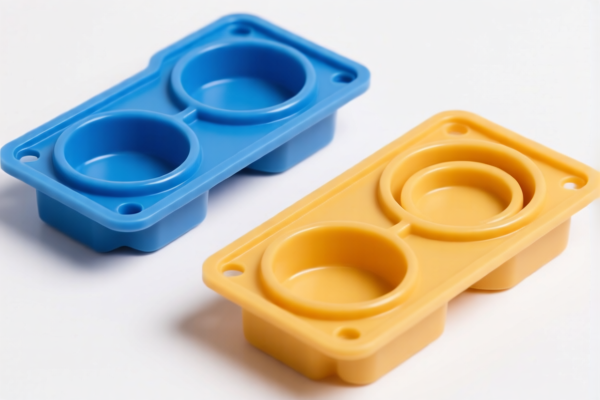
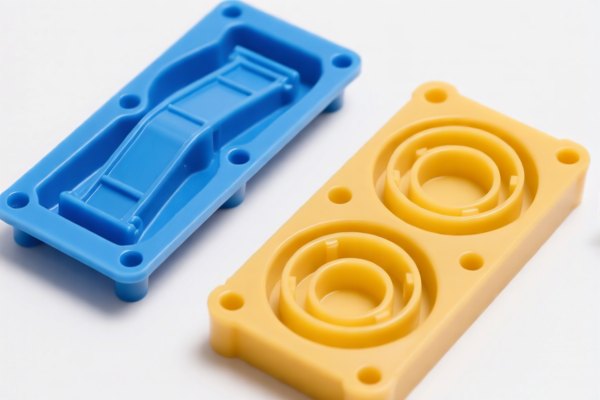
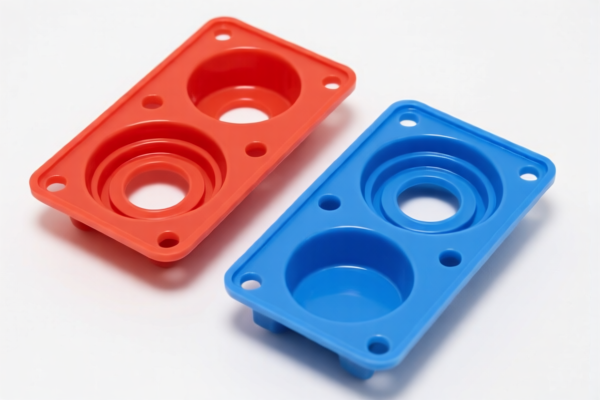
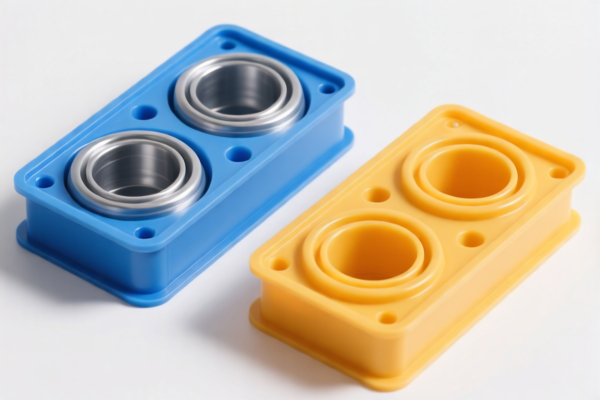
AI Analysis
🚗 Car Body Molds (Automotive Stamping Tools)
🌐 HS Code Reference & Customs Clearance Guide | 2026 Latest Tariff Analysis | Professional Clearance Strategy
📌 Part I: Product Definition & Classification Logic: What exactly is a "Car Body Mold"?
Car body molds (also known as automotive stamping dies or pressing tools) are specialized industrial equipment used in the manufacturing of vehicle chassis, body panels, and structural components. In international trade, these items are complex because they serve a dual nature: they are either standalone mechanical forming machines or critical accessories/parts for machine tools.
The classification depends heavily on whether the mold is considered a complete machine unit capable of operation or a subordinate tool/attachment for a press or machine tool.
⚠️ Key Classification Distinctions:
- If the mold is viewed as a self-contained forming/pressing apparatus not specifically named elsewhere in Chapter 84 → It falls under General Purpose Machinery.
- If the mold is viewed as a tool/attachment for machine tools (e.g., dies for press brakes, stamping dies for metalworking machines) → It falls under Parts and Accessories for Machine Tools.
📦 Part II: HS Code Classification Details (2026 Latest Tariff Authority Comparison)
Based on the provided data, there are three potential HS Codes depending on the specific technical interpretation and usage context of the mold.
| HS Code | Product Description | Logic/Application Scenario | Key Distinction |
|---|---|---|---|
8479.30.00.00 |
Machinery for pressing, stamping, or embossing (Other/Unspecified) | Standalone Forming Machine Logic: Treated as a "machine for pressing/embossing" that doesn't fit other specific headings. | Broad "Machinery" category. Fits the "catch-all" logic for mechanical pressing devices. |
8466.94.85.85 |
Parts and accessories for machine tools (Other) | Machine Tool Accessory Logic: Treated as a tool/attachment for manufacturing machines. Does not conflict with other parts/accessories categories. | Specific "Parts/Accessories" category for machine tools. |
8466.94.85.40 |
Parts and accessories for machine tools (Other) | Mechanical Drive/Pressure Linkage Logic: Treated as a mold accessory linked to mechanical transmission/pressure machines. | Specific "Parts/Accessories" category, emphasizing the pressure/motion transmission aspect. |
🔍 Critical Insight:
-8479.30.00.00is often used when the mold is considered a machine in itself (e.g., a complete stamping press unit).
-8466.94.85.xxis used when the mold is a replaceable tool/die for a larger press or machine tool.
- ⚠️ Warning: Both categories attract significant additional tariffs for Chinese origin goods due to Section 301 and IEEPA provisions. The choice between them does not eliminate the high tax burden but changes the "Base Tariff" slightly.
💰 Part III: 2026 Latest Tariff Rate Breakdown (Including Surcharges & Policy Add-ons)
✅ Applicable Country: United States (US)
✅ Country of Origin: China (CN)
✅ Effective Date: Current rates applied to imports from China
✅ Policy Basis: Section 301 Tariffs + IEEPA Additional Tariffs
🎯 1. 8479.30.00.00 – Machinery for Pressing/Stamping (General Machinery)
| Item | Content |
|---|---|
| Base Tariff | 0.0% |
| Section 301 Surcharge | +25.0% |
| IEEPA (Section 122) Surcharge | +10.0% |
| Total Effective Tariff | 35.0% |
| Tax Calculation | CIF Value × 35% |
| De Minimis Exemption | ❌ Not Applicable (deny_de_minimis) |
| Legal Path | Base: 8479.30.00.00 → 301: Footnote 9903.88.01 → IEEPA: 9903.01.25 |
📌 Explanation:
- Although the base rate is 0%, the 35% total effective rate is very high.
- The 0% base makes it slightly cheaper than the8466options, but the burden remains severe.
- This code applies if the goods are classified as "other machinery for pressing/stamping/embossing."
🎯 2. 8466.94.85.85 – Parts & Accessories for Machine Tools (Other)
| Item | Content |
|---|---|
| Base Tariff | 4.7% |
| Section 301 Surcharge | +25.0% |
| IEEPA (Section 122) Surcharge | +10.0% |
| Total Effective Tariff | 39.7% |
| Tax Calculation | CIF Value × 39.7% |
| De Minimis Exemption | ❌ Not Applicable (deny_de_minimis) |
| Legal Path | Base: 8466.94.85.85 → 301: Footnote 9903.88.01 → IEEPA: 9903.01.25 |
📌 Explanation:
- The base rate is 4.7%, leading to a higher total tax of 39.7%.
- This classification is used when the mold is strictly viewed as a "part/accessory" for machine tools.
- Do not assume that being a "part" lowers your tax; in this case, it increases the base, making the total higher than8479.30.00.00.
🎯 3. 8466.94.85.40 – Parts & Accessories for Machine Tools (Mechanical Drive/Pressure)
| Item | Content |
|---|---|
| Base Tariff | 4.7% |
| Section 301 Surcharge | +25.0% |
| IEEPA (Section 122) Surcharge | +10.0% |
| Total Effective Tariff | 39.7% |
| Tax Calculation | CIF Value × 39.7% |
| De Minimis Exemption | ❌ Not Applicable (deny_de_minimis) |
| Legal Path | Base: 8466.94.85.40 → 301: Footnote 9903.88.01 → IEEPA: 9903.01.25 |
📌 Explanation:
- Identical tax burden to8466.94.85.85(39.7%).
- The distinction between.85.85and.85.40is technical:.40emphasizes the linkage to mechanical transmission/pressure machines, while.85.85is a broader "other parts" category.
- Strategic Note: If your customs broker argues for.85.40based on mechanical linkage, the tax outcome is the same as.85.85.
🛠️ Part IV: Customs Clearance Practical Advice (Field Pitfall Avoidance Guide)
✅ 1. Recommended Document Checklist (Non-Negotiable)
| Document | Required? | Explanation |
|---|---|---|
| ✅ Product Technical Manual | ✔️ | Must specify if the mold is a "standalone press" or "replaceable die/tool." |
| ✅ 3D Models / Drawings | ✔️ | Critical for proving whether it includes mechanical drive systems (supports 8479) or is purely a static tool (supports 8466). |
| ✅ Commercial Invoice | ✔️ | Description must be precise: e.g., "Automotive Stamping Mold, No Electrical Drive" vs. "Hydraulic Pressing Machine." |
| ✅ Packing List | ✔️ | List all components; if clamps, base frames, or ejectors are included, clarify if they are part of the machine. |
| ✅ Certificate of Origin (CO) | ✔️ | Essential for confirming Chinese origin to apply/verify surcharges. |
| ✅ Third-Party Inspection Report | ✔️ | Confirms material composition and manufacturing process. |
✅ 2. Declaration Strategy (Key Mnemonics)
🔥 “Define Function First, Check Base Rate, Avoid Splitting!”
| Scenario | Recommended HS Code | Why? |
|---|---|---|
| Complete Pressing Unit (Includes motor/hydraulic system) | 8479.30.00.00 |
Best Option: 0% base rate → 35% total. Lower than parts. |
| Simple Die/Tool (No motor, attaches to external press) | 8466.94.85.85 |
Standard: 4.7% base → 39.7% total. |
| Complex Tool (Linked to specific pressure transmission system) | 8466.94.85.40 |
Alternative: 4.7% base → 39.7% total. Same tax as above. |
| Mold + Base Frame + Ejector Pin Set | Declare as One Unit | Do not split parts. Splitting may trigger higher duties on individual components. |
📌 Critical Warning:
- Do NOT declare as "Machine Parts" (8466) if the product is a self-contained machine (8479), as customs may reclassify it and apply penalties.
- Conversely, Do NOT declare a simple die as a "Machine" (8479) if it lacks driving mechanisms, as this may be seen as misclassification.
✅ 3. Special Handling Tips
| Situation | Advice |
|---|---|
| Hydraulic vs. Mechanical | If the mold has its own hydraulic pump/motor, lean towards 8479.30.00.00 (Machinery). If it's just steel plates to be used in a shop press, use 8466. |
| OEM vs. Standard | Provide OEM contracts to prove the specific industrial use, helping justify the "specialized machinery" classification. |
| Used vs. New | Ensure the invoice clearly states "New" or "Used." Used machinery may face additional inspection or different duty treatments. |
| Valuation | High-value molds may trigger anti-dumping or countervailing duty reviews. Ensure the declared value matches the transaction value strictly. |
🌍 Part V: Global Market Comparison (2026 Snapshot)
| Country/Region | Recommended HS Code | Estimated Total Tariff (China Origin) | Key Certifications | Notes |
|---|---|---|---|---|
| 🇺🇸 USA | 8479.30.00.00 |
35.0% | N/A | Highest cost. Base 0% + 35% surcharges. |
| 🇺🇸 USA | 8466.94.85.85 |
39.7% | N/A | Higher base rate. Avoid if possible. |
| 🇨🇳 China | 8479.84.00.00* |
~5-10% | CCC | Domestic trade rates vary; not applicable for export. |
| 🇪🇺 EU | 8463.90.00.00 |
~0-4% | CE | Generally lower tariffs if classified correctly as tools. |
| 🇲🇽 Mexico | 8466.94.00.00 |
~0-5% | NOM | NAFTA/USMCA benefits may apply if originating. |
📌 Conclusion for US Imports:
- The US is the most expensive market for Car Body Molds due to Section 301 and IEEPA tariffs.
-8479.30.00.00is the optimal choice among the provided options, offering a 4.7% tax saving compared to the8466categories.
- Consider supply chain diversification (e.g., sourcing from Vietnam/Mexico) if volumes are high, as these regions may have lower or zero tariffs under current trade agreements.
📌 Part VI: Common Mistakes & Pitfalls (Lessons Learned)
❌ Mistake 1: Declaring a complete hydraulic press mold as a "Part of Machine Tool" (8466)
👉 Consequence: Customs may reclassify to 8479, but if you overpaid base duties, getting a refund is difficult. If they penalize misclassification, you face fines.
❌ Mistake 2: Ignoring Section 122 (IEEPA) 10% Surcharge
👉 Consequence: Underestimating landed cost by 10%. All Chinese-origin machinery/tools are subject to this. Total budget must include 35-40% duty.
❌ Mistake 3: Splitting Mold + Clamping Accessories into separate shipments
👉 Consequence: Each shipment is taxed individually. If one is deemed "machine" and another "part," you lose optimization opportunities. Ship as a complete set.
✅ Correct Practice:
"Automotive Body Stamping Mold, Steel, Non-Driving Component for Hydraulic Press, Model XYZ, Made in China"
🎯 Part VII: Conclusion: Professional Declaration, Cost Control!
🎯 Remember the Golden Rule:
🔹 “Machine = 0% Base (35% Total). Part = 4.7% Base (39.7% Total).”
🔹 “Choose 8479 if possible to save 4.7% base duty.”
🔹 “Always account for the 35-40% total burden in your pricing model.”
📌 Pro Tip:
If your volume is significant, Apply for an Advance Ruling from US Customs (CBP) to lock in the 8479.30.00.00 classification and avoid post-import audits.
For US imports, 35% is the realistic floor for this category. Plan your margin accordingly!
📣 Immediate Action:
📞 Consult with a licensed customs broker to review your technical drawings.
📄 Submit a Letter of Explanation with your invoice highlighting the "machinery" nature if applicable.
🚀 Optimize your HS Code choice to save 4.7% on every container!
✨ Precision in Classification Saves Thousands!
💼 Every Percent Counts in Global Trade!
Customer Reviews
About HS Code Classification
The Harmonized System (HS) is an internationally standardized nomenclature developed by the World Customs Organization (WCO) to classify traded products. Over 200 countries use the HS system as the basis for customs tariffs, trade statistics, and import/export regulations.
Each HS code follows a hierarchical structure:
- Chapter (2 digits) — Broad category of goods (e.g., Chapter 84: Machinery and Mechanical Appliances)
- Heading (4 digits) — More specific grouping within the chapter
- Subheading (6 digits) — Internationally standardized breakdown, used by all WCO member countries
- National subdivisions (8-10 digits) — Country-specific extensions for further classification, such as US HTSUS 10-digit codes
Correct HS code classification is essential for smooth customs clearance, accurate duty payment, and compliance with trade regulations. Misclassification can lead to customs delays, overpayment of duties, or penalties.
When importing from CN to US, the applicable tariff rates may include:
- Most-Favored-Nation (MFN) rate — The standard duty rate applied to WTO members
- General rate — Applied to countries without trade agreements
- Trade remedy duties — Additional tariffs such as Section 301 (anti-dumping), Section 232 (national security), or countervailing duties
The information provided on this page is for reference purposes only. For official classification, please consult with your local customs authority or a licensed customs broker.