Car Chassis
CN → US| HS Code | Tariff Rate | Origin | Destination | Doc |
|---|---|---|---|---|
| 8706001520 | 37.5% | CN | US | Official Doc |
| 8706001540 | 37.5% | CN | US | Official Doc |
| 8708801600 | 12.5% | CN | US | Official Doc |
| 8708806590 | 0.0% | CN | US | Official Doc |
Product Images
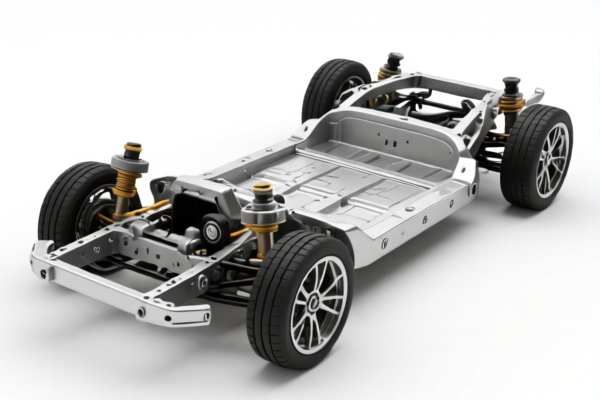
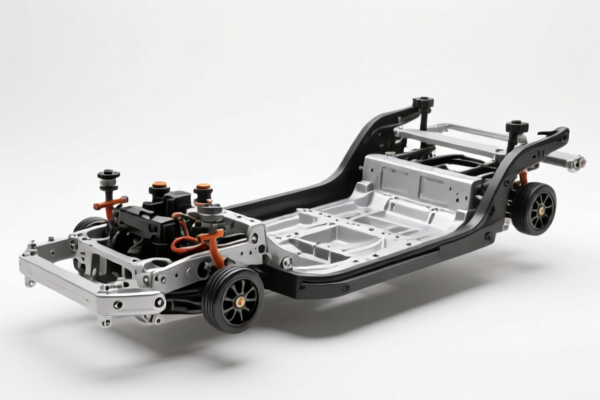
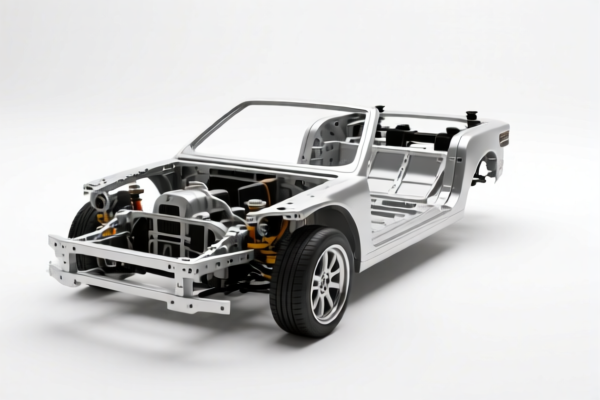
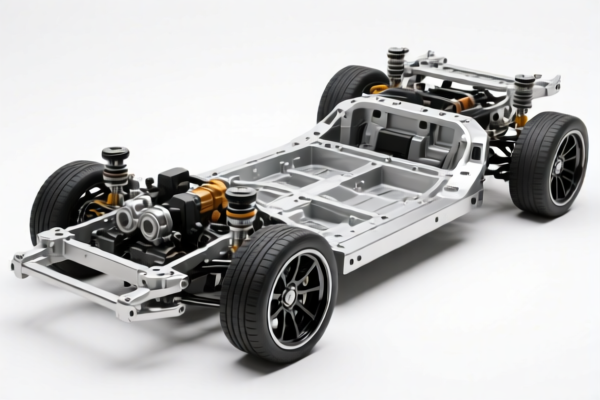
AI Analysis
🚗 Car Chassis (Chassis with Engine)
🌐 HS Code Reference & Customs Clearance Guide | 2026 Latest Tariff Analysis | Professional-Level Customs Strategy
📌 I. Product Definition & Classification: Do You Really Understand "Car Chassis"?
A car chassis, in the context of international trade, refers to the fundamental structural frame of a vehicle. Specifically, "Chassis with Engine" implies a semi-assembled vehicle state where the engine is already installed on the frame. This is a critical distinction from "Chassis without Engine" or complete vehicles.
In global trade, it is primarily categorized under Chapter 87 (Vehicles Other Than Railway or Tramway Rolling Stock). The classification depends heavily on: 1. Structure: Is it just the frame, or does it include major systems like suspension/steering? 2. Application: Is it for passenger cars (Section 8703/8706) or other vehicles/parts? 3. Component Status: Is it a complete structural unit or a sub-component (like suspension)?
⚠️ Key Distinction Points:
- If it is a complete frame with engine, intended for assembly into a passenger car → HS 8706.
- If it is a sub-assembly (e.g., suspension/steering system only) → HS 8708.
- Material Factor: Aluminum/Copper products may face additional tariffs under specific US trade clauses.
📦 II. HS Code Classification Details (2026 Latest Tariff Authority Comparison)
| HS Code | Product Description | Application Scenario | Structure/Type |
|---|---|---|---|
8706.00.15.20 |
Chassis fitted with engine, suitable for passenger cars or related motor vehicles | Semi-assembled chassis for sedans/SUVs; includes engine but no body/interior | ✅ With Engine |
8706.00.15.40 |
Chassis fitted with engine, automotive structural part, consistent with vehicles in 8703 | Structural chassis components for passenger vehicles; aligned with 8703 vehicle types | ✅ With Engine |
8708.80.16.00 |
Core vehicle structural component, including suspension and steering systems | Suspension/steering assemblies; classified as parts/accessories for other vehicles | ✅ Sub-Assembly |
8708.80.65.90 |
Motor vehicle component, form of vehicle part, consistent with parts/accessories classification | General vehicle parts/accessories; specific material-based classification | ✅ Part/Accessory |
🔍 Key Reminder:
- 8706 codes are for chassis-with-engine states. These are higher-value, semi-finished vehicles.
- 8708 codes are for parts and accessories (like suspension/steering systems). These are lower-level components.
- Material Matters: Aluminum/Copper products under 8708 may attract additional tariffs under "122 Clause" or similar trade measures.
💰 III. 2026 Latest Tariff Rate Details (Including Surcharges, Policy Add-ons)
✅ Applicable Country: United States (US)
✅ Origin: China (CN)
✅ Effective Date: Current trade policies (Section 301 & 122 Clauses)
🎯 1. 8706.00.15.20 —— Chassis with Engine (Passenger Car Type)
| Item | Content |
|---|---|
| Base Tariff Rate | 2.5% (Ad Valorem) |
| Section 301 Surcharge | +25.0% |
| 122 Clause Surcharge | +10% |
| Total Tariff Rate | 37.5% |
| Tax Calculation | CIF Value × 37.5% |
| De Minimis Eligibility | ❌ Not Eligible (Deny De Minimis) |
| Legal Basis Path | Base: 2.5% → Section 301: 25% → 122 Clause: 10% |
📌 Explanation:
- "Base Tariff 2.5%": Standard MFN rate for vehicles with engines.
- "Section 301 Surcharge 25%": Additional tariff imposed on Chinese goods under Trade Act Section 301.
- "122 Clause Surcharge 10%": Additional tariff under specific trade provisions (often related to national security or specific industry protections).
- Total 37.5%: High cost for semi-assembled vehicles. Must be planned in advance!
🎯 2. 8706.00.15.40 —— Chassis with Engine (Automotive Structural Part)
| Item | Content |
|---|---|
| Base Tariff Rate | 2.5% |
| Section 301 Surcharge | +25.0% |
| 122 Clause Surcharge | +10% |
| Total Tariff Rate | 37.5% |
| Tax Calculation | CIF Value × 37.5% |
| De Minimis Eligibility | ❌ Not Eligible |
| Legal Basis Path | Base: 2.5% → Section 301: 25% → 122 Clause: 10% |
📌 Note:
- Same tariff structure as8706.00.15.20.
- Applies to chassis that are structurally consistent with passenger vehicles (8703 category).
- High tariff burden: Requires careful supply chain cost analysis.
🎯 3. 8708.80.16.00 —— Suspension & Steering System (Core Part)
| Item | Content |
|---|---|
| Base Tariff Rate | 2.5% |
| Section 301 Surcharge | +0.0% (Exempt or Lower Rate) |
| 122 Clause Surcharge | +10% |
| Total Tariff Rate | 12.5% |
| Tax Calculation | CIF Value × 12.5% |
| De Minimis Eligibility | ❌ Not Eligible |
| Legal Basis Path | Base: 2.5% → Section 301: 0% → 122 Clause: 10% |
📌 Important:
- Lower Total Rate (12.5%): Significantly cheaper than chassis-with-engine.
- No Section 301 Surcharge: Many vehicle parts are excluded or have lower rates under Section 301.
- 122 Clause Still Applies: Check if suspension/steering systems fall under specific 122 protections.
🎯 4. 8708.80.65.90 —— General Vehicle Part (Material-Specific)
| Item | Content |
|---|---|
| Base Tariff Rate | 2.5% |
| Section 301 Surcharge | +25.0% |
| 122 Clause Surcharge | +10% |
| Steel/Aluminum/Copper Surcharge | +50% (If applicable) |
| Total Tariff Rate | 2.5% + 85.0% (Up to 87.5% if material surcharge applies) |
| Tax Calculation | CIF Value × (2.5% + 25% + 10% + 50%) |
| De Minimis Eligibility | ❌ Not Eligible |
| Legal Basis Path | Base: 2.5% → Section 301: 25% → 122 Clause: 10% → Material Surcharge: 50% |
📌 Critical Warning:
- Steel/Aluminum/Copper Products: If the part is made of these materials, an additional 50% tariff may apply under "122 Clause" or similar trade measures.
- Total Rate Can Reach 87.5%: Extremely high for metal vehicle parts.
- Material Declaration: Must accurately declare material composition to avoid misclassification and penalties.
🛠️ IV. Customs Clearance Practical Advice (Pitfall Avoidance Guide)
✅ 1. Required Document Checklist (All Mandatory)
| Document | Must Provide | Description |
|---|---|---|
| ✅ Product Specification Sheet | ✔️ | Dimensions, weight, engine type (if any), suspension/steering details |
| ✅ Assembly Diagram/Structure Diagram | ✔️ | To prove whether it’s a chassis-with-engine or a sub-assembly |
| ✅ Product Photos (With Nameplate) | ✔️ | Clear display of model, brand, VIN (if applicable), material labels |
| ✅ Third-Party Test Report | ✔️ | ECE, FMVSS, RoHS (if applicable) |
| ✅ Commercial Invoice | ✔️ | Must specify "Chassis with Engine" or "Suspension System" accurately |
| ✅ Certificate of Origin (CO) | ✔️ | If non-China origin, may qualify for preferential rates |
| ✅ Packing List | ✔️ | Clarify relationship between main unit and accessories |
✅ 2. Declaration Tips (Key Mantra)
🔥 "Chassis with Engine: 37.5%; Part without Engine: 12.5%-87.5%; Material Matters!"
| Scenario | Correct Declaration | Wrong Practice |
|---|---|---|
| Chassis with Engine (Passenger) | 8706.00.15.20 or 8706.00.15.40 |
Misdeclare as "Part" → Risk of penalty |
| Suspension/Steering System | 8708.80.16.00 |
Misdeclare as "Chassis" → 37.5% vs 12.5% |
| Steel/Aluminum Part | 8708.80.65.90 |
Omit material info → Additional 50% tariff |
| Complete Vehicle Kit | Split into Parts | Declare as "Complete Vehicle" → Higher duties |
✅ 3. Special Cases Handling
| Scenario | Handling Advice |
|---|---|
| OEM Chassis for Custom Vehicles | Provide customer order + design drawings to avoid "non-standard" classification |
| Chassis with Mixed Materials | Declare primary material; if >50% steel/aluminum, expect 50% surcharge |
| Chassis for Non-Passenger Vehicles | May fall under different 8706 subcodes; check 8708 vs 8706 carefully |
| Chassis with Electric Motor | Still HS 8706; ensure motor specifications are clearly stated |
🌍 V. Global Market Customs Comparison (2026 Latest)
| Country/Region | Recommended HS Code | Tariff Rate | Certification Requirements | Notes |
|---|---|---|---|---|
| 🇺🇸 US | 8706.00.15.20 |
37.5% (China) | FMVSS + EPA | High tariff due to Section 301 & 122 Clause |
| 🇨🇳 China | 8706.00.15.20 |
10% (Import) | CCC + GB Standards | Lower tariff for domestic assembly |
| 🇪🇺 EU | 8706.00.15.20 |
10% (China) | WEEE + RoHS | No Section 301 equivalent, but anti-dumping may apply |
| 🇯🇵 Japan | 8706.00.15.20 |
0-5% (Depending on FTA) | JIS Standards | Check Japan-China EPA for preferential rates |
| 🇲🇽 Mexico | 8706.00.15.20 |
0% (If USMCA Compliant) | NOM Certifications | USMCA may eliminate tariffs for North American assembly |
📌 Conclusion:
- US is the highest cost market for Chinese-origin car chassis due to Section 301 and 122 Clause.
- EU and Japan have moderate tariffs but require strict certification.
- Mexico offers potential 0% tariff under USMCA if assembled in North America.
📌 VI. Common Errors & Pitfall Guide (Blood and Tears Lessons)
❌ Error 1: Declaring "Chassis with Engine" as "Vehicle Parts"
👉 Consequence: Incorrect HS Code → 37.5% vs 12.5% → Overpayment or penalty.
❌ Error 2: Ignoring Material Composition for 8708.80.65.90
👉 Consequence: Missing 50% Steel/Aluminum Surcharge → 87.5% Total → Massive cost increase.
❌ Error 3: Declaring "Suspension System" as "Chassis with Engine"
👉 Consequence: Over-declaration → 37.5% vs 12.5% → Unnecessary cost.
❌ Error 4: Not Providing Structure Diagrams
👉 Consequence: Customs cannot verify "With Engine" status → Delayed clearance or rejection.
✅ Correct Practice:
"Chassis with Engine, 2.0L Petrol, for Passenger Car, Model XYZ, FMVSS Compliant"
OR
"Suspension and Steering Assembly, Steel/Aluminum, Part Number ABC, No Engine"
🎯 VII. Conclusion: Professional Declaration, Time-Saving, Cost-Effective!
🎯 Remember the Mantra:
🔹 "Chassis with Engine: 37.5%; Part without Engine: 12.5%-87.5%; Material Matters!"
🔹 "HS Code Determines Fate, Tariff Differs 25 Points, Declaration Error Costs Thousands!"
📌 Tips:
- If your chassis is assembled in Mexico, Canada, or Southeast Asia, apply for USMCA or FTZ Benefits to reduce tariffs.
- Apply for Advance Ruling for complex chassis structures to avoid clearance risks.
- Accurate Material Declaration is crucial for 8708.80.65.90 to avoid 50% surcharges.
📣 Immediate Action:
📞 Contact Professional Customs Broker + Provide Product Diagrams + Apply for HS Code Advance Ruling
🚀 Let your chassis clear customs smoothly, export efficiently, and maximize profits!
✨ Professional Customs Clearance Starts with Accurate Classification!
💼 Every Cent of Your Cost Deserves Precise Calculation!
Customer Reviews
About HS Code Classification
The Harmonized System (HS) is an internationally standardized nomenclature developed by the World Customs Organization (WCO) to classify traded products. Over 200 countries use the HS system as the basis for customs tariffs, trade statistics, and import/export regulations.
Each HS code follows a hierarchical structure:
- Chapter (2 digits) — Broad category of goods (e.g., Chapter 84: Machinery and Mechanical Appliances)
- Heading (4 digits) — More specific grouping within the chapter
- Subheading (6 digits) — Internationally standardized breakdown, used by all WCO member countries
- National subdivisions (8-10 digits) — Country-specific extensions for further classification, such as US HTSUS 10-digit codes
Correct HS code classification is essential for smooth customs clearance, accurate duty payment, and compliance with trade regulations. Misclassification can lead to customs delays, overpayment of duties, or penalties.
When importing from CN to US, the applicable tariff rates may include:
- Most-Favored-Nation (MFN) rate — The standard duty rate applied to WTO members
- General rate — Applied to countries without trade agreements
- Trade remedy duties — Additional tariffs such as Section 301 (anti-dumping), Section 232 (national security), or countervailing duties
The information provided on this page is for reference purposes only. For official classification, please consult with your local customs authority or a licensed customs broker.