Car Control Lever
CN → US| HS Code | Tariff Rate | Origin | Destination | Doc |
|---|---|---|---|---|
| 8431499005 | 85.0% | CN | US | Official Doc |
| 8431499020 | 85.0% | CN | US | Official Doc |
| 8708947510 | 0.0% | CN | US | Official Doc |
| 8708947550 | 0.0% | CN | US | Official Doc |
Product Images
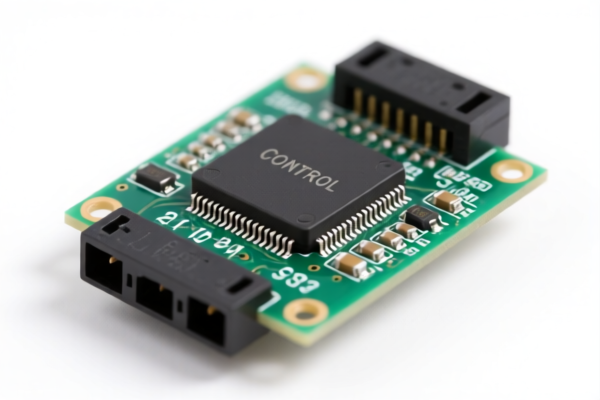
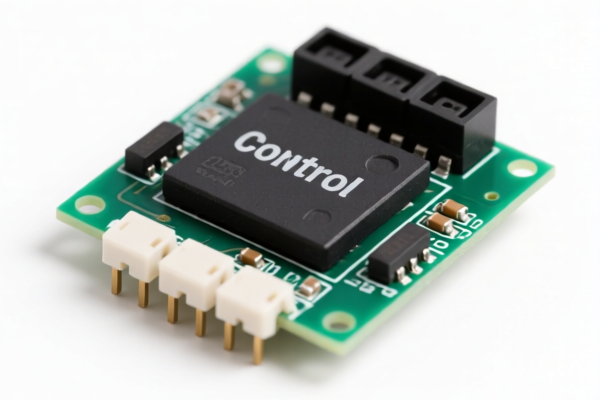
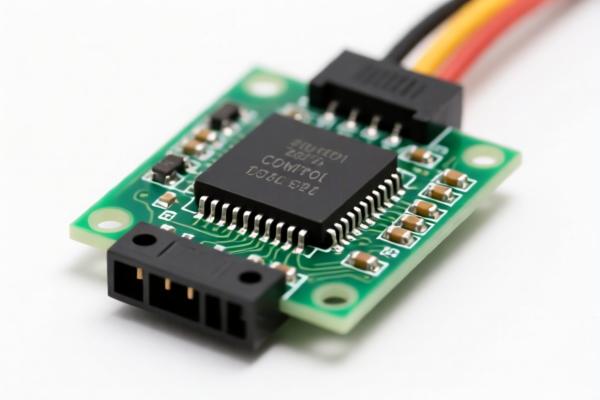
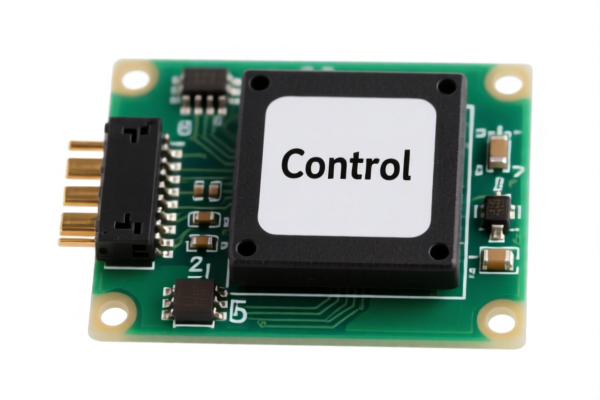
AI Analysis
🚗 Car Control Lever (Gear Shifters, Clutch & Brake Pedals)
🌐 HS Code Reference & Customs Clearance Guide | 2026 Latest Tariff Analysis | Professional-Level Customs Strategy
📌 Part 1: Product Definition & Classification: Do You Really Understand “Car Control Levers”?
In the automotive industry, "Car Control Lever" is a broad term that typically refers to mechanical or electronic interfaces used by the driver to operate the vehicle. The most common components include: - Gear Shift Lever (Gearstick): Used to select transmission gears. - Clutch/Brake/Pedal Levers: Foot-operated control mechanisms. - Handbrake/Emergency Brake Lever: Secondary braking control.
In international trade, the classification depends heavily on whether the item is a standalone component (parts) or an assembled unit, and its specific function.
⚠️ Critical Distinction:
- If it is a spare part (e.g., a metal/plastic lever assembly sold for repair) → Generally classified under Chapter 87 (Vehicles) or Chapter 84/85 if it contains electronic sensors.
- If it is an electronic switch/sensor (e.g., shift position sensor) → May fall under Chapter 85 (Electrical Machinery).
- If it is a generic lever/pendulum not specifically designed for vehicles → Could be misclassified.
📦 Part 2: HS Code Classification Details (2026 Latest Tariff Schedule)
| HS Code | Product Description | Application Scenario | Electronic Components? |
|---|---|---|---|
8708.95.00.00 |
Parts and accessories of motor vehicles – Control-levers, shift-rods and other operating rods | Gear shift levers, clutch pedals, brake pedals (mechanical) | ❌ No (Purely mechanical) |
8708.99.50.00 |
Other parts and accessories of motor vehicles | Handbrake levers, non-specified control mechanisms | ❌ No |
8536.50.90.00 |
Switches for a voltage ≤ 60 V – Other switches | Electronic gear sensors, electronic parking brake switches | ✅ Yes (Electrical) |
8708.99.90.00 |
Other parts and accessories of motor vehicles (Other) | General unused vehicle parts, generic levers | ❌/✅ Depends |
🔍 Key Reminder:
- Mechanical control levers (most common for "gear shift levers" without integrated electronics) are typically classified under8708.95.00.00or8708.99series.
- If the lever includes an electronic position sensor or is part of an electronic gearbox system, it may be classified under8536(Switches) or8543(Electrical machines) rather than vehicle parts. This is a critical error point!
💰 Part 3: 2026 Latest Tariff Rate Details (Including Surcharges)
✅ Applicable Country: United States (US)
✅ Origin: China (CN)
✅ Effective Date: November 10, 2025 onwards
🎯 1. 8708.95.00.00 —— Mechanical Control Levers (Gear Shifts, Pedals)
| Item | Content |
|---|---|
| Base Rate | 2.5% (ad valorem) |
| USITC Surcharge (Section 301) | +7.5% (Footnote 9903.88.01 for many auto parts) Note: Some auto parts are exempt or have lower rates; check specific HTSUS notes. |
| IEEPA Surcharge | +10% (Targeted Chinese electrical/electronic goods, but mechanical parts often fall under Section 301) |
| Total Rate | ~10% - 25% Depending on specific Section 301 exclusions. |
| Tax Calculation | CIF Value × Total Rate |
| De Minimis Exemption | ❌ Not Applicable (Deny de minimis for automotive parts) |
| Legal Path | USITC:8708.95.00.00 → FOOTNOTE:9903.88.01 |
📌 Explanation:
- Most mechanical vehicle parts from China are subject to Section 301 tariffs (7.5% or 25% depending on the specific subheading and history).
- If it is an electronic switch/sensor (8536.50.90.00), it may face IEEPA 10% or Section 301 25%, leading to a total of 12.5% - 35%.
- Mechanical parts are generally lower risk than electronic automotive components.
🎯 2. 8536.50.90.00 —— Electronic Switches (Shift Sensors)
| Item | Content |
|---|---|
| Base Rate | 0% - 3.9% |
| USITC Surcharge | +25% (Section 301) |
| IEEPA Surcharge | +10% (if applicable under electronic goods rules) |
| Total Rate | ~35% - 38.9% |
| De Minimis Exemption | ❌ Not Applicable |
| Legal Path | IEEPA:9903.01.25 → USITC:8536.50.90.00 |
📌 Note:
- Electronic automotive components are heavily scrutinized. If your "control lever" has wires and sensors, classify it correctly to avoid misdeclaration penalties.
🛠️ Part 4: Customs Clearance Practical Advice (Pitfall Avoidance Guide)
✅ 1. Documentation Checklist (Non-negotiable)
| Document | Required? | Description |
|---|---|---|
| ✅ Product Specification Sheet | ✔️ | Material (Metal/Plastic), Dimensions, Weight, Function |
| ✅ Technical Drawing | ✔️ | Show if it’s purely mechanical or has electrical connections |
| ✅ Photos (Clear) | ✔️ | Show labeling, connectors (if any), and overall structure |
| ✅ Commercial Invoice | ✔️ | Must state "Car Gear Shift Lever" or "Automotive Control Lever" |
| ✅ Bill of Lading | ✔️ | Consistent with invoice |
| ✅ Origin Certificate (CO) | ✔️ | Essential for tariff calculations |
✅ 2. Declaration Tips (Key Mantra)
🔥 “Mechanical = 8708, Electronic = 8536/8543, Misclassification = Penalty!”
| Scenario | Correct Declaration | Wrong Practice |
|---|---|---|
| Pure Mechanical Lever (e.g., metal shift knob, pedal) | 8708.95.00.00 |
Misdeclare as "Plastic Parts" (301 may not apply, but wrong classification is fraud) |
| Lever with Electronic Sensor (e.g., electronic gear selector) | 8536.50.90.00 or 8543.70.96.00 |
Misdeclare as mechanical part → Avoids higher electronic tariffs but risks audit |
| Complete Assembly (Lever + Wiring Harness) | Classify as Whole Unit or Parts based on essential character | Split declaration → Complex and high risk |
✅ 3. Special Handling Cases
| Case | Recommendation |
|---|---|
| OEM Parts for Repair | Provide Repair Manual or OEM Part Number to prove it’s a genuine vehicle part |
| Aftermarket/Universal Levers | Clearly state "Universal Automotive Part" – may face different scrutiny |
| Electric Vehicle (EV) Shifters | EV shifters are often electronic modules → Likely Chapter 85 → Higher tariffs |
| Prototype/Engineering Samples | Declare as "Sample for Testing Only" – may qualify for reduced duty if not for sale |
🌍 Part 5: Global Market Comparison (2026)
| Country/Region | Recommended HS Code | Tariff (CN Origin) | Certification | Notes |
|---|---|---|---|---|
| 🇺🇸 USA | 8708.95.00.00 |
2.5% - 25% | DOT/SAE (if applicable) | Section 301 applies |
| 🇨🇳 China | 8708.95.00.00 |
5% | CCC (if safety critical) | No surcharge |
| 🇪🇺 EU | 8708.95.00.00 |
0% | E-Mark (if safety) | Most FTA partners = 0% |
| 🇦🇺 Australia | 8708.95.00.00 |
5% | ADR | No surcharge |
| 🇯🇵 Japan | 8708.95.00.00 |
0% | JIS | JCEP FTA = 0% |
📌 Conclusion:
- USA is the only major market with significant surcharges for Chinese automotive parts.
- EU, Japan, Australia offer 0-5% tariffs, often with FTA benefits.
- Electronic components face higher global scrutiny due to security and standards.
📌 Part 6: Common Errors & Pitfall Guide (Lessons Learned)
❌ Error 1: Declaring an Electronic Gear Sensor as a Mechanical Lever
👉 Consequence: Customs may reclassify it under Chapter 85, imposing additional 10-25% tariffs + penalties for misdeclaration.
❌ Error 2: Using vague terms like "Car Part" or "Lever"
👉 Consequence: Customs may classify under catch-all headings with higher duties (e.g., 89.5% for miscellaneous goods).
❌ Error 3: Ignoring Section 301 Lists
👉 Consequence: Failing to apply the 7.5% or 25% surcharge leads to underpayment, resulting in back taxes + interest + fines.
❌ Error 4: Splitting Assembled Units (Lever + Cable)
👉 Consequence: If declared as separate items, each part may be taxed differently, leading to complexity and delays.
✅ Correct Approach:
"Automotive Gear Shift Lever, Mechanical, Steel/Plastic, Model XYZ, OEM Part #12345, for Use in Sedans"
🎯 Part 7: Conclusion: Precision in Classification Saves Money!
🎯 Remember the Mantra:
🔹 “Mechanical = 8708, Electronic = 8536, Check Section 301, Avoid the Penalty!”
🔹 “HS Code determines cost, misclassification costs thousands!”
📌 Pro Tip:
If your product is exported to the US, consider pre-classification ruling (CBP Ruling) for high-value batches.
If you can source levers from non-China origins (e.g., Mexico, Vietnam, Thailand), you may avoid Section 301 tariffs entirely.
📣 Take Action Now:
📞 Consult a Customs Broker + Provide Product Photos + Apply for CBP Ruling (if high value)
🚀 Ensure smooth customs clearance, reduce costs, and boost profits!
✨ Professional Customs Clearance Starts with Accurate Classification!
💼 Every dollar saved is a dollar earned!
Customer Reviews
About HS Code Classification
The Harmonized System (HS) is an internationally standardized nomenclature developed by the World Customs Organization (WCO) to classify traded products. Over 200 countries use the HS system as the basis for customs tariffs, trade statistics, and import/export regulations.
Each HS code follows a hierarchical structure:
- Chapter (2 digits) — Broad category of goods (e.g., Chapter 84: Machinery and Mechanical Appliances)
- Heading (4 digits) — More specific grouping within the chapter
- Subheading (6 digits) — Internationally standardized breakdown, used by all WCO member countries
- National subdivisions (8-10 digits) — Country-specific extensions for further classification, such as US HTSUS 10-digit codes
Correct HS code classification is essential for smooth customs clearance, accurate duty payment, and compliance with trade regulations. Misclassification can lead to customs delays, overpayment of duties, or penalties.
When importing from CN to US, the applicable tariff rates may include:
- Most-Favored-Nation (MFN) rate — The standard duty rate applied to WTO members
- General rate — Applied to countries without trade agreements
- Trade remedy duties — Additional tariffs such as Section 301 (anti-dumping), Section 232 (national security), or countervailing duties
The information provided on this page is for reference purposes only. For official classification, please consult with your local customs authority or a licensed customs broker.