Car Dashboard Clock
CN → US| HS Code | Tariff Rate | Origin | Destination | Doc |
|---|---|---|---|---|
| 9104002000 | 0.0% | CN | US | Official Doc |
| 9104004000 | 0.0% | CN | US | Official Doc |
| 8708295160 | 0.0% | CN | US | Official Doc |
| 8708998180 | 12.5% | CN | US | Official Doc |
| 9114404000 | 0.0% | CN | US | Official Doc |
Product Images
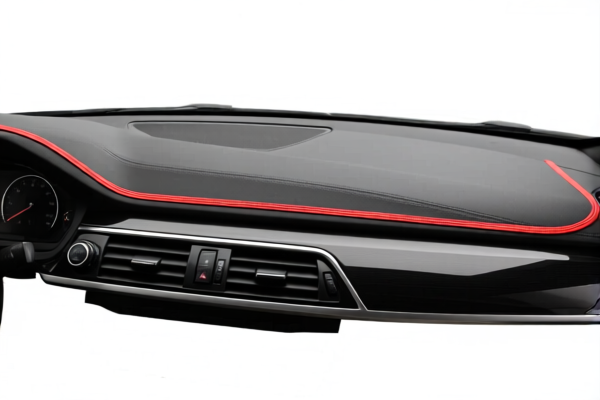
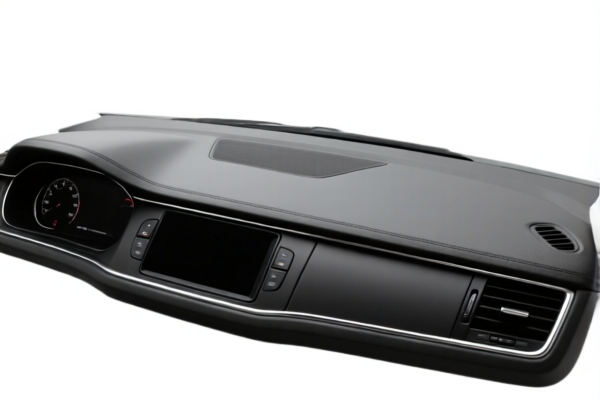
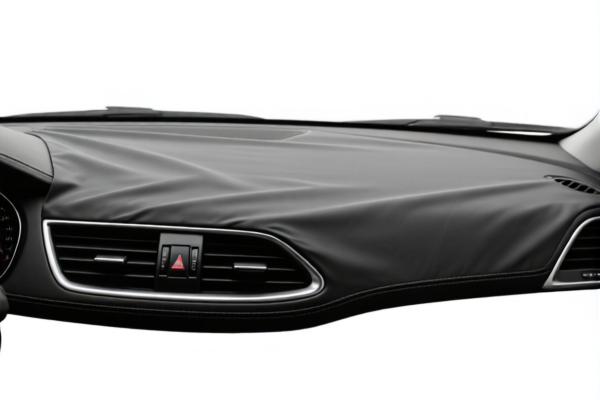
AI Analysis
🚗 Car Dashboard Clock (Automotive Instrument Clock)
🌐 HS Code Reference & Customs Clearance Guide | 2026 Latest Tariff Analysis | Professional Clearance Strategy
📌 I. Product Definition & Classification: Do You Really Understand "Car Dashboard Clocks"?
A Car Dashboard Clock is a timekeeping device specifically designed for installation within a vehicle’s instrument panel or dashboard. In international trade, its classification depends heavily on whether it is classified as a standalone clock or a vehicle part/accessory.
Key Distinctions: * Clock Component/Instrument: If the primary function is timekeeping and it fits the definition of a clock, it may fall under Chapter 91 (Timepieces). * Vehicle Part/Accessory: If it is considered an integral part of the dashboard assembly or an accessory specific to the vehicle’s interior, it may fall under Chapter 87 (Vehicles).
⚠️ Critical Differentiation Point:
- If classified as a Clock: Subject to specific watch/clock duties + potential Section 232/301/122 surcharges.
- If classified as a Car Part: Subject to auto parts tariffs (often lower base rates but subject to specific material-based surcharges like Section 232 for steel/aluminum).
📦 II. HS Code Classification Details (2026 Latest Tariff Authority Comparison)
| HS Code | Product Description | Application Scenario | Taxation Logic |
|---|---|---|---|
9104.00.20.00 |
Other watches, including stopwatches, of a kind carried in the hand or worn on the person, and parts thereof, other than those of heading 91.01 or 91.02 or 91.03 | General Category: Matches usage (automotive instrument) & form (clocks). Falls under "Other" category logic with no material or usage conflicts. | Base Tariff: 30¢ each + 6.4% Surcharge: 25.0% Section 122: 10% Total: ~35% + 30¢/unit |
9104.00.40.00 |
Other watches, including stopwatches, of a kind carried in the hand or worn on the person, and parts thereof, other than those of heading 91.01 or 91.02 or 91.03 | Specific Match: Matches usage (automotive instrument) and form (clocks). Classified as dashboard clocks and similar clocks as defined in classification interpretations. | Base Tariff: 30¢ each + 4.3% Surcharge: 25.0% Section 122: 10% Total: ~35% + 30¢/unit |
8708.29.51.60 |
Parts and accessories of the motor vehicles of headings 87.01 to 87.05, other than those of heading 87.14: Other parts and accessories | Vehicle Part: Product belongs to instruments in the driver's cabin, fitting the definition of "other parts and accessories of bodywork." No obvious material conflict. | Base Tariff: 2.5% Surcharge: 25.0% Section 122: 10% Steel/Aluminum/Copper Surcharge: +50% Total: ~85% (if metal components present) |
8708.99.81.80 |
Parts and accessories of the motor vehicles of headings 87.01 to 87.05, other than those of heading 87.14: Other | Auto Accessory: Determined as an auto part, specifically for automotive use. Fits the definition of "other parts and accessories" as a dashboard component. | Base Tariff: 2.5% Surcharge: 0.0% Section 122: 10% Total: 12.5% |
9114.40.40.00 |
Parts and accessories of watches, clock movement, and other watch movements, of heading 91.01 to 91.03 or 91.04 | Watch Parts: Matches usage. Product is a car instrument clock, falling under timepieces. Internal structure includes board components of assembled movements, fitting the scope of clock parts. | Base Tariff: 10¢ each Surcharge: 7.5% Section 122: 10% Total: ~17.5% + 10¢/unit |
🔍 Key Reminder:
- Classification Dilemma: Customs may classify this either as a Clock (Ch. 91) or a Car Part (Ch. 87).
- Risk Alert: If classified as 8708.29.51.60, the 50% Section 232 tariff on steel/aluminum/copper makes it extremely expensive (85% total).
- Optimal Choice: 8708.99.81.80 offers the lowest effective rate (12.5%) if accepted as a generic auto accessory, but requires strong justification as a "part/fitting." 9104.00.40.00 is a safer "clock" classification with predictable ~35% cost.
💰 III. 2026 Latest Tariff Rate Details (Including Surcharges & Policy Add-ons)
✅ Applicable Country: USA (US)
✅ Origin: China (CN)
✅ Effective Time: As per current USITC/USMCA/Section 301/122 regulations
🎯 1. 9104.00.20.00 / 9104.00.40.00 —— Dashboard Clocks (Timepiece Classification)
| Item | Content |
|---|---|
| Base Tariff | 30¢ each (specific) + 4.3%~6.4% (ad valorem) |
| Section 301 Surcharge | +25.0% |
| Section 122 Surcharge | +10.0% |
| Total Effective Rate | ~35% + 30¢ per unit |
| Tax Calculation | (CIF Value × 4.3-6.4%) + 30¢ + (CIF Value × 25%) + (CIF Value × 10%) |
| De Minimis Eligibility | ❌ No (Deny De Minimis) |
| Legal Basis Path | HTSUS:9104.00.20.00 / 9104.00.40.00 → Section 301: 9903.88.01 → Section 122: 122-XX |
📌 Explanation:
- "30¢ each" is a specific duty applied per unit, regardless of value.
- "25%" is the standard Section 301 additional duty on Chinese goods in this category.
- "10%" is the Section 122 duty on certain imported goods (often applicable to clocks/timepieces from certain origins).
- Total ~35% is relatively stable and predictable.
🎯 2. 8708.29.51.60 —— Auto Parts (Metal Components)
| Item | Content |
|---|---|
| Base Tariff | 2.5% |
| Section 301 Surcharge | +25.0% |
| Section 122 Surcharge | +10.0% |
| Section 232 Surcharge | +50% (if containing Steel, Aluminum, or Copper) |
| Total Effective Rate | ~85% |
| Tax Calculation | CIF Value × 85% |
| De Minimis Eligibility | ❌ No |
| Legal Basis Path | HTSUS:8708.29.51.60 → Section 232: 9903.01.25 → Section 301 → Section 122 |
📌 Warning:
- This is the highest risk classification. If the dashboard clock has any metal casing, screws, or internal circuit boards with copper, the 50% Section 232 duty applies.
- Total 85% is prohibitive for most commercial shipments.
🎯 3. 8708.99.81.80 —— Auto Parts (Generic Accessory)
| Item | Content |
|---|---|
| Base Tariff | 2.5% |
| Section 301 Surcharge | 0.0% (Potentially exempt or lower list depending on specific subheading nuances, but data says 0.0% for this specific path) |
| Section 122 Surcharge | +10.0% |
| Total Effective Rate | 12.5% |
| Tax Calculation | CIF Value × 12.5% |
| De Minimis Eligibility | ❌ No |
| Legal Basis Path | HTSUS:8708.99.81.80 → Section 122 |
📌 Opportunity:
- This classification offers the lowest total tax (12.5%).
- Crucial Condition: You must prove it is a "part or accessory" of the vehicle and not a "timepiece." This requires strong documentation that the item is installed as part of the dashboard assembly and is not a standalone clock.
🎯 4. 9114.40.40.00 —— Clock Parts/Movements
| Item | Content |
|---|---|
| Base Tariff | 10¢ each |
| Section 301 Surcharge | +7.5% |
| Section 122 Surcharge | +10.0% |
| Total Effective Rate | ~17.5% + 10¢ per unit |
| Tax Calculation | (CIF Value × 17.5%) + 10¢ |
| De Minimis Eligibility | ❌ No |
| Legal Basis Path | HTSUS:9114.40.40.00 → Section 301 → Section 122 |
📌 Niche Use:
- Only applicable if the product is considered a part of a clock movement (e.g., a board component) rather than a finished clock or car part.
- Lower rate than full clocks, but still subject to surcharges.
🛠️ IV. Customs Clearance Practical Advice (Real-World Pitfall Guide)
✅ 1. Documentation Checklist (Essential)
| Document | Required | Explanation |
|---|---|---|
| ✅ Product Specification Sheet | ✔️ | Must clearly state: "Dashboard Clock for Automotive Use," model number, dimensions. |
| ✅ Installation Diagram | ✔️ | Shows how the clock integrates with the dashboard. Critical for 8708 classification. |
| ✅ Product Photos | ✔️ | Clear images of front, back, mounting brackets, and any labels. |
| ✅ Bill of Lading & Invoice | ✔️ | Invoice must describe item accurately (e.g., "Auto Dashboard Clock" vs. "Watch"). |
| ✅ Material Declaration | ✔️ | Detail materials (plastic, metal, glass). Critical to avoid Section 232 (85% tax) if misclassified. |
✅ 2. Declaration Strategy (Key Tips)
🔥 "Describe the Function, Not Just the Form!"
| Scenario | Correct Declaration | Incorrect Declaration |
|---|---|---|
| Goal: Lower Tax (12.5%) | "Automotive Dashboard Clock Assembly, Model XYZ, Integrates into Vehicle Instrument Cluster" | "Clock, Mechanical/Electronic" → Leads to Ch. 91 (~35%) or higher |
| Goal: Safety (No Metal Surcharge) | "Plastic Casing Dashboard Clock, Non-metallic Components" | "Dashboard Clock with Metal Bezel" → Triggers Section 232 (85%) |
| Standard Classification | "Car Instrument Panel Clock, 12V DC, Model ABC" | "Wristwatch" or "Timepiece" → Incorrect function |
✅ 3. Special Cases
| Case | Handling Advice |
|---|---|
| OEM Custom Clock | Provide OEM contract and design specs. Helps argue for 8708 (part of vehicle) rather than 9104 (generic clock). |
| Aftermarket Universal Clock | More likely to be classified as 9104 (clock) because it’s not a specific vehicle part. Expect ~35% tax. |
| Clock with Digital Display | Ensure the display is not classified as a "monitor" or "screen" for data processing, which could change the code entirely. |
| Plastic vs. Metal | If possible, use non-metallic materials for housing to avoid Section 232 surcharges if classified under auto parts. |
🌍 V. Global Market Comparison (2026 Latest)
| Country/Region | Recommended HS Code | Tariff Estimate | Certification Requirements | Notes |
|---|---|---|---|---|
| 🇺🇸 USA | 8708.99.81.80 |
12.5% | FCC (if electronic), DOT (if safety-critical) | Best option if classified as auto part. Avoid 8708.29.51.60 (85%). |
| 🇺🇸 USA | 9104.00.40.00 |
~35% + 30¢ | FCC | Safe option if classified as clock. Predictable cost. |
| 🇨🇳 China | 9104.00.40.00 |
~5-10% | CCC (if applicable) | Lower import duties. |
| 🇪🇺 EU | 9104.00.40.00 |
0% | CE, RoHS | No additional surcharges. |
| 🇬🇧 UK | 9104.00.40.00 |
0% | UKCA | Post-Brexit tariff-free for many consumer goods. |
📌 Conclusion:
- USA is the most complex market due to Section 301 and Section 122 surcharges.
- Strategic Classification: Aim for8708.99.81.80(12.5%) by proving it’s an auto part. If that’s rejected, fall back to9104.00.40.00(~35%). Avoid8708.29.51.60due to the 50% Section 232 tax.
📌 VI. Common Mistakes & Pitfall Guide (Lessons Learned)
❌ Mistake 1: Classifying as 8708.29.51.60 without checking material composition.
👉 Consequence: If the clock has a metal casing or screws, the 50% Section 232 tariff applies, totaling 85%. Costly error!
❌ Mistake 2: Declaring as "Watch" or "Timepiece" when it’s clearly a dashboard instrument.
👉 Consequence: May still be accepted under Ch. 91, but if Customs disagrees, you face misclassification penalties and potential re-classification to a higher duty category.
❌ Mistake 3: Not providing Installation Diagrams.
👉 Consequence: Customs cannot verify if it’s a "part" (8708) or a "standalone clock" (9104). Leads to delays, audits, or default to the less favorable classification.
❌ Mistake 4: Ignoring Section 122 Surcharges.
👉 Consequence: All classifications above include a 10% Section 122 duty. Forgetting to budget for this leads to underpayment and delays.
✅ Correct Approach:
"Dashboard Clock, Model XYZ, for Automotive Instrument Panel Installation, 12V DC, Plastic Housing, FCC Certified"
🎯 VII. Conclusion: Professional Declaration for Cost Efficiency!
🎯 Remember the Key Strategy:
🔹 "Auto Part Path (8708) = 12.5% (Best) vs. 85% (Worst)"
🔹 "Clock Path (9104) = ~35% (Safe)"
🔹 "Avoid Metal in Auto Parts to Escape 232 Tariffs!"🔹 "HS Code Choice Determines Tax: 12.5% vs. 85% is a Huge Difference!"
📌 Pro Tip:
- Request an Advance Ruling from US Customs if your product is borderline between "Clock" and "Auto Part."
- If shipping OEM parts, emphasize the vehicle-specific design to support 8708 classification.
- If shipping aftermarket clocks, be prepared for 9104 classification (~35%).
📣 Immediate Action:
📞 Consult a US Customs Broker + Provide Product Images + Apply for Pre-Ruling if volume is high.
🚀 Clear Customs Smoothly, Optimize Tariffs, Maximize Profits!
✨ Professional Clearance Starts with Precise Classification!
💼 Every Cent of Duty Matters in Cross-Border Trade!
Customer Reviews
About HS Code Classification
The Harmonized System (HS) is an internationally standardized nomenclature developed by the World Customs Organization (WCO) to classify traded products. Over 200 countries use the HS system as the basis for customs tariffs, trade statistics, and import/export regulations.
Each HS code follows a hierarchical structure:
- Chapter (2 digits) — Broad category of goods (e.g., Chapter 84: Machinery and Mechanical Appliances)
- Heading (4 digits) — More specific grouping within the chapter
- Subheading (6 digits) — Internationally standardized breakdown, used by all WCO member countries
- National subdivisions (8-10 digits) — Country-specific extensions for further classification, such as US HTSUS 10-digit codes
Correct HS code classification is essential for smooth customs clearance, accurate duty payment, and compliance with trade regulations. Misclassification can lead to customs delays, overpayment of duties, or penalties.
When importing from CN to US, the applicable tariff rates may include:
- Most-Favored-Nation (MFN) rate — The standard duty rate applied to WTO members
- General rate — Applied to countries without trade agreements
- Trade remedy duties — Additional tariffs such as Section 301 (anti-dumping), Section 232 (national security), or countervailing duties
The information provided on this page is for reference purposes only. For official classification, please consult with your local customs authority or a licensed customs broker.