Car Door Instrument Panel Sealing Strip
CN → US| HS Code | Tariff Rate | Origin | Destination | Doc |
|---|---|---|---|---|
| 4016935050 | 37.5% | CN | US | Official Doc |
| 4016996050 | 37.5% | CN | US | Official Doc |
| 3926904590 | 38.5% | CN | US | Official Doc |
| 3926909989 | 22.8% | CN | US | Official Doc |
| 4016931010 | 37.5% | CN | US | Official Doc |
Product Images
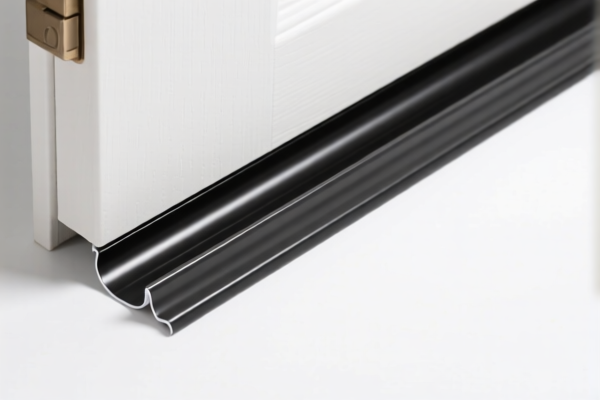
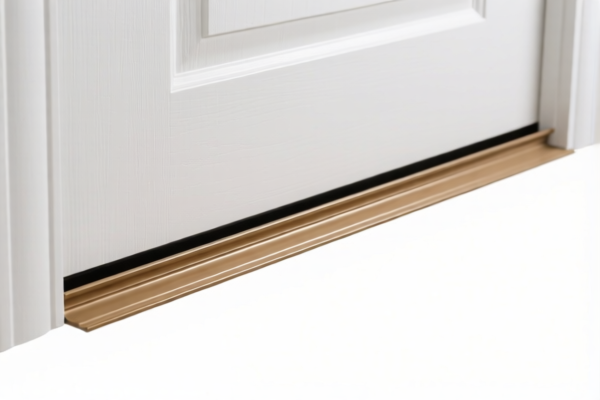
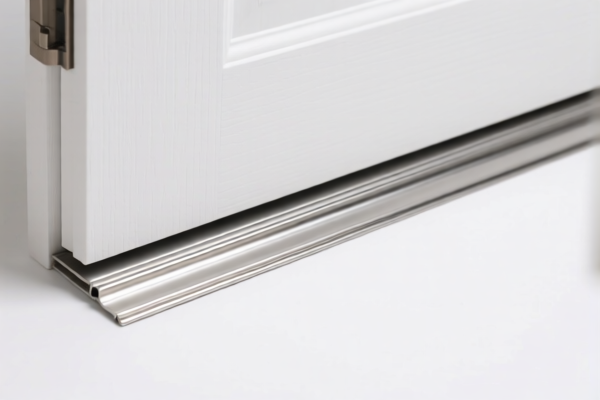
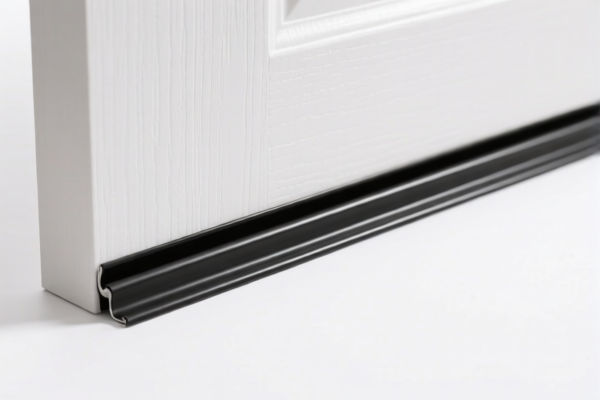
AI Analysis
🚗 Car Door Instrument Panel Sealing Strip
🌐 HS Code Reference & Customs Clearance Guide | 2026 Latest Tariff Analysis | Professional Clearance Strategy
📌 I. Product Definition and Classification: What is a "Sealing Strip"?
The Car Door Instrument Panel Sealing Strip is a critical automotive component used to create an airtight, watertight, and soundproof barrier between the car door frame and the door itself, or between interior panels. In international trade, its classification depends heavily on its material composition and specific function.
Key Distinction:
- Rubber Seals (Elastomers): Typically made from EPDM, PVC, or silicone rubber. These are flexible, durable, and resistant to weathering. → Usually classified under Chapter 40 (Rubber).
- Plastic/Thermoplastic Seals: Made from ABS, PVC, or other thermoplastics. These may be rigid or semi-flexible. → Usually classified under Chapter 39 (Plastics).
⚠️ Critical Classification Point:
- If the material is predominantly rubber (natural or synthetic), it falls under Chapter 40.
- If the material is predominantly plastic (non-rubber), it falls under Chapter 39.
- Misclassification can lead to significant duty differences (e.g., 22.8% vs. 37.5% total tariffs).
📦 II. HS Code Classification Details (2026 Latest Tariff Alignment)
Based on the provided data, here are the five most likely HS Codes for this product, ranked by classification logic:
| HS Code | Product Description | Material/Type | Application Logic | Total Tariff (US/CN) |
|---|---|---|---|---|
| 4016.93.50.50 | Other articles of vulcanized rubber other than hard rubber: Gaskets, washers and other seals | Rubber | Specifically for "gaskets, washers, and other seals." Best match if material is rubber. | 37.5% |
| 4016.99.60.50 | Other articles of vulcanized rubber other than hard rubber: Other | Rubber | If the seal is not strictly a "gasket/washer" but still rubber. Broad category for rubber parts. | 37.5% |
| 3926.90.45.90 | Other articles of plastics and articles of other materials: Other seals | Plastic/Rubber | For seals made of plastic or non-rubber materials. Matches "seal" function. | 38.5% |
| 3926.90.99.89 | Other articles of plastics and articles of other materials: Other | Plastic | General category for plastic parts not specified elsewhere. | 22.8% |
| 4016.93.10.10 | Other articles of vulcanized rubber other than hard rubber: Gaskets, washers and other seals | Rubber | Specific sub-category for rubber gaskets/seals. | 37.5% |
🔍 Key Insight:
- Rubber Seals (Chapter 40): Higher base tariff (2.5%) + 25% Section 301 + 10% IEEPA = 37.5%.
- Plastic Seals (Chapter 39): Lower base tariff (3.5% or 5.3%) + 25% Section 301 + 10% IEEPA = 38.5% or 22.8%.
- Note: The 22.8% rate for3926.90.99.89is significantly lower, but only applies if the product is confirmed as plastic and not falling under other specific plastic seal codes.
💰 III. 2026 Latest Tariff Rate Breakdown (Including Surtaxes)
✅ Applicable Country: United States (US)
✅ Origin: China (CN)
✅ Effective Date: November 10, 2025 (and subsequent imports)
🎯 1. Rubber-Based Seals (HS Codes: 4016.93.50.50, 4016.99.60.50, 4016.93.10.10)
| Item | Detail |
|---|---|
| Base Tariff | 2.5% |
| Section 301 Surtax | +25.0% |
| IEEPA Surtax (122 Clause) | +10.0% |
| Total Tariff | 37.5% |
| Calculation | CIF Value × 37.5% |
| De Minimis Exemption? | ❌ No (Denied) |
| Legal Basis | USITC:4016.93.50.50 → Section 301: Footnote 9903.88.01 → IEEPA:9903.01.25 |
📌 Explanation:
- The 37.5% rate is standard for rubber automotive seals from China.
- Section 301 (25%) applies to almost all rubber articles from China.
- IEEPA (10%) is an additional surcharge on Chinese goods.
🎯 2. Plastic-Based Seals (HS Code: 3926.90.45.90)
| Item | Detail |
|---|---|
| Base Tariff | 3.5% |
| Section 301 Surtax | +25.0% |
| IEEPA Surtax (122 Clause) | +10.0% |
| Total Tariff | 38.5% |
| Calculation | CIF Value × 38.5% |
| De Minimis Exemption? | ❌ No |
| Legal Basis | USITC:3926.90.45.90 → Section 301 → IEEPA |
📌 Note: Slightly higher than rubber due to a higher base rate (3.5% vs 2.5%).
🎯 3. General Plastic Articles (HS Code: 3926.90.99.89)
| Item | Detail |
|---|---|
| Base Tariff | 5.3% |
| Section 301 Surtax | +7.5% (Note: Data indicates 7.5% instead of 25% for this specific code) |
| IEEPA Surtax (122 Clause) | +10.0% |
| Total Tariff | 22.8% |
| Calculation | CIF Value × 22.8% |
| De Minimis Exemption? | ❌ No |
| Legal Basis | USITC:3926.90.99.89 → Section 301 → IEEPA |
📌 Critical Warning:
- This 22.8% rate is significantly lower than other options.
- However, it only applies if the product is classified as "other plastic articles" and not as a specific "seal" under other plastic subheadings.
- Customs may challenge this if the product is clearly a "seal," pushing it to3926.90.45.90(38.5%).
- Strategy: Only use this if your product has a non-standard shape or function that doesn't fit "seal" definitions precisely.
🛠️ IV. Customs Clearance Practical Advice (Avoiding Pitfalls)
✅ 1. Preparation Checklist (All Required)
| Document | Required | Notes |
|---|---|---|
| ✅ Product Specification Sheet | ✔️ | Must state material composition (e.g., "90% EPDM Rubber, 10% Plastic") |
| ✅ Technical Drawing | ✔️ | Show cross-section, dimensions, and installation method |
| ✅ Product Photos | ✔️ | Close-up of material texture, logo, and overall shape |
| ✅ Bill of Lading & Invoice | ✔️ | Clearly describe as "Rubber/Plastic Sealing Strip for Automotive Door Panel" |
| ✅ Material Test Report | ✔️ | Proof of rubber/plastic content (e.g., from SGS or Intertek) |
| ✅ Certificate of Origin | ✔️ | Required for tariff determination |
| ✅ Packing List | ✔️ | Detail net/gross weight, dimensions |
✅ 2. Classification Strategy (Key Tips)
🔥 "Material Determines Code, Function Confirms It!"
| Scenario | Recommended HS Code | Risk Level |
|---|---|---|
| 100% Rubber Seal | 4016.93.50.50 |
Low (Standard) |
| Rubber with Plastic Core | 4016.93.50.50 |
Low (Rubber predominates) |
| 100% Plastic Seal | 3926.90.45.90 |
Low (Standard) |
| Plastic Seal with Complex Shape | 3926.90.99.89 |
High (Risk of Challenge) |
| Mixed Material (Unclear) | 4016.93.50.50 |
Medium (Err on the side of Rubber) |
📌 Tip:
- If the seal is primarily rubber, always use Chapter 40.
- If the seal is primarily plastic, use Chapter 39.
- Never misrepresent material. Customs can inspect and reclassify, leading to penalties.
✅ 3. Special Cases
| Situation | Advice |
|---|---|
| OEM Parts for Car Manufacturers | Provide a letter from the automaker confirming the product type and material. |
| Used/Recycled Seals | Cannot be imported as new goods. May require different HS Code or be prohibited. |
| Seals with Adhesive Tape | If adhesive is a minor part, classify based on the main body material. |
| Custom-Extruded Profiles | Still classified as "seals" if their primary function is sealing. |
🌍 V. Global Market Comparison (2026)
| Country/Region | Recommended HS Code | Total Tariff (CN Origin) | Notes |
|---|---|---|---|
| 🇺🇸 USA | 4016.93.50.50 |
37.5% | High due to Section 301 + IEEPA |
| 🇨🇳 China | 4016.93.50.50 |
0% | No import tariff on rubber seals |
| 🇪🇺 EU | 4016.93.00 |
0% | No tariff if under 0% duty rate |
| 🇯🇵 Japan | 4016.93.000 |
0% | Free trade agreement benefits may apply |
| 🇬🇧 UK | 4016.93.00 |
2.5% | Lower than US, no Section 301 |
📌 Conclusion:
- USA is the most expensive market due to additional surtaxes.
- EU and Japan are more favorable, with 0% tariff for rubber/plastic seals in many cases.
- Consider third-country manufacturing (e.g., Mexico, Vietnam) for US exports to avoid Section 301 tariffs.
📌 VI. Common Mistakes & Pitfalls (Lessons Learned)
❌ Mistake 1: Classifying rubber seals as "plastic" to get a lower rate.
👉 Consequence: Customs audit finds rubber → Back tariffs + penalties.
❌ Mistake 2: Using 3926.90.99.89 (22.8%) for a standard plastic seal.
👉 Consequence: Customs reclassifies to 3926.90.45.90 (38.5%) → Back taxes + interest.
❌ Mistake 3: Failing to disclose material composition.
👉 Consequence: Delayed clearance, requests for additional documentation, potential seizure.
✅ Correct Approach:
"Automotive Rubber Sealing Strip, EPDM Material, for Car Door Panel, Model XYZ, Certified to ISO 9001"
🎯 VII. Conclusion: Precision Classification, Cost Savings
🎯 Remember:
🔹 "Rubber = 37.5%, Plastic = 38.5% (or 22.8% if careful), Don't Guess!"
🔹 "Material is Key, Function Supports, Documentation is King!"
📌 Pro Tip:
If your seals are sourced from Vietnam, Mexico, or Thailand, you may qualify for lower or zero tariffs under USMCA or FTAs.
Recommend Advance Ruling from US Customs (CBP) for high-volume shipments.
📣 Take Action Now:
📞 Contact a licensed customs broker + Provide material specs + Apply for Pre-Ruling
🚀 Ensure smooth clearance, minimize costs, and scale your automotive exports!
✨ Professional clearance starts with accurate classification!
💼 Every dollar saved is a dollar earned!
Customer Reviews
About HS Code Classification
The Harmonized System (HS) is an internationally standardized nomenclature developed by the World Customs Organization (WCO) to classify traded products. Over 200 countries use the HS system as the basis for customs tariffs, trade statistics, and import/export regulations.
Each HS code follows a hierarchical structure:
- Chapter (2 digits) — Broad category of goods (e.g., Chapter 84: Machinery and Mechanical Appliances)
- Heading (4 digits) — More specific grouping within the chapter
- Subheading (6 digits) — Internationally standardized breakdown, used by all WCO member countries
- National subdivisions (8-10 digits) — Country-specific extensions for further classification, such as US HTSUS 10-digit codes
Correct HS code classification is essential for smooth customs clearance, accurate duty payment, and compliance with trade regulations. Misclassification can lead to customs delays, overpayment of duties, or penalties.
When importing from CN to US, the applicable tariff rates may include:
- Most-Favored-Nation (MFN) rate — The standard duty rate applied to WTO members
- General rate — Applied to countries without trade agreements
- Trade remedy duties — Additional tariffs such as Section 301 (anti-dumping), Section 232 (national security), or countervailing duties
The information provided on this page is for reference purposes only. For official classification, please consult with your local customs authority or a licensed customs broker.