Car Emergency Power Starter
CN → US| HS Code | Tariff Rate | Origin | Destination | Doc |
|---|---|---|---|---|
| 8504409520 | 35.0% | CN | US | Official Doc |
| 8504407007 | 35.0% | CN | US | Official Doc |
| 8507100090 | 38.5% | CN | US | Official Doc |
| 8518402000 | 35.0% | CN | US | Official Doc |
Product Images
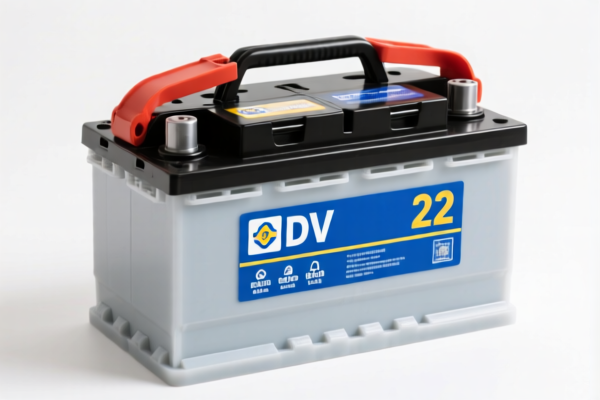
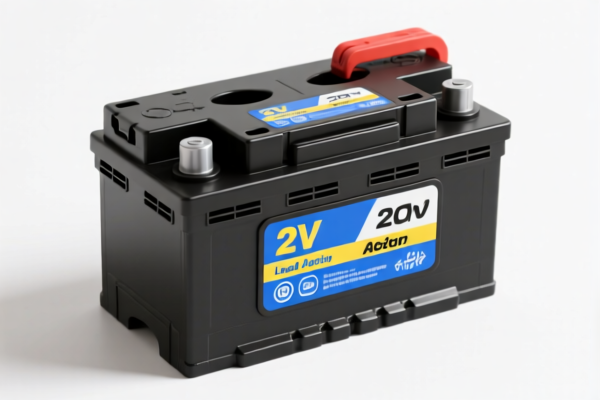
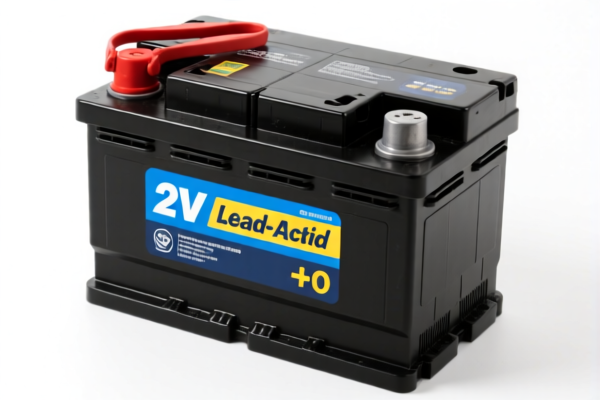
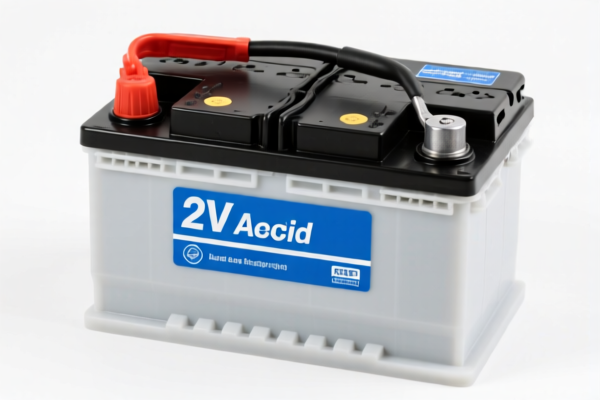
AI Analysis
🔋 Car Emergency Power Starter (Jump Starter)
🌐 HS Code Reference & Customs Clearance Guide | 2026 Latest Tariff Analysis | Professional Clearance Strategy
📌 I. Product Definition & Classification: Do You Really Understand "Car Emergency Power Starter"?
A Car Emergency Power Starter is a portable power device designed to jump-start vehicles with depleted batteries. In international trade, this product often falls into a "classification gray area" because it combines functions of power conversion (DC-DC or DC-AC), energy storage (Lithium or Lead-Acid batteries), and electronic control.
Depending on the primary function emphasized and the core composition of the device, it can be classified into four different HS Codes. Choosing the wrong code can lead to significant duty discrepancies and customs delays.
⚠️ Key Classification Logic:
- If the device primarily converts voltage (e.g., inverter function) and acts as a power source → 8504.40
- If the device is primarily a battery specifically for starting engines → 8507.10
- If the device is categorized broadly as an audio amplifier/electronic device (less common, high risk) → 8518.40
📦 II. HS Code Classification Details (2026 Latest Tariff Authority Comparison)
| HS Code | Product Description | Applicability Scenario | Core Function |
|---|---|---|---|
8504.40.95.20 |
Static converters (e.g., power supplies); Other | Portable jump starters acting as DC voltage converters with output within specified power ranges. | DC Voltage Conversion Output |
8504.40.70.07 |
Static converters (e.g., power supplies); Power supplies; Output 50W-150W | Jump starters providing power where the output power typically falls between 50W and 150W. | Power Supply / Power Delivery |
8507.10.00.90 |
Accumulators; Primary cells and primary batteries; Of lead-acid type | Jump starters where the core component is a Lead-Acid or Lithium battery, specifically used for starting piston engines. | Battery Storage for Engine Start |
8518.40.20.00 |
Sound amplifiers; Other | Jump starters classified as audio/electronic equipment involving energy conversion/amplification logic. | Electronic Device / Amplifier Logic |
🔍 Key Reminder:
- 8504.40 codes are often preferred if the device is marketed as a "Power Supply" or "Inverter" with jump-start capability. - 8507.10 is the most traditional classification for battery-based jump starters, especially those relying on lead-acid chemistry, though lithium-based ones are increasingly shifting towards 8504 or 8507 depending on local customs interpretation. - 8518.40 is a high-risk classification; unless the device has significant audio amplification features, this is likely incorrect.
💰 III. 2026 Latest Tariff Rate Details (Including Additional Taxes & Policy Surcharges)
✅ Applicable Country: United States (US)
✅ Country of Origin: China (CN)
✅ Effective Time: From November 10, 2025 (including subsequent imports)
🎯 1. HS Code 8504.40.95.20 & 8504.40.70.07 (Static Converters / Power Supplies)
Both codes fall under the category of static converters. The tariff structure is identical for these two subheadings in this context.
| Item | Content |
|---|---|
| Base Tariff | 0.0% |
| Section 301 Additional Tariff | +25.0% |
| Section 122 Tariff | +10.0% |
| Total Tariff Rate | 35.0% |
| Tax Calculation | CIF Value × 35% |
| De Minimis Exemption Eligible? | ❌ No (deny_de_minimis applies due to Section 301/122) |
| Legal Basis Path | IEEPA:9903.01.25 → USITC:8504.40.95.20 → FOOTNOTE:301/122 |
📌 Explanation:
- The 0% base rate is standard for many electronics. - The 25% is the Section 301 tariff imposed on Chinese goods. - The 10% is the Section 122 tariff (often applied to specific categories or under certain trade enforcement actions). - Total 35% is a high tariff rate for electronics. Customs will scrutinize the "Power Supply" classification strictly.
🎯 2. HS Code 8507.10.00.90 (Lead-Acid/Lithium Batteries for Engine Start)
This code classifies the product primarily as a battery.
| Item | Content |
|---|---|
| Base Tariff | 3.5% |
| Section 301 Additional Tariff | +25.0% |
| Section 122 Tariff | +10.0% |
| Total Tariff Rate | 38.5% |
| Tax Calculation | CIF Value × 38.5% |
| De Minimis Exemption Eligible? | ❌ No |
| Legal Basis Path | IEEPA:9903.01.25 → USITC:8507.10.00.90 → FOOTNOTE:301/122 |
📌 Note:
- Although the base rate is 3.5%, the additional surcharges push the total to 38.5%. - This classification is valid if the product is primarily a battery used to start engines. However, if it contains significant power conversion circuits, customs may reclassify it to 8504.
🎯 3. HS Code 8518.40.20.00 (Sound Amplifiers / Other Electronic Devices)
This is a less common classification for jump starters unless they have specific audio functions.
| Item | Content |
|---|---|
| Base Tariff | 0.0% |
| Section 301 Additional Tariff | +25.0% |
| Section 122 Tariff | +10.0% |
| Total Tariff Rate | 35.0% |
| Tax Calculation | CIF Value × 35% |
| De Minimis Exemption Eligible? | ❌ No |
| Legal Basis Path | IEEPA:9903.01.25 → USITC:8518.40.20.00 → FOOTNOTE:301/122 |
📌 Warning:
- While the rate is 35%, the misclassification risk is extremely high.
- Customs may reject this code if the product lacks audio amplification features, leading to penalties and back-taxes.
🛠️ IV. Customs Clearance Practical Advice (Real-World Pitfall Avoidance Guide)
✅ 1. Document Preparation Checklist (Mandatory)
| Document | Required | Explanation |
|---|---|---|
| ✅ Product Specification Sheet | ✔️ | Must clearly state: Input/Output Voltage, Capacity (Wh/Ah), Max Peak Current (Amps), and Primary Function (e.g., "Jump Starter with USB Power Bank"). |
| ✅ Circuit Diagram / Structure Photo | ✔️ | To prove whether it is a pure battery (8507) or includes power conversion circuits (8504). |
| ✅ Product Photos (with Nameplate) | ✔️ | Clear image of the model number, brand, and technical labels. |
| ✅ Third-Party Test Report | ✔️ | FCC, CE, RoHS, UN38.3 (for lithium batteries) – Critical for safety compliance. |
| ✅ Commercial Invoice | ✔️ | Accurate description: "Portable Car Jump Starter, Model XYZ, Lithium-ion, 12V/200A Peak". |
| ✅ Packing List | ✔️ | Itemize components to avoid "split shipment" suspicion. |
✅ 2. Declaration Tips (Key Mantra)
🔥 "Define Core Function, Disclose Capacity, Avoid Misclassification!"
| Scenario | Correct Declaration | Wrong Practice |
|---|---|---|
| Lithium Jump Starter with Power Bank Function | 8504.40.95.20 or 8504.40.70.07 (if power conversion is primary) |
Misdeclare as pure battery (8507) → Risk of penalty |
| Lead-Acid Jump Starter | 8507.10.00.90 |
Misdeclare as converter (8504) → Unlikely but possible |
| OEM Custom Jump Starter | Provide client order + technical specs | Use vague terms like "Electronic Device" → High audit risk |
| Lithium Battery Included | Must declare UN38.3 | Omit battery info → Cargo detained/destroyed |
✅ 3. Special Case Handling
| Situation | Handling Advice |
|---|---|
| Lithium-ion Content | Must include UN38.3 test report and MSDS. Customs will check for lithium compliance strictly. |
| "Power Bank" vs. "Jump Starter" | If marketed as both, emphasize jump-start capability (high current) to justify 8504 or 8507. Pure power banks might fall under different codes. |
| Pre-Clearance Ruling | Highly Recommended. Apply for an Advance Ruling from US CBP to fix the HS Code before shipping. |
🌍 V. Global Market Customs Comparison (2026 Latest)
| Country/Region | Recommended HS Code | Tariff Rate (China Origin) | Certification Requirements | Notes |
|---|---|---|---|---|
| 🇺🇸 USA | 8504.40.95.20 / 8507.10.00.90 |
35% - 38.5% | FCC + UN38.3 + RoHS | High additional tariffs apply. |
| 🇨🇳 China | 8504.40.95.20 |
~5-8% (Varies) | CCC (if applicable) | Lower base tariff. |
| 🇪🇺 EU | 8504.40.95.20 |
0-4% (Depending on exact subheading) | CE + UKCA | No Section 301/122 tariffs. |
| 🇬🇧 UK | 8504.40.95.20 |
0-4% | UKCA | Post-Brexit rules apply. |
📌 Conclusion:
- USA is the most expensive market due to Section 301 and Section 122 tariffs.
- EU/UK offers more favorable tariff structures but requires strict CE/UKCA and lithium safety certifications.
- Misclassification in the USA can lead to heavy penalties and cargo delays.
📌 VI. Common Errors & Pitfall Guide (Lessons Learned from Blood & Tears)
❌ Error 1: Declaring a Lithium Jump Starter as a simple "Electronics" item without specifying battery type
👉 Consequence: Cargo detained for safety inspection → Delays & Storage Fees.
❌ Error 2: Using HS Code 8507.10 for a device that is primarily a DC-DC Converter (with minimal battery storage)
👉 Consequence: Customs reclassification → Back-taxes + Penalties.
❌ Error 3: Omitting UN38.3 Report for Lithium Models
👉 Consequence: Rejected Entry. Lithium batteries require specific safety documentation.
❌ Error 4: Vague Description "Car Accessory"
👉 Consequence: Customs assigns a generic, high-duty code → Higher Tax.
✅ Correct Practice:
"Portable Car Jump Starter, Model XYZ, Lithium-Ion, 12V, 200A Peak Current, with USB Power Bank Output, FCC Certified, UN38.3 Tested"
🎯 VII. Conclusion: Professional Declaration, Save Time, Reduce Costs!
🎯 Remember the Mantra:
🔹 "Lithium Needs UN38.3, Converter Goes to 8504, Battery Goes to 8507, Vague Description Gets Punished!"
🔹 "USA Tariff is 35-38.5%, Pre-Ruling Saves Thousands, Accurate Docs Ensure Smooth Clearance!"
📌 Tips:
- If your jump starters are originating from Vietnam, Mexico, or Thailand, you may be eligible for IEEPA exemptions or lower tariffs.
- Always apply for an Advance Ruling if the classification is uncertain.
- For Lithium products, ensure the MSDS and UN38.3 are up-to-date and attached to the commercial invoice.
📣 Immediate Action:
📞 Contact a licensed customs broker + Provide Product Tech Specs + Apply for HS Code Advance Ruling
🚀 Let your Car Emergency Power Starters clear customs smoothly, efficiently, and profitably!
✨ Professional Clearance Starts with Accurate Classification!
💼 Every cent of your cost deserves precise calculation!
Customer Reviews
About HS Code Classification
The Harmonized System (HS) is an internationally standardized nomenclature developed by the World Customs Organization (WCO) to classify traded products. Over 200 countries use the HS system as the basis for customs tariffs, trade statistics, and import/export regulations.
Each HS code follows a hierarchical structure:
- Chapter (2 digits) — Broad category of goods (e.g., Chapter 84: Machinery and Mechanical Appliances)
- Heading (4 digits) — More specific grouping within the chapter
- Subheading (6 digits) — Internationally standardized breakdown, used by all WCO member countries
- National subdivisions (8-10 digits) — Country-specific extensions for further classification, such as US HTSUS 10-digit codes
Correct HS code classification is essential for smooth customs clearance, accurate duty payment, and compliance with trade regulations. Misclassification can lead to customs delays, overpayment of duties, or penalties.
When importing from CN to US, the applicable tariff rates may include:
- Most-Favored-Nation (MFN) rate — The standard duty rate applied to WTO members
- General rate — Applied to countries without trade agreements
- Trade remedy duties — Additional tariffs such as Section 301 (anti-dumping), Section 232 (national security), or countervailing duties
The information provided on this page is for reference purposes only. For official classification, please consult with your local customs authority or a licensed customs broker.