Car Engine Rubber Gasket
CN → US| HS Code | Tariff Rate | Origin | Destination | Doc |
|---|---|---|---|---|
| 4016931010 | 37.5% | CN | US | Official Doc |
| 4008210000 | 35.0% | CN | US | Official Doc |
| 4008292000 | 37.9% | CN | US | Official Doc |
| 8484900000 | 37.5% | CN | US | Official Doc |
| 4016931050 | 37.5% | CN | US | Official Doc |
Product Images
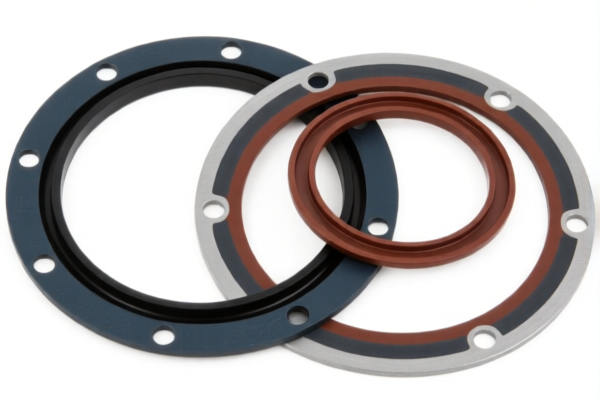
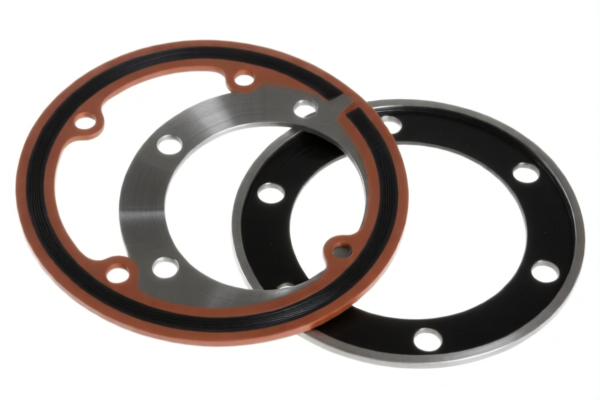
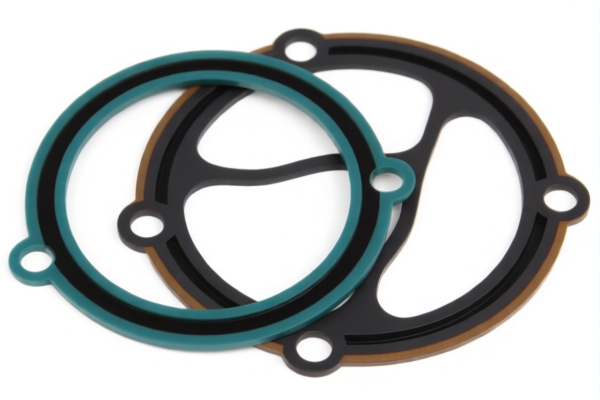
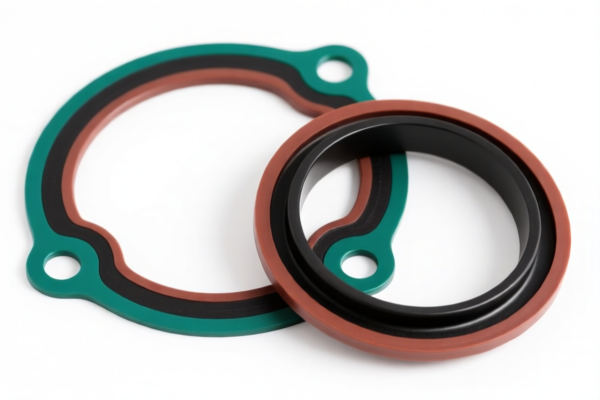
AI Analysis
🚗 Car Engine Rubber Gasket: HS Code Classification & US Customs Clearance Guide (2026)
🌐 HS Code Reference & Customs Clearance Strategy | 2026 Tariff Full Analysis | Professional Clearance Protocol
📌 Part I: Product Definition & Classification Logic
A Car Engine Rubber Gasket is a critical automotive component designed to seal the joints between engine parts, preventing leaks of oil, coolant, or combustion gases. In international trade, the classification depends heavily on the material form (sheet/strip vs. specific part) and the presence of additional materials (metal reinforcements, adhesives, etc.).
Based on the provided data, here are the 5 precise HS Codes applicable to this product, along with the specific reasoning for each classification and the corresponding tax structure.
⚠️ Key Insight:
- If the gasket is a specific finished part for an engine → 4016.93.10
- If the gasket is a raw sheet/strip of rubber → 4008.21 or 4008.29
- If it contains metal/other materials combined with rubber → 8484.90
📦 Part II: HS Code Classification Details (2026 Latest Tariff Alignment)
| HS Code | Product Description | Classification Logic (Why this code?) | Material/Form Conflict? |
|---|---|---|---|
4016.93.10.10 |
Rubber Engine Gasket | Specifically for "Engine Gaskets" made of rubber. | ✅ No conflict |
4008.21.00.00 |
Vulcanized Rubber Sheets/Strips | Classified as "Vulcanized rubber gaskets" in sheet/strip form, non-foam. | ✅ No conflict |
4008.29.20.00 |
Rubber Gaskets (Plates/Strips) | General rubber gaskets falling under plates/strips/bars. | ✅ No conflict |
8484.90.00.00 |
Rubber Gaskets (Mixed Materials) | Classified under "Gaskets" where rubber is combined with other materials. | ✅ Mixed material scenario |
4016.93.10.50 |
Vulcanized Rubber Gasket | Specifically for automotive engine accessories, vulcanized rubber. | ✅ No conflict |
🔍 Detailed Explanation of Classifications:
4016.93.10.10: This is the most direct classification for "Rubber Engine Gaskets." It specifically targets gaskets made of rubber that are shaped for use in automotive engines. The description explicitly mentions "Rubber material, Plate form, Automotive use."4008.21.00.00: Used if the product is imported as vulcanized rubber sheets, plates, or strips that will be cut into gaskets later. It is defined as "Vulcanized rubber gaskets, form: plate/strip, non-foam rubber product."4008.29.20.00: A broader category for Rubber Gaskets under the range of plates, strips, and bars. It is used when the specific "engine" designation isn't the primary classifier, but the material form is consistent.8484.90.00.00: This code falls under Chapter 84 (Nuclear reactors, boilers, machinery and mechanical appliances). It is used for Gaskets made of any material, but in this context, it specifies "Rubber gaskets, compliant with Gaskets classification, material: combination of rubber and other materials." Use this if your gasket has metal cores, adhesive layers, or composite structures.4016.93.10.50: Similar to.10but specifies "Vulcanized Rubber Products Gaskets, Purpose: Car Engine Accessories." It confirms no material conflict and emphasizes the automotive application.
💰 Part III: 2026 Latest Tariff Rate Breakdown (Detailed Tax Clauses)
✅ Applicable Country: United States (US)
✅ Country of Origin: China (CN)
✅ Effective Time: 2025/2026 Current Tariff Structure
All five HS codes share a similar high-tax structure due to US-China trade policies. Below is the detailed tax breakdown for each:
🎯 1. 4016.93.10.10 & 4016.93.10.50 — Automotive Rubber Gaskets
| Item | Content |
|---|---|
| Base Tariff Rate | 2.5% |
| Section 301 Additional Tariff | 25.0% |
| Section 122 Tariff | 10.0% |
| Total Tax Rate | 37.5% |
| Tax Calculation | CIF Value × 37.5% |
| De Minimis Exemption | ❌ Not Eligible (Subject to strict scrutiny) |
📌 Explanation:
- Base 2.5%: Standard MFN tariff for rubber articles.
- Section 301 (25%): The dominant additional tariff on Chinese rubber goods.
- Section 122 (10%): Specific additional tariff for certain rubber products.
- Total 37.5%: High cost barrier for automotive rubber parts from China.
🎯 2. 4008.21.00.00 — Vulcanized Rubber Sheets/Strips
| Item | Content |
|---|---|
| Base Tariff Rate | 0.0% |
| Section 301 Additional Tariff | 25.0% |
| Section 122 Tariff | 10.0% |
| Total Tax Rate | 35.0% |
| Tax Calculation | CIF Value × 35.0% |
| De Minimis Exemption | ❌ Not Eligible |
📌 Note:
- The base rate is lower (0%), but the additional tariffs remain high.
- Total rate is 35.0%, slightly lower than the finished gasket rate (37.5%).
- Warning: If imported as raw sheets, customs may require proof that they are not "finished gaskets" to justify this lower base rate.
🎯 3. 4008.29.20.00 — General Rubber Gaskets (Plates/Strips)
| Item | Content |
|---|---|
| Base Tariff Rate | 2.9% |
| Section 301 Additional Tariff | 25.0% |
| Section 122 Tariff | 10.0% |
| Total Tax Rate | 37.9% |
| Tax Calculation | CIF Value × 37.9% |
| De Minimis Exemption | ❌ Not Eligible |
📌 Note:
- Highest base rate among the options (2.9%).
- Total rate 37.9% is the most expensive option.
- Only use this if the product does not fit the specific "engine" or "vulcanized sheet" descriptions.
🎯 4. 8484.90.00.00 — Mixed Material Gaskets
| Item | Content |
|---|---|
| Base Tariff Rate | 2.5% |
| Section 301 Additional Tariff | 25.0% |
| Section 122 Tariff | 10.0% |
| Total Tax Rate | 37.5% |
| Tax Calculation | CIF Value × 37.5% |
| De Minimis Exemption | ❌ Not Eligible |
📌 Note:
- Same total rate as the primary automotive gasket codes.
- Use only if the gasket contains significant non-rubber components (e.g., metal reinforcement layers, composite fabrics).
- Misclassification Risk: Declaring a pure rubber gasket under this code may lead to customs audits.
🛠️ Part IV: Customs Clearance Practical Advice (Pitfall Avoidance Guide)
✅ 1. Required Documentation Checklist
| Document | Required? | Description |
|---|---|---|
| ✅ Commercial Invoice | ✔️ | Must clearly state: "Rubber Gasket for Car Engine," Material: "Vulcanized Rubber," HS Code. |
| ✅ Packing List | ✔️ | Detail net/gross weight, dimensions. |
| ✅ Product Specifications | ✔️ | Include material composition (100% rubber vs. composite), dimensions, hardness (Shore A). |
| ✅ Certificate of Origin | ✔️ | Crucial for proving origin (China) to apply correct Section 301/122 rates. |
| ✅ Material Safety Data Sheet (MSDS) | ✔️ | For rubber products, especially if shipped in bulk. |
| ✅ Photos of Product & Label | ✔️ | Show the gasket shape, any markings (e.g., "Engine Gasket"), and packaging. |
✅ 2. Classification Strategy & Tips
🔥 "Form Defines Code, Material Defines Duty"
| Scenario | Recommended HS Code | Reason |
|---|---|---|
| Finished Gasket (Cut to shape) | 4016.93.10.10 or .50 |
Most accurate for "Auto Engine Gasket." Clear intent. |
| Composite Gasket (Rubber + Metal) | 8484.90.00.00 |
Classified as machinery part/gasket. Must disclose mixed materials. |
| Bulk Rubber Sheets (To be cut later) | 4008.21.00.00 |
Lower base rate (0%), but must prove it's not a "finished part." |
| General Rubber Strips | 4008.29.20.00 |
Avoid if possible; highest total rate (37.9%). |
⚠️ Critical Warning:
- Do Not Split Declarations: If importing finished gaskets, do not try to classify them as "rubber scraps" or "other rubber articles" to avoid Section 301 tariffs. Customs will reject this.
- Material Declaration: If using8484.90.00.00, you must declare the presence of other materials. Failure to do so is considered fraud.
- Origin Marking: Ensure all gaskets are marked "Made in China" to comply with US labeling laws.
✅ 3. Special Cases
| Case | Handling Advice |
|---|---|
| OEM Parts for Aftermarket | Clearly label as "Aftermarket Automotive Part," not "OEM Vehicle Part," to avoid different duty treatments. |
| Sample Shipments | Even for samples, if value > $800, de minimis does not apply due to Section 301/122. Pay full tax. |
| Return Goods | If returning defective gaskets, apply for Duty Drawback under 19 U.S.C. § 1513. |
🌍 Part V: Global Market Comparison (2026)
| Country/Region | Recommended HS Code | Tariff (China Origin) | Key Requirement |
|---|---|---|---|
| 🇺🇸 USA | 4016.93.10.10 |
37.5% | Section 301 + 122 Tariffs Apply |
| 🇨🇳 China | 4016.93.10.10 |
5% | Standard Import Tariff |
| 🇪🇺 EU | 4016.93.10 |
0-6.5% | CE Marking (if for machinery) |
| 🇦🇺 Australia | 4016.93.10 |
5% | No Section 301 equivalent |
📌 Conclusion:
- USA is the most expensive market for rubber gaskets from China due to Section 301 and Section 122 tariffs.
- Total duty burden is 35-37.9%.
- No de minimis exemption applies to these HS codes from China.
📌 Part VI: Common Errors & Pitfall Guide
❌ Error 1: Declaring finished gaskets under 4008.21 (Sheets) to save on base rate.
👉 Consequence: Customs may reclassify to 4016.93 and issue a penalty for misdeclaration.
❌ Error 2: Not declaring Section 122 Tariff applicability.
👉 Consequence: Underpayment of duty → Seizure of goods + fines.
❌ Error 3: Assuming "Gaskets" under Chapter 84 are free of Section 301.
👉 Consequence: 37.5% total tax still applies. Chapter 84 does not exempt rubber products from Section 301.
❌ Error 4: Mixing "Rubber" and "Plastic" gaskets in one shipment without clear separation.
👉 Consequence: Customs may apply the highest duty rate to the entire shipment.
✅ Correct Practice:
"Rubber Gasket, Vulcanized, for Car Engine, Model XYZ, 100% Rubber, Made in China, HS Code: 4016.93.10.10"
🎯 Part VII: Conclusion & Action Plan
🎯 Remember the Mantra:
🔹 "Form is Key, Material is King, Tariff is High, Document is Everything!"
🔹 "37.5% Tax for Auto Gaskets, No De Minimis, No Excuses!"
📌 Pro Tips:
- If your gasket contains metal reinforcement, consider 8484.90.00.00 but ensure full disclosure.
- If importing raw rubber sheets, use 4008.21.00.00 for a slightly lower rate (35.0%) but prepare evidence that it is not a finished part.
- Always apply for an Advance Ruling from US Customs if your product is borderline (e.g., composite materials).
📣 Immediate Action:
📞 Contact your freight forwarder with exact product photos and material specifications.
🚀 Ensure your invoice clearly states "Rubber Engine Gasket, HS Code: 4016.93.10.10" to avoid delays.
✨ Professional clearance starts with accurate classification!
💼 Every dollar of duty matters in the auto parts trade!
Customer Reviews
About HS Code Classification
The Harmonized System (HS) is an internationally standardized nomenclature developed by the World Customs Organization (WCO) to classify traded products. Over 200 countries use the HS system as the basis for customs tariffs, trade statistics, and import/export regulations.
Each HS code follows a hierarchical structure:
- Chapter (2 digits) — Broad category of goods (e.g., Chapter 84: Machinery and Mechanical Appliances)
- Heading (4 digits) — More specific grouping within the chapter
- Subheading (6 digits) — Internationally standardized breakdown, used by all WCO member countries
- National subdivisions (8-10 digits) — Country-specific extensions for further classification, such as US HTSUS 10-digit codes
Correct HS code classification is essential for smooth customs clearance, accurate duty payment, and compliance with trade regulations. Misclassification can lead to customs delays, overpayment of duties, or penalties.
When importing from CN to US, the applicable tariff rates may include:
- Most-Favored-Nation (MFN) rate — The standard duty rate applied to WTO members
- General rate — Applied to countries without trade agreements
- Trade remedy duties — Additional tariffs such as Section 301 (anti-dumping), Section 232 (national security), or countervailing duties
The information provided on this page is for reference purposes only. For official classification, please consult with your local customs authority or a licensed customs broker.