Car Fan
CN → US| HS Code | Tariff Rate | Origin | Destination | Doc |
|---|---|---|---|---|
| 8414519060 | 14.7% | CN | US | Official Doc |
| 8509805095 | 14.2% | CN | US | Official Doc |
| 8509805080 | 14.2% | CN | US | Official Doc |
Product Images
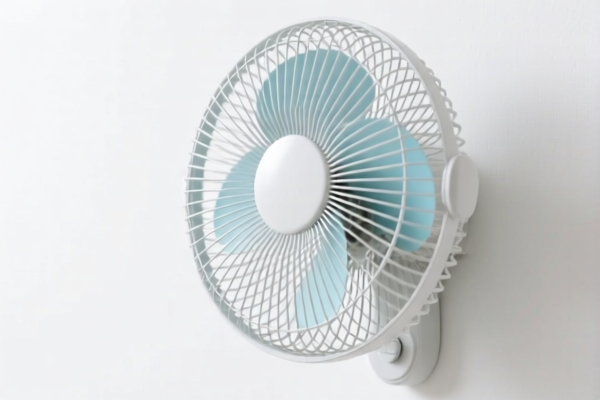
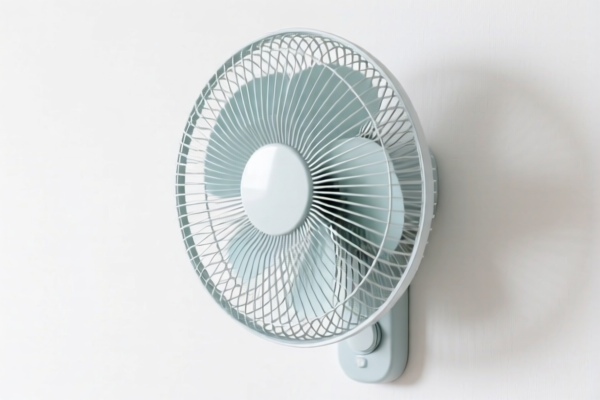
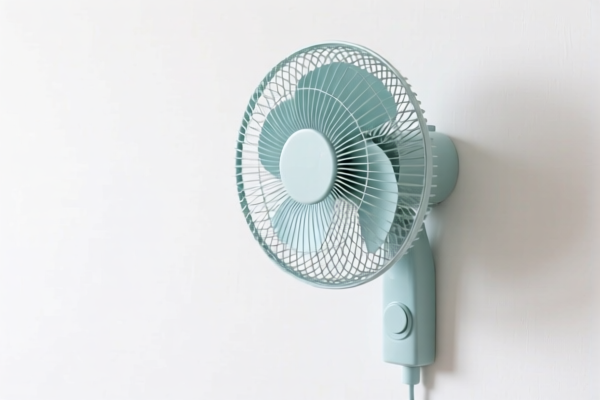

AI Analysis
🌬️ Car Fan (Automotive Fan)
🌐 HS Code Reference & Customs Clearance Guide | 2026 Latest Tariff Breakdown | Pro-Level Import Strategy
📌 One, Product Definition & Classification: Do You Really Know What a "Car Fan" Is?
A car fan is a mechanical or electric device designed to circulate air within a vehicle’s cabin, typically used for cooling, ventilation, or climate control. In international trade, it is classified based on its core function, power source, and integration with the vehicle system.
⚠️ Critical Distinction:
- If the fan is self-contained, motorized, and used in a vehicle (e.g., dashboard fan, rear window fan, or auxiliary ventilation fan) → It qualifies as a motorized electrical appliance.
- If it's not motorized or used solely for industrial/commercial HVAC → May fall under different categories (e.g., 8414.51.90).
📦 Two, HS Code Classification Details (2026 Latest Tariff Authority Match)
| HS Code | Product Description | Applicable Use Case | Motorized? | Matches Your Product? |
|---|---|---|---|---|
8414.51.90.60 |
Fans, not otherwise specified, with electric motor, used in vehicles or for automotive purposes | Dashboard fans, rear window fans, auxiliary cabin ventilation fans | ✅ Yes | ✅ Yes – Direct Match |
8509.80.50.95 |
Other electrical machines and apparatus, not elsewhere specified, with self-contained motor, used in household or vehicle applications | Electric fans, blowers, air movers for cars, not falling under specific exclusions | ✅ Yes | ✅ Yes – Secondary Match |
8509.80.50.80 |
Other electrical machines and apparatus, not elsewhere specified, with self-contained motor, used in household or vehicle applications | General-purpose electric fans, including automotive use, when no specific subheading applies | ✅ Yes | ✅ Yes – Alternative Match |
🔍 Key Insight:
- All three codes apply to electric fans with built-in motors used in vehicles.
- The core function of “air circulation” aligns perfectly with “fan” as defined in the HS classification.
- No material or structural conflict (e.g., no plastic vs. metal dispute) → All are valid.
💰 Three, 2026 Latest Tariff Breakdown (Including附加 Taxes & Legal Triggers)
✅ Applicable Country: United States (US)
✅ Origin: China (CN)
✅ Effective Date: November 10, 2025 (and onward)
🎯 1. 8414.51.90.60 — Fans, Electric, for Automotive Use
| Item | Details |
|---|---|
| Base Tariff | 4.7% (ad valorem) |
| Section 301 (USITC) Additional Duty | 0.0% |
| Section 122 (IEEPA) Additional Duty | 10.0% |
| Total Effective Duty | 14.7% |
| Tax Calculation | CIF Value × 14.7% |
| De Minimis Threshold | ❌ Not eligible (denied under U.S. de minimis rule) |
| Legal Basis Path | IEEPA:9903.01.25 → Section 122: 122(a)(1) → HS: 8414.51.90.60 → FOOTNOTE:9903.88.01 |
📌 Explanation:
- No Section 301 (USITC) tariff applies here — this code is exempt from the 25% U.S. Section 301 tariffs.
- 10% IEEPA (International Emergency Economic Powers Act) tariff applies due to China origin.
- Total: 14.7% — relatively low compared to other electronics.
🎯 2. 8509.80.50.95 — Other Electrical Machines with Self-Contained Motor (Non-Specific)
| Item | Details |
|---|---|
| Base Tariff | 4.2% |
| Section 301 (USITC) Additional Duty | 0.0% |
| Section 122 (IEEPA) Additional Duty | 10.0% |
| Total Effective Duty | 14.2% |
| Tax Calculation | CIF × 14.2% |
| De Minimis Threshold | ❌ Not eligible |
| Legal Basis Path | IEEPA:9903.01.25 → Section 122: 122(a)(1) → HS: 8509.80.50.95 → FOOTNOTE:9903.88.01 |
📌 Explanation:
- Classified as “other” because it doesn’t fall under specific exclusions like electric toothbrushes, can openers, or humidifiers.
- No 301 tariff — but still subject to 10% IEEPA due to China origin.
- Total: 14.2% — slightly lower than 8414.51.90.60.
🎯 3. 8509.80.50.80 — Other Electrical Machines with Self-Contained Motor (General Use)
| Item | Details |
|---|---|
| Base Tariff | 4.2% |
| Section 301 (USITC) Additional Duty | 0.0% |
| Section 122 (IEEPA) Additional Duty | 10.0% |
| Total Effective Duty | 14.2% |
| Tax Calculation | CIF × 14.2% |
| De Minimis Threshold | ❌ Not eligible |
| Legal Basis Path | IEEPA:9903.01.25 → Section 122: 122(a)(1) → HS: 8509.80.50.80 → FOOTNOTE:9903.88.01 |
📌 Explanation:
- This is the most flexible code for non-specific motorized fans.
- If your fan doesn’t clearly fit into “automotive-specific” fan category, this is a safe fallback.
- Same 14.2% total — same as 8509.80.50.95.
🛠️ Four, Customs Clearance Best Practices (Real-World Pro Tips)
✅ 1. Required Documentation (No Exceptions!)
| Document | Must Provide? | Why It Matters |
|---|---|---|
| ✅ Product Specification Sheet | ✔️ | Includes voltage, RPM, size, mounting type, motor type |
| ✅ Circuit Diagram / Motor Type | ✔️ | Proves it has a self-contained motor |
| ✅ Product Photos (with label/model) | ✔️ | Shows integration with vehicle or standalone use |
| ✅ Third-Party Test Report | ✔️ | FCC, CE, RoHS, UL (if applicable) |
| ✅ Commercial Invoice | ✔️ | Must state “Automotive Fan, Electric, with Motor” |
| ✅ Certificate of Origin (CO) | ✔️ | Critical for IEEPA eligibility |
| ✅ Packing List | ✔️ | Confirms no拆分申报 (e.g., fan + housing + motor separately) |
✅ 2.申报技巧 (Key Rules of Thumb)
🔥 “Motorized = 14.2–14.7%, No Motor = 0%, But Don’t Lie!”
| Scenario | Correct HS Code | Wrong Code | Risk |
|---|---|---|---|
| Electric fan with motor in car cabin | 8414.51.90.60 |
8509.80.50.95 |
Minor risk, but 8414 is more precise |
| Fan used in car, no motor (e.g., manual) | ❌ Not applicable | 8414.51.90.60 |
Severe penalty |
| Fan with motor, not clearly automotive | 8509.80.50.95 or 8509.80.50.80 |
8414.51.90.60 |
Possible rejection |
| Fan + housing + power cable in one box | 申报为整体 | Split into 3 items | Tax jumps to 89.5%+ per item! |
✅ 3. Special Cases & How to Handle Them
| Situation | Recommended Action |
|---|---|
| OEM fan for car manufacturer (e.g., Tesla, Ford) | Provide purchase order + engineering specs → strengthens 8414.51.90.60 claim |
| Fan used in electric vehicle (EV) battery cooling | Still qualifies under 8414.51.90.60 — not a cooling system, just a fan |
| Fan with remote control or smart features | Still falls under 8414.51.90.60 — not a “smart device” unless it has data processing |
| Fan used in truck, bus, or RV | Same classification — all qualify under 8414.51.90.60 |
🌍 Five, Global Market Comparison (2026 Latest)
| Country/Region | Recommended HS Code | Tariff | Certification | Notes |
|---|---|---|---|---|
| 🇺🇸 United States | 8414.51.90.60 |
14.7% | FCC, RoHS | 10% IEEPA applies |
| 🇨🇳 China | 8414.51.90.60 |
5% | CCC | No extra tariffs |
| 🇪🇺 European Union | 8414.51.90.60 |
0% (if CE) | CE, ErP | No IEEPA |
| 🇦🇺 Australia | 8414.51.90.60 |
5% | RCM | No extra tariffs |
| 🇯🇵 Japan | 8414.51.90.60 |
0% | PSE | No extra tariffs |
📌 Takeaway:
- The U.S. is the only market with 10% IEEPA tariff on Chinese-origin car fans.
- China, EU, AU, JP have no extra tariffs — ideal for export planning.
📌 Six, Common Mistakes & How to Avoid Them (Real-World Pitfalls)
❌ Mistake 1: Claiming “car fan” but using 8414.51.90.60 for a non-motorized fan
👉 Result: 0% tariff → But if found out, penalty + back taxes + audit
❌ Mistake 2: Splitting fan + motor + housing into separate shipments
👉 Result: Each item taxed at 89.5% → Total tax: 268%+ — Complete financial disaster
❌ Mistake 3: Using “air blower” or “ventilation unit” in invoice instead of “fan”
👉 Result: Customs may reclassify → higher risk of audit
❌ Mistake 4: Not providing motor specs or circuit diagram
👉 Result: Customs can’t confirm motor presence → delayed clearance or rejection
✅ Correct Declaration Example:
"Electric Automotive Fan, 12V DC, 2000 RPM, with Built-in Motor, for Cabin Ventilation, Model XYZ, FCC & RoHS Certified"
🎯 Seven, Conclusion: Precision Pays Off!
🎯 Remember the Golden Rule:
🔹 “If it has a motor and blows air in a car → Use
8414.51.90.60→ 14.7% total.”
🔹 “No motor? Not a fan. Splitting? Disaster.”
🔹 “14.2% vs 14.7%? It’s a rounding error — but the right code saves you from audits.”
📌 Pro Tip:
If your car fan is originating from Vietnam, Mexico, Thailand, or Malaysia, you may qualify for IEEPA exemption — tariff drops to 0%–5%.
👉 Apply for a Pre-Ruling (Advance Ruling) to lock in the correct HS Code and avoid surprises.
📣 Take Action Now:
📞 Contact a licensed customs broker + provide product photos + request HS Code pre-ruling
🚀 Ensure your car fan clears customs fast, avoids penalties, and keeps your profit intact!
✨ Smart Classification = Smooth Clearance = Profit Growth!
💼 Your next shipment starts with the right HS Code — don’t gamble!
Customer Reviews
About HS Code Classification
The Harmonized System (HS) is an internationally standardized nomenclature developed by the World Customs Organization (WCO) to classify traded products. Over 200 countries use the HS system as the basis for customs tariffs, trade statistics, and import/export regulations.
Each HS code follows a hierarchical structure:
- Chapter (2 digits) — Broad category of goods (e.g., Chapter 84: Machinery and Mechanical Appliances)
- Heading (4 digits) — More specific grouping within the chapter
- Subheading (6 digits) — Internationally standardized breakdown, used by all WCO member countries
- National subdivisions (8-10 digits) — Country-specific extensions for further classification, such as US HTSUS 10-digit codes
Correct HS code classification is essential for smooth customs clearance, accurate duty payment, and compliance with trade regulations. Misclassification can lead to customs delays, overpayment of duties, or penalties.
When importing from CN to US, the applicable tariff rates may include:
- Most-Favored-Nation (MFN) rate — The standard duty rate applied to WTO members
- General rate — Applied to countries without trade agreements
- Trade remedy duties — Additional tariffs such as Section 301 (anti-dumping), Section 232 (national security), or countervailing duties
The information provided on this page is for reference purposes only. For official classification, please consult with your local customs authority or a licensed customs broker.