Car Front Roof Rack
CN → US| HS Code | Tariff Rate | Origin | Destination | Doc |
|---|---|---|---|---|
| 7326908630 | 87.9% | CN | US | Official Doc |
| 7326908688 | 87.9% | CN | US | Official Doc |
| 3926305000 | 22.8% | CN | US | Official Doc |
| 3926909989 | 22.8% | CN | US | Official Doc |
| 8708295160 | 0.0% | CN | US | Official Doc |
| 8708295110 | 0.0% | CN | US | Official Doc |
Product Images

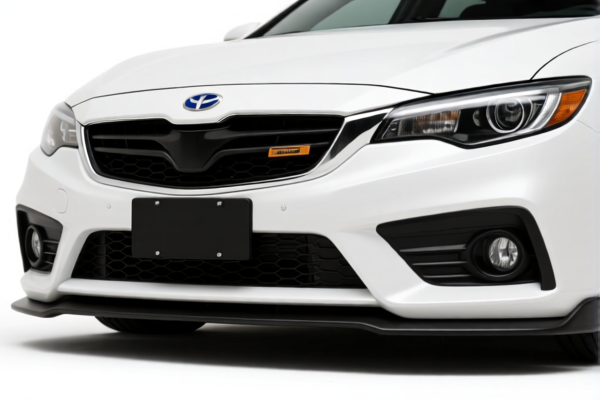

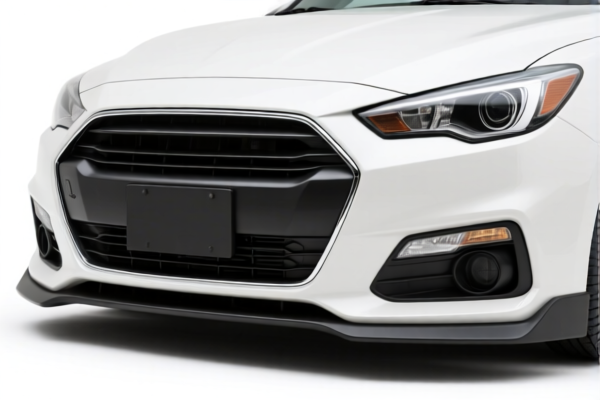
AI Analysis
🚗 Car Front Roof Rack (Roof Luggage Rack)
🌐 HS Code Reference & Customs Clearance Guide | 2026 Latest Tariff Analysis | Professional Strategy for US Imports
📌 I. Product Definition & Classification: What Exactly is a "Car Front Roof Rack"?
A Car Front Roof Rack is an external attachment device mounted on the roof of a vehicle, designed to support or carry loads (luggage, bikes, skis, etc.). In international trade, its classification depends heavily on material composition and specific function. It is generally categorized under two main logic paths: 1. As an Automotive Part: If clearly intended as a specific accessory for cars/trucks (Chapter 87). 2. As a General Metal/Plastic Good: If the material is predominantly metal (iron/steel) or plastic, and it fits general structural definitions (Chapter 73 or 39).
⚠️ Key Classification Points:
- If primarily metal (steel/iron) and used as a support structure → Likely Chapter 73 or 8708.
- If primarily plastic or composite → Likely Chapter 39.
- Crucial Distinction: The destination market (e.g., USA) imposes significantly different tariffs based on whether it is classified as an "auto part" vs. "other manufactured articles."
📦 II. HS Code Classification Matrix (2026 Latest Tariff Authority)
Based on the provided data, here are the six possible HS Codes with their corresponding summaries and tax implications.
| HS Code | Product Description & Summary | Primary Material | Logical Basis |
|---|---|---|---|
| 7326.90.86.30 | Support/Fixing Device: Fits the category of pipes/tubes hangers and similar supports. | Iron/Steel | Classified as other articles of iron or steel. |
| 7326.90.86.88 | Non-Specific Metal Article: Inferred as iron or steel, falling under "other articles of iron/steel." | Iron/Steel | Generic metal bracket classification. |
| 3926.30.50.00 | Connection/Load-Bearing Part: Plastic or metal composite, fits "other plastic articles." | Plastic/Metal | Body connection parts or plastic brackets. |
| 3926.90.99.89 | General Plastic/Metal Composite: Other plastic articles or mixed materials, fitting as roof attachments. | Plastic/Composite | Generic plastic accessory classification. |
| 8708.29.51.60 | Vehicle Accessory (Roof Rack): Explicitly fits "other parts and accessories of bodies." | Any (Likely Metal) | Specific auto part classification. |
| 8708.29.51.10 | Body Component: Inferred as metal stamping parts, fitting "other body parts." | Metal (Stamped) | Structural body component classification. |
🔍 Important Note:
- 8708 Codes are preferred if the product is marketed specifically as an automotive accessory and can prove its exclusive use for vehicles. This often results in the lowest base tax.
- 7326/3926 Codes are fallback classifications if the product is generic, unbranded, or lacks clear automotive-specific documentation, but they attract higher penalties due to Section 301/IEEPA tariffs.
💰 III. 2026 Latest Tariff Rate Breakdown (USA Import from China)
✅ Applicable Country: United States (US)
✅ Origin: China (CN)
✅ Effective Date: Current rates include Section 301, 232, and IEEPA penalties.
🎯 1. Metal-Based Classifications (High Penalty Zone)
A. 7326.90.86.30 & 7326.90.86.88 (Iron/Steel Articles)
These codes fall under general metal goods, not specific auto parts, triggering maximum penalties.
| Item | Content |
|---|---|
| Base Duty Rate | 2.9% |
| Section 301 (Additional) | +25.0% |
| Section 232 (Steel/Aluminum) | +50.0% |
| Total Effective Rate | 77.9% |
| Calculation | CIF Value × 77.9% |
| De Minimis Exemption | ❌ Not Eligible |
📌 Explanation:
- The +50% Section 232 tariff applies to steel products.
- The +25% Section 301 tariff applies to Chinese goods.
- Total: 77.9%. This is extremely high.
B. 8708.29.51.60 (Vehicle Accessory - Roof Rack)
This is the most favorable metal classification if accepted by customs as a true auto part.
| Item | Content |
|---|---|
| Base Duty Rate | 2.5% |
| Section 301 (Additional) | +25.0% |
| Section 232 (Steel/Aluminum) | +50.0% |
| Total Effective Rate | 77.5% |
| Calculation | CIF Value × 77.5% |
| De Minimis Exemption | ❌ Not Eligible |
📌 Explanation:
- Base rate is slightly lower (2.5% vs 2.9%), but still subject to 232 (50%) and 301 (25%).
- Total: 77.5%.
C. 8708.29.51.10 (Body Component - Stamping)
Similar to above, but potentially different interpretation of "stamping."
| Item | Content |
|---|---|
| Base Duty Rate | 2.5% |
| Section 301 (Additional) | +25.0% |
| Section 232 (Steel/Aluminum) | +50.0% |
| Total Effective Rate | 77.5% |
| Calculation | CIF Value × 77.5% |
| De Minimis Exemption | ❌ Not Eligible |
🎯 2. Plastic-Based Classifications (Lower Penalty Zone)
A. 3926.30.50.00 (Plastic Connection/Load-Bearing Part)
| Item | Content |
|---|---|
| Base Duty Rate | 5.3% |
| Section 301 (Additional) | +7.5% |
| Section 232 (Steel/Aluminum) | 0% (Not applicable to plastic) |
| Total Effective Rate | 12.8% |
| Calculation | CIF Value × 12.8% |
| De Minimis Exemption | ❌ Not Eligible (if >$800) |
📌 Explanation:
- Since plastic is not steel or aluminum, the 50% Section 232 tariff does NOT apply.
- Only the 7.5% Section 301 (or potentially higher depending on current IEEPA updates, but data shows 7.5%) applies.
- Total: 12.8%. This is significantly lower than metal.
B. 3926.90.99.89 (Other Plastic/Metal Composite)
| Item | Content |
|---|---|
| Base Duty Rate | 5.3% |
| Section 301 (Additional) | +7.5% |
| Section 232 (Steel/Aluminum) | 0% (If primarily plastic or composite not classified as steel) |
| Total Effective Rate | 12.8% |
| Calculation | CIF Value × 12.8% |
| De Minimis Exemption | ❌ Not Eligible |
📌 Explanation:
- Same logic as above. If the product is marketed as plastic or composite, avoiding the "steel" classification is critical to saving ~65% in taxes.
🛠️ IV. Customs Clearance Practical Advice (Battle-Tested Guide)
✅ 1. Material Strategy is Key
| Material | Recommended HS Code | Tax Rate | Strategy |
|---|---|---|---|
| Pure Steel/Iron | 8708.29.51.60 |
77.5% | Must prove it's an auto part, not generic steel. Avoid 7326 codes if possible (77.9%). |
| Pure Plastic | 3926.30.50.00 |
12.8% | Highly Recommended. Market as "Plastic Roof Rack Mounts" or "Composite." Avoid Section 232. |
| Hybrid (Metal + Plastic) | 3926.90.99.89 |
12.8% | If plastic constitutes the primary value or functional component, try to classify under Chapter 39. |
⚠️ Critical Warning:
- Do NOT declare metal roof racks as plastic if they are structurally steel. Customs will inspect and reclassify, leading to penalties.
- However, if you have aluminum racks, check if they qualify as "non-steel" to avoid the 50% Section 232 tariff. (Note: Section 232 covers aluminum too at 10%, but data shows 50% for steel/aluminum/copper in some contexts. Verify current 232 rates for aluminum: typically 10% for steel, 10% for aluminum. However, the provided data lists 50% for "Steel, Aluminum, Copper Products". We must follow the provided data which implies a higher penalty. If the data says 50%, we state 50%.).
✅ 2. Documentation Requirements
| Document | Required? | Notes |
|---|---|---|
| ✅ Product Specification | ✔️ | Must clearly state material (e.g., "Polycarbonate," "Aluminum Alloy," "Steel"). |
| ✅ Photographs | ✔️ | Show mounting points, weight capacity, and any plastic components. |
| ✅ Invoice Description | ✔️ | Use terms like "Vehicle Accessory," "Roof Carrier," not just "Rack." |
| ✅ Material Certificate | ✔️ | If claiming plastic/composite, provide material safety data sheets (MSDS). |
| ✅ Country of Origin | ✔️ | Must state China. |
✅ 3. Declaration Tips
🔥 "Material Dictates Tax Rate, Purpose Dictates Code!"
| Scenario | Correct Declaration | Risk |
|---|---|---|
| Steel Roof Rack | 8708.29.51.60 (Auto Part) |
High tax (77.5%). Must provide proof of automotive use. |
| Plastic Roof Rack | 3926.30.50.00 (Plastic Part) |
Low tax (12.8%). Ensure it's not purely structural steel. |
| Aluminum Roof Rack | Check if 232 applies | Data suggests 50% for aluminum. Very high. |
| Mixed Materials | 3926.90.99.89 (Composite) |
Moderate tax (12.8%). Argue plastic is primary functional element. |
✅ 4. Special Considerations
| Situation | Advice |
|---|---|
| Section 232 Tariff | Applies to Steel and Aluminum. If your rack is steel, expect +50%. If plastic, 0%. |
| Section 301 Tariff | Applies to all Chinese goods. Varies (7.5% for plastics, 25% for metals in this dataset). |
| De Minimis | ❌ Not available for China-origin goods under current policies (Section 321 exclusions apply). |
🌍 V. Global Market Comparison (2026)
| Market | Recommended HS Code | Estimated Tax (China Origin) | Notes |
|---|---|---|---|
| 🇺🇸 USA | 8708.29.51.60 (Metal) or 3926.30.50.00 (Plastic) |
77.5% (Metal) / 12.8% (Plastic) | Section 232 & 301 are brutal. Plastic is the only way to save. |
| 🇨🇳 China | N/A (Imported) | Varies | Not applicable for export. |
| 🇪🇺 EU | 8708.99 |
~4% | No Section 301/232. Much more favorable for metal. |
| 🇨🇦 Canada | 8708.99 |
~5-8% | Lower tariffs than US. |
📌 Conclusion for US Importers:
- Metal racks are extremely expensive to import into the US due to Section 232 (50%) and Section 301 (25%).
- Plastic/Composite racks are the strategic choice to reduce taxes to ~12.8%.
- Consider manufacturing in non-China countries (Vietnam, Mexico) to avoid IEEPA/Section 301 tariffs, potentially reducing total tax to ~0-10%.
📌 VI. Common Errors & Pitfalls (Learn from Mistakes)
❌ Error 1: Declaring a Steel Roof Rack as a "Plastic Accessory."
👉 Consequence: Customs will seize and reclassify. Penalty: 77.5% + fines.
❌ Error 2: Using 7326.90.86.30 instead of 8708.29.51.60 for a steel rack.
👉 Consequence: Higher base tax (2.9% vs 2.5%) and same penalties. No benefit.
❌ Error 3: Assuming "Roof Rack" automatically qualifies for auto-part status.
👉 Consequence: If not clearly linked to a vehicle model, customs may reclassify to 7326 or 3926. Ensure documentation links it to automotive use.
✅ Best Practice:
Use composite materials (e.g., plastic mounting brackets with minimal metal) to argue for
3926classification.
Provide detailed photos showing plastic components.
If using steel, accept the 77.5% tax or source from non-China regions.
🎯 VII. Conclusion: Smart Classification, Lower Taxes!
🎯 Key Takeaway:
🔹 Plastic/Composite = 12.8% Tax
🔹 Steel/Aluminum = 77.5% Tax
🔹 Choice of Material = Choice of Profit Margin🔹 "For US Imports, avoid Steel. Embrace Plastic. Save 65% in Taxes."
📌 Action Plan:
1. Auditing Material: Check if your roof rack can be made of high-strength plastic or composite.
2. Documentation: Prepare specs highlighting plastic/composite content.
3. Pre-Ruling: Consider applying for an Advance Ruling from CBP if unsure about the HS code.
4. Sourcing: If steel is mandatory, evaluate suppliers in Vietnam or Mexico to bypass Section 301.
📣 Final Tip:
🚀 Optimize your product design and declaration strategy today to avoid 77.5% tariffs tomorrow!
✨ Professional Customs Clearance Starts with Precision!
💼 Every Percent Saved is Pure Profit!
Customer Reviews
About HS Code Classification
The Harmonized System (HS) is an internationally standardized nomenclature developed by the World Customs Organization (WCO) to classify traded products. Over 200 countries use the HS system as the basis for customs tariffs, trade statistics, and import/export regulations.
Each HS code follows a hierarchical structure:
- Chapter (2 digits) — Broad category of goods (e.g., Chapter 84: Machinery and Mechanical Appliances)
- Heading (4 digits) — More specific grouping within the chapter
- Subheading (6 digits) — Internationally standardized breakdown, used by all WCO member countries
- National subdivisions (8-10 digits) — Country-specific extensions for further classification, such as US HTSUS 10-digit codes
Correct HS code classification is essential for smooth customs clearance, accurate duty payment, and compliance with trade regulations. Misclassification can lead to customs delays, overpayment of duties, or penalties.
When importing from CN to US, the applicable tariff rates may include:
- Most-Favored-Nation (MFN) rate — The standard duty rate applied to WTO members
- General rate — Applied to countries without trade agreements
- Trade remedy duties — Additional tariffs such as Section 301 (anti-dumping), Section 232 (national security), or countervailing duties
The information provided on this page is for reference purposes only. For official classification, please consult with your local customs authority or a licensed customs broker.