Car Headlight Controller
CN → US| HS Code | Tariff Rate | Origin | Destination | Doc |
|---|---|---|---|---|
| 8708295160 | 0.0% | CN | US | Official Doc |
| 8512906000 | 35.0% | CN | US | Official Doc |
| 8537109170 | 37.7% | CN | US | Official Doc |
| 8512909000 | 37.5% | CN | US | Official Doc |
| 8708998180 | 12.5% | CN | US | Official Doc |
Product Images
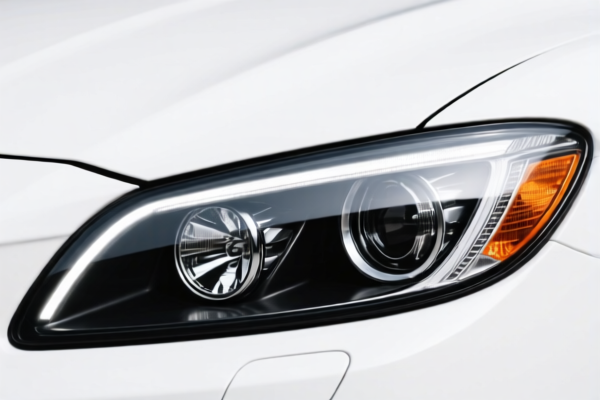
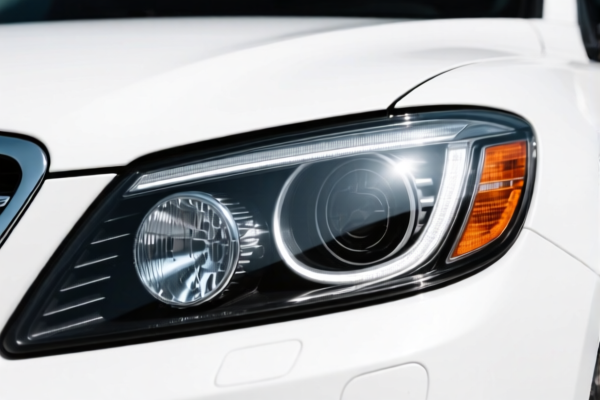
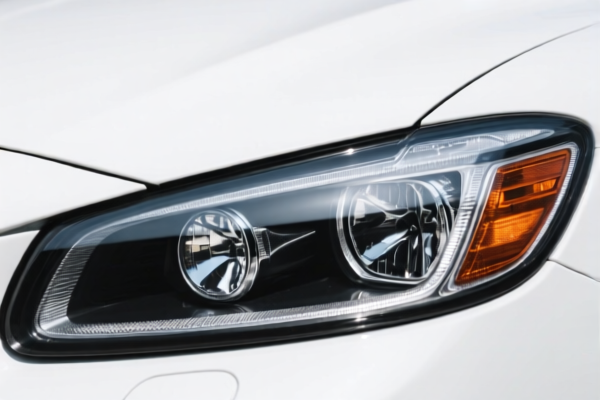
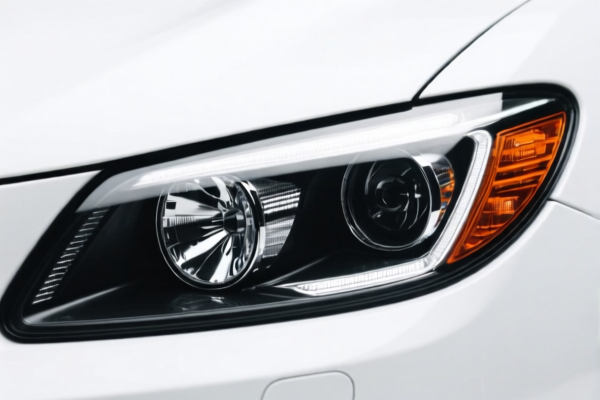
AI Analysis
🚗 Car Headlight Controller (Automotive Lighting Control Unit)
🌐 HS Code Reference & Customs Clearance Guide | 2026 Latest Tariff Analysis | Professional-Level Clearance Strategy
📌 I. Product Definition & Classification: Do You Really Understand "Car Headlight Controllers"?
A Car Headlight Controller is a critical component of the automotive electrical system. In international trade, its classification depends heavily on its functional role and structural form. It is not a single monolithic category but varies based on whether it is treated as a general automotive part, a lighting accessory, or a standalone electronic control device.
Key Classification Logic: 1. As a General Automotive Part: If the controller is primarily viewed as a component of the vehicle's overall electrical architecture, it falls under Chapter 87 (Vehicles). 2. As a Lighting Component: If it is strictly defined as a part/accessory of the lighting apparatus itself, it falls under Chapter 85 (Electrical Machinery), specifically Heading 8512. 3. As an Independent Control Unit: If it possesses complex circuitry independent of the specific lighting module, it may be classified as a Power Control Apparatus under Chapter 85, Heading 8537.
⚠️ Critical Distinction Point:
- If the device is a simple switch/relay for headlights → Likely 8708.99 or 8512.90.
- If the device is a sophisticated ECU/Controller for dynamic lighting → Likely 8537.10 or 8708.29.
- Misclassification Risk: Declaring a high-tech controller as a simple "part" (8708) when it has significant electronic control features (8537) can lead to duty discrepancies.
📦 II. HS Code Classification Details (2026 Latest Tariff Authority Comparison)
| HS Code | Product Description | Applicable Scenario | Functionality Focus |
|---|---|---|---|
8708.29.51.60 |
Controllers for vehicle electrical systems | General automotive electrical components | Fits the attribute of "other parts and accessories of motor vehicles" |
8512.90.60.00 |
Control components for automotive lighting equipment | Specific lighting system accessories | Fits the classification of "parts of electric lighting equipment" |
8537.10.91.70 |
Controllers with circuit control functions | Standalone electronic control devices | Fits the category of "power control apparatus" |
8512.90.90.00 |
Controllers for automotive headlamps | Parts of headlamp assemblies | Fits the "parts" classification based on physical form |
8708.99.81.80 |
Automotive spare parts (headlight system components) | General auto parts classification | Fits the use-category of "automotive parts and accessories" |
🔍 Key Reminder:
- 8537.10 is often the "highest value" classification due to its specific electronic nature, attracting higher base duties.
- 8708.29 and 8708.99 leverage the "auto part" benefit but may face different surcharge structures depending on the specific subheading and recent trade policies.
- 8512.90 is the most direct classification for lighting-specific parts.
💰 III. 2026 Latest Tariff Rate Details (Including Surcharges & Policy Add-ons)
✅ Applicable Country: United States (US)
✅ Origin: China (CN)
✅ Effective Time: Current trade rules (Subject to Section 301 and IEEPA updates)
🎯 1. 8708.29.51.60 – Automotive Electrical System Controller
| Item | Content |
|---|---|
| Base Duty Rate | 2.5% (Ad Valorem) |
| Surcharge (Section 301) | +25% |
| Section 122 Tariff | +10% (Specific provisions apply) |
| Section 232 Tariff (Steel/Aluminum/Copper) | +50% (If materials qualify) |
| Total Effective Rate | 2.5% + 85.0% |
| Tax Detail | Base: 2.5% |
📌 Explanation:
- This classification benefits from a lower base duty (2.5%) compared to other electronic controllers.
- However, it is heavily impacted by Section 232 (Steel/Aluminum/Copper) tariffs if the casing or internal conductive materials qualify, adding a steep 50% on top.
- The total burden is extremely high (85%) if all surcharges apply.
🎯 2. 8512.90.60.00 – Control Component for Automotive Lighting
| Item | Content |
|---|---|
| Base Duty Rate | 0.0% |
| Surcharge (Section 301) | +25% |
| Section 122 Tariff | +10% |
| Total Effective Rate | 35.0% |
| Tax Detail | Base: 0.0% |
📌 Note:
- This is one of the most cost-effective classifications due to the 0% base duty.
- It avoids the heavy Section 232 metals tariff (assuming the core function is electronic control, not structural metal parts).
- Total 35% is significantly lower than other options.
🎯 3. 8537.10.91.70 – Power Control Apparatus Controller
| Item | Content |
|---|---|
| Base Duty Rate | 2.7% |
| Surcharge (Section 301) | +25% |
| Section 122 Tariff | +10% |
| Total Effective Rate | 37.7% |
| Tax Detail | Base: 2.7% |
📌 Explanation:
- Classified as a standalone "Power Control Apparatus."
- Higher base duty than lighting parts, but still avoids the 50% Section 232 metals tariff.
- Total 37.7% is competitive compared to the 85% option.
🎯 4. 8512.90.90.00 – Controller for Automotive Headlamps
| Item | Content |
|---|---|
| Base Duty Rate | 2.5% |
| Surcharge (Section 301) | +25% |
| Section 122 Tariff | +10% |
| Total Effective Rate | 37.5% |
| Tax Detail | Base: 2.5% |
📌 Note:
- Similar to8512.90.60.00but with a slightly higher base duty (2.5% vs 0.0%).
- Focuses on the "part of the device" aspect.
- Total 37.5% is very close to the 8537 classification.
🎯 5. 8708.99.81.80 – Other Automotive Parts (Headlight System)
| Item | Content |
|---|---|
| Base Duty Rate | 2.5% |
| Surcharge (Section 301) | 0.0% |
| Section 122 Tariff | +10% |
| Total Effective Rate | 12.5% |
| Tax Detail | Base: 2.5% |
📌 Critical Advantage:
- This classification avoids the 25% Section 301 surcharge (depending on specific exclusion lists or interpretations for certain auto parts).
- Total 12.5% is the lowest cost option if legally defensible.
- Risk: Customs may challenge this if the item is deemed primarily an "electronic control unit" rather than a "general auto part."
🛠️ IV. Customs Clearance Practical Advice (Battle-Proven Pitfall Avoidance)
✅ 1. Preparation Checklist (Mandatory)
| Document | Required? | Description |
|---|---|---|
| ✅ Product Specification Sheet | ✔️ | Must detail voltage, current, control logic, and interface types. |
| ✅ Circuit Diagram/Structure Photo | ✔️ | Essential to prove if it contains complex control circuits (8537) or is a simple part (8708). |
| ✅ Product Photos (Label/Nameplate) | ✔️ | Show model number, brand, and input/output parameters. |
| ✅ Function Declaration | ✔️ | Explicitly state: "Controller for Headlight System" or "Automotive Electrical Component." |
| ✅ Commercial Invoice | ✔️ | Clear description matching the HS Code selection. |
| ✅ Origin Certificate (CO) | ✔️ | If applicable for any potential future exemptions. |
✅ 2. Declaration Strategy (Key Mantras)
🔥 “Function Defines Code, Material Defines Tariff, Logic Determines Cost!”
| Scenario | Recommended HS Code | Reasoning | Risk Level |
|---|---|---|---|
| Simple Switch/Relay Module | 8708.99.81.80 |
Low complexity, fits "auto part" broadly. | ✅ Low Risk |
| Electronic Control Unit (ECU) for Lights | 8537.10.91.70 or 8512.90.60.00 |
High electronic content. Choose 8512 for 0% base. |
⚠️ Medium Risk |
| Complex Controller with Metal Housing | 8708.29.51.60 |
Only if Section 232 applies; otherwise avoid. | ❌ High Cost |
| Generic Lighting Part | 8512.90.90.00 |
Safe fallback for lighting accessories. | ✅ Low Risk |
✅ 3. Special Circumstances Handling
| Situation | Handling Suggestion |
|---|---|
| OEM Custom Controller | Provide the client’s engineering specs to justify the functional classification. |
| Mixed Materials (Metal + PCB) | If the PCB/control is the essential character, lean towards 8512 or 8537. If it's mostly a bracket with a small chip, 8708 might be argued. |
| Dispute on Section 301 | Check if the specific HS Code was excluded from the 25% surcharge in recent trade war updates. 8708.99.81.80 shows 0% surcharge in the data, making it highly attractive if defensible. |
| Section 232 (Metals) Trigger | Avoid 8708.29.51.60 unless necessary, due to the 50% steel/aluminum/copper tariff. |
🌍 V. Global Market Clearance Comparison (2026 Latest)
| Country/Region | Recommended HS Code | Estimated Total Duty | Certification Requirements | Notes |
|---|---|---|---|---|
| 🇺🇸 USA | 8708.99.81.80 (if valid) or 8512.90.60.00 |
12.5% or 35.0% | FCC, DOT (if lighting) | USA is the most complex due to Section 301/232. Choose 8708.99.81.80 for lowest cost if defensible. |
| 🇨🇳 China | 8708.99.81.80 |
~10-15% (Varies) | CCC (if applicable) | Domestic production may have different rates. |
| 🇪🇺 EU | 8708.99 or 8537 |
0-2.7% | E-Mark, CE | No Section 301/232. Generally lower duties than US. |
| 🇦🇺 Australia | 8708.99 |
5% | RCM | Moderate duty. |
📌 Conclusion:
- For US Imports: The8708.99.81.80(12.5%) is the most economical, but carries classification risk. The8512.90.60.00(35.0%) is the safest "lighting part" classification. The8708.29.51.60(85%) should be avoided unless the 50% metal tariff can be mitigated.
- Strategy: Prioritize8512.90.60.00for safety or8708.99.81.80for cost savings, depending on your risk tolerance and product structure.
📌 VI. Common Errors & Pitfall Guide (Lessons Learned)
❌ Error 1: Declaring an electronic controller as a simple "auto part" (8708) when it has complex PCB logic.
👉 Consequence: Customs may reclassify to 8537 (37.7%) or audit for undervaluation.
❌ Error 2: Ignoring the Section 232 (Steel/Aluminum/Copper) tariff on 8708.29.51.60.
👉 Consequence: Unexpected 50% surcharge → Profit margin wiped out.
❌ Error 3: Using "Headlight Controller" as a generic description without specifying function.
👉 Consequence: Customs has discretion to pick the highest duty code.
✅ Correct Approach:
"Automotive Headlight Control Module, Electronic Circuit Board, 12V/24V DC Input, For [Brand] Vehicle Model XYZ"
🎯 VII. Conclusion: Professional Declaration, Cost Optimization!
🎯 Remember the Mantras:
🔹 "Low Base, High Surcharge vs. Zero Base, High Surcharge."
🔹 "8708.99.81.80 is the King of Savings (12.5%), but King 8708.29.51.60 is a Monster (85%)!"
🔹 "8512.90.60.00 is the Safe Haven (35%) for Lighting Parts."
📌 Pro Tip:
If your controller has a metal housing made of steel or aluminum, avoid 8708.29.51.60 due to the 50% Section 232 tariff. Instead, opt for 8512.90.60.00 (0% base) or 8708.99.81.80 (0% surcharge) if structurally justifiable.
📣 Immediate Action:
📞 Consult a Customs Broker to review your product’s circuit diagrams.
🚀 Apply for an Advance Ruling if importing high volumes to secure the 12.5% or 35% rate legally.
✨ Professional Clearance Starts with Precise Classification!
💼 Your Every Cent Saved is a Cent Earned!
Customer Reviews
About HS Code Classification
The Harmonized System (HS) is an internationally standardized nomenclature developed by the World Customs Organization (WCO) to classify traded products. Over 200 countries use the HS system as the basis for customs tariffs, trade statistics, and import/export regulations.
Each HS code follows a hierarchical structure:
- Chapter (2 digits) — Broad category of goods (e.g., Chapter 84: Machinery and Mechanical Appliances)
- Heading (4 digits) — More specific grouping within the chapter
- Subheading (6 digits) — Internationally standardized breakdown, used by all WCO member countries
- National subdivisions (8-10 digits) — Country-specific extensions for further classification, such as US HTSUS 10-digit codes
Correct HS code classification is essential for smooth customs clearance, accurate duty payment, and compliance with trade regulations. Misclassification can lead to customs delays, overpayment of duties, or penalties.
When importing from CN to US, the applicable tariff rates may include:
- Most-Favored-Nation (MFN) rate — The standard duty rate applied to WTO members
- General rate — Applied to countries without trade agreements
- Trade remedy duties — Additional tariffs such as Section 301 (anti-dumping), Section 232 (national security), or countervailing duties
The information provided on this page is for reference purposes only. For official classification, please consult with your local customs authority or a licensed customs broker.