Car Insulated Lunch Bag
CN → US| HS Code | Tariff Rate | Origin | Destination | Doc |
|---|---|---|---|---|
| 4202920809 | 42.0% | CN | US | Official Doc |
| 4202920807 | 42.0% | CN | US | Official Doc |
| 6307909891 | 24.5% | CN | US | Official Doc |
| 6307909887 | 24.5% | CN | US | Official Doc |
| 3926909989 | 22.8% | CN | US | Official Doc |
| 3926907500 | 14.2% | CN | US | Official Doc |
Product Images
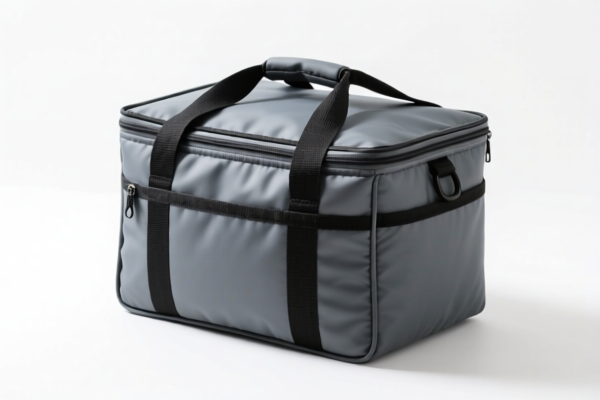
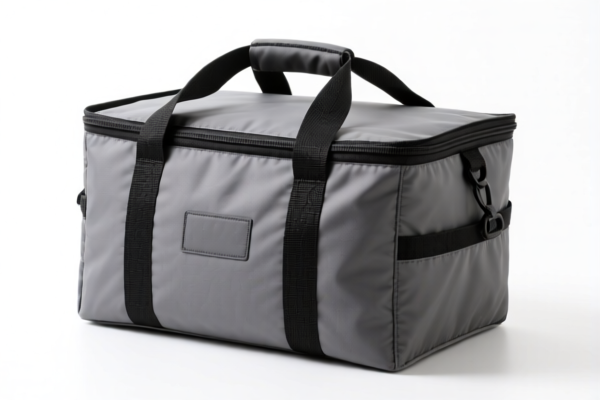
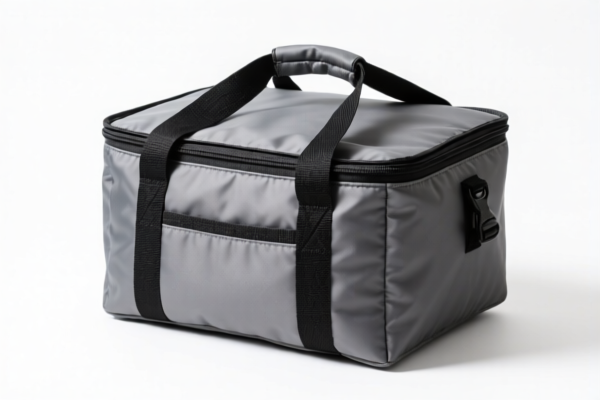
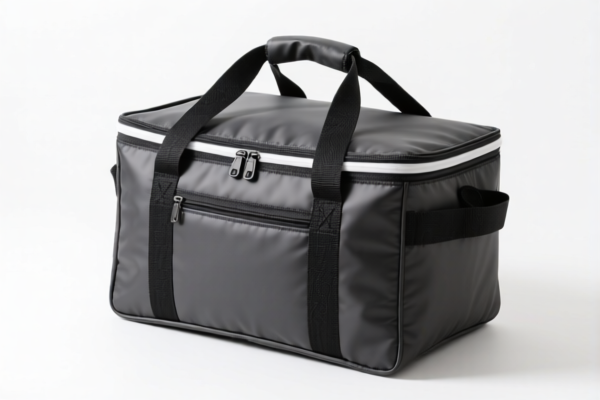
AI Analysis
🚗 Car Insulated Lunch Bag (Automotive Food & Beverage Storage)
🌐 HS Code Reference & Customs Clearance Guide | 2026 Latest Tariff Analysis | Strategic Logistics Protocol
📌 I. Product Definition & Classification: What Exactly Is It?
A Car Insulated Lunch Bag is a specialized container designed to maintain the temperature of food and beverages during automotive transport. In international trade, its classification depends strictly on its outer surface material and intended use.
It is not a generic plastic article (Heading 39) nor a general textile bag (Heading 63). It falls under Heading 4202 ("Trunks, suitcases, vanity cases... traveling bags, insulated food or beverage bags...").
⚠️ Key Distinction Point:
- If the outer surface is Textile (e.g., polyester, nylon, canvas) → Classified under 4202.92.08.07 or 4202.92.08.09.
- If the outer surface is Plastic Sheeting (e.g., PVC, TPU coated fabric) → Classified under 4202.92.00 (General category, but specific sub-headings often group textiles and plastics differently; see below for the specific codes provided in data).
- CRITICAL: It is NOT "Other articles of plastics" (3926.90) unless it lacks the structural features of a bag (e.g., a rigid plastic cooler box, which might fall under 3924/3926). However, the provided data explicitly separates "Insulated food or beverage bags" with specific outer materials.
📦 II. HS Code Classification Details (Based on Provided Data)
According to the provided dataset, the classification for Car Insulated Lunch Bags is split by the material of the outer surface.
| HS Code | Product Description (Excerpt) | Outer Surface Material | Applicable Scenario |
|---|---|---|---|
4202.92.08.07 |
Insulated food or beverage bags: With outer surface of textile materials: Other Of man-made fibers | Textile (Man-made) | Bags made of Polyester, Nylon, Oxford cloth, etc. |
4202.92.08.09 |
Insulated food or beverage bags: With outer surface of textile materials: Other Other | Textile (Other) | Bags made of natural fibers (cotton, wool) or mixed materials not primarily man-made fibers. |
🔍 Note on Plastic Outer Bags:
The provided data does not list a specific HS Code for "Insulated food or beverage bags" with an outer surface of sheeting of plastics.
- If the outer layer is purely plastic sheathing (e.g., a PVC bag), it might fall under the general "Other" categories of Heading 4202, or potentially Heading 39 if it lacks the structural integrity of a "bag" (e.g., if it's a flexible plastic pouch).
- However, based strictly on the provided data, we only have entries for Textile outer surfaces.
- Warning: Do NOT classify these bags under 3926.90.99.89 ("Other articles of plastics") if they are structured as bags with handles/straps and insulation lining. Headings 3901-3914 exclude articles of heading 4202. Misclassification here leads to significant duty discrepancies (5.3% + 7.5% vs 0%).
💰 III. 2026 Latest Tariff Rate Analysis (Detailed Breakdown)
✅ Applicable Country: United States (US)
✅ Origin: China (CN) (Inferred from "Additional Tariffs" mentioned in data)
✅ Status: Exempt from Additional Tariffs
🎯 Category A: Textile Outer Surface Bags
1. HS Code: 4202.92.08.07 (Man-made Fibers) & 4202.92.08.09 (Other Textiles)
| Item | Details |
|---|---|
| Base Tariff | 0.0% |
| Additional Tariff (Section 301/Retaliation) | 0.0% |
| Total Effective Tax Rate | 0.0% |
| Tax Detail | 基础关税: 0.0%, 加征关税: 0.0% |
| Total Tax | 0.0% |
📌 Interpretation:
- Insulated lunch bags with a textile outer surface are currently exempt from both base tariffs and additional retaliatory tariffs under the provided data.
- This is a highly favorable classification for cost control.
- Why 0%? The US has listed specific subheadings under 4202.92 for insulated bags that are exempt from the Section 301 list, or they fall under specific exclusions. The data explicitly states 0% for both base and additional taxes.
❌ Category B: Incorrect Classification (Plastic Articles)
If you mistakenly classify an insulated bag under 3926.90.99.89 (Other articles of plastics):
| Item | Details |
|---|---|
| Base Tariff | 5.3% |
| Additional Tariff | 7.5% |
| Total Effective Tax Rate | 12.8% |
| Tax Detail | 基础关税: 5.3%, 加征关税: 7.5% |
⚠️ Risk:
- Classifying a structured insulated bag as a generic "plastic article" incurs a 12.8% tax.
- This is 12.8 percentage points higher than the correct textile-based classification (0%).
- Do not use 3926.90.99.89 for insulated bags unless they are simple, unstructured plastic liners without bag-like features (handles, zippers, distinct bag shape).
❌ Category C: Incorrect Classification (General Made-up Articles)
If you mistakenly classify under 6307.90.98.91:
| Item | Details |
|---|---|
| Base Tariff | 7.0% |
| Additional Tariff | 7.5% |
| Total Effective Tax Rate | 14.5% |
| Tax Detail | 基础关税: 7.0%, 加征关税: 7.5% |
⚠️ Risk:
- Heading 6307 covers "Other made up articles."
- Heading 4202 specifically covers "Insulated food or beverage bags."
- Lex specialis derogat legi generali: Specific rules override general rules. Using 6307 is incorrect and more expensive (14.5% vs 0%).
🛠️ IV. Customs Clearance Practical Advice
✅ 1. Documentation Checklist (Mandatory)
| Document | Required? | Purpose |
|---|---|---|
| Product Specifications | ✔️ | Must clearly state: "Insulated Lunch Bag," "Outer Material: 100% Polyester/Nylon," "Lining: Aluminum Foam/PE Cotton." |
| Bill of Lading / Commercial Invoice | ✔️ | Description must match HS Code logic: "Insulated Food Bag, Textile Outer, Man-made Fibers." |
| Material Composition Proof | ✔️ | Lab test or supplier declaration confirming outer fabric is Textile (not plastic sheathing). |
| Photos | ✔️ | Show zippers, handles, straps, and insulation lining to prove it is a "Bag" (Heading 42) and not a "Plastic Article" (Heading 39). |
✅ 2. Declaration Strategy (Critical Tips)
🔥 Golden Rule:
"Bag Structure + Insulation + Textile Cover = 4202.92.08 (0% Tax)"
| Scenario | Correct HS Code | Tax Rate | Common Mistake |
|---|---|---|---|
| Standard Car Lunch Bag (Polyester/Nylon outer) | 4202.92.08.07 |
0.0% | Misclassifying as Plastic (3926) → 12.8% |
| Car Lunch Bag (Cotton/Canvas outer) | 4202.92.08.09 |
0.0% | Misclassifying as General Textile (6307) → 14.5% |
| Rigid Plastic Cooler Box (No fabric) | Check Data | 12.8% | (Falls under 3926.90.99.89 if no bag features) |
| Insulated Bag with PVC Outer | Not in Data | ⚠️ High Risk | May fall under 3926 (12.8%) if not strictly "bag" defined. Avoid if possible. |
✅ 3. Key Classification Logic for Customs Officers
- Function: Is it for carrying food/beverages? → Yes → Consider Heading 4202.
- Form: Does it have handles/straps/zippers and a defined bag shape? → Yes → Heading 4202 (Not 3926).
- Outer Material:
- Textile (Fabric)? →
4202.92.08.xx→ 0% Tax. - Plastic Sheeting? → Check if it qualifies as a "bag" under 4202. If not, it falls to 3926 → 12.8% Tax.
- Textile (Fabric)? →
📌 Recommendation:
If you have a choice, manufacture bags with a textile outer surface (Polyester, Nylon) to secure the 0% tariff rate. Avoid "Vinyl" or "PVC" outer layers if you want to stay within the 0% bracket, as the provided data does not show a 0% rate for plastic-sheeting-insulated bags.
🌍 V. Global Market Comparison (Inferred from Data)
| Market | HS Code Focus | Tariff Rate (CN Origin) | Note |
|---|---|---|---|
| 🇺🇸 USA | 4202.92.08.07 / 09 |
0.0% | Exempt from 301 tariffs. Best Option. |
| 🇨🇳 China (Export) | 4202.92.08.07 |
0% (Export Duty) | No export duty on these items. |
| 🇪🇺 EU | 4202.92 | Varies | EU has different sub-codes. Textile bags often 4-12%. |
| 🇬🇧 UK | 4202.92 | Varies | Post-Brexit, check UK Tariff. |
📌 Conclusion:
The US Market is the most favorable for insulated lunch bags with textile outer surfaces, offering 0% total duty.
For other markets, consult local tariff schedules, but the US 0% rate is a significant competitive advantage.
📌 VI. Common Errors & Pitfalls
❌ Error 1: Calling it "Plastic Cooler Bag" in the description.
👉 Result: Customs may classify it under 3926.90.99.89 → 12.8% Tax.
✅ Fix: Use "Insulated Lunch Bag, Textile Outer."
❌ Error 2: Using HS Code 6307.90.98.91 (Other Made-up Articles).
👉 Result: 14.5% Tax (7% Base + 7.5% Additional).
✅ Fix: Use Heading 4202 (Specific for bags/containers).
❌ Error 3: Ignoring Outer Material.
👉 Result: If the outer is PVC (plastic), it might not qualify for the 0% textile rate.
✅ Fix: Ensure the primary outer material is Man-made Fibers (Polyester/Nylon) to lock in 4202.92.08.07.
🎯 VII. Conclusion: Optimize Your Costs
🎯 Key Takeaway:
🔹 "Textile Outer = 0% Tax (4202.92.08)"
🔹 "Plastic Outer = 12.8% Tax (3926.90.99)"
🔹 "General Bag = 14.5% Tax (6307.90.98)"
📌 Action Plan:
1. Confirm Material: Ensure your product's outer shell is Polyester, Nylon, or other Man-made Textile.
2. Labeling: Clearly state "Textile Outer" on invoices.
3. HS Code: Declare as 4202.92.08.07 for man-made fiber bags.
4. Avoid: Do not use plastic-coated fabrics if you can avoid it, unless you are prepared for the 12.8% duty.
📣 Immediate Action:
📞 Verify your supplier's material composition certificate.
🚀 If 100% Polyester/Nylon → Declare4202.92.08.07→ Save 12.8% in Duties!
✨ Precision in Classification, Profit in Clearance!
💼 Don't let a "Bag" become a "Plastic Article" – Save your margins!
Customer Reviews
About HS Code Classification
The Harmonized System (HS) is an internationally standardized nomenclature developed by the World Customs Organization (WCO) to classify traded products. Over 200 countries use the HS system as the basis for customs tariffs, trade statistics, and import/export regulations.
Each HS code follows a hierarchical structure:
- Chapter (2 digits) — Broad category of goods (e.g., Chapter 84: Machinery and Mechanical Appliances)
- Heading (4 digits) — More specific grouping within the chapter
- Subheading (6 digits) — Internationally standardized breakdown, used by all WCO member countries
- National subdivisions (8-10 digits) — Country-specific extensions for further classification, such as US HTSUS 10-digit codes
Correct HS code classification is essential for smooth customs clearance, accurate duty payment, and compliance with trade regulations. Misclassification can lead to customs delays, overpayment of duties, or penalties.
When importing from CN to US, the applicable tariff rates may include:
- Most-Favored-Nation (MFN) rate — The standard duty rate applied to WTO members
- General rate — Applied to countries without trade agreements
- Trade remedy duties — Additional tariffs such as Section 301 (anti-dumping), Section 232 (national security), or countervailing duties
The information provided on this page is for reference purposes only. For official classification, please consult with your local customs authority or a licensed customs broker.