Car Interior Disinfectant
CN → US| HS Code | Tariff Rate | Origin | Destination | Doc |
|---|---|---|---|---|
| 3926909950 | 22.8% | CN | US | Official Doc |
| 3401115000 | 35.0% | CN | US | Official Doc |
| 3926909989 | 22.8% | CN | US | Official Doc |
| 3808945010 | 40.0% | CN | US | Official Doc |
| 3808945095 | 40.0% | CN | US | Official Doc |
Product Images
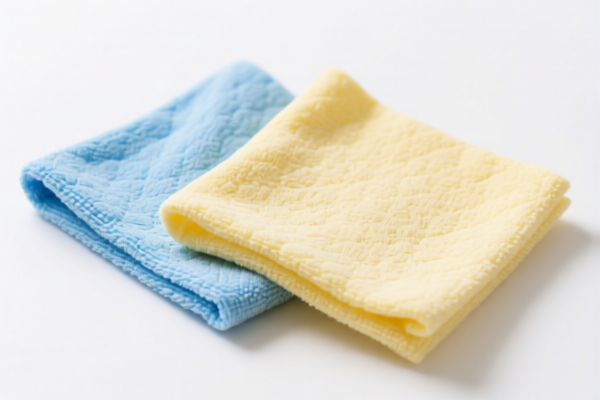
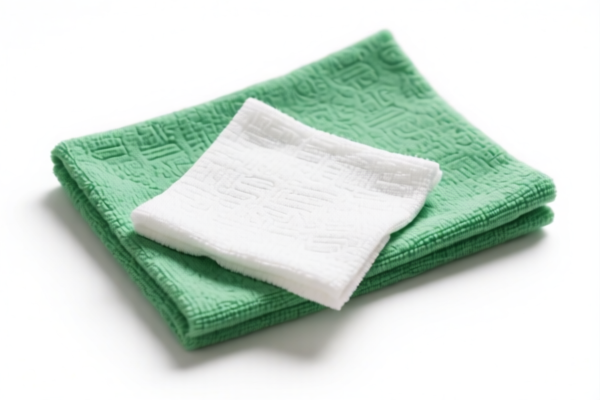
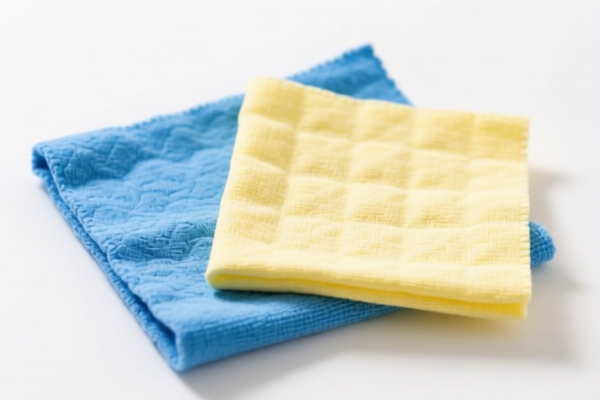
AI Analysis
🚗 Car Interior Disinfectant (Automotive Sanitizer Wipes/Spray)
🌐 HS Code Reference & Customs Clearance Guide | 2026 Latest Tariff Analysis | Professional Entry Strategy
📌 I. Product Definition & Classification: Do You Really Understand "Car Disinfectants"?
Car Interior Disinfectants are specialized cleaning and hygiene products designed to eliminate bacteria, viruses, and odors within vehicle cabins. In international trade, these products are often ambiguous because they sit at the intersection of plastics/packaging, chemical disinfectants, and cosmetic/cleaning preparations.
Based on the specific composition (form) and primary function, they can fall into several divergent HS Codes with significantly different tax implications.
⚠️ Key Distinction Points:
- If the product is pre-moistened wipes (non-woven fabric impregnated with solution) → Likely falls under Chapter 34 (Soaps/Cleaning Preparations) or Chapter 39 (Plastics/Fiber articles) depending on whether the fabric or the chemical is deemed the essential character.
- If the product is a liquid spray/solution (bottled) → Likely falls under Chapter 38 (Pharmaceutical/Chemical Preparations) as a disinfectant.
- Critical Risk: Misclassification can lead to a 15-20% tariff difference and potential delays due to "Essential Character" disputes.
📦 II. HS Code Classification Details (2026 Latest Tariff Authoritative Comparison)
| HS Code | Product Description | Application Scenario | Essential Character | Total Tax Rate (China Origin) |
|---|---|---|---|---|
3926.90.99.50 |
Other articles of plastics: Disinfectant Wipe Dispensers/Accessories | Plastic packaging holders, wipe dispensers, or wipes considered as "plastic fiber articles" | Plastic Material | 22.8% |
3401.11.50.00 |
Soap/Organic Surface Active Agents: Wipes impregnated with cleaning agents | Non-woven fabric wipes used for cleaning/disinfection | Fabric + Cleaning Agent | 35.0% |
3926.90.99.89 |
Other plastic articles (not elsewhere specified) | Wipes where plastic fibers/non-woven base dominate the value | Plastic/Fiber Base | 22.8% |
3808.94.50.10 |
Insecticides/Rodenticides/Fungicides/Bactericides: Disinfectants (Solid/Other forms) | Chemical disinfectant wipes or solids | Chemical Disinfectant | 40.0% |
3808.94.50.95 |
Other Disinfectants (not elsewhere specified) | Liquid sprays or wipes categorized strictly as "chemical disinfectants" | Chemical Disinfectant | 40.0% |
🔍 Key Reminder:
- Wipes vs. Spray: If it is a wipe, customs often look at Chapter 34 or 39. If it is a bottle, it is almost always Chapter 38.
- "Essential Character": For wipes, if the non-woven fabric is treated as the essential element, it may go to 3926 (Plastic). If the disinfectant solution is deemed essential, it goes to 3808 or 3401.
- High Tax Alert: 3808.94.50.95 and 3808.94.50.10 carry the highest tariff (40%) but are often the most legally accurate for chemical disinfectants.
💰 III. 2026 Latest Tariff Rate Breakdown (Including Surtaxes & Policy Add-ons)
✅ Applicable Country: United States (US)
✅ Country of Origin: China (CN)
✅ Effective Date: November 10, 2025 onwards (including subsequent imports)
🎯 1. 3926.90.99.50 & 3926.90.99.89 —— Plastic/Fiber Articles (Wipes/Packaging)
| Item | Content |
|---|---|
| Base Tariff | 5.3% (ad valorem) |
| Section 301 Surtax (USITC) | +7.5% (Specific to certain plastic articles/wholesale trade items) |
| 122 Provision Surtax | +10% (Specific to "122" list items, often applied to hygiene/plastics) |
| Total Rate | 22.8% |
| Tax Calculation | CIF Value × 22.8% |
| De Minimis Eligibility | ❌ No (Denied under current US trade policy for Chinese origin) |
| Legal Pathway | USITC:3926.90.99.50 → SECTION:301 → PROVISION:122 |
📌 Explanation:
- These codes classify the product as a plastic article or non-woven fabric item.
- The 7.5% is the standard Section 301 rate for many plastics.
- The 10% is an additional surcharge under the "122" provision (often related to specific hygiene or plastic waste categories).
- Total 22.8% is moderate compared to chemical disinfectants.
🎯 2. 3401.11.50.00 —— Wipes Impregnated with Cleaning Agents (Chapter 34)
| Item | Content |
|---|---|
| Base Tariff | 0.0% |
| Section 301 Surtax (USITC) | +25.0% (Standard 301 rate for many chemical/cleaning imports) |
| 122 Provision Surtax | +10% |
| Total Rate | 35.0% |
| Tax Calculation | CIF Value × 35.0% |
| De Minimis Eligibility | ❌ No |
| Legal Pathway | USITC:3401.11.50.00 → SECTION:301 → PROVISION:122 |
📌 Note:
- Chapter 34 often has 0% base duty, but the 25% Section 301 surtax is standard for many Chinese-origin consumer goods.
- This code argues the product is primarily a cleaning wipe (fabric + soap/surfactant).
- Risk: Customs may challenge this if the product is heavily marketed as a "Disinfectant" rather than a "Cleaner."
🎯 3. 3808.94.50.10 & 3808.94.50.95 —— Disinfectants (Chemical Preparations)
| Item | Content |
|---|---|
| Base Tariff | 5.0% |
| Section 301 Surtax (USITC) | +25.0% |
| 122 Provision Surtax | +10% |
| Total Rate | 40.0% |
| Tax Calculation | CIF Value × 40.0% |
| De Minimis Eligibility | ❌ No |
| Legal Pathway | USITC:3808.94.50.10 → SECTION:301 → PROVISION:122 |
📌 Critical Warning:
- This is the highest tariff category in your dataset.
- Applies if the product is classified strictly as a bactericide/fungicide/disinfectant under Chapter 38.
- Justification: The primary function is killing germs, not cleaning.
- Recommendation: Only use this if your product cannot be classified as a "wipe" (3401/3926) to avoid penalties for misdeclaration. However, if you can legally argue for 3926 (22.8%), you save 17.2%.
🛠️ IV. Customs Clearance Practical Advice (Real-World Pitfall Guide)
✅ 1. Document Checklist (Non-Negotiable)
| Document | Required | Explanation |
|---|---|---|
| ✅ Product Formula/Ingredient List | ✔️ | Must list active disinfecting agents (e.g., Quaternary Ammonium, Alcohol %) |
| ✅ SDS (Safety Data Sheet) | ✔️ | Critical for determining if it's "Chemical" (Ch 38) or "Cosmetic/Cleaner" (Ch 34/39) |
| ✅ Product Photos | ✔️ | Show form: Wipe? Spray? Solid? Packaging? |
| ✅ EPA Registration Number | ✔️ | If claiming "Disinfectant," US EPA registration is often required for US import |
| ✅ Commercial Invoice | ✔️ | Clearly state "Car Interior Disinfectant Wipes" or "Chemical Disinfectant Spray" |
| ✅ Origin Certificate | ✔️ | Required for Section 301 and 122 calculations |
| ✅ Packaging List | ✔️ | Show weight/volume of active solution vs. wipe fabric |
✅ 2. Declaration Strategy (Key Mantras)
🔥 "Form Dictates Chapter, Function Dictates Tax!"
| Scenario | Correct Declaration | Wrong Practice |
|---|---|---|
| Pre-moistened Wipes | 3401.11.50.00 (if cleaning focus) or 3926.90.99.89 (if plastic focus) |
Declare as 3808.94 → Overpay 15-20% |
| Bottled Spray/Liquid | 3808.94.50.95 (Standard Disinfectant) |
Declare as 3401 → Underpaid Tax + Fine |
| Wipes + Plastic Dispenser | Separate lines: Wipes + Dispenser | Combined line → Complex Valuation + Delays |
| Generic "Car Cleaner" | 3402.90 (if non-disinfecting) |
"Disinfectant" claim without EPA → Seizure Risk |
📌 Strategic Tip:
- If your product is a wipe, try to argue for 3401 (Cleaning) or 3926 (Plastic) to avoid the 40% tariff of 3808.
- However, if your product contains high concentrations of disinfectants (e.g., >1% quaternary ammonium), customs may insist on 3808.
- Pre-Ruling: Apply for an Advance Ruling (CBP Ruling) to lock in the HS Code and avoid retroactive penalties.
✅ 3. Special Case Handling
| Situation | Handling Advice |
|---|---|
| EPA Registration | Ensure the product has an EPA Registration Number if marketed as a disinfectant. Lack of this can lead to refusal of entry. |
| Alcohol-Based Wipes | If >24% alcohol, may be considered hazardous material (Hazmat) → Extra shipping costs + stricter classification. |
| OEM/Private Label | Provide manufacturer authorization and formula disclosure to prove "Essential Character" of the fabric vs. liquid. |
| Mixed Shipments | If shipping wipes (3401) and sprays (3808) together, separate line items are mandatory to avoid "General" classification (often higher tax). |
🌍 V. Global Market Comparison (2026 Latest)
| Country/Region | Recommended HS Code | Tax Rate | Certification | Notes |
|---|---|---|---|---|
| 🇺🇸 USA | 3808.94.50.95 or 3401.11.50.00 |
35%-40% (China) | EPA Reg. + FDA (if cosmetic) | Highest tax burden; EPA crucial |
| 🇨🇳 China | 3808.94.50.95 or 3401.11 |
5%-10% | NMPA (if medical) | Lower taxes, stricter domestic labeling |
| 🇪🇺 EU | 3808.94 or 3401 |
0%-6.5% | CLP/GHS + Biocidal Products Regulation (BPR) | BPR registration is mandatory for disinfectants |
| 🇦🇺 Australia | 3808.94.50.95 |
5% | AICIS Registration | Chemical inventory compliance required |
| 🇯🇵 Japan | 3808.94.50.95 |
0%-3.2% | Pharma/Medical Device Act | Strict safety data requirements |
📌 Conclusion:
- USA: High tax (35-40%), strict EPA enforcement.
- EU: Moderate tax, extremely strict Biocidal regulation (BPR).
- Key Takeaway: For US imports, cost optimization comes from correct HS Code selection (3926/3401 vs. 3808), not just duty evasion.
📌 VI. Common Errors & Pitfall Guide (Blood & Tears Lessons)
❌ Error 1: Declaring "Disinfectant Wipes" as 3926.90 (Plastic) without sufficient plastic content proof.
👉 Consequence: Customs reclassifies to 3808.94 → Back tax + Interest + Penalty.
❌ Error 2: Failing to list EPA Registration Number on the invoice/packaging.
👉 Consequence: Detention by CBP/FDA, potential return or destruction.
❌ Error 3: Using vague descriptions like "Car Cleaner" for a product with quaternary ammonium compounds.
👉 Consequence: Classified as "Chemical Disinfectant" (3808) by default due to ambiguous declaration → 40% Tax.
❌ Error 4: Combining bottled spray and wipes in one HS Code.
👉 Consequence: Mixed rates applied incorrectly → Audit Risk.
✅ Correct Approach:
"Pre-Moistened Disinfectant Wipes, Non-Woven Fabric, Impregnated with [Active Ingredient %], EPA Reg. No. 12345-67, for Automotive Interior Use"
🎯 VII. Conclusion: Professional Declaration, Cost Efficiency, Risk Mitigation!
🎯 Remember the Mantra:
🔹 "Wipes vs. Spray? Chapter 34/39 vs. 38!"
🔹 "EPA Reg Number is King; without it, no entry!"
🔹 "40% Tax for Chemicals, 22% for Plastics, Choose Wisely!"
📌 Pro Tip:
If your product is alcohol-based, ensure it is declared as Non-Flammable (if <24%) or Hazmat (if >24%).
For biocidal products in the EU, BPR Registration is mandatory before import.
For US imports, consider CBP Advance Ruling to secure the 22.8% rate (3926) if structurally viable, saving 17% over the 40% rate.
📣 Immediate Action:
📞 Consult a licensed customs broker + Provide SDS + EPA Reg No. + Formula Disclosure
🚀 Ensure compliant entry, avoid penalties, and maximize profit margins!
✨ Professional Customs Clearance Starts with Precise Classification!
💼 Every Percent of Tax Saved is Pure Profit!
Customer Reviews
About HS Code Classification
The Harmonized System (HS) is an internationally standardized nomenclature developed by the World Customs Organization (WCO) to classify traded products. Over 200 countries use the HS system as the basis for customs tariffs, trade statistics, and import/export regulations.
Each HS code follows a hierarchical structure:
- Chapter (2 digits) — Broad category of goods (e.g., Chapter 84: Machinery and Mechanical Appliances)
- Heading (4 digits) — More specific grouping within the chapter
- Subheading (6 digits) — Internationally standardized breakdown, used by all WCO member countries
- National subdivisions (8-10 digits) — Country-specific extensions for further classification, such as US HTSUS 10-digit codes
Correct HS code classification is essential for smooth customs clearance, accurate duty payment, and compliance with trade regulations. Misclassification can lead to customs delays, overpayment of duties, or penalties.
When importing from CN to US, the applicable tariff rates may include:
- Most-Favored-Nation (MFN) rate — The standard duty rate applied to WTO members
- General rate — Applied to countries without trade agreements
- Trade remedy duties — Additional tariffs such as Section 301 (anti-dumping), Section 232 (national security), or countervailing duties
The information provided on this page is for reference purposes only. For official classification, please consult with your local customs authority or a licensed customs broker.