Car Key Signal Shielding Box
CN → US| HS Code | Tariff Rate | Origin | Destination | Doc |
|---|---|---|---|---|
| 6307909891 | 24.5% | CN | US | Official Doc |
| 4202929700 | 52.6% | CN | US | Official Doc |
| 6307909875 | 17.0% | CN | US | Official Doc |
| 4202399000 | 55.0% | CN | US | Official Doc |
Product Images
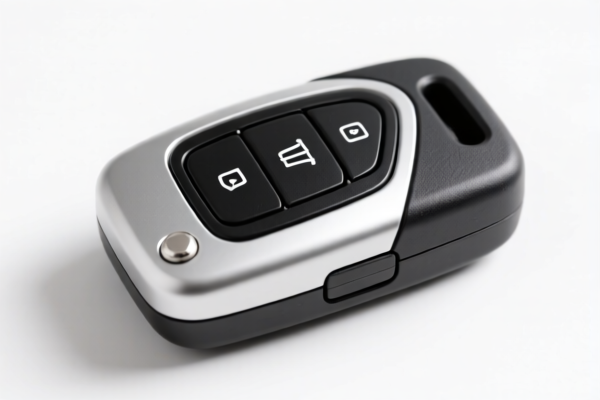
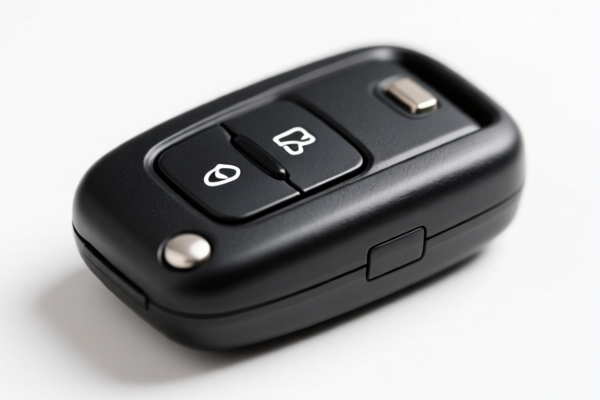
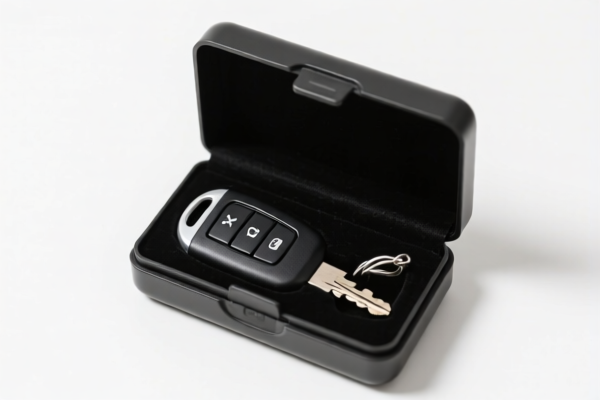
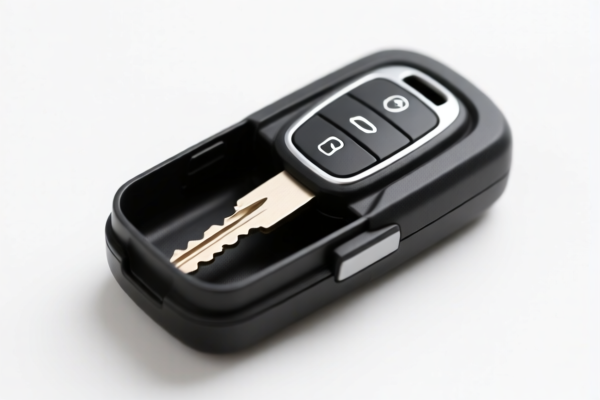
AI Analysis
🔐 Car Key Signal Shielding Box (Anti-Relay Attack Protection)
🌐 HS Code Reference & Customs Clearance Guide | 2026 Latest Tariff Analysis | Professional Clearance Strategy
📌 I. Product Definition & Classification: What Exactly is a "Car Key Shielding Box"?
A Car Key Signal Shielding Box is a protective case or pouch designed to block radio frequency (RF) signals emitted by smart car keys (key fobs). Its primary purpose is to prevent "relay attacks," where thieves amplify and relay the key’s signal to unlock and start the vehicle.
In international trade, these products are classified based on their material composition, functional description, and manufactured state:
- Textile/Composite Materials with Metallic Coating: Pouches made of fabric or non-woven material infused with conductive fibers or metal coatings.
- Shaped Containers: Boxes or cases that resemble "similar containers" but serve a protective/shielding function.
- Finished Protective Articles: Classified under "Other Made-up Articles" if they don’t fit specific container definitions.
⚠️ Key Distinction Point:
- If the product is a simple pouch/bag made of shielding fabric → Often falls under Textiles/Accessories (6307) or Leather Goods/Containers (4202).
- If it is a rigid box or has specific shielding properties marketed as "EMF protection" → May fall under Other Made-up Articles (6307) or Other Containers (4202).
- Critical Factor: The presence of metallic coating/conductive fiber is the defining characteristic for "shielding."
📦 II. HS Code Classification Details (2026 Latest Tariff Cross-Reference)
Based on the provided data, here are the four most likely HS Codes, along with their tax implications and classification logic:
| HS Code | Product Description & Classification Logic | Total Tax Rate | Tax Breakdown |
|---|---|---|---|
6307.90.98.91 |
Made-up Article (Protective Case): Fits under "Other Made-up Articles." Material: Fabric/composite with metallic coating or conductive fiber. Logic: Classified as a finished protective item, not a standard container. | 24.5% | Base Duty: 7.0% Section 301: 7.5% Section 122: 10% |
4202.92.97.00 |
Similar Container (Textile/Metalized): Matches "similar containers" category. Material: Often textile or metalized film. Logic: No conflict with container description; treated as a protective bag/pouch. | 52.6% | Base Duty: 17.6% Section 301: 25.0% Section 122: 10% |
6307.90.98.75 |
Shielding Material Made-up Article: Classified as "Protective Case" made of "Shielding Material." Logic: Functional link to "Other Masks/Covers" in terms of function; acts as a "catch-all" for other items. | 17.0% | Base Duty: 7.0% Section 301: 0.0% Section 122: 10% |
4202.39.90.00 |
Bag/Case Type Container: Form is "case/bag." Material: Textile or metal foil composite. Logic: Fits "Other Carrying Articles" logic for protection/carrying. | 55.0% | Base Duty: 20.0% Section 301: 25.0% Section 122: 10% |
🔍 Key Insight:
-6307.90.98.75offers the lowest total tax rate (17.0%) but requires proving the item is a "shielding material made-up article."
-4202.39.90.00has the highest rate (55.0%) due to higher base duties for "other carrying articles" under Chapter 42.
-6307.90.98.91is a mid-range option (24.5%) for general "made-up articles."
-4202.92.97.00(52.6%) is common for textile-based bags but incurs heavy Section 301 tariffs.
💰 III. 2026 Latest Tariff Rate Details (Including Additional Taxes & Policy Surcharges)
✅ Applicable Country: United States (US)
✅ Country of Origin: China (CN)
✅ Effective Date: November 10, 2025 onwards (including subsequent imports)
🎯 1. 6307.90.98.91 — Made-up Article (Protective Case)
| Item | Detail |
|---|---|
| Base Duty | 7.0% (ad valorem) |
| Section 301 Duty | +7.5% |
| Section 122 Duty | +10% |
| Total Rate | 24.5% |
| Calculation | CIF Value × 24.5% |
| De Minimis Exemption | ❌ Not Eligible (deny_de_minimis) |
| Legal Basis Path | USITC:6307.90.98.91 → Section 301 Footnote → Section 122 |
📌 Explanation:
- "Base Duty 7.0%" applies to other made-up articles.
- "Section 301 7.5%" is a targeted tariff on specific Chinese goods.
- "Section 122 10%" applies to imports threatening US national security (often used for dual-use or strategic materials).
- Total 24.5% is moderately high but lower than the 4202 options.
🎯 2. 4202.92.97.00 — Similar Container (Textile/Metalized)
| Item | Detail |
|---|---|
| Base Duty | 17.6% |
| Section 301 Duty | +25.0% |
| Section 122 Duty | +10% |
| Total Rate | 52.6% |
| Calculation | CIF Value × 52.6% |
| De Minimis Exemption | ❌ Not Eligible |
| Legal Basis Path | USITC:4202.92.97.00 → Section 301 Footnote 9903.88.01 → Section 122 |
📌 Warning:
- High base duty (17.6%) combined with the maximum Section 301 rate (25%) results in a very high total cost.
- Only use this if the product is unmistakably a "bag/pouch" under Chapter 42 and cannot be classified under Chapter 63.
🎯 3. 6307.90.98.75 — Shielding Material Made-up Article
| Item | Detail |
|---|---|
| Base Duty | 7.0% |
| Section 301 Duty | +0.0% |
| Section 122 Duty | +10% |
| Total Rate | 17.0% |
| Calculation | CIF Value × 17.0% |
| De Minimis Exemption | ❌ Not Eligible |
| Legal Basis Path | USITC:6307.90.98.75 → Section 122 |
📌 Optimization Opportunity:
- Lowest Total Rate (17.0%) because Section 301 duty is 0%.
- Requires strong justification that the item is a "shielding material made-up article" rather than a general container.
- Strategy: Use this code if you can prove the primary function is signal shielding (a technical function) rather than just carrying/holding (a logistical function).
🎯 4. 4202.39.90.00 — Other Carrying Articles (Bag/Case)
| Item | Detail |
|---|---|
| Base Duty | 20.0% |
| Section 301 Duty | +25.0% |
| Section 122 Duty | +10% |
| Total Rate | 55.0% |
| Calculation | CIF Value × 55.0% |
| De Minimis Exemption | ❌ Not Eligible |
| Legal Basis Path | USITC:4202.39.90.00 → Section 301 Footnote → Section 122 |
📌 Avoidance Advice:
- This is the highest tariff option (55.0%).
- Only applies if the item is strictly defined as a "carrying case" with no emphasis on shielding technology.
- Do not use unless the product has no shielding properties or cannot be classified elsewhere.
🛠️ IV. Customs Clearance Practical Advice (Real-World Pitfall Guide)
✅ 1. Required Documentation Checklist (Non-Negotiable)
| Document | Must Provide | Explanation |
|---|---|---|
| ✅ Product Specification Sheet | ✔️ | Must detail frequency range blocked (e.g., 315/433 MHz), shielding effectiveness (dB), and material composition. |
| ✅ Material Composition Report | ✔️ | Specify % of metallic coating or conductive fibers. Crucial for proving it’s a "shielding article" vs. regular fabric. |
| ✅ Product Photos (Labeled) | ✔️ | Clear images showing the interior lining (if visible) and any branding indicating "Shielding" or "Anti-Relay." |
| ✅ Third-Party Test Report | ✔️ | RF shielding test results from an accredited lab (e.g., FCC, CE, or ISO certified). |
| ✅ Commercial Invoice | ✔️ | Description must be precise: e.g., "RF Shielding Case for Car Key Fobs, Metallic Coated Fabric." |
| ✅ Packing List | ✔️ | Detail quantities and weights. Avoid vague terms like "Accessories." |
✅ 2. Declaration Tips (Critical Mnemonic)
🔥 “Function Dictates Code, Shielding Lowers Tax, Bags High Cost!”
| Scenario | Correct Declaration | Wrong Practice | Consequence |
|---|---|---|---|
| Primary Function is Shielding | 6307.90.98.75 (17.0%) |
Declaring as "Pouch" → 4202.92.97.00 |
Overpaying 35.6% in duties |
| General Protective Case | 6307.90.98.91 (24.5%) |
Declaring as "Plastic Box" → Misclassification | Risk of penalty + back taxes |
| Textile Bag with No Shielding Tech | 4202.92.97.00 (52.6%) |
Using 6307 code falsely |
Audit risk + fines |
| Carrying Case for Keys | 4202.39.90.00 (55.0%) |
Using 6307 code |
Overpayment + unnecessary complexity |
📌 Key Strategy:
- Emphasize "RF Shielding," "Faraday Cage," "Anti-Relay," and "Conductive Material" in your product description.
- Avoid generic terms like "Key Holder" or "Pouch" which trigger higher-duty chapters (42).
- If possible, obtain an Advance Ruling from CBP to lock in the 17.0% rate under6307.90.98.75.
✅ 3. Special Circumstances Handling
| Situation | Handling Advice |
|---|---|
| OEM Private Label | Provide design specs to prove shielding function. CBP may require test reports. |
| Composite Materials | Clearly state the % of metallic layer. If >50% by weight is metal, consider Chapter 83 (Base Metal), but 6307 is safer for "made-up articles." |
| Gift Sets (Key + Box) | Declare the box separately. Do not bundle with the key fob itself (which has different HS codes). |
| Military/Government Use | If sold to government agencies, ensure compliance with Section 122 and National Security requirements. |
🌍 V. Global Market Customs Comparison (2026 Latest)
| Country/Region | Recommended HS Code | Tariff Rate | Certification Requirements | Notes |
|---|---|---|---|---|
| 🇺🇸 USA | 6307.90.98.75 |
17.0% | FCC ID (if emitting), Test Reports | Best Rate: Emphasize shielding function |
| 🇨🇳 China | 6307.90.98.91 |
~10-15% | CCC (if applicable) | Lower base duties than US |
| 🇪🇺 EU | 6307.90.98.91 |
0-6% | CE, RoHS | No Section 301/122 equivalents |
| 🇬🇧 UK | 6307.90.98.91 |
0-6% | UKCA | Post-Brexit rules apply |
| 🇦🇺 Australia | 6307.90.98.91 |
5-10% | RCM | No major surcharges |
📌 Conclusion:
- The USA is the most complex market due to Section 301 and Section 122 tariffs.
- Strategy: Aim for6307.90.98.75(17.0%) by proving technical shielding functionality.
- Avoid4202codes unless the product is purely a fashion accessory with no shielding claims.
📌 VI. Common Errors & Pitfall Guide (Blood-Teachings Lessons)
❌ Mistake 1: Declaring a shielding box as a "Key Chain" or "Pouch"
👉 Consequence: Classified under 4202 → 52.6% Tax instead of 17.0%. Loss of 35.6% profit!
❌ Mistake 2: Not providing RF Test Reports
👉 Consequence: CBP rejects the 17.0% rate, forces reclassification to a higher-duty code. Delays + Demurrage Costs.
❌ Mistake 3: Using vague descriptions like "Metal Box"
👉 Consequence: May be classified under Chapter 73 (Iron/Steel) or 76 (Aluminum) → Different, often higher duties. Misclassification Risk.
❌ Mistake 4: Ignoring Section 122 implications
👉 Consequence: Even if Section 301 is 0%, Section 122 (10%) still applies. Always account for 10% minimum.
✅ Correct Practice:
"RF Signal Blocking Case for Car Key Fobs, Made of Conductive Fabric with Metallic Coating, Tested to Block 315/433 MHz Signals, Model XYZ, FCC Compliant"
🎯 VII. Conclusion: Precise Classification Saves Money!
🎯 Remember the Mantra:
🔹 "Shielding Function = Lower Tax (17%), General Bag = High Tax (55%)!"
🔹 "Describe the Tech, Not Just the Shape!"
🔹 "Always Add 10% for Section 122!"
📌 Pro Tip:
If your shielding boxes are originating from Vietnam, Thailand, or Malaysia, you may avoid Section 301 tariffs entirely.
Recommendation: Apply for an Advance Ruling from CBP to confirm the6307.90.98.75classification before large-scale imports.
📣 Immediate Action:
📞 Contact a licensed customs broker + Provide RF Test Reports + Request HS Code Pre-Ruling
🚀 Ensure your shielding boxes pass through customs smoothly, legally, and profitably!
✨ Professional Customs Clearance Starts with Accurate Classification!
💼 Every Percent of Duty Saved is Profit Gained!
Customer Reviews
About HS Code Classification
The Harmonized System (HS) is an internationally standardized nomenclature developed by the World Customs Organization (WCO) to classify traded products. Over 200 countries use the HS system as the basis for customs tariffs, trade statistics, and import/export regulations.
Each HS code follows a hierarchical structure:
- Chapter (2 digits) — Broad category of goods (e.g., Chapter 84: Machinery and Mechanical Appliances)
- Heading (4 digits) — More specific grouping within the chapter
- Subheading (6 digits) — Internationally standardized breakdown, used by all WCO member countries
- National subdivisions (8-10 digits) — Country-specific extensions for further classification, such as US HTSUS 10-digit codes
Correct HS code classification is essential for smooth customs clearance, accurate duty payment, and compliance with trade regulations. Misclassification can lead to customs delays, overpayment of duties, or penalties.
When importing from CN to US, the applicable tariff rates may include:
- Most-Favored-Nation (MFN) rate — The standard duty rate applied to WTO members
- General rate — Applied to countries without trade agreements
- Trade remedy duties — Additional tariffs such as Section 301 (anti-dumping), Section 232 (national security), or countervailing duties
The information provided on this page is for reference purposes only. For official classification, please consult with your local customs authority or a licensed customs broker.