Car Light
CN → US| HS Code | Tariff Rate | Origin | Destination | Doc |
|---|---|---|---|---|
| 8512202040 | 10.0% | CN | US | Official Doc |
| 8531200040 | 35.0% | CN | US | Official Doc |
| 8531809051 | 17.5% | CN | US | Official Doc |
| 8512202080 | 35.0% | CN | US | Official Doc |
| 9405428440 | 38.9% | CN | US | Official Doc |
Product Images
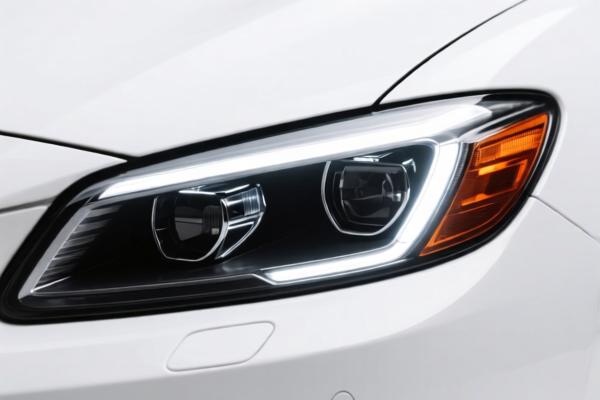
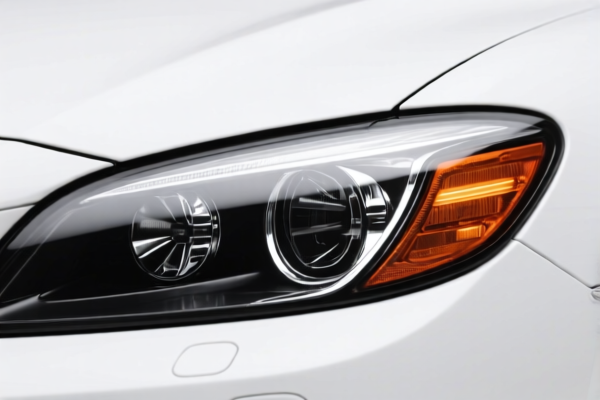
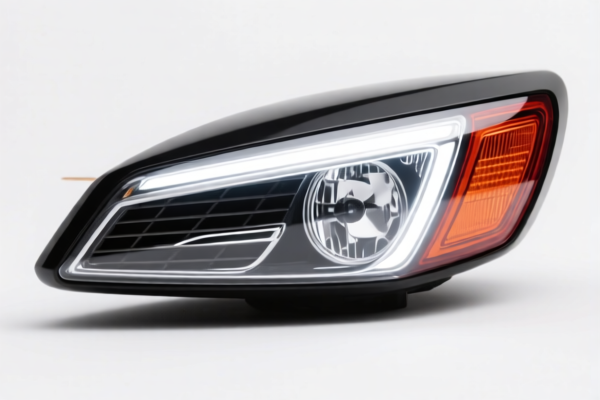
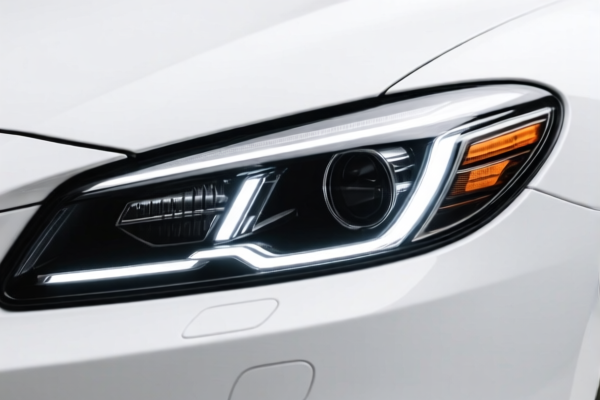
AI Analysis
🚗 Car Light (Automotive Decorative Lighting)
🌐 HS Code Reference & Customs Clearance Guide | 2026 Latest Tariff Analysis | Professional Clearance Strategy
📌 Part 1: Product Definition & Classification: Do You Really Understand "Car Lights"?
Automotive decorative lights are essential components for vehicle aesthetics and functional signaling. In international trade, their classification depends heavily on their primary function (illumination vs. signaling) and technical integration.
Key Distinction Criteria: * Illumination Purpose: If the device's main purpose is to provide light for the vehicle's operation or decoration (headlights, fog lights, interior ambient lighting), it typically falls under Chapter 8512 (Electrical lighting equipment). * Signaling Purpose: If the device functions primarily as a visual signal indicator (dashboard lights, turn signals, brake lights without high-output illumination), it may fall under Chapter 8531 (Industrial/Professional Signaling Equipment). * General Lighting: If it fits general household-style lighting fixtures adapted for cars, it might fall under Chapter 9405 (Lamps and lighting fittings).
⚠️ Critical Note for Customs:
Misclassification between "Lighting" (8512) and "Signaling" (8531) can lead to drastically different tariff rates due to US-China trade tensions. Always verify the product's primary function and technical specifications.
📦 Part 2: HS Code Classification Details (Based on Provided Data)
| HS Code | Product Description | Application Scenario | Primary Function |
|---|---|---|---|
8512.20.20.40 |
Electrical lighting equipment for road vehicles | Matching category for other automotive lighting equipment | Illumination/Decoration |
8531.20.00.40 |
Electrical or visual signaling apparatus | Indicator panels / signal devices | Signaling |
8531.80.90.51 |
Visual signaling devices | Other signaling apparatus (fallback category) | Signaling |
8512.20.20.80 |
Electrical lighting equipment | Vehicle accessories / auxiliary lighting | Illumination/Decoration |
9405.42.84.40 |
Electric lamps and lighting fittings | Other electric lamps (general purpose) | General Lighting |
🔍 Key Reminder:
- 8512 codes are generally for devices that produce light for viewing or decoration.
- 8531 codes are for devices that indicate status (like a dashboard warning light).
- 9405 is a broader category for lamps not specifically designed for vehicles but used in them.
💰 Part 3: 2026 Latest Tariff Rate Breakdown (Including Additional Duties)
✅ Applicable Market: United States (US)
✅ Origin: China (CN)
✅ Effective Date: Current trade policies include Section 301 (25%) and Section 232/IEEPA (10%) additional tariffs for many Chinese goods.
🎯 1. 8512.20.20.40 – Automotive Lighting Equipment (Lighting Category)
| Item | Detail |
|---|---|
| Base Tariff | 0.0% |
| Additional Tariff (Section 301) | 0.0% |
| Section 122 Tariff (IEEPA/Other) | 10.0% |
| Total Effective Tariff | 10.0% |
| Tax Calculation | CIF Value × 10% |
| De Minimis Exemption? | ❌ No (Section 301/IEEPA duties usually apply regardless of value for these codes) |
| Legal Basis | 8512.20.20.40 → 122 Clause: 10% |
📌 Explanation:
This code is classified under electrical lighting equipment. While the base duty is 0%, the 122 Clause tariff of 10% applies. This is the most cost-effective option among the provided codes for standard automotive decorative lights.
🎯 2. 8531.20.00.40 – Visual Signaling Apparatus (Signaling Category)
| Item | Detail |
|---|---|
| Base Tariff | 0.0% |
| Additional Tariff (Section 301) | 25.0% |
| Section 122 Tariff (IEEPA/Other) | 10.0% |
| Total Effective Tariff | 35.0% |
| Tax Calculation | CIF Value × 35% |
| De Minimis Exemption? | ❌ No |
| Legal Basis | 8531.20.00.40 → Section 301: 25% + 122 Clause: 10% |
📌 Explanation:
This code is classified under electrical signaling equipment. It attracts the higher 25% Section 301 tariff plus the 10% 122 Clause tariff. This is a high-cost classification, suitable only if the product is strictly a signal indicator (e.g., dashboard LED) and not a light source.
🎯 3. 8531.80.90.51 – Other Visual Signaling Devices (Signaling Category)
| Item | Detail |
|---|---|
| Base Tariff | 0.0% |
| Additional Tariff (Section 301) | 7.5% |
| Section 122 Tariff (IEEPA/Other) | 10.0% |
| Total Effective Tariff | 17.5% |
| Tax Calculation | CIF Value × 17.5% |
| De Minimis Exemption? | ❌ No |
| Legal Basis | 8531.80.90.51 → Section 301: 7.5% + 122 Clause: 10% |
📌 Explanation:
This is a fallback signaling category. It has a lower Section 301 tariff (7.5%) compared to8531.20.00.40, but still incurs the 122 Clause tariff. Total duty is 17.5%. Use this only if the product does not fit the specific signaling categories above.
🎯 4. 8512.20.20.80 – Electrical Lighting Equipment (Lighting Category)
| Item | Detail |
|---|---|
| Base Tariff | 0.0% |
| Additional Tariff (Section 301) | 25.0% |
| Section 122 Tariff (IEEPA/Other) | 10.0% |
| Total Effective Tariff | 35.0% |
| Tax Calculation | CIF Value × 35% |
| De Minimis Exemption? | ❌ No |
| Legal Basis | 8512.20.20.80 → Section 301: 25% + 122 Clause: 10% |
📌 Explanation:
Although this is a lighting code, it is subject to the higher 25% Section 301 tariff. This may seem counterintuitive, but specific sub-headings within 8512 are subject to different duty rates. Avoid this code if8512.20.20.40is applicable, as the rate is significantly higher.
🎯 5. 9405.42.84.40 – Electric Lamps and Lighting Fittings (General Category)
| Item | Detail |
|---|---|
| Base Tariff | 3.9% |
| Additional Tariff (Section 301) | 25.0% |
| Section 122 Tariff (IEEPA/Other) | 10.0% |
| Total Effective Tariff | 38.9% |
| Tax Calculation | CIF Value × 38.9% |
| De Minimis Exemption? | ❌ No |
| Legal Basis | 9405.42.84.40 → Base: 3.9% + Section 301: 25% + 122 Clause: 10% |
📌 Explanation:
This code applies to general electric lamps not specifically classified as automotive lighting. It has the highest total duty (38.9%) due to the base tariff plus both additional tariffs. Only use this if no other automotive-specific code applies.
🛠️ Part 4: Customs Clearance Practical Advice (Pitfall Avoidance Guide)
✅ 1. Essential Documentation Checklist
| Document | Required? | Description |
|---|---|---|
| ✅ Product Specifications | ✔️ | Must clearly state: Voltage, Wattage, Type (LED/Incandescent), Function (Illumination vs. Signaling) |
| ✅ Technical Diagrams | ✔️ | Schematics showing circuitry to prove if it's a "signaling device" or "light source" |
| ✅ Product Photos | ✔️ | Clear images of the product, label, and packaging |
| ✅ Commercial Invoice | ✔️ | Accurate description matching the HS Code justification |
| ✅ Certificate of Origin | ✔️ | To determine eligibility for any potential exemptions (though unlikely for these codes) |
✅ 2. Classification Strategy (Key Tips)
🔥 "Function Dictates Code: Light = 8512, Signal = 8531, General = 9405"
| Scenario | Recommended HS Code | Why? |
|---|---|---|
| Ambient Interior Lights, Underglow, Headlights | 8512.20.20.40 |
Best rate (10%). Classified as automotive lighting equipment. |
| Dashboard Indicators, Turn Signal Bulbs (Non-illuminating primary) | 8531.20.00.40 or 8531.80.90.51 |
Classified as signaling. Check if 7.5% or 25% applies based on specific subheading. |
| General Decorative String Lights used in Cars | 9405.42.84.40 |
Fallback. High duty (38.9%). Avoid if possible. |
| Automotive Lighting with Specific Subheading Match | 8512.20.20.80 |
Only if 8512.20.20.40 is not applicable. High duty (35%). |
✅ 3. Special Circumstances
| Situation | Advice |
|---|---|
| Hybrid Devices (Light + Signal) | Prioritize the primary function. If it lights up the road/car, use 8512. If it just flashes a warning, use 8531. |
| OEM vs. Aftermarket | Documentation must match. OEM parts may have different clearance flows but same duty rates. |
| Kit Sets (Wires + Bulbs + Mounts) | Declare as a single set. Do not split items to lower duties, as this may trigger audits. |
🌍 Part 5: Global Market Comparison (2026 Latest)
| Country/Region | Recommended HS Code | Total Duty Rate | Key Certification | Note |
|---|---|---|---|---|
| 🇺🇸 USA | 8512.20.20.40 |
10.0% | DOT/SAE (if applicable) | Best option for automotive lights. |
| 🇨🇳 China | 8512.20.20.40 |
Varies | CCC (if applicable) | Export market focus. |
| 🇪🇺 EU | 8512.20.20.40 |
0-4% (varies by agreement) | E-Mark | No Section 301/122 tariffs. |
| 🇬🇧 UK | 8512.20.20.40 |
0-4% | UKCA | Post-Brexit regulations. |
📌 Conclusion:
The US market imposes significant tariffs on Chinese-made automotive lighting.
8512.20.20.40is the optimal code with a 10% total duty, compared to 35-38.9% for other codes.
Correct classification is crucial to avoid overpayment.
📌 Part 6: Common Errors & Pitfalls (Lessons Learned)
❌ Error 1: Classifying decorative interior LED strips as "Signaling Equipment" (8531)
👉 Consequence: Higher duty (35% vs 10%).
✅ Fix: Prove the primary function is illumination/decoration, not signaling.
❌ Error 2: Using 9405 for automotive-specific lights
👉 Consequence: Highest duty (38.9%).
✅ Fix: Always check Chapter 8512 first for automotive lighting.
❌ Error 3: Ignoring the 122 Clause Tariff
👉 Consequence: Unexpected 10% charge on all codes.
✅ Fix: Factor this into all cost calculations.
🎯 Part 7: Conclusion: Precision Classification Saves Money!
🎯 Remember the Mantra:
🔹 "Lighting is 10% (Code .40), Signaling is 35% (Code .40) or 17.5% (Code .51). Avoid 8512.80 and 9405."
🔹 "Function First: If it illuminates, go 8512. If it signals, go 8531."
📌 Pro Tip:
Always request an Advance Ruling from US Customs and Border Protection (CBP) if your product is complex. This provides legal certainty on the HS Code and duty rate before shipment.
📣 Action Required:
📞 Consult a licensed customs broker.
📄 Prepare detailed technical specs.
🚀 Apply for pre-classification to ensure smooth customs clearance and cost efficiency.
✨ Professional Customs Clearance Starts with Accurate Classification!
💼 Every percentage point of duty matters in your profit margin!
Customer Reviews
About HS Code Classification
The Harmonized System (HS) is an internationally standardized nomenclature developed by the World Customs Organization (WCO) to classify traded products. Over 200 countries use the HS system as the basis for customs tariffs, trade statistics, and import/export regulations.
Each HS code follows a hierarchical structure:
- Chapter (2 digits) — Broad category of goods (e.g., Chapter 84: Machinery and Mechanical Appliances)
- Heading (4 digits) — More specific grouping within the chapter
- Subheading (6 digits) — Internationally standardized breakdown, used by all WCO member countries
- National subdivisions (8-10 digits) — Country-specific extensions for further classification, such as US HTSUS 10-digit codes
Correct HS code classification is essential for smooth customs clearance, accurate duty payment, and compliance with trade regulations. Misclassification can lead to customs delays, overpayment of duties, or penalties.
When importing from CN to US, the applicable tariff rates may include:
- Most-Favored-Nation (MFN) rate — The standard duty rate applied to WTO members
- General rate — Applied to countries without trade agreements
- Trade remedy duties — Additional tariffs such as Section 301 (anti-dumping), Section 232 (national security), or countervailing duties
The information provided on this page is for reference purposes only. For official classification, please consult with your local customs authority or a licensed customs broker.