Car Light Decorative Sticker
CN → US| HS Code | Tariff Rate | Origin | Destination | Doc |
|---|---|---|---|---|
| 8512202040 | 35.0% | CN | US | Official Doc |
| 8531200040 | 35.0% | CN | US | Official Doc |
| 8531809051 | 17.5% | CN | US | Official Doc |
| 8512202080 | 35.0% | CN | US | Official Doc |
| 9405428440 | 38.9% | CN | US | Official Doc |
Product Images
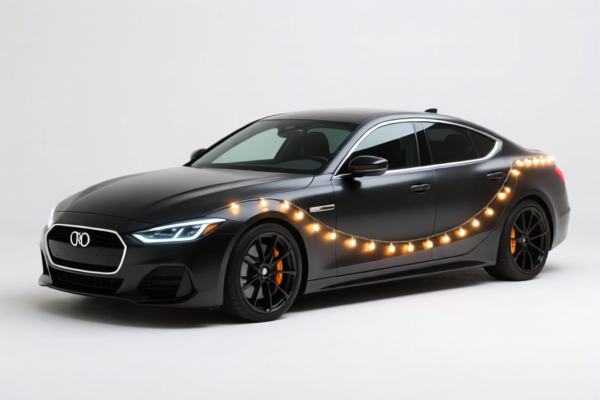
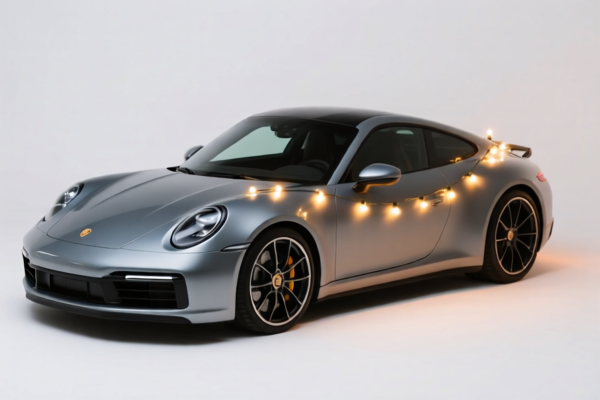
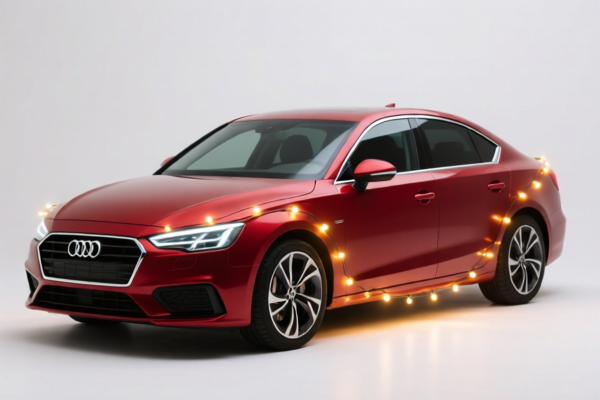
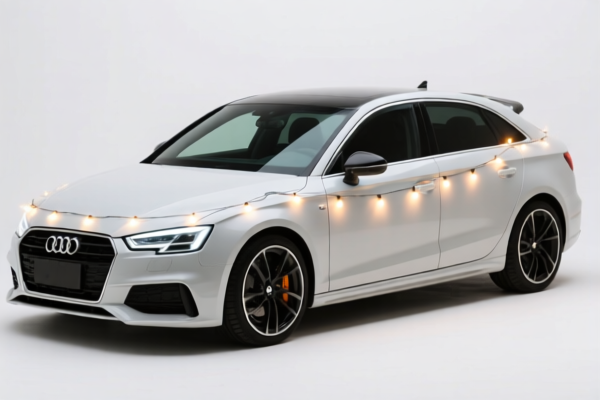
AI Analysis
💡 Car Light Decorative Sticker (Automotive Decorative Lighting)
🌐 HS Code Reference & Customs Clearance Guide | 2026 Latest Tariff Analysis | Professional Clearance Strategy
📌 I. Product Definition and Classification: Do You Really Understand "Car Light Decorative Stickers"?
"Car Light Decorative Sticker" is a broad term often used in cross-border e-commerce to describe aftermarket automotive lighting accessories. However, in international trade and customs classification, these products are not a single unified category. They are generally divided into three logical categories based on their function and composition:
- Lighting Equipment (8512 Series): If the product includes bulbs, LEDs, wiring, and power sources, and is used to illuminate or signal.
- Visual Signal Devices (8531 Series): If the product is a panel or indicator light that provides visual signals (e.g., turn signals, brake lights, dashboard indicators).
- General Lighting Fixtures (9405 Series): If the product is a general-purpose electric lamp that does not fit specific vehicle-exclusive criteria but is technically a "lamp."
⚠️ Key Distinction Point:
- If it has active electronics (LEDs, drivers) and is intended for vehicle use → Typically 8512 or 8531.
- If it is a passive sticker (no power) → It may be classified as a Plastic Article (3926) or Adhesive Product (3506), but the data provided focuses on active electrical goods.
- Note: The<DATA>provided exclusively lists electrical lighting/signal codes (8512, 8531, 9405). Therefore, this guide assumes the "Sticker" is an active LED light strip/sticker or a light-integrated decal, not a passive vinyl sticker.
📦 II. HS Code Classification Details (Based on Provided Data)
| HS Code | Product Description | Logic/Summary | Total Tax Rate (2026 Estimate) |
|---|---|---|---|
8512.20.20.40 |
Lighting Equipment, Other | Matches "Other automotive lighting equipment" category. | 35.0% |
8531.20.00.40 |
Visual Signal Equipment | Fits "Indicator Panel" classification logic. | 35.0% |
8531.80.90.51 |
Visual Signal Devices (Other) | Fallback category for "Other visual signal devices." | 17.5% |
8512.20.20.80 |
Electrical Lighting Equipment | Matches "Vehicle accessory purpose" criteria. | 35.0% |
9405.42.84.40 |
Electric Lamps/Lighting Fixtures | Matches "Other electric lamps" category. | 38.9% |
🔍 Key Insight:
- The most favorable rate among the provided options is 17.5% under8531.80.90.51.
- The highest risk rates are 38.9% (9405) and 35.0% (8512,8531).
- The difference in tax burden can be massive (over 200% relative difference). Choosing the right HS Code is critical for cost control.
💰 III. 2026 Latest Tariff Rate Breakdown (Including Surtaxes & Policy Surcharges)
✅ Applicable Country: United States (US)
✅ Origin: China (CN)
✅ Effective Time: 2025/2026 (Post-Section 301 & IEEPA adjustments)
🎯 1. 8512.20.20.40 & 8512.20.20.80 — Automotive Lighting Equipment
| Item | Content |
|---|---|
| Base Tariff | 0.0% |
| Section 301 Surcharge | 25.0% |
| IEEPA Surcharge (122 Clause) | 10.0% |
| Total Tax Rate | 35.0% |
| Tax Calculation | CIF Value × 35% |
| De Minimis Exemption | ❌ Not Applicable (Deny de minimis) |
| Legal Basis Path | USITC:8512.20.20.40/80 → FOOTNOTE:301 → IEEPA:9903.01.25 |
📌 Explanation:
- These codes fall under "Lighting Equipment for Motor Vehicles."
- Subject to both 25% Section 301 tariffs and 10% IEEPA surcharges.
- Total: 35%. This is a high-cost classification.
🎯 2. 8531.20.00.40 — Visual Signal Devices (Indicator Panels)
| Item | Content |
|---|---|
| Base Tariff | 0.0% |
| Section 301 Surcharge | 25.0% |
| IEEPA Surcharge (122 Clause) | 10.0% |
| Total Tax Rate | 35.0% |
| Tax Calculation | CIF Value × 35% |
| De Minimis Exemption | ❌ Not Applicable |
| Legal Basis Path | USITC:8531.20.00.40 → FOOTNOTE:301 → IEEPA:9903.01.24 |
📌 Note:
- Classified as "Electric Sound or Visual Signaling Apparatus."
- If your "sticker" functions as a turn signal, brake light, or dashboard indicator, it may fall here.
- Total: 35%. Same high cost as lighting equipment.
🎯 3. 8531.80.90.51 — Other Visual Signal Devices (BEST RATE)
| Item | Content |
|---|---|
| Base Tariff | 0.0% |
| Section 301 Surcharge | 7.5% |
| IEEPA Surcharge (122 Clause) | 10.0% |
| Total Tax Rate | 17.5% |
| Tax Calculation | CIF Value × 17.5% |
| De Minimis Exemption | ❌ Not Applicable |
| Legal Basis Path | USITC:8531.80.90.51 → FOOTNOTE:301 (lower bracket) → IEEPA:9903.01.24 |
📌 Key Advantage:
- This code falls under "Other" visual signal devices.
- Crucially, the Section 301 surcharge is reduced to 7.5% (instead of 25%) for certain subheadings in 8531.80.
- Total: 17.5%. This is the most cost-effective option if the product can be legally classified here.
- Condition: The product must be clearly defined as a "visual signal device" and not primarily as "lighting equipment."
🎯 4. 9405.42.84.40 — Electric Lamps and Lighting Fixtures
| Item | Content |
|---|---|
| Base Tariff | 3.9% |
| Section 301 Surcharge | 25.0% |
| IEEPA Surcharge (122 Clause) | 10.0% |
| Total Tax Rate | 38.9% |
| Tax Calculation | CIF Value × 38.9% |
| De Minimis Exemption | ❌ Not Applicable |
| Legal Basis Path | USITC:9405.42.84.40 → FOOTNOTE:301 → IEEPA:9903.01.25 |
📌 Warning:
- This is the most expensive option.
- It applies if the product is considered a general-purpose electric lamp (e.g., decorative ambient light not specifically for vehicle safety/signaling).
- Total: 38.9%. Avoid this classification if possible.
🛠️ IV. Customs Clearance Practical Advice (Real-World Pitfall Guide)
✅ 1. Preparation Checklist (All Must Be Provided)
| Document | Required | Notes |
|---|---|---|
| ✅ Product Specification Sheet | ✔️ | Must detail: Voltage, Power, LED Type, Mounting Method (Adhesive/Sticker), Function (Light/Signal/Decorative). |
| ✅ Technical Diagram | ✔️ | Show internal circuit if applicable. Prove it is a "signal device" vs. "general lighting." |
| ✅ Product Photos (with Label) | ✔️ | Show the product in use on a vehicle. Highlight any certifications (FCC/CE). |
| ✅ FCC Certification | ✔️ | Mandatory for any electrical device emitting RF signals (LEDs often do). |
| ✅ Commercial Invoice | ✔️ | Description must be precise: "LED Decorative Sticker for Automotive Use, Function: Visual Signaling" or "Ambient Lighting." |
| ✅ Packing List | ✔️ | List items clearly. Avoid "mixed" descriptions. |
✅ 2. Declaration Strategy (Critical Mnemonics)
🔥 "Signal vs. Light, 17.5% vs. 35%! Function Defines Code!"
| Scenario | Recommended HS Code | Tax Rate | Why? |
|---|---|---|---|
| Product acts as a turn signal/brake light | 8531.20.00.40 |
35.0% | Clear "Signal Device." |
| Product is decorative ambient light (not for safety) | 8531.80.90.51 |
17.5% | BEST OPTION if classified as "Other Visual Signal Device" (broad interpretation). |
| Product is a dedicated headlight/taillight | 8512.20.20.40 |
35.0% | Specific "Vehicle Lighting." |
| Product is a general room lamp shipped with car | 9405.42.84.40 |
38.9% | Worst option. Avoid. |
📌 Strategy for Cost Saving:
- Can you argue that your "Decorative Sticker" is primarily a visual signal device (e.g., it flashes to warn others) rather than a lighting equipment?
- If yes, try to classify under8531.80.90.51(17.5%).
- Risk: Customs may reject this if the product is clearly for illumination (e.g., bright white LEDs for visibility). Ensure marketing materials describe it as "signal" or "indicator" rather than "light source."
✅ 3. Special Cases Handling
| Case | Handling Advice |
|---|---|
| Passive Vinyl Sticker (No Electronics) | NOT Covered in Data. Likely 3926 (Plastic Articles) or 3506 (Adhesive). Tariff much lower (~0-3%). If it has no battery/wire, do NOT use 85xx codes. |
| Battery-Operated vs. Wired | Wired (connected to car power) → Stronger case for 8512/8531. Battery-operated → Might lean towards 9405 (less likely for cars) or still 8531 if portable. |
| FCC Compliance | If the sticker has a remote control or wireless feature, FCC ID is mandatory. Without it, goods will be detained at US Customs. |
🌍 V. Global Market Comparison (2026)
| Country/Region | Recommended HS Code (if similar) | Tariff (China Origin) | Notes |
|---|---|---|---|
| 🇺🇸 USA | 8531.80.90.51 |
17.5% | Best rate from data. 122 Clause applies. |
| 🇨🇳 China | 8531.80.90.51 | ~10-13% | Import duties apply, but no Section 301. |
| 🇪🇺 EU | 8531.80 | 0-4% | No major surcharges, but VAT applies. |
| 🇬🇧 UK | 8531.80 | 0-4% | Post-Brexit tariffs similar to EU. |
📌 Conclusion:
- The US market is the most tax-sensitive for these goods due to Section 301 and IEEPA.
- Every percentage point matters. A 1.5% difference (between 17.5% and 19%) can be significant for low-margin items. A 17.5% vs 35% difference is huge.
📌 VI. Common Errors & Pitfalls (Lessons Learned)
❌ Error 1: Calling it "Car Light" and declaring under 8512.20.20.40 (35%) when it could be 8531.80.90.51 (17.5%).
👉 Fix: Check if it qualifies as "Other Visual Signal Device." If it's just for show (ambient light), argue for the broader "Signal Device" category to access the lower 301 bracket.
❌ Error 2: Declaring an electronic LED sticker under Plastic Code (3926).
👉 Consequence: Customs will reclassify it, add interest, and possibly fine you for undervaluation/wrong code.
👉 Fix: Always declare electrical components accurately.
❌ Error 3: Ignoring the IEEPA 10% Surcharge.
👉 Consequence: Underpayment. The 122 Clause adds 10% on top of Section 301.
👉 Fix: Factor in 10% IEEPA + Section 301 in your cost model.
❌ Error 4: Mislabeling the product as "Sticker" without mentioning "LED/Light."
👉 Consequence: Customs may suspect it's a passive plastic product and assign a wrong code, leading to delays.
👉 Fix: Use clear descriptions: "Adhesive LED Decorative Strip for Automotive Use."
🎯 VII. Conclusion: Precision in Classification Saves Money
🎯 Key Takeaway:
🔹 "Signal vs. Light: Choose 8531.80 for 17.5% Tax!"
🔹 "35% vs. 17.5%: A 17.5% Difference Can Double Your Profit!"
🔹 "FCC Certification is Non-Negotiable for Electrical Imports to the US."
📌 Pro Tip:
If your product is purely decorative (no signaling function, no safety role), try to negotiate with a customs broker to classify it under 8531.80.90.51 (Other Visual Signal Devices) to benefit from the 7.5% Section 301 rate instead of the 25% rate for dedicated lighting (8512).
- Argument: "The product provides visual feedback/signaling to the driver or other road users, fitting the broad definition of a visual signal device."
📣 Immediate Action:
📞 Contact a Customs Broker for a Pre-Ruling on your specific product design.
🚀 Verify FCC Compliance before shipping.
💼 Optimize your HS Code to save up to 17.5% in duties.
✨ Professional Clearance, Starts with Accurate Classification!
💼 Your Cost Efficiency Depends on These Digits!
Customer Reviews
About HS Code Classification
The Harmonized System (HS) is an internationally standardized nomenclature developed by the World Customs Organization (WCO) to classify traded products. Over 200 countries use the HS system as the basis for customs tariffs, trade statistics, and import/export regulations.
Each HS code follows a hierarchical structure:
- Chapter (2 digits) — Broad category of goods (e.g., Chapter 84: Machinery and Mechanical Appliances)
- Heading (4 digits) — More specific grouping within the chapter
- Subheading (6 digits) — Internationally standardized breakdown, used by all WCO member countries
- National subdivisions (8-10 digits) — Country-specific extensions for further classification, such as US HTSUS 10-digit codes
Correct HS code classification is essential for smooth customs clearance, accurate duty payment, and compliance with trade regulations. Misclassification can lead to customs delays, overpayment of duties, or penalties.
When importing from CN to US, the applicable tariff rates may include:
- Most-Favored-Nation (MFN) rate — The standard duty rate applied to WTO members
- General rate — Applied to countries without trade agreements
- Trade remedy duties — Additional tariffs such as Section 301 (anti-dumping), Section 232 (national security), or countervailing duties
The information provided on this page is for reference purposes only. For official classification, please consult with your local customs authority or a licensed customs broker.