Car Lumbar Support
CN → US| HS Code | Tariff Rate | Origin | Destination | Doc |
|---|---|---|---|---|
| 9401991010 | 17.5% | CN | US | Official Doc |
| 9401991020 | 17.5% | CN | US | Official Doc |
| 3926305000 | 22.8% | CN | US | Official Doc |
Product Images
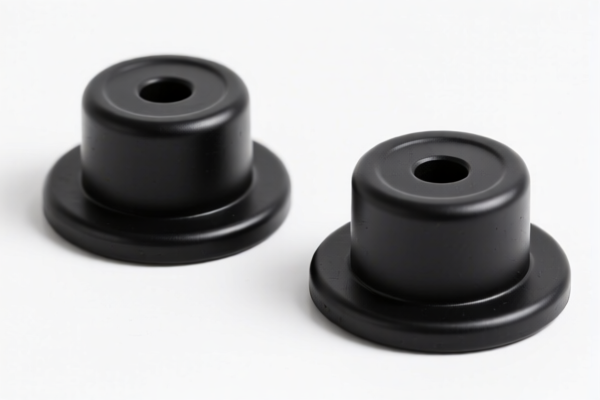
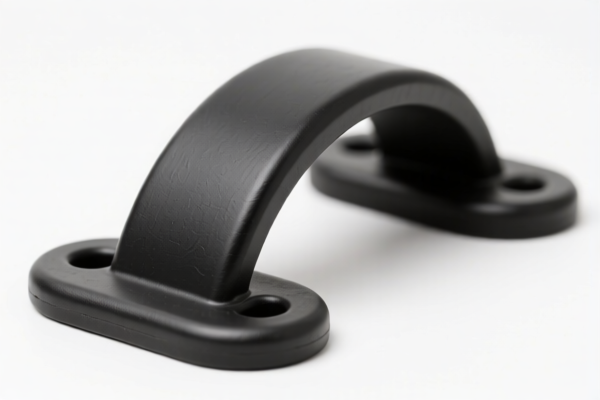
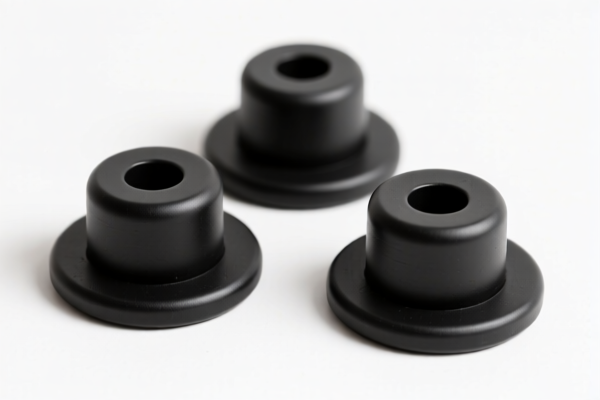
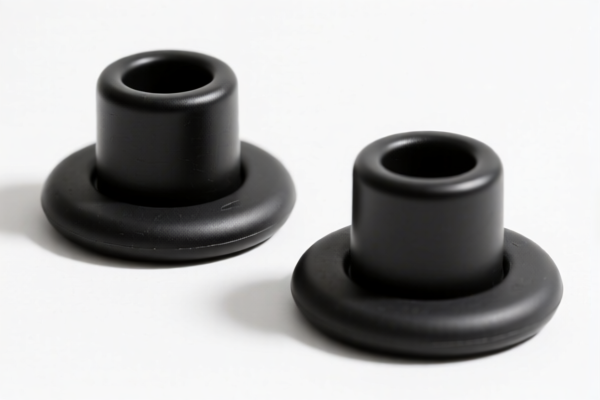
AI Analysis
🚗 Car Lumbar Support (Automotive Seat Accessories)
🌐 HS Code Reference & Customs Clearance Guide | 2026 Latest Tariff Analysis | Professional Clearance Strategy
📌 I. Product Definition & Classification: Do You Really Understand "Car Lumbar Support"?
Car Lumbar Supports are ergonomic accessories designed to provide lower back support for drivers and passengers in vehicles. In international trade, they are not classified as standalone seats (Chapter 94) but as parts or accessories for seats, or potentially as plastic/rubber components depending on their construction and material composition.
Key Classification Divergence:
1. Textile/Leather Upholstery/Parts: If the product is primarily a padded cover, cushion, or attachment made of fabric/leather, it falls under Seat Parts.
2. Plastic/Rigid Components: If the product contains a rigid plastic frame, inflation mechanism, or structural element, it may be classified under Plastic Articles for Vehicles.
⚠️ Critical Distinction:
- If it is a soft cushion or upholstered attachment →归入 9401.99.10 (Seat Parts)
- If it is a plastic bracket, inflator, or rigid connector → 归入 3926.30.50 (Plastic Parts)
📦 II. HS Code Classification Details (2026 Latest Tariff Authority Comparison)
| HS Code | Product Description | Application Scenario | Material/Structure |
|---|---|---|---|
9401.99.10.10 |
Parts and accessories of seats (Automotive Seat Related Parts) | Soft lumbar cushions, fabric/leather attachments, padded supports | ✅ Textile/Leather/Upholstery |
9401.99.10.20 |
Parts and accessories of seats (Seat Components/Accessories) | General seat attachments, textile-based supports | ✅ Textile/Synthetic Fiber |
3926.30.50.00 |
Other articles of plastics and articles of other materials of headings 3901 to 3914 | Rigid plastic supports, inflation mechanisms, plastic connectors for vehicle bodies | ✅ Plastic/Rigid Components |
🔍 Key Reminder:
- Soft/Padded Lumbar Supports: Must be classified under 9401.99.10 as seat parts.
- Plastic/Rigid Elements: If the lumbar support relies heavily on plastic components for structure, customs may classify it under 3926.30.50.
- Do Not Split:申报时应整体申报,避免将“软垫”和“塑料支架”分开申报导致税率差异巨大。
💰 III. 2026 Latest Tariff Rate Detailed Explanation (Including Additional Taxes & Policy Surcharges)
✅ Applicable Country: United States (US)
✅ Country of Origin: China (CN)
✅ Effective Date: From November 10, 2025 (including subsequent imports)
🎯 1. 9401.99.10.10 & 9401.99.10.20 —— Automotive Seat Parts (Textile/Leather Based)
| Item | Content |
|---|---|
| Base Tariff | 0.0% (ad valorem) |
| Section 301 Additional Tariff | +7.5% |
| Section 122 Tariff | +10% |
| Total Tariff | 17.5% |
| Tax Calculation | CIF Value × 17.5% |
| De Minimis Eligibility | ❌ Not Eligible (deny_de_minimis) |
| Legal Basis Path | Section 301: 9401.99.10 → Section 122: 9401.99.10 |
📌 Explanation:
- These codes are classified as seat parts.
- Section 301 Tariff (7.5%): Imposed on Chinese-made goods under trade remedy measures.
- Section 122 Tariff (10%): Specific surcharge applied to certain vehicle accessories.
- Base Tariff is 0%, but the total effective rate is 17.5%.
🎯 2. 3926.30.50.00 —— Plastic Articles for Vehicles (Plastic Based)
| Item | Content |
|---|---|
| Base Tariff | 5.3% (ad valorem) |
| Section 301 Additional Tariff | +7.5% |
| Section 122 Tariff | +10% |
| Total Tariff | 22.8% |
| Tax Calculation | CIF Value × 22.8% |
| De Minimis Eligibility | ❌ Not Eligible (deny_de_minimis) |
| Legal Basis Path | Base Tariff: 5.3% → Section 301: 7.5% → Section 122: 10% |
📌 Explanation:
- If classified as plastic articles, the base tariff is 5.3%.
- Additional surcharges remain 7.5% (Section 301) and 10% (Section 122).
- Total effective rate is 22.8%, which is 5.3% higher than textile-based seat parts.
- Cost Impact: For a $1,000 shipment, the tax difference is $53.
🛠️ IV. Customs Clearance Practical Advice (Real-World Pitfall Avoidance Guide)
✅ 1. Documentation Checklist (All Required)
| Document | Required | Notes |
|---|---|---|
| ✅ Product Specification Sheet | ✔️ | Must specify material (textile vs. plastic), dimensions, and intended use (automotive seat). |
| ✅ Product Photos | ✔️ | Clear images showing the entire product, labels, and packaging. |
| ✅ Commercial Invoice | ✔️ | Describe as "Lumbar Support for Car Seats" or "Seat Accessory". Avoid vague terms like "Cushion". |
| ✅ Packing List | ✔️ | Detail quantities and weights. |
| ✅ Certificate of Origin (CO) | ✔️ | If not Chinese origin, may qualify for lower tariffs. |
| ✅ Material Composition Statement | ✔️ | Crucial for distinguishing between 9401 (Textile) and 3926 (Plastic). |
✅ 2. Declaration Tips (Key Mantra)
🔥 “Material Defines Code, Textile is Cheaper, Plastic is Costly, Declare as One!”
| Scenario | Correct Declaration | Incorrect Approach |
|---|---|---|
| Soft/Fabric Lumbar Support | 9401.99.10.10 / .20 |
Misclassified as 3926 → Higher Tax |
| Plastic/Rigid Lumbar Support | 3926.30.50.00 |
Misclassified as 9401 → Lower Tax (Risk of Audit) |
| Mixed Material (Fabric + Plastic Frame) | Whole Item Classification | Split declaration → Complex & Risky |
| Generic "Back Cushion" | Specific Automotive Use | Vague description → Customs Delay |
📌 Note:
- Textile-based supports are cheaper (17.5% total).
- Plastic-based supports are more expensive (22.8% total).
- Accurate material declaration is critical to avoid underpayment penalties.
✅ 3. Special Cases Handling
| Scenario | Recommendation |
|---|---|
| OEM Custom Parts | Provide client order and design specs to prove automotive use. |
| Inflatable Lumbar Support | Likely 9401.99.10 if attached to seat; 3926 if standalone plastic unit. |
| High-End Leather Seats | Ensure invoice specifies "Automotive Seat Accessory" to avoid misclassification as general furniture. |
| Non-Chinese Origin | If from Vietnam/Mexico, apply for IEEPA Exemption or lower tariffs. |
🌍 V. Global Market Customs Comparison (2026 Latest)
| Country/Region | Recommended HS Code | Tariff (China Origin) | Certification | Notes |
|---|---|---|---|---|
| 🇺🇸 USA | 9401.99.10.10 |
17.5% | N/A | Highest due to Section 301 + 122 |
| 🇨🇳 China | 9401.99.10.10 |
0% | CCC (if applicable) | No additional tariffs for domestic trade |
| 🇪🇺 EU | 9401.99.10.10 |
0% | CE + REACH | No additional tariffs |
| 🇦🇺 Australia | 9401.99.10.10 |
5% | N/A | Lower than US |
| 🇯🇵 Japan | 9401.99.10.10 |
0% | PSE (if electronic) | No additional tariffs |
📌 Conclusion:
- USA has the highest tariffs due to Section 301 and Section 122.
- EU and Japan offer zero tariffs for similar goods, making them more cost-effective markets.
- China-origin goods to USA face a 17.5%–22.8% tariff burden.
📌 VI. Common Errors & Pitfall Guide (Lessons Learned)
❌ Error 1: Declaring as "General Cushion" (HS 9404.90)
👉 Consequence: Misclassification → Customs audit, delay, and potential back-taxes.
👉 Correct: Declare as "Automotive Seat Accessory" under 9401.99.10.
❌ Error 2: Splitting Declaration (Soft Pad + Plastic Bracket)
👉 Consequence: Each item declared separately → Higher total tax due to multiple base rates.
👉 Correct: Declare as one integrated product.
❌ Error 3: Ignoring Section 122 Tariff
👉 Consequence: Underpayment by 10% → Penalties and interest.
👉 Correct: Include all surcharges in cost calculation.
❌ Error 4: Using "Cushion" Instead of "Seat Part"
👉 Consequence: Customs may reclassify under general goods, leading to higher base tariffs.
👉 Correct: Use "Automotive Seat Part" or "Seat Accessory".
✅ Best Practice:
"Lumbar Support for Car Seats, Fabric Covered, Model XYZ, For Automotive Use Only"
🎯 VII. Conclusion: Professional Declaration, Save Time, Reduce Costs!
🎯 Remember the Mantra:
🔹 "Textile is 17.5%, Plastic is 22.8%, Declare as Seat Part, Avoid the 5% Trap!"
🔹 "HS Code Determines Tax, 17.5% vs 22.8%, Small Difference, Big Cost!"
📌 Pro Tip:
- If your lumbar supports are originated from Vietnam, Mexico, or Thailand, you may apply for IEEPA Exemption, reducing tariffs to 0%–5%.
- Consider Advance Ruling from US Customs to confirm classification before shipment.
📣 Call to Action:
📞 Contact a Professional Customs Broker + Provide Product Photos + Apply for HS Code Advance Ruling
🚀 Ensure Smooth Clearance, Maximize Profit, and Global Expansion!
✨ Professional Clearance Starts with Accurate Classification!
💼 Every Dollar Saved is a Dollar Earned!
Customer Reviews
About HS Code Classification
The Harmonized System (HS) is an internationally standardized nomenclature developed by the World Customs Organization (WCO) to classify traded products. Over 200 countries use the HS system as the basis for customs tariffs, trade statistics, and import/export regulations.
Each HS code follows a hierarchical structure:
- Chapter (2 digits) — Broad category of goods (e.g., Chapter 84: Machinery and Mechanical Appliances)
- Heading (4 digits) — More specific grouping within the chapter
- Subheading (6 digits) — Internationally standardized breakdown, used by all WCO member countries
- National subdivisions (8-10 digits) — Country-specific extensions for further classification, such as US HTSUS 10-digit codes
Correct HS code classification is essential for smooth customs clearance, accurate duty payment, and compliance with trade regulations. Misclassification can lead to customs delays, overpayment of duties, or penalties.
When importing from CN to US, the applicable tariff rates may include:
- Most-Favored-Nation (MFN) rate — The standard duty rate applied to WTO members
- General rate — Applied to countries without trade agreements
- Trade remedy duties — Additional tariffs such as Section 301 (anti-dumping), Section 232 (national security), or countervailing duties
The information provided on this page is for reference purposes only. For official classification, please consult with your local customs authority or a licensed customs broker.