Car Model Accessories
CN → US| HS Code | Tariff Rate | Origin | Destination | Doc |
|---|---|---|---|---|
| 8708295160 | 0.0% | CN | US | Official Doc |
| 8512202080 | 35.0% | CN | US | Official Doc |
| 8708106050 | 87.5% | CN | US | Official Doc |
| 8512909000 | 37.5% | CN | US | Official Doc |
| 8708295160 | 0.0% | CN | US | Official Doc |
Product Images
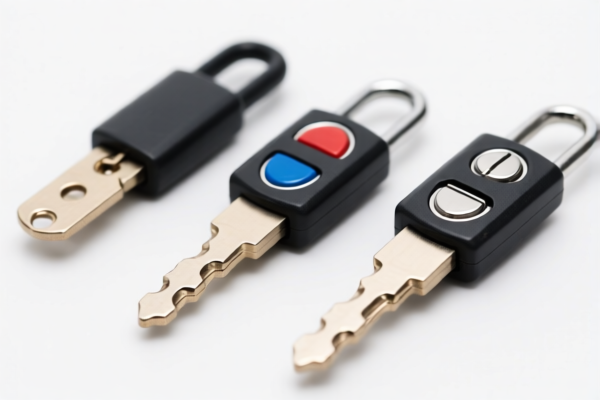
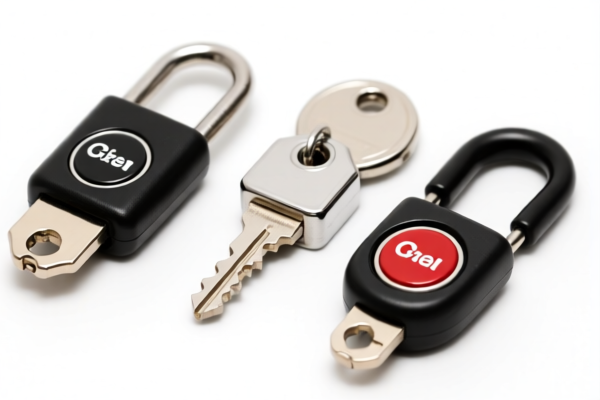
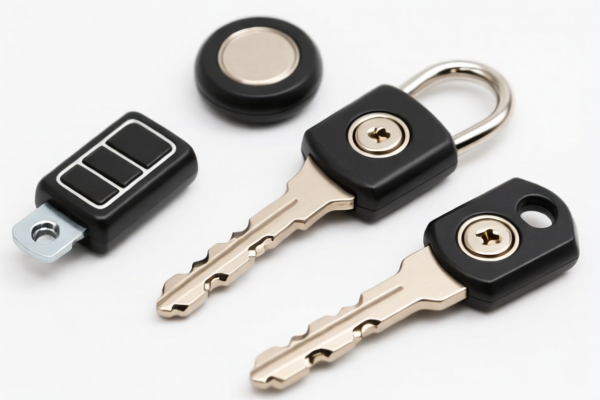
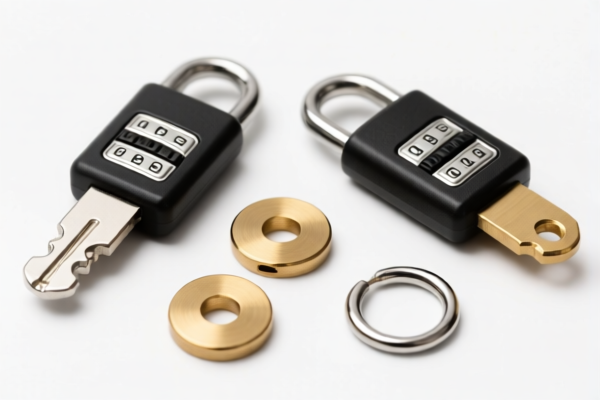
AI Analysis
🚗 Car Model Accessories (Automotive Parts & Accessories)
🌐 HS Code Reference & Customs Clearance Guide | 2026 Latest Tariff Breakdown | Pro-Level Import Strategy
📌 One, Product Definition & Classification: Do You Really Know What “Car Model Accessories” Are?
Car model accessories — whether they’re plastic scale models, functional vehicle parts, or decorative trim components — are often misclassified during international trade. In customs, these items fall under automotive parts and accessories, but their HS Code classification depends on material, function, and structure.
⚠️ Critical Distinction:
- If it's a plastic toy model (non-functional, for display) → likely 8708.29.51.60
- If it's a real vehicle component (e.g., headlight, mirror, bumper) → could be 8708.10.60.50 or 8512.20.20.80
- If it's a generic automotive part with no specific function → 8512.90.90.00 (catch-all)
📦 Two, HS Code Classification Details (2026 Latest Tariff Authority Match)
| HS Code | Product Description | Use Case | Material | Functional? |
|---|---|---|---|---|
8708.29.51.60 |
Automotive parts or plastic car model parts, classified as body components & accessories, made of plastic, fits the "catch-all" category rule | Display models, hobby kits, plastic replicas | ✅ Plastic | ❌ Non-functional |
8512.20.20.80 |
Automotive accessories, part of vehicle lighting/signaling equipment, functionally matched, no material conflict | Headlight covers, brake light housings, turn signal lenses | ✅ Plastic/Metal | ✅ Functional |
8708.10.60.50 |
Automotive parts, within vehicle component category, unspecified form or material, tentative classification | General parts, unclear use, may be borderline | ❓ Unclear | ⚠️ Possibly functional |
8512.90.90.00 |
Other automotive parts, consistent with motor vehicle components, fits the "catch-all" principle | Miscellaneous interior/exterior parts, connectors, brackets | ✅ Plastic/Metal | ✅ Functional |
🔍 Key Insight:
- Plastic model parts without real function → 8708.29.51.60
- Real vehicle components (even if plastic) → 8512.20.20.80 or 8708.10.60.50
- Unclear function or form → 8512.90.90.00 (most flexible, but high tax)
💰 Three, 2026 Latest Tariff Breakdown (With Full附加 Tax Clauses)
✅ Target Country: United States (US)
✅ Origin: China (CN)
✅ Effective Date: November 10, 2025 (including subsequent imports)
🎯 1. 8708.29.51.60 — Plastic Car Model Parts (Body Components & Accessories)
| Item | Details |
|---|---|
| Base Tariff | 2.5% (ad valorem) |
| Additional Tariff (Section 301) | +25.0% |
| 122条款 Tariff (Steel, Aluminum, Copper Products) | +10% |
| Special Additional (Steel/Aluminum/Copper) | +50% |
| Total Effective Tariff | 87.5% |
| Tax Calculation | CIF Value × 87.5% |
| De Minimis Exemption? | ❌ Not applicable (denied) |
| Legal Basis Path | Section 301: 8708.29.51.60 → 122 Clause: 10% → Steel/Aluminum/Copper: 50% → Total: 87.5% |
📌 Explanation:
- This code applies to plastic car model parts (e.g., replica bumpers, grilles, doors) used for display or hobby. - Even though it’s not a real car part, it’s classified under "body components" due to form and function similarity. - The 87.5% total comes from: - 2.5% base - 25% Section 301 (USITC) - 10% 122 Clause (applies to metal/plastic parts with metal content) - 50% extra on steel/aluminum/copper-based components — even if only trace amounts.
🎯 2. 8512.20.20.80 — Vehicle Lighting/Signal Equipment Parts
| Item | Details |
|---|---|
| Base Tariff | 0.0% |
| Additional Tariff (Section 301) | +25.0% |
| 122 Clause Tariff (Steel, Aluminum, Copper) | +10% |
| Special Additional (Steel/Aluminum/Copper) | ❌ Not applicable (no metal in core) |
| Total Effective Tariff | 35.0% |
| Tax Calculation | CIF Value × 35.0% |
| De Minimis Exemption? | ❌ Not applicable |
| Legal Basis Path | Section 301: 8512.20.20.80 → 122 Clause: 10% → Total: 35% |
📌 Explanation:
- Applies to functional parts of headlights, brake lights, turn signals, even if made of plastic. - No base tariff, but 25% Section 301 + 10% 122 Clause = 35%. - No 50% steel/aluminum surcharge unless metal components are present (e.g., wiring, reflector). - Best option if your part is functionally matched to real vehicle systems.
🎯 3. 8708.10.60.50 — General Vehicle Parts (Unclear Form/Material)
| Item | Details |
|---|---|
| Base Tariff | 2.5% |
| Additional Tariff (Section 301) | +25.0% |
| 122 Clause Tariff (Steel, Aluminum, Copper) | +10% |
| Special Additional (Steel/Aluminum/Copper) | +50% |
| Total Effective Tariff | 87.5% |
| Tax Calculation | CIF Value × 87.5% |
| De Minimis Exemption? | ❌ Not applicable |
| Legal Basis Path | Section 301: 8708.10.60.50 → 122 Clause: 10% → Steel/Aluminum/Copper: 50% → Total: 87.5% |
📌 Explanation:
- High-risk classification due to unclear form or material. - If the part is not clearly functional or made of plastic, customs may default to this code. - Same 87.5% rate as8708.29.51.60— very expensive. - Use only if no better fit exists.
🎯 4. 8512.90.90.00 — Other Automotive Parts (Catch-All)
| Item | Details |
|---|---|
| Base Tariff | 2.5% |
| Additional Tariff (Section 301) | +25.0% |
| 122 Clause Tariff (Steel, Aluminum, Copper) | +10% |
| Special Additional (Steel/Aluminum/Copper) | ❌ Not applicable (no metal) |
| Total Effective Tariff | 37.5% |
| Tax Calculation | CIF Value × 37.5% |
| De Minimis Exemption? | ❌ Not applicable |
| Legal Basis Path | Section 301: 8512.90.90.00 → 122 Clause: 10% → Total: 37.5% |
📌 Explanation:
- Best for ambiguous or miscellaneous parts (e.g., trim pieces, brackets, connectors). - No 50% steel/aluminum surcharge unless metal is present. - 37.5% total — lower than 87.5%, but still high. - Preferred over 87.5% codes if you can’t prove function.
🛠️ Four, Customs Clearance Tips (Pro-Level Avoidance Guide)
✅ 1. Must-Have Documentation (No Exceptions)
| Document | Required? | Notes |
|---|---|---|
| ✅ Product Specification Sheet | ✔️ | Include size, function, material, usage |
| ✅ Circuit/Structure Diagram | ✔️ | Prove if it’s functional or not |
| ✅ High-Res Product Photos | ✔️ | Show brand, model, interface, material |
| ✅ Third-Party Test Report | ✔️ | FCC, CE, RoHS, UL (if applicable) |
| ✅ Commercial Invoice | ✔️ | Clearly state “Car Model Accessories” or “Automotive Parts” |
| ✅ Certificate of Origin (CO) | ✔️ | If from non-China origin, may reduce tariffs |
| ✅ Packing List | ✔️ | Show item-by-item breakdown |
✅ 2.申报技巧(Key Rules)
🔥 “Function First, Material Second, Name Matters, Tax Drops 50%!”
| Scenario | Correct HS Code | Wrong Choice | Result |
|---|---|---|---|
| Plastic model (non-functional) | 8708.29.51.60 |
8512.90.90.00 |
Tax jumps from 87.5% → 37.5% |
| Functional headlight cover | 8512.20.20.80 |
8708.29.51.60 |
Tax from 35% → 87.5% |
| Unclear part (no function) | 8512.90.90.00 |
8708.10.60.50 |
Tax from 37.5% → 87.5% |
| Mixed kit (model + real part) | Split申报 | Bundle as one | Risk of 87.5% on all |
✅ 3. Special Cases Handling
| Situation | Solution |
|---|---|
| Model kit with real functional parts | Split申报: Plastic parts → 8708.29.51.60, functional parts → 8512.20.20.80 |
| Hobby model with lighting function | Declare as functional → 8512.20.20.80 (if works) |
| Parts from Vietnam/Mexico/Thailand | Apply for IEEPA exemption → 0% tariff |
| Pre-shipment inspection needed | Request Advance Ruling (AR) → avoid disputes |
🌍 Five, Global Customs Comparison (2026 Latest)
| Country/Region | Recommended HS Code | Tariff | Certification | Notes |
|---|---|---|---|---|
| 🇺🇸 USA | 8708.29.51.60 |
87.5% (China) | FCC, RoHS | 50% steel surcharge applies |
| 🇨🇳 China | 8708.29.51.60 |
5% | CCC | No extra tariffs |
| 🇪🇺 EU | 8708.29.51.60 |
0% (if CE) | CE | No 301 or 122 Clause |
| 🇦🇺 Australia | 8512.90.90.00 |
5% | RCM | No extra tariffs |
| 🇯🇵 Japan | 8708.29.51.60 |
0% | PSE | No additional taxes |
📌 Conclusion:
- USA is the most aggressive — 87.5% tax on plastic models. - China, EU, Australia, Japan are much more favorable. - Consider shifting production to Vietnam, Mexico, or Thailand to avoid 87.5%.
📌 Six, Common Mistakes & Risk Warnings (Real-World Pitfalls)
❌ Mistake 1: Treating plastic model parts as functional vehicle parts
👉 Result: Tax jumps from 35% → 87.5% → huge overpayment
❌ Mistake 2: Not declaring material or function clearly
👉 Result: Customs defaults to 87.5% code → delayed clearance, penalties
❌ Mistake 3: Bundling functional and non-functional parts
👉 Result: Entire shipment taxed at highest rate → losses up to 87.5%
❌ Mistake 4: Using “car model” as description without proof
👉 Result: Customs assumes it’s a real part → higher risk of 87.5%
✅ Correct Description Example:
“Plastic Car Model Accessory, Non-Functional, for Display Only, Made of ABS Plastic, Model: 1:18 Scale, Brand: XYZ”
🎯 Seven, Final Verdict: Precision Wins, Mistakes Cost
🎯 Remember the Golden Rule:
🔹 “If it’s not real, don’t act like it is.”
🔹 “Function determines code, material determines tax, name determines fate.”📌 Pro Tip:
- If your plastic model has no function, use8708.29.51.60— it’s the only safe code. - If it has real function, use8512.20.20.80or8512.90.90.00— avoid 87.5%. - Apply for Advance Ruling (AR) — get a binding decision before shipment.
📣 Take Action Now:
📞 Contact a licensed customs broker + provide photos + specs + request HS Code pre-ruling
🚀 Avoid 87.5% surprise taxes, save thousands, ship confidently
✨ Smart Importing Starts with Accurate Classification!
💼 Your profit margin depends on the right HS Code.
Customer Reviews
About HS Code Classification
The Harmonized System (HS) is an internationally standardized nomenclature developed by the World Customs Organization (WCO) to classify traded products. Over 200 countries use the HS system as the basis for customs tariffs, trade statistics, and import/export regulations.
Each HS code follows a hierarchical structure:
- Chapter (2 digits) — Broad category of goods (e.g., Chapter 84: Machinery and Mechanical Appliances)
- Heading (4 digits) — More specific grouping within the chapter
- Subheading (6 digits) — Internationally standardized breakdown, used by all WCO member countries
- National subdivisions (8-10 digits) — Country-specific extensions for further classification, such as US HTSUS 10-digit codes
Correct HS code classification is essential for smooth customs clearance, accurate duty payment, and compliance with trade regulations. Misclassification can lead to customs delays, overpayment of duties, or penalties.
When importing from CN to US, the applicable tariff rates may include:
- Most-Favored-Nation (MFN) rate — The standard duty rate applied to WTO members
- General rate — Applied to countries without trade agreements
- Trade remedy duties — Additional tariffs such as Section 301 (anti-dumping), Section 232 (national security), or countervailing duties
The information provided on this page is for reference purposes only. For official classification, please consult with your local customs authority or a licensed customs broker.