Car Noise Finder
CN → US| HS Code | Tariff Rate | Origin | Destination | Doc |
|---|---|---|---|---|
| 9031499000 | 35.0% | CN | US | Official Doc |
| 9027894560 | 35.0% | CN | US | Official Doc |
| 8543908885 | 85.0% | CN | US | Official Doc |
| 9031808085 | 10.0% | CN | US | Official Doc |
| 8543906800 | 35.0% | CN | US | Official Doc |
Product Images
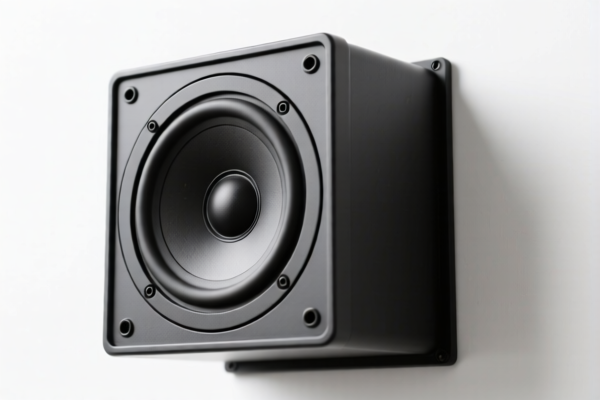
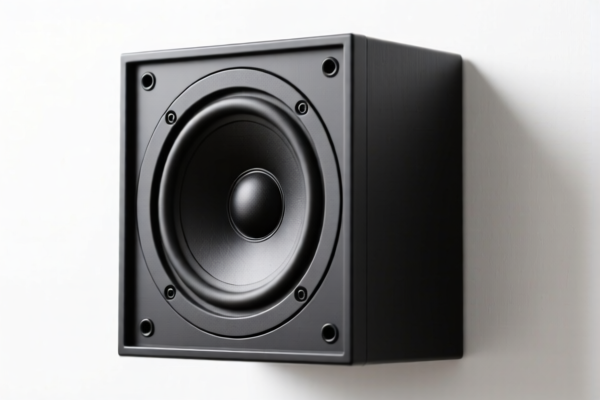
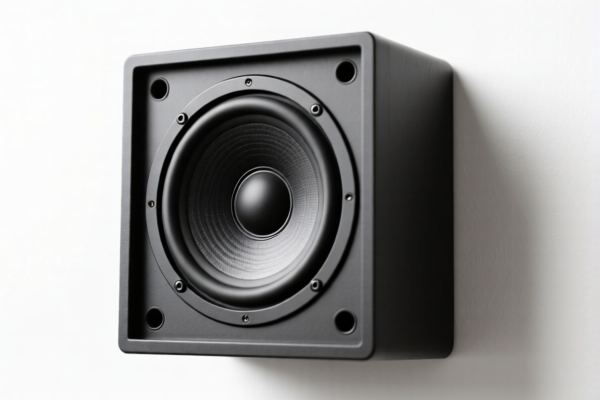
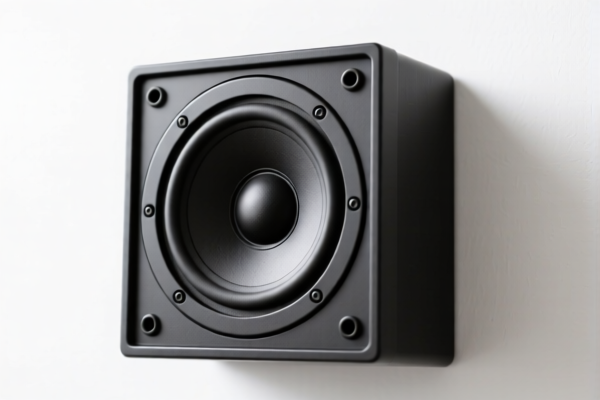
AI Analysis
📢 Car Noise Finder: HS Code Classification & Customs Clearance Guide (2026)
🌐 HS Code Reference & Customs Clearance Strategy | 2026 Latest Tariff Analysis | Professional Level Entry Strategy
📌 I. Product Definition & Classification: Do You Really Understand "Car Noise Finder"?
A Car Noise Finder (often called an Electronic Stethoscope, Automotive Acoustic Locator, or Mechanical Fault Detector) is a diagnostic tool used by mechanics to pinpoint the source of abnormal sounds in vehicle engines, transmissions, or chassis.
In international trade, its classification depends heavily on its internal composition and primary function. It is generally categorized into two main streams: 1. Measurement Instruments (Chapter 90): If it functions primarily as a scientific or precision acoustic measurement device. 2. Electrical Appliances/Parts (Chapter 85): If it is considered a specialized electrical apparatus for detecting faults in machinery.
⚠️ Key Distinction Point:
- Is it a standalone diagnostic instrument designed for precise noise analysis? → Likely Chapter 90.
- Is it a specialized electrical probe/component with independent functionality but no primary measurement output? → Likely Chapter 85.
- Does it contain specific circuit boards as its core value? → Potential Chapter 85 sub-category for parts/components.
📦 II. HS Code Classification Details (2026 Latest Tariff Authority Comparison)
Based on the provided data, here are the four most relevant HS Codes for "Car Noise Finder," ranging from low-tax precision instruments to high-tax electrical components.
| HS Code | Product Description | Application Scenario | Key Classification Logic |
|---|---|---|---|
9031.80.80.85 |
Other Measuring/Checking Instruments | Primary Recommendation: Precision noise analysis for automotive diagnostics. | Fits "Other Measuring or Checking Instruments" with no material conflict. |
9027.89.45.60 |
Physical Analysis Instruments | Laboratory or high-end diagnostic tools focusing on sound wave analysis. | Fits "Instruments for physical analysis" (sound measurement). |
9031.49.90.00 |
Optical/Acoustic Measurement Instruments | General acoustic measurement devices. | Fits "Optical/Acoustic Measuring Instruments." |
8543.90.88.85 |
Other Electrical Apparatus | Basic electronic listening devices without complex measurement logic. | Fits "Independent Electrical Equipment," but carries highest tax. |
8543.90.68.00 |
Electrical Circuit Components | Internal printed circuit assemblies within the device. | Only if申报 as "Circuit Component" rather than a finished device. |
🔍 Critical Reminder:
- The lowest tax rate (10%) is associated with9031.80.80.85. This is the most strategic classification if the device can be proven to be a "Measuring Instrument."
- Classifying it as8543.90.88.85results in an 85% tax rate, which is economically unviable for most commercial shipments.
- Misclassification (e.g., declaring a finished instrument as a "circuit component") is a major customs compliance risk.
💰 III. 2026 Latest Tariff Rate Breakdown (Including Additional Taxes & Policies)
✅ Applicable Country: United States (US)
✅ Country of Origin: China (CN)
✅ Effective Date: From November 10, 2025 (and subsequent imports)
🎯 1. 9031.80.80.85 —— Other Measuring/Checking Instruments (RECOMMENDED)
| Item | Content |
|---|---|
| Base Tariff | 0% (ad valorem) |
| Section 301 (Added Tariff) | 0% |
| IEEPA Section 122 Tariff | +10% (For China/HK products) |
| Total Tariff Rate | 10% |
| Tax Calculation | CIF Value × 10% |
| De Minimis Eligibility | ❌ No (deny_de_minimis applies to Section 301/IEEPA items in many cases, check specific de minimis rules) |
| Legal Basis Path | IEEPA:9903.01.24 (Section 122) → USITC:9031.80.80.85 |
📌 Explanation:
- This is the most favorable classification for Car Noise Finders.
- The 10% rate is solely due to the IEEPA Section 122 tariff.
- No 25% Section 301 tariff applies to this specific subheading under the provided data, making it significantly cheaper than other options.
🎯 2. 9027.89.45.60 —— Physical Analysis Instruments
| Item | Content |
|---|---|
| Base Tariff | 0% |
| Section 301 (Added Tariff) | +25% |
| IEEPA Section 122 Tariff | +10% |
| Total Tariff Rate | 35% |
| Tax Calculation | CIF Value × 35% |
| De Minimis Eligibility | ❌ No |
| Legal Basis Path | IEEPA:9903.01.25 → USITC:9027.89.45.60 |
📌 Explanation:
- If the device is deemed a "Physical Analysis Instrument," it attracts the standard 25% Section 301 tariff.
- Total tax is 35%, which is high but lower than the electrical appliance category.
🎯 3. 9031.49.90.00 —— Optical/Acoustic Measurement Instruments
| Item | Content |
|---|---|
| Base Tariff | 0% |
| Section 301 (Added Tariff) | +25% |
| IEEPA Section 122 Tariff | +10% |
| Total Tariff Rate | 35% |
| Tax Calculation | CIF Value × 35% |
| De Minimis Eligibility | ❌ No |
| Legal Basis Path | IEEPA:9903.01.25 → USITC:9031.49.90.00 |
📌 Explanation:
- Similar to the above, this classification incurs the 25% Section 301 tariff.
- Use this only if9031.80.80.85is rejected by customs and the device is clearly an "Acoustic Measuring Instrument."
🎯 4. 8543.90.88.85 —— Other Electrical Apparatus (AVOID)
| Item | Content |
|---|---|
| Base Tariff | 0% |
| Section 301 (Added Tariff) | +25% |
| IEEPA Section 122 Tariff | +10% |
| Steel/Aluminum/Copper Surcharge | +50% (If applicable components) |
| Total Tariff Rate | 85% (Up to 135% with materials surcharge) |
| Tax Calculation | CIF Value × 85% |
| De Minimis Eligibility | ❌ No |
| Legal Basis Path | IEEPA:9903.01.25 → USITC:8543.90.88.85 |
📌 Warning:
- This is the worst-case scenario.
- Car Noise Finders are not simple electrical appliances; classifying them as such invites a massive tax burden.
- Avoid this classification unless the device is essentially just a circuit board sold separately.
🎯 5. 8543.90.68.00 —— Electrical Circuit Components
| Item | Content |
|---|---|
| Base Tariff | 0% |
| Section 301 (Added Tariff) | +25% |
| IEEPA Section 122 Tariff | +10% |
| Total Tariff Rate | 35% |
| Tax Calculation | CIF Value × 35% |
| De Minimis Eligibility | ❌ No |
| Legal Basis Path | IEEPA:9903.01.25 → USITC:8543.90.68.00 |
📌 Note:
- This classification applies only if you are importing the internal circuit board as a "part," not the finished device.
- Attempting to declare a finished "Car Noise Finder" as a "circuit component" will likely lead to customs audits and penalties.
🛠️ IV. Customs Clearance Practical Advice (Battle-Tested Pitfall Guide)
✅ 1. Preparation Checklist (Non-negotiable)
| Document | Required | Explanation |
|---|---|---|
| ✅ Product Specifications | ✔️ | Must explicitly state "Noise Detection Function" and "Measurement Capability." |
| ✅ Circuit Diagram/Structure | ✔️ | To prove it is a complete instrument, not just a component. |
| ✅ Product Photos (with Label) | ✔️ | Show model number, brand, and any measurement scales/interfaces. |
| ✅ Third-party Test Report | ✔️ | FCC (for radio frequency interference), CE, RoHS. Crucial for electronics. |
| ✅ Commercial Invoice | ✔️ | Description must be precise: "Electronic Automotive Acoustic Locator, Model XYZ." |
| ✅ Proof of Origin (CO) | ✔️ | If not Chinese-made, claim FTZ/FTA benefits. |
| ✅ Packing List | ✔️ | Detail all accessories (headsets, probes, cables) to avoid "split shipment" issues. |
✅ 2. Declaration Strategy (Key Mantras)
🔥 "Measurements Win, Circuits Lose. Name it Right, Save Your Cash!"
| Scenario | Correct Declaration | Incorrect Action |
|---|---|---|
| Finished Device | 9031.80.80.85 (10% Tax) |
Declare as 8543.90.88.85 (85% Tax) |
| Device + Accessories | Single Declaration as Instrument | Split into "probe" + "display" → Higher combined risk |
| Internal Circuit Board Only | 8543.90.68.00 (35% Tax) |
Declare finished device as "part" → Fraud risk |
| Acoustic Analysis Unit | 9027.89.45.60 (35% Tax) |
Use vague terms like "Electronic Tool" |
✅ 3. Special Case Handling
| Scenario | Handling Advice |
|---|---|
| OEM Custom Device | Provide customer order + design specs. Proves it's a specialized instrument, not a generic part. |
| Device with Software | Ensure the software is pre-installed. Emphasize "Measurement Algorithm" in descriptions. |
| Used/Refurbished | Declare as "Used" but still subject to same HS Code. Ensure it meets safety standards (FCC). |
| Military/Aerospace Use | If applicable, request "Dual-Use" exemption or specific end-user certificates, but tax rates may not change. |
🌍 V. Global Market Comparison (2026 Latest)
| Country/Region | Recommended HS Code | Estimated Tax (China Origin) | Certification Required | Notes |
|---|---|---|---|---|
| 🇺🇸 USA | 9031.80.80.85 |
10% (IEEPA only) | FCC + RoHS | Best option. Avoid 8543 (85%). |
| 🇨🇳 China | 9031.80.80.85 |
10% | CCC + RoHS | No Section 301/IEEPA counter-tariffs. |
| 🇪🇺 EU | 9031.80.80.85 |
0% (if CE compliant) | CE + RoHS | No additional tariffs for China in most cases. |
| 🇦🇺 Australia | 9031.80.80.85 |
5% | RCM | No Section 301/IEEPA. |
| 🇯🇵 Japan | 9031.80.80.85 |
0% | PSE | No additional tariffs. |
📌 Conclusion:
- The USA is the only market where tariff strategy is critical due to Section 301 and IEEPA.
- Correctly classifying under9031.80.80.85saves 75% in taxes compared to the electrical appliance category.
- Europe, Australia, and Japan offer low/no tariffs regardless, but certification (CE/RCM/PSE) is mandatory.
📌 VI. Common Errors & Pitfall Guide (Lessons Learned)
❌ Error 1: Declaring "Car Noise Finder" as "Electronic Speaker" or "Audio Part"
👉 Consequence: Customs may classify it under Chapter 85 → 85% Tax!
❌ Error 2: Declaring a finished device as "Circuit Board"
👉 Consequence: Audit, fines, and potential seizure for misdeclaration. Even if tax is 35%, the legal risk is high.
❌ Error 3: Vague Description: "Auto Tool"
👉 Consequence: Customs will investigate, delay clearance, and potentially assign a higher duty rate.
❌ Error 4: Ignoring IEEPA Section 122
👉 Consequence: Even with 0% Section 301, the 10% IEEPA tariff still applies. Budget accordingly!
✅ Correct Practice:
"Automotive Acoustic Diagnostic Instrument, Model XYZ, for Engine Noise Measurement, FCC Certified, No Software Included"
🎯 VII. Conclusion: Precision Classification for Profit Maximization
🎯 Remember the Mantra:
🔹 "Instrument First, 10% Wins. Part Second, 35% Loses. Electrical Last, 85% Dies!"
🔹 "HS Code Determines Fate, 10% vs 85% is the Difference Between Profit and Loss!"
📌 Pro Tip:
If your Car Noise Finder is originating from Vietnam, Mexico, Thailand, or Malaysia, you may qualify for IEEPA Exemptions or lower Section 301 rates.
Recommendation: Apply for an Advance Ruling (Pre-classification) with US Customs (CBP) before shipping to ensure you get the 10% rate.
📣 Immediate Action:
📞 Contact a Professional Customs Broker + Provide Product Specs + Apply for HS Code Pre-classification
🚀 Let your Car Noise Finder clear customs smoothly, efficiently, and with maximum profit!
✨ Professional Clearance Starts with Accurate Classification!
💼 Every cent of cost deserves precise calculation!
Customer Reviews
About HS Code Classification
The Harmonized System (HS) is an internationally standardized nomenclature developed by the World Customs Organization (WCO) to classify traded products. Over 200 countries use the HS system as the basis for customs tariffs, trade statistics, and import/export regulations.
Each HS code follows a hierarchical structure:
- Chapter (2 digits) — Broad category of goods (e.g., Chapter 84: Machinery and Mechanical Appliances)
- Heading (4 digits) — More specific grouping within the chapter
- Subheading (6 digits) — Internationally standardized breakdown, used by all WCO member countries
- National subdivisions (8-10 digits) — Country-specific extensions for further classification, such as US HTSUS 10-digit codes
Correct HS code classification is essential for smooth customs clearance, accurate duty payment, and compliance with trade regulations. Misclassification can lead to customs delays, overpayment of duties, or penalties.
When importing from CN to US, the applicable tariff rates may include:
- Most-Favored-Nation (MFN) rate — The standard duty rate applied to WTO members
- General rate — Applied to countries without trade agreements
- Trade remedy duties — Additional tariffs such as Section 301 (anti-dumping), Section 232 (national security), or countervailing duties
The information provided on this page is for reference purposes only. For official classification, please consult with your local customs authority or a licensed customs broker.