Car Parts
CN → US| HS Code | Tariff Rate | Origin | Destination | Doc |
|---|---|---|---|---|
| 8708106050 | 87.5% | CN | US | Official Doc |
| 8512909000 | 37.5% | CN | US | Official Doc |
| 8708295160 | 0.0% | CN | US | Official Doc |
| 8512202080 | 35.0% | CN | US | Official Doc |
| 8302496055 | 90.7% | CN | US | Official Doc |
Product Images
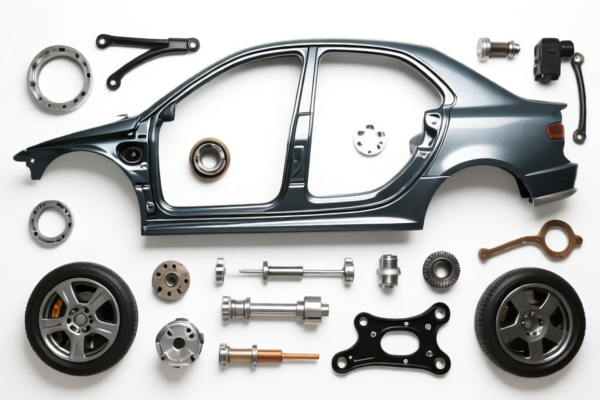
AI Analysis
🚗 Car Parts (Automotive Accessories & Components)
🌐 HS Code Reference & Customs Clearance Guide | 2026 Latest Tariff Analysis | Professional Clearance Strategy
📌 I. Product Definition & Classification: What Exactly Are "Car Parts"?
"Car Parts" is a broad umbrella term in international trade, covering everything from engine valves to body panels and lighting systems. In customs classification, intent, material, and specificity dictate the HS Code. Misclassification can lead to massive tariff hikes, especially under current US trade restrictions (Section 301, Section 232).
Key Distinctions: * Vehicle-Specific Parts (Ch. 87): Items designed exclusively or primarily for vehicles (e.g., bumpers, seats, specific brackets). * Electronic Components (Ch. 85): Lighting, signals, and electrical control units. * Hardware/General Accessories (Ch. 83): Generic hinges, locks, or fittings that could apply to various industries, not just cars.
⚠️ Critical Warning:
- Lighting/Signals are often misclassified as "general vehicle parts." They belong in Chapter 85, not Chapter 87.
- Metal Hardware (steel/aluminum/copper) triggers Section 232 tariffs (50%) in addition to standard trade duties.
- "Other/General" clauses usually attract higher "catch-all" tariffs.
📦 II. HS Code Classification Details (Based on Provided Data)
Below is the precise breakdown of the 5 recommended HS Codes from the dataset, explaining why each fits and the associated tax implications.
| HS Code | Product Description & Justification | Application Scenario |
|---|---|---|
8708.29.51.60 |
Body Parts & Accessories Classified as "body parts and accessories." Matches via "Fallback/General Principle" due to lack of specific sub-category. ✅ Fits: Bumpers, grilles, body panels, mirrors. |
General automotive body components not listed elsewhere in Ch. 87. |
8512.20.20.80 |
Lighting & Signal Devices Classified as "parts/accessories for vehicle lighting/signal equipment." Matches via "Default Preference for Parts." ✅ Fits: Headlights, taillights, turn signals, interior lights. |
Any electrical device that provides light or signal for the vehicle. |
8708.10.60.50 |
Vehicle Parts (Fallback) Classified as "parts of vehicles," consistent with vehicle parts/accessories usage. Matches via "Fallback Principle." ✅ Fits: Suspension parts, brakes, steering wheels, general chassis components. |
General mechanical parts that don’t fit specific lighting or body categories. |
8512.90.90.00 |
Other Parts & Accessories Classified as "parts for motor vehicles" under the "Other Fallback" category. Used when no more specific electrical code applies. ✅ Fits: Miscellaneous electrical connectors, wiring harnesses (non-lighting), sensors. |
Electrical components that are not primarily for lighting/signaling. |
8302.49.60.55 |
Bicycle Accessories / Hardware Classified as "mounting, fittings & similar articles." Matches via "Default Preference for Parts." ✅ Fits: Note: This code is for Bicycle parts. If your item is a car part but uses generic hardware (hinges, locks, bases), this may be a fallback if no auto-specific code fits, but use with caution. Likely for bike racks, bike accessories, or generic metal fittings attached to vehicles. |
Generic metal hardware, hinges, locks, or bicycle-specific accessories. Verify if item is truly automotive or bicycle/general hardware. |
🔍 Key Insight:
- 8708 codes are for mechanical/body parts.
- 8512 codes are for lighting/electrical parts.
- 8302 is a red flag for car parts—it’s primarily for bicycles or general hardware. If you are importing car parts, ensure this code is truly the best fit (e.g., generic metal brackets). If it’s a specific car part, 8708 or 8512 is safer.
💰 III. 2026 Latest Tariff Rate Breakdown (Including Surcharges)
✅ Applicable Country: USA (US)
✅ Origin: China (CN)
✅ Effective Date: 2025/2026 (Current Trade War Status)
🎯 1. 8708.29.51.60 – Body Parts & Accessories
| Item | Details |
|---|---|
| Base Rate | 2.5% |
| Section 301 Tariff (Add-on) | 25% |
| Section 122 / Steel-Alt-Cu Tariff | 10% (if steel/aluminum/copper products) + 50% (Section 232) |
| Total Tariff | 87.5% (2.5% + 25% + 10% + 50%) |
| De Minimis Eligible? | ❌ No (High-risk classification) |
| Legal Basis | USITC 8708.29.51.60 + IEEPA/USITC Footnotes for 301 & 232 |
📌 Explanation:
- 87.5% is the maximum tier. This applies if the part is made of steel, aluminum, or copper.
- If the part is plastic (non-metal), the 50% Section 232 tariff may not apply, potentially lowering the total to 37.5% (2.5% + 25% + 10%). Verify material composition!
🎯 2. 8512.20.20.80 – Lighting & Signal Devices
| Item | Details |
|---|---|
| Base Rate | 0.0% |
| Section 301 Tariff (Add-on) | 25% |
| Section 122 Tariff | 10% |
| Section 232 (Steel/Alt/Cu) | 50% (if metal-heavy lighting housing) |
| Total Tariff | 35.0% (if non-metal) to 85.0% (if metal) |
| De Minimis Eligible? | ❌ No |
| Legal Basis | USITC 8512.20.20.80 + IEEPA 9903.01.24 + USITC Footnotes |
📌 Explanation:
- If the lighting unit has a plastic housing, the total is 35% (0% base + 25% + 10%).
- If the lighting unit has a metal (steel/aluminum) housing, the 50% Section 232 tariff applies, pushing the total to 85%.
- Lighting is heavily scrutinized—ensure the material is correctly declared.
🎯 3. 8708.10.60.50 – General Vehicle Parts
| Item | Details |
|---|---|
| Base Rate | 2.5% |
| Section 301 Tariff (Add-on) | 25% |
| Section 122 / Steel-Alt-Cu Tariff | 10% + 50% (Section 232) |
| Total Tariff | 87.5% |
| De Minimis Eligible? | ❌ No |
| Legal Basis | USITC 8708.10.60.50 + IEEPA/USITC Footnotes for 301 & 232 |
📌 Explanation:
- Same as8708.29.51.60. If the part is metallic, the total is 87.5%.
- If non-metallic (plastic/rubber), the 50% tariff may not apply, resulting in 37.5%.
🎯 4. 8512.90.90.00 – Other Electrical Parts
| Item | Details |
|---|---|
| Base Rate | 2.5% |
| Section 301 Tariff (Add-on) | 25% |
| Section 122 Tariff | 10% |
| Total Tariff | 37.5% |
| De Minimis Eligible? | ❌ No |
| Legal Basis | USITC 8512.90.90.00 + IEEPA Footnotes |
📌 Explanation:
- This code has NO 50% Section 232 tariff listed in the data.
- This is likely because it’s classified as an "Other" electrical part not primarily steel/aluminum/copper.
- Best option for electrical parts if you can justify this classification!
🎯 5. 8302.49.60.55 – Bicycle Accessories / Hardware
| Item | Details |
|---|---|
| Base Rate | 5.7% |
| Section 301 Tariff (Add-on) | 25% |
| Section 122 / Steel-Alt-Cu Tariff | 10% + 50% (Section 232) |
| Total Tariff | 90.7% |
| De Minimis Eligible? | ❌ No |
| Legal Basis | USITC 8302.49.60.55 + IEEPA/USITC Footnotes |
📌 Explanation:
- Highest tariff: 90.7%!
- Only use if the item is genuinely a bicycle part or generic hardware not fitting auto-specific codes.
- Avoid for standard car parts unless no other code applies.
🛠️ IV. Customs Clearance Practical Advice (Risk Mitigation)
✅ 1. Preparation Checklist (Non-Negotiable)
| Document | Required? | Notes |
|---|---|---|
| ✅ Product Specification Sheet | ✔️ | Must detail material composition (Plastic vs. Metal). Critical for Section 232. |
| ✅ Photographs | ✔️ | Show the entire item, including labels, connections, and mounting points. |
| ✅ Bill of Materials (BOM) | ✔️ | Prove if the item is >50% metal (triggers 50% tariff). |
| ✅ Commercial Invoice | ✔️ | Clear description: "Automotive Headlight Assembly, Model XYZ, Plastic Housing." |
| ✅ Packing List | ✔️ | Avoid mixed containers if possible. Separate car parts from bike parts. |
✅ 2. Declaration Strategy (Key Formulas)
🔥 "Material Matters, Light vs. Body, Specificity Saves Money!"
| Scenario | Correct HS Code | Tariff | Why? |
|---|---|---|---|
| Plastic Headlight | 8512.20.20.80 |
35% | Non-metal → No 50% tariff. |
| Metal Headlight Housing | 8512.20.20.80 |
85% | Metal housing → 50% Section 232 applies. |
| Plastic Bumper | 8708.29.51.60 |
37.5% | Non-metal → No 50% tariff. |
| Steel Wheel Bracket | 8708.29.51.60 |
87.5% | Steel → 50% Section 232 applies. |
| Wiring Harness | 8512.90.90.00 |
37.5% | General electrical part, no metal tariff listed. |
| Bicycle Rack | 8302.49.60.55 |
90.7% | Generic hardware, high base + metal tariffs. |
📌 Strategic Tip:
- Maximize Non-Metal Use: If a part can be made of plastic or composite, specify it in the declaration to avoid the 50% Section 232 tariff.
- Avoid8302for Car Parts: Unless it’s a universal bracket, use 8708 or 8512 for lower risk.
- Be Precise in Description: "Automotive LED Headlight, ABS Plastic Housing" vs. "Car Light" changes everything.
✅ 3. Special Cases
| Case | Handling Advice |
|---|---|
| Mixed Containers | Separate car parts from bicycle/general hardware. Do not mix 8708 and 8302 in one line item. |
| OEM Parts | Provide the car manufacturer’s part number and compatibility list. |
| Aftermarket Parts | Clearly state "Aftermarket," but ensure material declaration is accurate. |
| Kit Sets (Light + Wire) | Declare as the primary component (Lighting). Do not split unless necessary. |
🌍 V. Global Market Comparison (2026)
| Country/Region | Recommended HS Code | Tariff (China Origin) | Key Requirement |
|---|---|---|---|
| 🇺🇸 USA | 8708 or 8512 |
35%–90.7% | Material declaration critical. Avoid Section 232 if possible. |
| 🇨🇳 China | 8708 / 8512 |
0%–10% | Standard import duties. No Section 301/232. |
| 🇪🇺 EU | 8708 / 8512 |
0%–4.5% | CE Marking required. No Section 232. |
| 🇬🇧 UK | 8708 / 8512 |
0%–6% | UKCA Marking. No Section 232. |
| 🇨🇦 Canada | 8708 / 8512 |
0%–6.1% | C-PTPP benefits possible if originating. |
📌 Conclusion:
- USA is the most expensive market due to Section 301 and Section 232 tariffs.
- EU/UK/Canada are significantly cheaper. Consider transshipment or third-country assembly if shipping to the US.
- Material composition is the single biggest cost driver in the US.
📌 VI. Common Errors & Pitfalls (Lessons Learned)
❌ Error 1: Declaring a metal bumper as "Plastic" to avoid 50% tariff.
👉 Consequence: Customs audit, fines, seizure, and blacklisting.
✅ Fix: Accurately declare material. Use plastic/composite alternatives if possible.
❌ Error 2: Using 8302 for auto-specific parts.
👉 Consequence: Higher tariffs (90.7%) and potential misclassification penalties.
✅ Fix: Use 8708 for auto parts. Reserve 8302 for bicycles/generic hardware.
❌ Error 3: Ignoring Section 122 (10%).
👉 Consequence: Underpayment of duties.
✅ Fix: Always include 10% for steel/aluminum/copper products.
❌ Error 4: Combining Lighting and Mechanical Parts in one HS Code.
👉 Consequence: Incorrect tariff application.
✅ Fix: Split invoices or line items by function (Lighting vs. Body).
🎯 VII. Conclusion: Precision Saves Millions
🎯 Remember:
🔹 "Metal Costs 50% More, Plastic Saves You. Specificity Beats Fallback."
🔹 "Headlights are 8512, Bumpers are 8708, Bike Parts are 8302 – Don’t Mix Them!"
🔹 "Declare Material Accurately – The 50% Tariff is Real!"
📌 Pro Tip:
If your car parts are primarily plastic or composite, ensure your supplier provides a Material Safety Data Sheet (MSDS) or Bill of Materials (BOM) proving <10% metal content to potentially bypass Section 232.
For high-value shipments, apply for a USITC Exclusion if available for your specific HS Code.
📣 Immediate Action:
📞 Contact a licensed customs broker.
📄 Prepare detailed product specs with material breakdown.
🚀 Optimize your supply chain for non-metal components to reduce US tariffs.
✨ Professional clearance starts with accurate classification!
💼 Your profit margin depends on getting the HS Code right!
Customer Reviews
About HS Code Classification
The Harmonized System (HS) is an internationally standardized nomenclature developed by the World Customs Organization (WCO) to classify traded products. Over 200 countries use the HS system as the basis for customs tariffs, trade statistics, and import/export regulations.
Each HS code follows a hierarchical structure:
- Chapter (2 digits) — Broad category of goods (e.g., Chapter 84: Machinery and Mechanical Appliances)
- Heading (4 digits) — More specific grouping within the chapter
- Subheading (6 digits) — Internationally standardized breakdown, used by all WCO member countries
- National subdivisions (8-10 digits) — Country-specific extensions for further classification, such as US HTSUS 10-digit codes
Correct HS code classification is essential for smooth customs clearance, accurate duty payment, and compliance with trade regulations. Misclassification can lead to customs delays, overpayment of duties, or penalties.
When importing from CN to US, the applicable tariff rates may include:
- Most-Favored-Nation (MFN) rate — The standard duty rate applied to WTO members
- General rate — Applied to countries without trade agreements
- Trade remedy duties — Additional tariffs such as Section 301 (anti-dumping), Section 232 (national security), or countervailing duties
The information provided on this page is for reference purposes only. For official classification, please consult with your local customs authority or a licensed customs broker.