Car Phone Non slip Mat
CN → US| HS Code | Tariff Rate | Origin | Destination | Doc |
|---|---|---|---|---|
| 3923290000 | 38.0% | CN | US | Official Doc |
| 3926901000 | 20.9% | CN | US | Official Doc |
| 3926904000 | 12.8% | CN | US | Official Doc |
| 3923900080 | 38.0% | CN | US | Official Doc |
Product Images
AI Analysis
🚗 Car Phone Non-Slip Mat (Anti-Slip Dashboard Pad)
🌐 HS Code Reference & Customs Clearance Guide | 2026 Latest Tariff Analysis | Professional Clearance Strategy
📌 I. Product Definition & Classification: Do You Really Understand "Non-Slip Mats"?
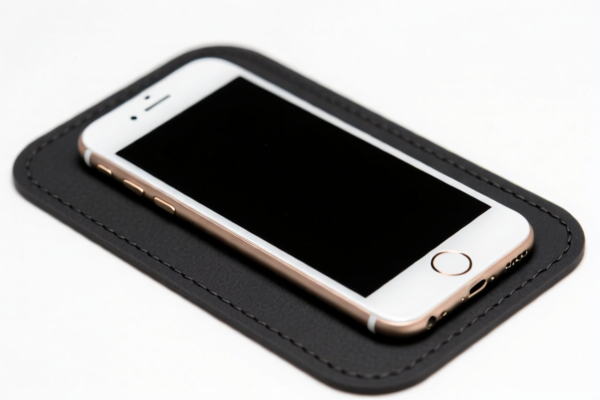
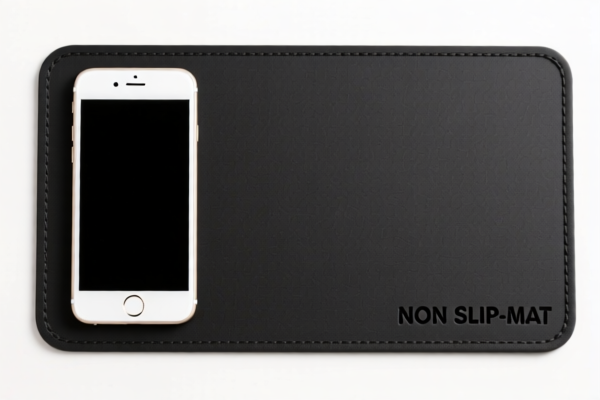
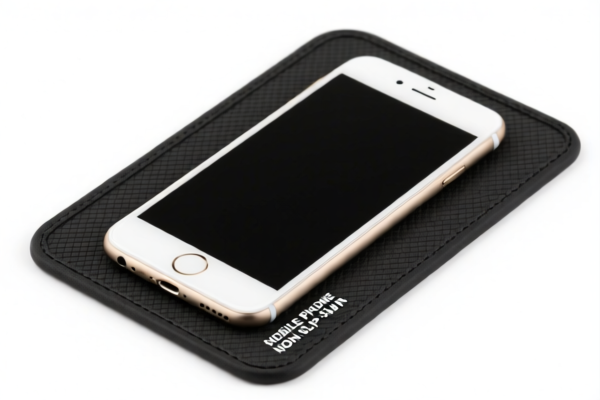
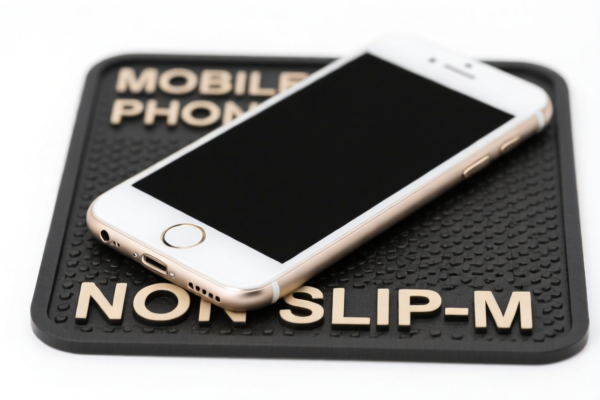
A Car Phone Non-Slip Mat is a small accessory used in vehicles to prevent smartphones, GPS devices, or wallets from sliding on the dashboard or console. It is typically made of silicone, rubber, or TPU (Thermoplastic Polyurethane).
In international trade, its classification depends heavily on the primary function and material composition: 1. Packaging/Closing Device Logic: If designed primarily as a generic "pad" for various uses (not exclusively automotive), it may fall under plastic closing/packaging accessories. 2. Plastic Articles Logic: If viewed as a "plastic article" (silicone is a polymer/plastic category), it falls under general plastic制品.
⚠️ Key Distinction Point:
- If classified as a "plastic closing device" or "packaging accessory" logic → HS 3923.29.00.00 or 3923.90.00.80
- If classified as a "general plastic article" (non-specific use) → HS 3926.90.10.00 or 3926.90.40.00
📦 II. HS Code Classification Details (2026 Latest Tariff Authority Comparison)
| HS Code | Product Description | Application Scenario | Logic Basis |
|---|---|---|---|
3923.29.00.00 |
Sacks and bags (including cones), of plastics | Silicone mats treated as "plastic closing devices" or generic packaging/accessories | ✅ Plastic/Composite Material, "Closing Device" Logic |
3926.90.10.00 |
Other articles of plastic: Anti-slip articles | Silicone considered a plastic/polymer; Anti-slip mat is a plastic article | ✅ Plastic/Polymer Material, "Anti-slip" Specific |
3926.90.40.00 |
Other articles of plastic: General plastic articles | Silicone is a high-molecular synthetic material; Mat is a general plastic item | ✅ Plastic/Synthetic Material, "General Article" Logic |
3923.90.00.80 |
Other articles for the conveyance or packaging of goods | Material inferred as plastic/synthetic; Used for auxiliary fixation/packaging | ✅ Plastic/Synthetic Material, "Auxiliary Fixation" Logic |
🔍 Key Reminder:
- Silicone (硅胶) is chemically categorized as a polymer/plastic material in customs classifications. - The term "Non-slip mat" itself does not have a dedicated HS code; it must be grouped under general plastic articles or packaging accessories. - Packaging vs. Article: If the mat is sold as part of a packaging kit or for general utility,3923codes are more likely. If it is a standalone car accessory,3926codes are more appropriate.
💰 III. 2026 Latest Tariff Rate Breakdown (Including Additional Taxes & Policy Surcharges)
✅ Applicable Country: United States (US)
✅ Country of Origin: China (CN)
✅ Effective Time: From November 10, 2025 (including subsequent imports)
🎯 1. 3923.29.00.00 —— Plastic Sacks/Bags (Closing Device Logic)
| Item | Content |
|---|---|
| Basic Tariff | 3.0% (Ad Valorem) |
| Section 301 Additional Tariff | +25.0% (USITC Footnote 9903.23.00) |
| Section 122 Tariff | +10.0% (Specific for certain plastic articles/packaging) |
| Total Tariff Rate | 38.0% |
| Tax Calculation | CIF Value × 38.0% |
| De Minimis Exemption | ❌ Not Eligible (deny_de_minimis) |
| Legal Basis Path | USITC:3923.29.00.00 → SECTION301:9903.23.00 → SECTION122 |
📌 Explanation:
- This classification treats the mat as a "plastic closing device" or accessory. - The 38% rate is extremely high due to the combination of Section 301 (25%) and Section 122 (10%) on top of the basic 3% duty. - Risk: High customs clearance cost; requires strict documentation.
🎯 2. 3926.90.10.00 —— Other Plastic Articles: Anti-Slip Articles
| Item | Content |
|---|---|
| Basic Tariff | 3.4% (Ad Valorem) |
| Section 301 Additional Tariff | +7.5% (USITC Footnote 9903.24.00) |
| Section 122 Tariff | +10.0% |
| Total Tariff Rate | 20.9% |
| Tax Calculation | CIF Value × 20.9% |
| De Minimis Exemption | ❌ Not Eligible (deny_de_minimis) |
| Legal Basis Path | USITC:3926.90.10.00 → SECTION301:9903.24.00 → SECTION122 |
📌 Note:
- This is a more favorable classification if the product can be explicitly defined as an "anti-slip article" (防滑制品). - The Section 301 rate is only 7.5% (lower than the 25% in 3923 codes). - Advantage: 20.9% total tariff is significantly cheaper than 38%.
🎯 3. 3926.90.40.00 —— Other Plastic Articles: General Articles
| Item | Content |
|---|---|
| Basic Tariff | 2.8% (Ad Valorem) |
| Section 301 Additional Tariff | 0.0% (Exempt from Section 301 surcharge) |
| Section 122 Tariff | +10.0% |
| Total Tariff Rate | 12.8% |
| Tax Calculation | CIF Value × 12.8% |
| De Minimis Exemption | ❌ Not Eligible (deny_de_minimis) |
| Legal Basis Path | USITC:3926.90.40.00 → SECTION122 |
📌 Best Case Scenario:
- This code has NO Section 301 tariff (0%). - Only the basic duty (2.8%) and Section 122 (10%) apply. - Total Rate: 12.8% — This is the most cost-effective classification for a non-slip mat. - Condition: Must be clearly described as a "general plastic article" without triggering specific high-tariff subcategories.
🎯 4. 3923.90.00.80 —— Other Plastic Packaging/Conveyance Articles
| Item | Content |
|---|---|
| Basic Tariff | 3.0% (Ad Valorem) |
| Section 301 Additional Tariff | +25.0% (USITC Footnote 9903.23.00) |
| Section 122 Tariff | +10.0% |
| Total Tariff Rate | 38.0% |
| Tax Calculation | CIF Value × 38.0% |
| De Minimis Exemption | ❌ Not Eligible (deny_de_minimis) |
| Legal Basis Path | USITC:3923.90.00.80 → SECTION301:9903.23.00 → SECTION122 |
📌 Explanation:
- Similar to3923.29.00.00, this code attracts the full 25% Section 301 tariff. - High Risk: Avoid this classification if possible due to the 38% total rate.
🛠️ IV. Customs Clearance Practical Advice (Battle-Tested Pitfall Avoidance Guide)
✅ 1. Documentation Checklist (Non-Negotiable)
| Document | Mandatory? | Explanation |
|---|---|---|
| ✅ Product Specification Sheet | ✔️ | Include material (Silicone/TPU/Rubber), dimensions, weight, and non-slip coefficient. |
| ✅ Product Photos (Clear) | ✔️ | Show texture, shape, and any branding. Crucial for proving it's a "mat" and not a tool. |
| ✅ Material Declaration | ✔️ | Explicitly state "Silicone (Polymer)" to support HS 3926 classification. |
| ✅ Commercial Invoice | ✔️ | Description: "Silicone Non-Slip Pad for Car Dashboard." Avoid vague terms like "Plastic Piece." |
| ✅ Packing List | ✔️ | Show net/gross weight and quantity. |
| ✅ Declaration of Non-Automotive Part | ✔️ | If possible, clarify it is an accessory, not a mechanical car part, to avoid auto parts tariffs. |
✅ 2. Declaration Tips (Key Mantras)
🔥 "Material is Key, Function is Clear, HS Code Choice Matters!"
| Situation | Correct Declaration | Wrong Approach |
|---|---|---|
| Silicone Non-Slip Mat | 3926.90.40.00 (General Plastic Article) |
Misdeclare as 3923 (Packaging) → 38% Tax |
| Explicit "Anti-Slip" Product | 3926.90.10.00 (Anti-Slip Article) |
Vague description → Risk of higher tariff |
| Automotive Accessory | Declare as "Plastic Accessory" | Declare as "Car Part" → Potential auto parts tariff |
| Small Quantity (De Minimis) | ❌ Cannot Use | Assuming < $800 is tax-free → SEIZED! |
📌 Critical Note:
- Do NOT assume De Minimis ($800) applies. All 4 HS codes listed havedeny_de_minimisstatus due to Section 301/122. - Choose3926.90.40.00if the product can be justified as a "general plastic article" to save 25.2% in tariffs compared to3923codes.
✅ 3. Special Cases Handling
| Situation | Handling Advice |
|---|---|
| Custom-Made Silicone Mats | Provide material test reports (RoHS/REACH) to prove it's a standard polymer product. |
| Mat with Adhesive Backing | Still classified as plastic article, but specify "self-adhesive" in description. |
| Car Dashboard Pad (Large) | If too large, may be viewed as an interior trim. Stick to "Non-Slip Mat" description. |
| OEM Orders | Ensure the supplier provides a clear material declaration to support HS 3926 classification. |
🌍 V. Global Main Market Customs Comparison (2026 Latest)
| Country/Region | Recommended HS Code | Tariff | Certification | Note |
|---|---|---|---|---|
| 🇺🇸 USA | 3926.90.40.00 |
12.8% | None | Best Rate: Avoid 3923 codes (38%) |
| 🇨🇳 China | 3926.90.90.00 |
5-10% | RoHS | No Section 301/122 |
| 🇪🇺 EU | 3926.90.97 |
4-6% | CE/REACH | No Section 122/301 |
| 🇬🇧 UK | 3926.90.90 |
5-6% | UKCA | Post-Brexit rules apply |
| 🇦🇺 Australia | 3926.90.90 |
5% | SAA | No major surcharges |
📌 Conclusion:
- USA is the only market with severe Section 301 & 122 surcharges. - Optimization Strategy: For US imports, aggressively pursue3926.90.40.00(12.8%) over3923codes (38%). - Other Markets: Tariffs are low and stable; focus on certification (CE, UKCA) rather than HS code arbitrage.
📌 VI. Common Mistakes & Pitfall Guide (Blood & Tears Lessons)
❌ Mistake 1: Declaring as 3923.29.00.00 (Packaging/Closing Device)
👉 Consequence: 38% Tariff → Cost increases by ~25%.
Fix: Argue for 3926.90.40.00 (General Plastic Article) with evidence of non-packaging use.
❌ Mistake 2: Assuming De Minimis ($800) applies
👉 Consequence: Seizure & Penalty.
Fix: All listed HS codes are excluded from de minimis. Prepare full customs entry documentation.
❌ Mistake 3: Vague Description "Plastic Mat"
👉 Consequence: Customs may assign a higher-risk code or request additional info.
Fix: Use precise terms: "Silicone Non-Slip Dashboard Pad".
❌ Mistake 4: Ignoring Section 122 Tariff
👉 Consequence: Unexpected 10% tax even if Section 301 is avoided.
Fix: Factor in 12.8% minimum (10% Section 122 + 2.8% Basic) for all plastic articles.
🎯 VII. Conclusion: Professional Declaration, Cost Saving, Efficient Clearance!
🎯 Remember the Mantra:
🔹 "Silicone is Plastic, Choose 3926, Avoid 3923!"
🔹 "3923 is 38%, 3926 is 12.8%, Save 25% by Choosing Right!"
🔹 "No De Minimis for US, Plan Full Entry!"
📌 Pro Tip:
If your non-slip mats are made of rubber (natural) instead of silicone, the HS code might be 4015.19.00.00 (Rubber articles). Check material carefully!
For silicone,3926.90.40.00is the gold standard for cost optimization in the US market.
📣 Immediate Action:
📞 Contact a Customs Broker + Provide Material Specs + Request HS Code Pre-Ruling
🚀 Ensure Smooth Customs Clearance, Maximize Profit, and Expand Globally!
✨ Professional Clearance Starts with Precise Classification!
💼 Every Penny of Cost Deserves Precise Calculation!
Customer Reviews
About HS Code Classification
The Harmonized System (HS) is an internationally standardized nomenclature developed by the World Customs Organization (WCO) to classify traded products. Over 200 countries use the HS system as the basis for customs tariffs, trade statistics, and import/export regulations.
Each HS code follows a hierarchical structure:
- Chapter (2 digits) — Broad category of goods (e.g., Chapter 84: Machinery and Mechanical Appliances)
- Heading (4 digits) — More specific grouping within the chapter
- Subheading (6 digits) — Internationally standardized breakdown, used by all WCO member countries
- National subdivisions (8-10 digits) — Country-specific extensions for further classification, such as US HTSUS 10-digit codes
Correct HS code classification is essential for smooth customs clearance, accurate duty payment, and compliance with trade regulations. Misclassification can lead to customs delays, overpayment of duties, or penalties.
When importing from CN to US, the applicable tariff rates may include:
- Most-Favored-Nation (MFN) rate — The standard duty rate applied to WTO members
- General rate — Applied to countries without trade agreements
- Trade remedy duties — Additional tariffs such as Section 301 (anti-dumping), Section 232 (national security), or countervailing duties
The information provided on this page is for reference purposes only. For official classification, please consult with your local customs authority or a licensed customs broker.