Car Pocket
CN → US| HS Code | Tariff Rate | Origin | Destination | Doc |
|---|---|---|---|---|
| 6307909891 | 24.5% | CN | US | Official Doc |
| 4202923900 | 52.6% | CN | US | Official Doc |
| 4202924500 | 55.0% | CN | US | Official Doc |
Product Images
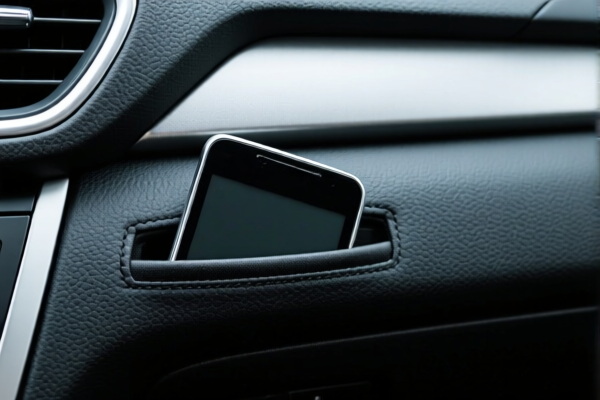
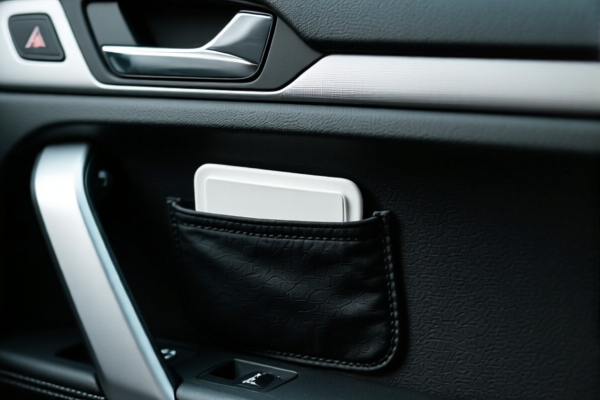
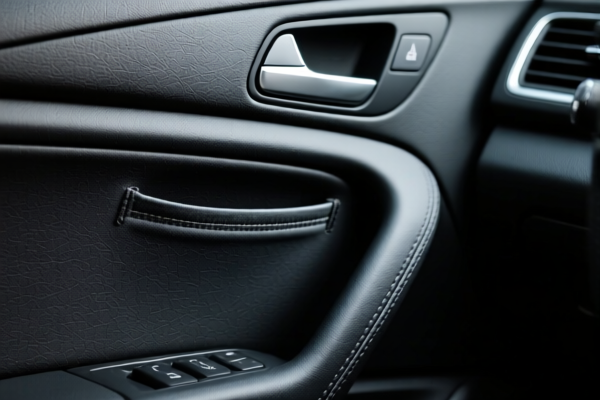
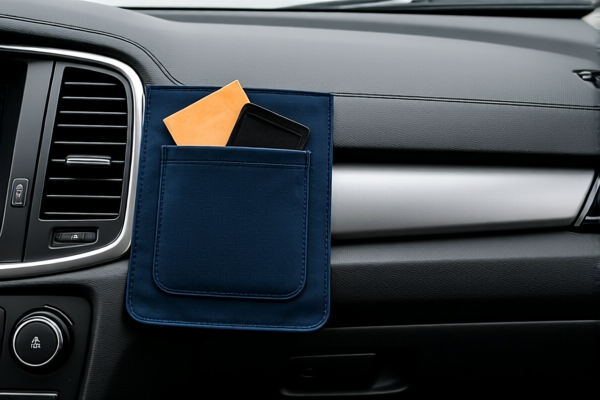
AI Analysis
🖥️ Car Pocket (Car Seat Storage Bag / Organizer)
🌐 HS Code Reference & Customs Clearance Guide | 2026 Latest Tariff Analysis | Professional Strategy for Auto Accessories
📌 I. Product Definition & Classification: Do You Really Know What a “Car Pocket” Is?
A “Car Pocket” (often referred to in trade as a Car Seat Storage Bag, Backseat Organizer, or Trunk Organizer) is an accessory designed to store items in a vehicle. In international trade, its classification hinges entirely on its material composition and specific construction. It is NOT automatically a generic bag; customs authorities scrutinize the surface material and intended use to determine the correct Heading.
⚠️ Key Distinction Point:
- If the product is a simple fabric pouch for organizing, it falls under Chapter 42 (Travel Goods) or Chapter 63 (Other Made-up Articles).
- If it has rigid structures or specific automotive mounting features, it may still fall under textile categories but with different duty implications.
- Crucial Warning: Misclassification between6307(Other Made-up Articles) and4202(Trunk/Travel Bags) can result in duty differences exceeding 28% due to Section 301 and IEEPA tariffs.
📦 II. HS Code Classification Details (2026 Latest Tariff Authority Cross-Reference)
Based on the provided data for "Car Seat Storage Bag", here are the three primary classification paths and their corresponding tax implications:
| HS Code | Product Description | Material/Feature | Total Tax Rate (China Origin to US) | Tax Breakdown |
|---|---|---|---|---|
6307.90.98.91 |
Other Made-up Articles (e.g., general storage pouches, non-specific bags) | Textile/Fabric (General) | 24.5% | Base: 7.0% Addl: 7.5% (Sec 301) IEEPA: 10% |
4202.92.39.00 |
Trunk/Travel Bags (Outer surface of textile materials) | Textile Surface | 52.6% | Base: 17.6% Addl: 25.0% (Sec 301) IEEPA: 10% |
4202.92.45.00 |
Trunk/Sport Bags (Textile or Plastic outer surface) | Textile or Plastic | 55.0% | Base: 20.0% Addl: 25.0% (Sec 301) IEEPA: 10% |
🔍 Key Takeaway:
-6307.90.98.91is the most favorable classification if the product can be argued as a general “made-up article” rather than a dedicated “travel bag.”
-4202codes are high-risk because they attract the full 25% Section 301 tariff in addition to the higher base rate.
- Material Consistency: Ensure the primary outer surface material matches the description. If it’s primarily textile,4202.92.39.00is more likely than4202.92.45.00(which often covers mixed materials or plastic-coated textiles).
💰 III. 2026 Latest Tariff Rate Detail (Including Surcharges & Policy Add-ons)
✅ Applicable Country: United States (US)
✅ Country of Origin: China (CN)
✅ Effective Date: 2025–2026 (Current Trade War Status)
🎯 1. 6307.90.98.91 —— Other Made-up Articles (Lowest Risk/Lowest Duty)
| Item | Detail |
|---|---|
| Base Tariff | 7.0% (Ad Valorem) |
| USITC Additional Tariff (Section 301) | +7.5% (Reduced from 25% due to exclusions/adjustments for certain textile accessories) |
| IEEPA Additional Tariff | +10% (Specific to Chinese-origin goods under recent executive orders) |
| Total Effective Rate | 24.5% |
| De Minimis Eligibility | ❌ Not Eligible (Value > $800 threshold; Section 301/IEEPA applies to de minimis since May 2024) |
| Legal Authority Path | HTSUS:6307.90.98.91 → USITC:Footnote 7 → IEEPA:9903.01.25 |
📌 Explanation:
- This classification treats the item as a general accessory (like a seat back pocket or trunk liner) rather than a “travel bag” (like a suitcase or duffel).
- Why it’s cheaper: The base duty (7%) is significantly lower than Chapter 42 (17–20%), and the Section 301 surcharge is lower (7.5% vs. 25%).
- Strategy: If your product is a simple fabric organizer without rigid handles or structured shapes, push for this classification.
🎯 2. 4202.92.39.00 —— Trunk/Travel Bags (Textile Outer Surface)
| Item | Detail |
|---|---|
| Base Tariff | 17.6% |
| USITC Additional Tariff (Section 301) | +25.0% (Standard for Chapter 42 goods from China) |
| IEEPA Additional Tariff | +10.0% |
| Total Effective Rate | 52.6% |
| De Minimis Eligibility | ❌ Not Eligible |
| Legal Authority Path | HTSUS:4202.92.39.00 → USITC:Footnote 9903.88.01 → IEEPA:9903.01.25 |
📌 Explanation:
- This code is used if the product is deemed a “bag” (e.g., has handles, zippers, structured form, intended for carrying goods like a tote or suitcase).
- High Cost: The 25% Section 301 tariff is standard for travel goods.
- Risk: If customs determines your “car pocket” is actually a “travel bag” (e.g., a large trunk organizer with handles), this rate applies.
🎯 3. 4202.92.45.00 —— Trunk/Sport Bags (Textile or Plastic)
| Item | Detail |
|---|---|
| Base Tariff | 20.0% |
| USITC Additional Tariff (Section 301) | +25.0% |
| IEEPA Additional Tariff | +10.0% |
| Total Effective Rate | 55.0% |
| De Minimis Eligibility | ❌ Not Eligible |
| Legal Authority Path | HTSUS:4202.92.45.00 → USITC:Footnote 9903.88.01 → IEEPA:9903.01.25 |
📌 Explanation:
- This code often applies if the outer surface is plastic-coated fabric or has plastic components as the primary feature.
- Highest Duty: Even with a slightly higher base rate than4202.92.39.00, the total is the same due to the flat 25% + 10% surcharges.
- Caution: Avoid this unless the material is clearly plastic-dominated.
🛠️ IV. Customs Clearance Practical Advice (Battle-Tested Pitfall Guide)
✅ 1. Preparation Checklist (Non-Negotiable)
| Document | Mandatory? | Explanation |
|---|---|---|
| ✅ Product Specification Sheet | ✔️ | Must detail materials (e.g., “100% Polyester Oxford Fabric”), dimensions, and intended use (e.g., “fits behind car seat”). |
| ✅ Material Breakdown | ✔️ | Specify % of textile vs. plastic vs. other. Critical for 4202 vs. 6307. |
| ✅ Product Photos | ✔️ | Show the item without car seats. If it has handles, it looks like a bag. If it’s a flat pouch with hooks, it looks like an accessory. |
| ✅ Commercial Invoice | ✔️ | Use precise language: “Car Seat Back Organizer Pouch” rather than “Travel Bag.” |
| ✅ Customs Ruling Letter (Optional) | ✔️ | If uncertain, apply for a Binding Tariff Information (BTI) or US CBP Ruling. |
✅ 2. Declaration Strategy (Key Mantra)
🔥 “Structure Defines Bag, Hooks Define Accessory!”
| Scenario | Recommended HS Code | Why? |
|---|---|---|
| Flat pouch with hooks/straps, no handles | 6307.90.98.91 |
Lacks “bag” characteristics (handles, closure). Seen as an accessory. |
| Structured box with handles, zippers | 4202.92.39.00 |
Clearly a “bag” for carrying. |
| Plastic-coated fabric with rigid base | 4202.92.45.00 |
Plastic material dominates. |
⚠️ Warning:
- Do NOT describe it as “Suitcase,” “Tote,” or “Travel Bag” in the invoice.
- DO use terms like “Organizer,” “Pouch,” “Insert,” or “Cover.”
✅ 3. Special Case Handling
| Situation | Recommendation |
|---|---|
| OEM Custom Design | Provide design files showing it’s meant to hang or stick to a seat, not carry goods. |
| Mixed Materials | If <50% plastic, argue for textile classification (4202.92.39.00 or 6307). |
| De Minimis Shipment (<$800) | ⚠️ Still taxed! Section 301 and IEEPA tariffs apply to de minimis shipments from China since May 2024. No exemption. |
🌍 V. Global Market Customs Comparison (2026 Update)
| Country/Region | Recommended HS Code | Est. Duty | Certification | Notes |
|---|---|---|---|---|
| 🇺🇸 USA | 6307.90.98.91 |
24.5% | No specific cert | Best rate; avoid 4202 (52–55%) |
| 🇨🇳 China | 6307.90.98.91 |
10–15% | CCC (if applicable) | Lower base duty, but US export dominates cost |
| 🇪🇺 EU | 6307.90.98 |
6.8% | CE/RoHS (if electronics involved) | No Section 301/IEEPA; simpler rules |
| 🇬🇧 UK | 6307.90.98 |
6.8% | UKCA | Post-Brexit alignment with EU |
| 🇨🇦 Canada | 6307.90.98 |
5–10% | Health Canada (if cleaning) | CUSMA benefits if Canadian-made |
📌 Conclusion:
- USA is the most expensive market due to Section 301 and IEEPA tariffs.
- EU/UK offer significantly lower duties (6.8% vs. 24.5%+), but logistics and compliance differ.
- Strategy for US Market: Aggressively pursue6307.90.98.91to save ~28% in duties compared to4202.
📌 VI. Common Mistakes & Pitfalls (Blood-Teaching Lessons)
❌ Mistake 1: Calling it a “Car Bag” in the invoice
👉 Consequence: Customs assigns 4202 → 52.6% duty → Profit wiped out!
❌ Mistake 2: Ignoring IEEPA 10% Surcharge
👉 Consequence: Underpayment of taxes → Penalties + Seizure.
❌ Mistake 3: Assuming De Minimis Exemption for < $800 Shipments
👉 Consequence: CBP now collects duties on de minimis from China since May 2024. You will be billed post-clearance.
❌ Mistake 4: Using “Plastic” Material When It’s Textile
👉 Consequence: Misclassification → Audit Flag → Delay + Legal Fees.
✅ Correct Approach:
“Car Seat Back Organizer Pouch, 100% Polyester, No Handles, Hook-and-Loop Closure, Model XYZ”
🎯 VII. Conclusion: Precision Classification Saves Money!
🎯 Remember the Mantra:
🔹 “No Handles = Accessory (6307) – Save 28%!”
🔹 “Handles = Bag (4202) – Pay 50%+!”
🔹 “De Minimis Is Dead for China – Plan for Duties!”
📌 Pro Tip:
If your product is small, simple, and hook-on, always aim for 6307.90.98.91.
If it’s a large, structured organizer with handles, you must accept 4202 rates, but try to optimize logistics.
📣 Immediate Action:
📞 Consult a licensed customs broker to file for a Pre-Ruling on your specific product design.
🚀 Accurate HS Code = Accurate Costing = Competitive Pricing!
✨ Professional Clearance Starts with Precise Classification!
💼 Every Duty Percentage Matters in Your Bottom Line!
Customer Reviews
About HS Code Classification
The Harmonized System (HS) is an internationally standardized nomenclature developed by the World Customs Organization (WCO) to classify traded products. Over 200 countries use the HS system as the basis for customs tariffs, trade statistics, and import/export regulations.
Each HS code follows a hierarchical structure:
- Chapter (2 digits) — Broad category of goods (e.g., Chapter 84: Machinery and Mechanical Appliances)
- Heading (4 digits) — More specific grouping within the chapter
- Subheading (6 digits) — Internationally standardized breakdown, used by all WCO member countries
- National subdivisions (8-10 digits) — Country-specific extensions for further classification, such as US HTSUS 10-digit codes
Correct HS code classification is essential for smooth customs clearance, accurate duty payment, and compliance with trade regulations. Misclassification can lead to customs delays, overpayment of duties, or penalties.
When importing from CN to US, the applicable tariff rates may include:
- Most-Favored-Nation (MFN) rate — The standard duty rate applied to WTO members
- General rate — Applied to countries without trade agreements
- Trade remedy duties — Additional tariffs such as Section 301 (anti-dumping), Section 232 (national security), or countervailing duties
The information provided on this page is for reference purposes only. For official classification, please consult with your local customs authority or a licensed customs broker.