Car Refrigerator
CN → US| HS Code | Tariff Rate | Origin | Destination | Doc |
|---|---|---|---|---|
| 8418690110 | 35.0% | CN | US | Official Doc |
| 8418690180 | 35.0% | CN | US | Official Doc |
Product Images
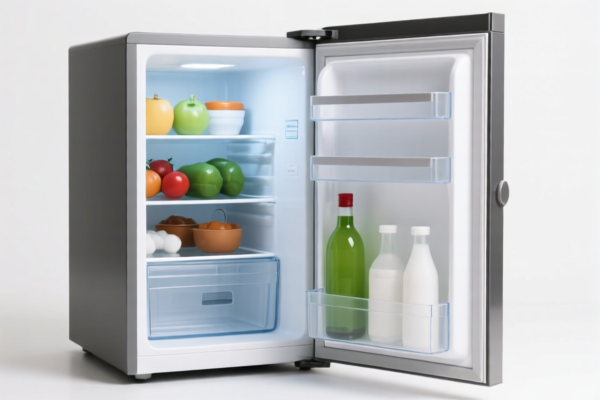
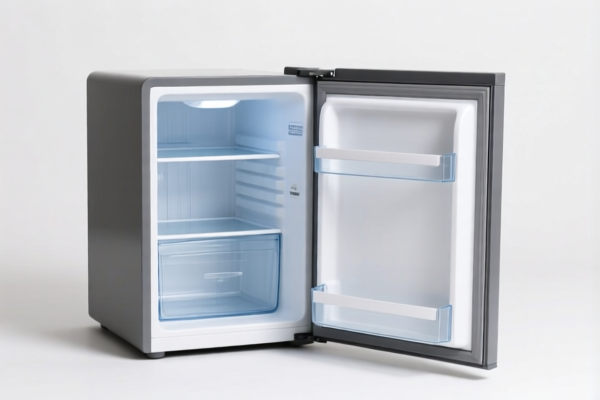
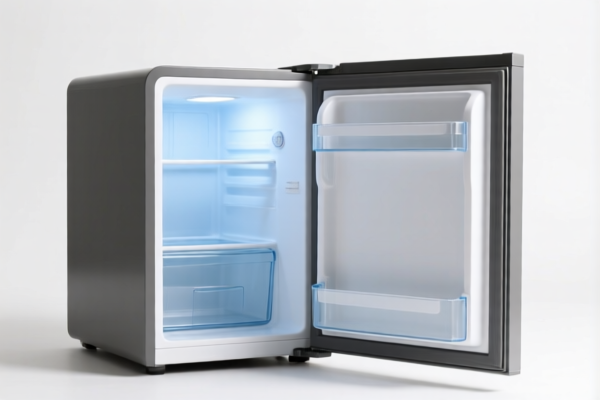
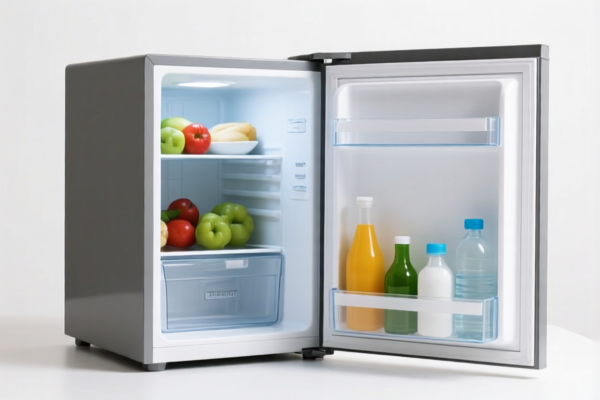
AI Analysis
❄️ Car Refrigerator / Portable Compressor Cooler
🌐 HS Code Reference & Customs Clearance Guide | 2026 Latest Tariff Analysis | Professional Strategy for US Imports
📌 I. Product Definition & Classification: Do You Really Understand "Car Refrigerators"?
A "Car Refrigerator" is not a single, monolithic category in international trade. It is a broad term covering various types of cooling equipment used in vehicles, RVs, marine applications, or homes. The critical distinction lies in its primary design intent, power source, and technical structure.
In customs classification, we must distinguish between: 1. Compressor-based Refrigerators/Freezers: These use a vapor-compression cycle (like home fridges) to actively cool. They are classified under Heading 8418. 2. Peltier (Thermoelectric) Coolers: These use semiconductor technology to cool (usually only down to ~10-20°C below ambient) or heat. While often marketed as "car fridges," strict classification can vary based on specific capabilities, but most active cooling units fall under 8418 if they are refrigerating apparatus. 3. Parts: Compressors, thermostats, or shells are classified separately.
⚠️ Key Distinction Point:
- If the device is a complete unit designed for refrigeration/freezing (active cooling) → Heading 8418.
- If it is merely a passive insulated box (no power/cooling mechanism) → It is a container, not a refrigerator.
- If it is a heat pump (reversible cooling/heating) → Also Heading 8418.
📦 II. HS Code Classification Details (2026 Latest Tariff Alignment)
Based on the provided data, the relevant HS Codes for "Car Refrigerators" (assuming they are electric compressor-based refrigerating/freezing equipment) are as follows:
| HS Code | Product Description | Applicable Scenario | Key Characteristics |
|---|---|---|---|
8418.69.01.10 |
Other refrigerating or freezing equipment; Icemaking machines | Units specifically designed or capable of producing ice; specialized ice makers for RVs/cars | ✅ Active Ice Production |
8418.69.01.80 |
Other refrigerating or freezing equipment; Other | Standard portable compressor fridges/freezers, dual-zone coolers, thermoelectric coolers (if classified as refrigerating apparatus) | ✅ Standard Cooling/Freezing |
🔍 Crucial Note:
- "Car Refrigerators" typically fall under8418.69.01.80because they are general-purpose refrigerating/freezing equipment not specifically designed as "icemaking machines."
- If your product is a dedicated ice maker (e.g., makes ice cubes automatically), it falls under8418.69.01.10.
- Do not classify as Heading 8471 (Automatic Data Processing Machines) or 8516 (Electric Heating Appliances).
- Do not classify as Heading 8708 (Parts of Motor Vehicles) unless it is explicitly a component (e.g., just a compressor) intended for installation into a vehicle's chassis, not a standalone appliance.
💰 III. 2026 Latest Tariff Rate Breakdown (Including Surcharge & Policy Add-ons)
✅ Applicable Country: United States (US)
✅ Origin: China (CN)
✅ Effective Date: From 2025-11-10 onwards (including subsequent imports)
🎯 1. 8418.69.01.10 —— Icemaking Machines
| Item | Content |
|---|---|
| Base Tariff Rate | 0.0% (ad valorem) |
| Section 301 Surcharge | +25.0% (USITC Footnote 9903.88.01) |
| Total Tariff Rate | 25.0% |
| Tax Calculation | CIF Value × 25% |
| De Minimis Eligibility | ❌ No (deny_de_minimis) |
| Legal Basis Path | USITC:8418.69.01.10 → FOOTNOTE:9903.88.01 |
📌 Explanation:
- The base tariff is 0%.
- However, due to the ongoing trade measures (Section 301), a 25% additional duty is applied.
- Total Cost Impact: 25% of the CIF value.
🎯 2. 8418.69.01.80 —— Other Refrigerating/Freezing Equipment (Most Common for Car Fridges)
| Item | Content |
|---|---|
| Base Tariff Rate | 0.0% (ad valorem) |
| Section 301 Surcharge | +25.0% (USITC Footnote 9903.88.01) |
| Total Tariff Rate | 25.0% |
| Tax Calculation | CIF Value × 25% |
| De Minimis Eligibility | ❌ No (deny_de_minimis) |
| Legal Basis Path | USITC:8418.69.01.80 → FOOTNOTE:9903.88.01 |
📌 Note:
- This is the most likely classification for standard portable car refrigerators (compressor type).
- Whether it's a 12V/24V DC unit or a dual-voltage unit, if it's a complete refrigerating apparatus, it falls here.
- Total Tariff is 25%. This is a significant cost factor.
🛠️ IV. Customs Clearance Practical Advice (Real-World Pitfall Guide)
✅ 1. Documentation Checklist (All Required)
| Document | Mandatory? | Details |
|---|---|---|
| ✅ Product Specification Sheet | ✔️ | Must include: Cooling capacity, temperature range, power input (12V/24V/110V), compressor type, dimensions, weight. |
| ✅ Circuit Diagram / Schematic | ✔️ | To prove it's a refrigeration apparatus (compressor-based) and not just a heated box. |
| ✅ Product Photos (with Nameplate) | ✔️ | Show the rating label with voltage, wattage, and model number. |
| ✅ Commercial Invoice | ✔️ | Description must be precise: "Portable Compressor Refrigerator for Vehicle Use, Model XYZ" |
| ✅ Packing List | ✔️ | Detail contents: Main unit, power cables (12V DC, 110V AC), user manual. |
| ✅ Certificate of Origin (CO) | ✔️ | If produced in China, standard CO required. |
✅ 2. Declaration Tips (Key Mantras)
🔥 "Be Specific, Don't Guess, Avoid 'General Appliance'"
| Scenario | Correct Declaration | Wrong Practice |
|---|---|---|
| Standard Car Fridge | 8418.69.01.80 - "Portable Electric Compressor Refrigerator" |
Vague "Cooler Box" → Risk of reclassification |
| Dual-Zone Unit | 8418.69.01.80 - "Dual Zone Portable Refrigerator" |
Split declaration → Complex & risky |
| Thermoelectric Cooler | 8418.69.01.80 (if capable of cooling) or 8419.89 (if just warming/cooling modestly) |
Misclassifying as "Heater" → Wrong tariff |
| Accessories Only | 8418.99 or 8537 (for control panels) |
Packing accessories as part of the fridge without explanation |
✅ 3. Special Cases & Handling
| Case | Handling Advice |
|---|---|
| Batteries Included | If Li-ion batteries are inside, ensure compliance with UN38.3 and DOT/IATA regulations for transport. Declare battery separately if required. |
| Dual Voltage (AC/DC) | Clearly state "12V/24V DC & 110V AC Input" in description. This confirms it's a versatile appliance, reinforcing Heading 8418. |
| Thermoelectric vs. Compressor | Compressor units are easier to classify under 8418. Thermoelectric units may face scrutiny; provide datasheet showing cooling delta-T. |
| Kit Sales | If sold as "Fridge + Mounting Kit," declare the fridge as the main item and accessories as parts or in the same shipment. |
🌍 V. Global Market Clearance Comparison (2026 Latest)
| Country/Region | Recommended HS Code | Tariff (China Origin) | Certification Required | Notes |
|---|---|---|---|---|
| 🇺🇸 USA | 8418.69.01.80 |
25% (301 Surcharge) | FCC (if wireless), DOE Efficiency | High tariff due to trade tensions. |
| 🇨🇳 China | 8418.69.01.80 |
0% ~ 5% (varies) | CCC (for AC models) | Domestic market-friendly. |
| 🇪🇺 EU | 8418.69.01.80 |
0% (Most Favored Nation) | CE, RoHS, ErP | Low tariff, but strict eco-design rules. |
| 🇬🇧 UK | 8418.69.01.80 |
0% | UKCA, RoHS | Post-Brexit standards apply. |
| 🇦🇺 Australia | 8418.69.01.80 |
5% | RCM, Energy Rating | Moderate tariff. |
📌 Conclusion:
- The US market has the highest barrier for Chinese-made car refrigerators due to the 25% Section 301 surcharge.
- EU and other markets offer better tariff conditions but have stricter environmental (ErP) and safety certifications.
📌 VI. Common Mistakes & Pitfall Guide (Lessons Learned)
❌ Mistake 1: Classifying as "Part of a Motor Vehicle" (Heading 8708)
👉 Consequence: If deemed a standalone appliance, Customs will reclassify to 8418 and backdate duties.
✅ Fix: Clearly state "Standalone Portable Refrigerator," not "Vehicle Component."
❌ Mistake 2: Using vague descriptions like "Cooler" or "Box"
👉 Consequence: Delays in customs, requests for additional info, potential misclassification.
✅ Fix: Use specific terms: "Compressor Refrigerator," "Electric Freezing Equipment."
❌ Mistake 3: Ignoring the "Icemaking" vs. "Other" distinction
👉 Consequence: Wrong HS Code (.10 vs .80). While tariff is same in this data, misclassification is a compliance risk.
✅ Fix: Verify if the unit has an automated ice-making function. If not, use .80.
❌ Mistake 4: Not disclosing Power Source
👉 Consequence: Customs may question if it's an "Electric" appliance.
✅ Fix: Explicitly state "Electric, 12V/24V DC, 110V AC Input."
🎯 VII. Conclusion: Professional Declaration, Smooth Clearance, Cost Control!
🎯 Remember the Mantra:
🔹 "Compressor = 8418, Base 0% + 25% Surcharge = 25% Total."
🔹 "Be Specific in Description, Avoid 'General' Terms."
🔹 "Check for Ice Maker Function: If Yes,.10; If No,.80."
📌 Pro Tip:
If your car refrigerators are originating from Vietnam, Mexico, or Thailand, you may qualify for lower or zero Section 301 surcharges due to FTAs or trade adjustments.
👉 Recommendation: Apply for an Advance Ruling with US Customs and Border Protection (CBP) if you are importing in large volumes. This provides legal certainty on the HS Code and tariff rate before shipment.
📣 Immediate Action:
📞 Contact your customs broker with Product Specs + Photos
📝 Ensure Commercial Invoice reads: "Portable Electric Compressor Refrigerator, Model XYZ, 12V/24V DC Input"
🚀 Clear your goods efficiently, avoid penalties, and protect your margins!
✨ Professional Clearance Starts with Accurate Classification!
💼 Every dollar of tariff cost is worth optimizing!
Customer Reviews
About HS Code Classification
The Harmonized System (HS) is an internationally standardized nomenclature developed by the World Customs Organization (WCO) to classify traded products. Over 200 countries use the HS system as the basis for customs tariffs, trade statistics, and import/export regulations.
Each HS code follows a hierarchical structure:
- Chapter (2 digits) — Broad category of goods (e.g., Chapter 84: Machinery and Mechanical Appliances)
- Heading (4 digits) — More specific grouping within the chapter
- Subheading (6 digits) — Internationally standardized breakdown, used by all WCO member countries
- National subdivisions (8-10 digits) — Country-specific extensions for further classification, such as US HTSUS 10-digit codes
Correct HS code classification is essential for smooth customs clearance, accurate duty payment, and compliance with trade regulations. Misclassification can lead to customs delays, overpayment of duties, or penalties.
When importing from CN to US, the applicable tariff rates may include:
- Most-Favored-Nation (MFN) rate — The standard duty rate applied to WTO members
- General rate — Applied to countries without trade agreements
- Trade remedy duties — Additional tariffs such as Section 301 (anti-dumping), Section 232 (national security), or countervailing duties
The information provided on this page is for reference purposes only. For official classification, please consult with your local customs authority or a licensed customs broker.