Car Remote Control Model
CN → US| HS Code | Tariff Rate | Origin | Destination | Doc |
|---|---|---|---|---|
| 9503000071 | 10.0% | CN | US | Official Doc |
| 8526925000 | 35.0% | CN | US | Official Doc |
| 8703210150 | 37.5% | CN | US | Official Doc |
| 9503000073 | 10.0% | CN | US | Official Doc |
| 8703105060 | 20.0% | CN | US | Official Doc |
Product Images
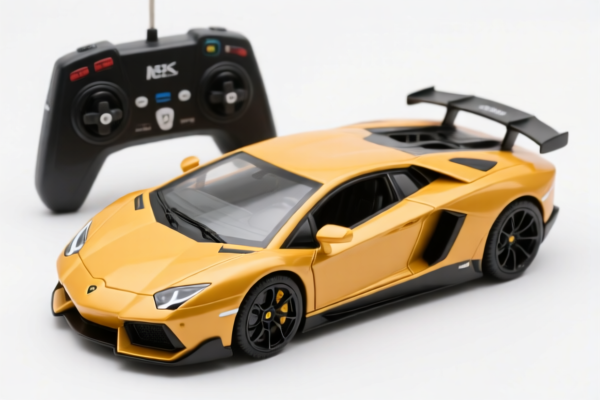
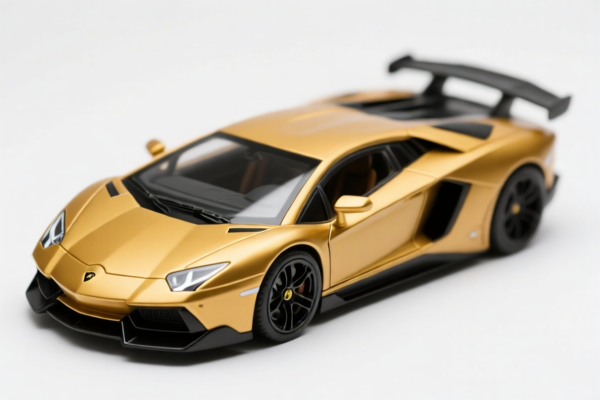
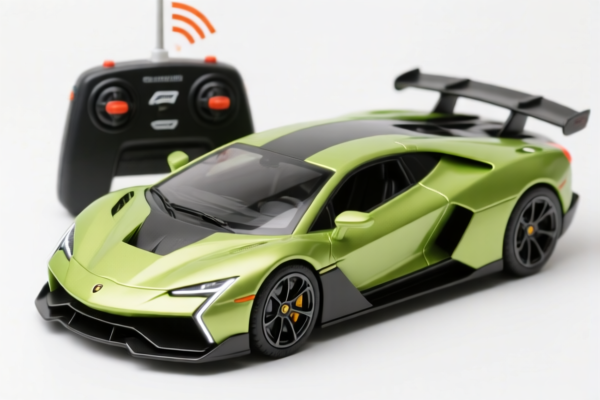
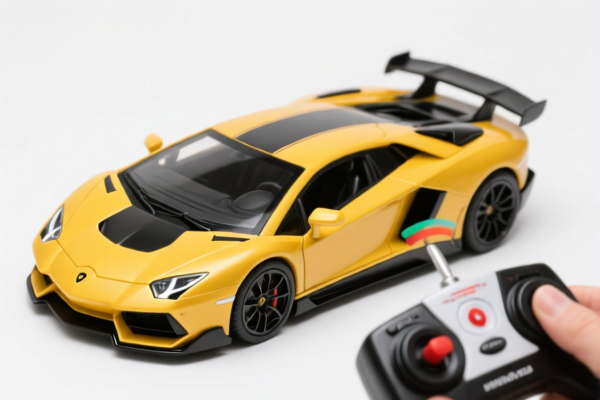
AI Analysis
🚗🤖 RC Car Model (Remote Control Toys for Entertainment)
🌐 HS Code Reference & Customs Clearance Guide | 2026 Latest Tariff Analysis | Professional Entry Strategies
📌 I. Product Definition & Classification: Do You Really Understand "RC Cars"?
A Remote Control (RC) Car Model is a battery-powered or electric toy vehicle controlled via a radio-frequency (RF) or infrared (IR) transmitter. In international trade, these are primarily classified under Chapter 95 (Toys, Games, and Sports Equipment). They are distinct from full-scale electric vehicles (Chapter 87) and industrial robotics (Chapter 84).
There are two main categories: 1. Playground/Toy RC Cars: Small-scale models (1:10, 1:18, etc.) made of plastic, metal, or die-cast materials, intended for personal entertainment. 2. Professional/Hobbyist RC Cars: Often made of carbon fiber or high-grade aluminum, used for racing or simulation. Note: Even hobbyist grades are generally classified as toys if intended for recreational use by individuals.
⚠️ Key Distinction:
- If the product is a full-scale electric car (e.g., Tesla, BYD) → HS 8703/8711.
- If it is a toy vehicle controlled remotely → HS 9503.
- If it is an industrial remote-controlled forklift or construction machinery → HS 8430/8429.
📦 II. HS Code Classification Details (2026 Latest Tariff Authority Alignment)
| HS Code | Product Description | Application Scenario | Power Source |
|---|---|---|---|
9503.00.71.00 |
RC Models (Toys with remote control devices, e.g., cars, trucks, boats) | General entertainment, hobbyist kits, die-cast models | Battery/Electric |
9503.00.89.00 |
Other Toys (Not elsewhere specified, e.g., non-RF wired toys, complex build kits without RC) | Simple plastic toys, mechanical kits, plush toys with electronics | Various |
8703.21.01.50 |
Electric Vehicles (Full-scale passenger cars, e.g., EVs for personal transport) | Actual road-legal electric cars, not toys | Electric |
8526.92.50.00 |
Remote Control Apparatus (Transmitters only, not integral to a toy) | Industrial RC transmitters, standalone hobby electronics | Electric |
🔍 Critical Note:
-9503.00.71.00is the primary code for RC Toy Cars. It specifically covers "Models with remote control devices."
-8703is NOT for toys. If customs suspects an RC car is actually a micro-electric vehicle, they may misclassify it, leading to massive tariffs. Always provide clear photos showing scale (e.g., next to a hand) to prove it is a toy.
💰 III. 2026 Latest Tariff Rate Breakdown (Including Additional Taxes & Policies)
✅ Applicable Country: United States (US)
✅ Country of Origin: China (CN)
✅ Effective Date: November 10, 2025 (for Section 301 and IEEPA tariffs)
🎯 1. 9503.00.71.00 —— RC Car Models (Toys)
| Item | Content |
|---|---|
| Basic Tariff Rate | 0% (Ad Valorem) |
| USITC Additional Tax | +25% (From USITC Footnote 9903.88.01) |
| IEEPA Additional Tax | +10% (Targeting China/HK products, effective Nov 10, 2025) |
| Total Tariff Rate | 45% |
| Tax Calculation | CIF Value × 45% |
| De Minimis Eligibility | ❌ NOT Eligible (Deny De Minimis for Section 301 goods) |
| Legal Reference Path | IEEPA:9903.01.25 → IEEPA:9903.01.24 → USITC:9503.00.71.00 → FOOTNOTE:9903.88.01 |
📌 Explanation:
- 25% USITC Tax: Imposed under Section 301 of the Trade Act on specific Chinese imports, including toys.
- 10% IEEPA Tax: Imposed under the International Emergency Economic Powers Act as part of broader US-China trade measures.
- Total 45%: This is a HIGH tariff. For a $100 RC car, you pay $45 in duties alone.
- No De Minimis: Shipments under $800 (Section 321) cannot bypass this tax. All shipments are subject to full duty.
🎯 2. 9503.00.89.00 —— Other Toys (Non-RC)
| Item | Content |
|---|---|
| Basic Tariff Rate | 0% |
| USITC Additional Tax | +25% |
| IEEPA Additional Tax | +10% |
| Total Tariff Rate | 45% |
| Tax Calculation | CIF × 45% |
| De Minimis Eligibility | ❌ Not Eligible |
📌 Note:
- Same tariff structure as RC toys.
- If your product is a "build-it-yourself" model kit without a remote control, it falls here, but the tax remains the same.
🛠️ IV. Customs Clearance Practical Advice (Field Pitfall Avoidance Guide)
✅ 1. Preparation Checklist (Missing items cause delays)
| Document | Required | Description |
|---|---|---|
| ✅ Product Spec Sheet | ✔️ | Must state: "Toy," "Remote Control," "Battery Powered," "Scale (e.g., 1:10)." |
| ✅ Circuit Diagram | ✔️ | To prove it is a toy receiver/transmitter, not industrial equipment. |
| ✅ Product Photos | ✔️ | Clear photos showing the toy next to a hand or coin to demonstrate scale. |
| ✅ FCC ID / CE Mark | ✔️ | Mandatory for US/EU. Radio frequency devices must have certification. |
| ✅ Commercial Invoice | ✔️ | Declare as "RC Car Model Toy, Model XYZ, for Entertainment Use." DO NOT write "Electric Vehicle." |
| ✅ Battery MSDS | ✔️ | Lithium batteries require MSDS and UN38.3 test reports for air/sea freight. |
| ✅ Packing List | ✔️ | Detail packaging to show it is a complete toy set (car + remote + charger). |
✅ 2. Declaration Techniques (Key Mantra)
🔥 "Declare as Toy, Not Vehicle; Prove Scale, Avoid 8703!"
| Scenario | Correct Declaration | Incorrect Practice |
|---|---|---|
| RC Car Toy | 9503.00.71.00 "Toy RC Car" |
"Electric Vehicle" → 8703.21 (Tariff up to 25%+25%+10% = 60%+) |
| RC Helicopter | 9503.00.71.00 "Toy RC Helicopter" |
"Aircraft" → 8803 (Complex certification required) |
| RC Robot | 9503.00.71.00 "Toy Robot" |
"Industrial Robot" → 8479 (High tariff, complex rules) |
| Bare RC Transmitter | 8526.92.50.00 "Remote Control Apparatus" |
"Toy Part" → Misclassification risk |
✅ 3. Special Cases Handling
| Scenario | Handling Advice |
|---|---|
| OEM Custom RC Cars | Provide client design drawings. Ensure materials are non-metallic (plastic) if possible to avoid anti-dumping duties on metal toys. |
| RC Cars with Lithium Batteries | Must declare UN3481 (Lithium Ion) or UN3090 (Lithium Metal). Freight forwarder must have DG (Dangerous Goods) license. |
| "1:1 Scale" Electric Go-Karts | If speed > 25 km/h or weight > 50kg, customs may classify as 8703 (Electric Vehicle). Tax is higher. Prove it is for off-road use only. |
| Dropshipping (De Minimis) | CAUTION: Section 301 goods (HS 9503.71) from China do NOT qualify for $800 de minimis exemption. Expect full 45% tax on small parcels. |
🌍 V. Global Market Clearance Comparison (2026 Latest)
| Country/Region | Recommended HS Code | Tariff Rate | Certification | Notes |
|---|---|---|---|---|
| 🇺🇸 USA | 9503.00.71.00 |
45% (China) | FCC + CPC (ASTM F963) | No de minimis for Section 301. |
| 🇨🇳 China | 9503.00.71.00 |
0% (Internal) | CCC | Exports often zero-rated. |
| 🇪🇺 EU | 9503.00.71.00 |
0% (If CE) | CE + EN71 + RoHS | Low duty, but strict safety rules. |
| 🇬🇧 UK | 9503.00.71.00 |
0% | UKCA | Post-Brexit standards apply. |
| 🇦🇺 Australia | 9503.00.71.00 |
5% | RCM (Radio, Electromagnetic) | Low tariff, high safety check. |
📌 Conclusion:
- USA is the most expensive market due to Section 301 + IEEPA tariffs.
- EU/UK/Australia are favorable with 0-5% tariffs, provided CE/UKCA/RCM certifications are valid.
📌 VI. Common Mistakes & Pitfall Avoidance (Blood-Lesson Guide)
❌ Mistake 1: Declaring an RC Car as "Plastic Model Kit" (HS 9503.90)
👉 Consequence: If it has a remote, it must be 9503.71. Misclassification leads to back taxes + fines.
❌ Mistake 2: Using "Electric Car" in the description
👉 Consequence: Triggers customs audit for HS 8703 (Actual Vehicles). Tariff jumps to 25% + 25% + 10% = 60%+.
❌ Mistake 3: Ignoring FCC/CE Certification
👉 Consequence: Radio frequency devices without certification will be seized and destroyed in the US/EU.
❌ Mistake 4: Assuming De Minimis ($800) applies to RC Toys from China
👉 Consequence: FALSE. Section 301 goods are explicitly excluded. Small shipments will be charged 45% duty.
✅ Correct Declaration Example:
"RC Car Model Toy, 1:10 Scale, Plastic Body, Battery Powered, Remote Control, Model XYZ, FCC Certified, For Entertainment Use Only."
🎯 VII. Conclusion: Professional Declaration Saves Money!
🎯 Remember the Mantra:
🔹 "Toy, Not Vehicle; 45% Tax in USA; FCC/CE Mandatory; De Minimis Does Not Apply!"
🔹 "HS Code 9503.71 is the Gold Standard for RC Toys. Don't risk HS 8703!"
📌 Pro Tip:
If your RC cars are assembled in Vietnam, Mexico, or Thailand, you may qualify for Section 301 Tax Exemption. Ensure your Certificate of Origin clearly states the country of manufacture.
We recommend applying for an Advance Ruling (US CBP) before shipping large batches to ensure classification accuracy.
📣 Immediate Action:
📞 Contact a licensed customs broker + Provide FCC ID + Verify Battery MSDS
🚀 Ensure your RC toys clear customs smoothly, avoid 45% surprises, and maximize profit!
✨ Professional clearance starts with accurate classification!
💼 Every cent of duty saved is pure profit!
Customer Reviews
About HS Code Classification
The Harmonized System (HS) is an internationally standardized nomenclature developed by the World Customs Organization (WCO) to classify traded products. Over 200 countries use the HS system as the basis for customs tariffs, trade statistics, and import/export regulations.
Each HS code follows a hierarchical structure:
- Chapter (2 digits) — Broad category of goods (e.g., Chapter 84: Machinery and Mechanical Appliances)
- Heading (4 digits) — More specific grouping within the chapter
- Subheading (6 digits) — Internationally standardized breakdown, used by all WCO member countries
- National subdivisions (8-10 digits) — Country-specific extensions for further classification, such as US HTSUS 10-digit codes
Correct HS code classification is essential for smooth customs clearance, accurate duty payment, and compliance with trade regulations. Misclassification can lead to customs delays, overpayment of duties, or penalties.
When importing from CN to US, the applicable tariff rates may include:
- Most-Favored-Nation (MFN) rate — The standard duty rate applied to WTO members
- General rate — Applied to countries without trade agreements
- Trade remedy duties — Additional tariffs such as Section 301 (anti-dumping), Section 232 (national security), or countervailing duties
The information provided on this page is for reference purposes only. For official classification, please consult with your local customs authority or a licensed customs broker.