Car Repair Tools
CN → US| HS Code | Tariff Rate | Origin | Destination | Doc |
|---|---|---|---|---|
| 8467290040 | 17.5% | CN | US | Official Doc |
| 8205595560 | 40.3% | CN | US | Official Doc |
| 8206000000 | 0.0% | CN | US | Official Doc |
| 8467891000 | 17.5% | CN | US | Official Doc |
| 8205593080 | 35.0% | CN | US | Official Doc |
Product Images
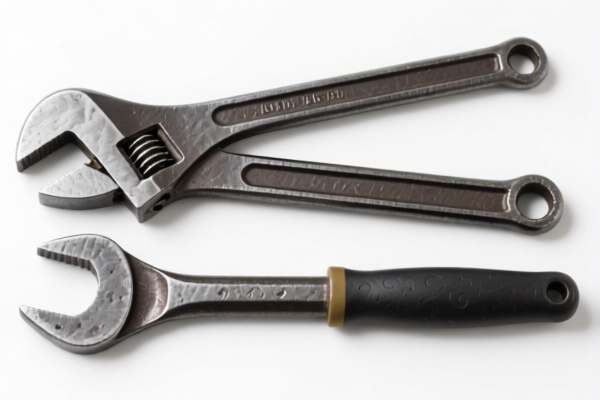
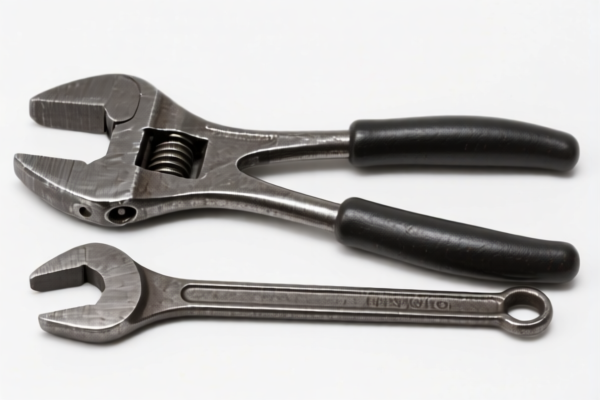
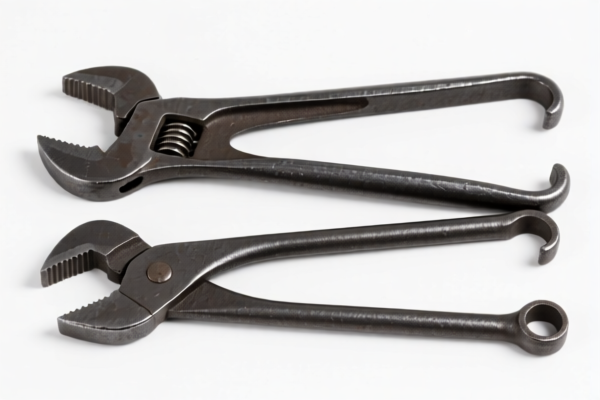
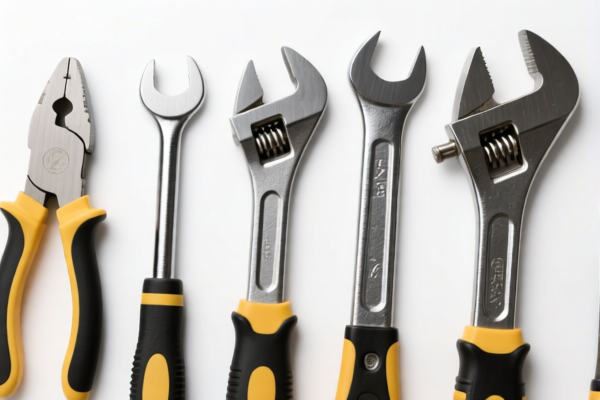
AI Analysis
🛠️ Car Repair Tools (Automotive Diagnostic & Hand Tools)
🌐 HS Code Reference & Customs Clearance Guide | 2026 Latest Tariff Analysis | Strategic通关 Strategy
📌 1. Product Definition & Classification: What Exactly Are "Car Repair Tools"?
Car repair tools are a broad category of instruments used for the maintenance, diagnostics, and mechanical repair of vehicles. In international trade, these tools are fragmented across different HS codes depending on their power source, material, and specific function. The key distinction lies in whether they are hand-held manual tools, powered tools, or sets.
⚠️ Critical Distinction Point:
- If the tool is manual (no motor, pneumatic, or hydraulic drive) and made of metal → It falls under Chapter 82 (Miscellaneous Articles of Iron or Steel) or Chapter 84 (Machinery) depending on specificity.
- If the tool is electric, pneumatic, or battery-operated → It falls under Chapter 84 (Particularly 8467).
- If the items are sold as a retail set containing multiple tools → Classification rules for sets (GRI 3) apply, often leading to broader categories.
📦 2. HS Code Classification Details (2026 Latest Tariff Authority Cross-Reference)
The following HS codes are derived from the provided data, reflecting the most common classifications for "Car Repair Tools" based on material, power, and structure.
| HS Code | Product Description | Applicability / Logic | Total Tax Rate (US Origin: CN) |
|---|---|---|---|
8205.59.55.60 |
Other Hand Tools (Metal/Iron/Steel inferred) | Manual repair tools (wrenches, pliers, screwdrivers) where no specific sub-heading fits. Inferred material: Metal. | 40.3% |
8206.00.00.00 |
Hand Tools; Socket Wrenches or Spanners (Retail Sets) | Used when tools are sold in a retail set (e.g., a mechanic’s kit). Classification follows the essential character of the set. | ~35.0% (Variable) |
8205.59.30.80 |
Other Hand Tools (General Metal) | Another fallback for general metal hand tools without specific sub-categorization. | 35.0% |
8467.29.00.40 |
Tools for Working in the Hand, Pneumatic or with Self-Contained Electric or Non-Electric Motor | Specific classification for impact wrenches or screw drivers (power tools) compatible with automotive repair. | 17.5% |
8467.89.10.00 |
Other Tools for Working in the Hand (Pneumatic/Hydraulic/Electric) | Broad category for pneumatic or hydraulic tools used in metalworking/auto repair. | 17.5% |
🔍 Key Insight:
- Manual Tools (Wrenches, Hammers, Pliers) generally face higher tariffs (35-40.3%) due to additional duties.
- Power Tools (Impact Guns, Drills) generally face lower tariffs (17.5%) but require precise description of the power source (Pneumatic/Electric).
- Sets introduce complexity; if the set contains both power and manual tools, the classification can vary based on the "essential character."
💰 3. Detailed 2026 Tariff Rate Analysis (Including Surtaxes & Policy Add-ons)
✅ Applicable Country: United States (US)
✅ Origin: China (CN)
✅ Effective Date: Post-November 2025 (Subject to IEEPA & USITC provisions)
🎯 1. 8205.59.55.60 & 8205.59.30.80 —— General Hand Tools (Manual)
| Item | Content |
|---|---|
| Base Duty Rate | 0% ~ 5.3% (Ad Valorem) |
| Section 301 Surcharge | +25.0% (USITC Footnote 9903.88.01) |
| IEEPA Surcharge | +10.0% (Targeting Chinese/HK products) |
| Total Effective Rate | 35.0% ~ 40.3% |
| Calculation Base | CIF Value × Total Rate |
| De Minimis Exemption? | ❌ NO (Deny_de_minimis applies to these categories) |
| Legal Path | USITC:8205.59.x0.x0 → 301 Footnote → IEEPA:9903.01.24 |
📌 Explanation:
- The base duty is low (often 0-5.3%), but the Section 301 tariff (+25%) and IEEPA surcharge (+10%) significantly inflate the cost.
- Total tax ranges from 35% to 40.3% depending on the specific sub-heading of "Other Hand Tools."
- High Cost Alert: Manual tools are heavily penalized due to trade friction policies.
🎯 2. 8467.29.00.40 & 8467.89.10.00 —— Powered/Pneumatic Auto Repair Tools
| Item | Content |
|---|---|
| Base Duty Rate | 0.0% (Ad Valorem) |
| Section 301 Surcharge | +7.5% (Specific subset of 301 tariffs) |
| IEEPA Surcharge | +10.0% |
| Total Effective Rate | 17.5% |
| Calculation Base | CIF Value × 17.5% |
| De Minimis Exemption? | ❌ NO (Still subject to full scrutiny) |
| Legal Path | USITC:8467.x9.x0.x0 → 301 Footnote (Lower Tier) → IEEPA |
📌 Explanation:
- These power tools (impact wrenches, air tools) benefit from a lower Section 301 rate (+7.5%) compared to general hand tools (+25%).
- Total tax is significantly lower at 17.5%.
- Strategic Advantage: If the "car repair tools" are electric/pneumatic, declaring them under HS 8467 is far more cost-effective than HS 8205/8206.
🎯 3. 8206.00.00.00 —— Hand Tools Set (Retail)
| Item | Content |
|---|---|
| Base Duty Rate | Variable (Rate of duty applicable to the article in the set) |
| Section 301 Surcharge | +25.0% |
| IEEPA Surcharge | +10.0% |
| Total Effective Rate | ~35.0% (Plus Base Rate Component) |
| De Minimis Exemption? | ❌ NO |
📌 Explanation:
- For retail sets, the base duty is determined by the component that gives the set its "essential character."
- If the set is mostly manual tools, it inherits the high ~40% rate.
- If the set is dominated by power tools, it might inherit the ~17.5% rate, but this requires strict evidence of composition.
🛠️ 4. Customs Clearance Practical Advice (Avoid Pitfalls Guide)
✅ 1. Preparation Checklist (Must-Have Documents)
| Document | Required? | Explanation |
|---|---|---|
| ✅ Product Specification Sheet | ✔️ | Must clearly state: Manual vs. Power, Voltage/Air Pressure, Material (e.g., Chrome Vanadium Steel). |
| ✅ Photos (With Labels) | ✔️ | Clear images showing the tool, power cord, air hose, or manual handle. |
| ✅ Bill of Lading / Invoice | ✔️ | Must match the HS code description exactly (e.g., "Pneumatic Impact Wrench" vs. "Car Tool"). |
| ✅ Set Composition List | ✔️ | If shipping a set, list every item and its individual HS code to justify "Essential Character." |
| ✅ Origin Certificate | ✔️ | To prove CN origin for IEEPA calculation. |
✅ 2. Declaration Tips (Key Mantras)
🔥 “Power Tools: 17.5%; Manual Tools: 40%; Set Depends on Core!”
| Scenario | Correct Declaration | Wrong Practice | Consequence |
|---|---|---|---|
| Electric/Pneumatic Wrench | 8467.29.00.40 or 8467.89.10.00 |
Describe as "Car Hand Tool" | Misclassification → Audit & Penalties |
| Manual Socket Set | 8206.00.00.00 (if set) or 8205.59.55.60 |
Describe as "Power Tool" | Severe Fraud Risk |
| Mixed Set (Power + Manual) | Declare based on Essential Character | Split into separate HS codes incorrectly | Customs Rejection or Re-classification |
| Individual Manual Pliers | 8205.59.30.80 |
Declare as part of a set without proof | Higher Tax Rate |
✅ 3. Special Cases Handling
| Case | Handling Advice |
|---|---|
| Diagnostic Scanners | Note: Electronic diagnostic tools (OBD readers) often fall under HS 9031 or 8543, NOT 8467/8205. Check if your "tool" is electronic. |
| OEM Tools | Provide manufacturer certification to prove specific use. |
| Sets with Electronics | If a set includes an OBD scanner + manual wrenches, the scanner (electronic) may dominate, potentially changing the HS code entirely. |
🌍 5. Global Market Comparison (2026 Outlook)
| Country/Region | Recommended HS Code | Est. Tariff (CN Origin) | Notes |
|---|---|---|---|
| 🇺🇸 USA | 8467.x9.x0.x0 (Power) / 8205.59 (Manual) |
17.5% - 40.3% | High friction. IEEPA + 301 Tariffs apply. |
| 🇪🇺 EU | 8205 / 8467 |
0% - 5% | Generally lower tariffs. No IEEPA equivalent. |
| 🇨🇳 China | 8205 / 8467 |
0% - 5% | Import duty is low for China. |
| 🇨🇦 Canada | 8205 / 8467 |
0% (CUSMA) | Preferential tariff if originating in NA. |
📌 Conclusion:
- USA is the most expensive market for car repair tools due to layered tariffs.
- Optimization Strategy:
1. Prioritize Power Tools: Declare as8467(17.5%) whenever possible.
2. Avoid General Sets: If possible, ship manual and power tools separately to control classification.
3. Electronic Tools: Ensure OBD scanners are classified under HS 9031/8543 if they are purely electronic, as rates may differ.
📌 6. Common Errors & Pitfalls (Lessons Learned)
❌ Mistake 1: Describing an Impact Wrench as a "Car Repair Tool" without specifying "Pneumatic/Electric."
👉 Result: Customs may classify it as a generic manual tool (HS 8205) → Tax jumps from 17.5% to 40.3%.
❌ Mistake 2: Shipping a Retail Set without a detailed packing list.
👉 Result: Customs assigns the highest rate among components → Total Tax ~40%.
❌ Mistake 3: Confusing Diagnostic Scanners with mechanical tools.
👉 Result: Wrong HS Code (8467 vs 9031) → Delays & Potential Seizure if deemed illegal tech.
✅ Correct Practice:
"Pneumatic Impact Wrench, 1/2 inch Drive, 1500 ft-lb Torque, Model XYZ, CN Origin"
vs.
"Mechanical Hand Tool Set, Chrome Vanadium Steel, 20-Piece, CN Origin"
🎯 7. Conclusion: Precision Classification Saves Money!
🎯 Remember the Mantra:
🔹 "Power Tools: 17.5% (Save 23%)!"
🔹 "Manual Tools: 40.3% (Avoid if possible)!"
🔹 "Sets: Check Essential Character!"
🔹 "Electronic Scanners: Not HS 8467!"
📌 Pro Tip:
If you are exporting manual tools to the US, consider shifting product mix towards pneumatic/electric tools (HS 8467) to save ~23% in duties.
For sets, ensure the power tools constitute the essential character if you want to target the 17.5% rate.
📣 Immediate Action:
📞 Consult a Customs Broker to verify the "Essential Character" of your sets.
🚀 Provide Specific Product Photos to ensure correct HS Code assignment (8467 vs 8205).
💼 Your Bottom Line Depends on This 3-Digit Code!
✨ Professional Clearance Starts with Accurate Classification!
💼 Every Percentage Point Counts in Global Trade!
Customer Reviews
About HS Code Classification
The Harmonized System (HS) is an internationally standardized nomenclature developed by the World Customs Organization (WCO) to classify traded products. Over 200 countries use the HS system as the basis for customs tariffs, trade statistics, and import/export regulations.
Each HS code follows a hierarchical structure:
- Chapter (2 digits) — Broad category of goods (e.g., Chapter 84: Machinery and Mechanical Appliances)
- Heading (4 digits) — More specific grouping within the chapter
- Subheading (6 digits) — Internationally standardized breakdown, used by all WCO member countries
- National subdivisions (8-10 digits) — Country-specific extensions for further classification, such as US HTSUS 10-digit codes
Correct HS code classification is essential for smooth customs clearance, accurate duty payment, and compliance with trade regulations. Misclassification can lead to customs delays, overpayment of duties, or penalties.
When importing from CN to US, the applicable tariff rates may include:
- Most-Favored-Nation (MFN) rate — The standard duty rate applied to WTO members
- General rate — Applied to countries without trade agreements
- Trade remedy duties — Additional tariffs such as Section 301 (anti-dumping), Section 232 (national security), or countervailing duties
The information provided on this page is for reference purposes only. For official classification, please consult with your local customs authority or a licensed customs broker.