Car Seat Belt Shoulder Cover
CN → US| HS Code | Tariff Rate | Origin | Destination | Doc |
|---|---|---|---|---|
| 8708995500 | 37.5% | CN | US | Official Doc |
| 6307909891 | 24.5% | CN | US | Official Doc |
| 8708210000 | 37.5% | CN | US | Official Doc |
| 3926902500 | 24.0% | CN | US | Official Doc |
| 3926305000 | 22.8% | CN | US | Official Doc |
Product Images
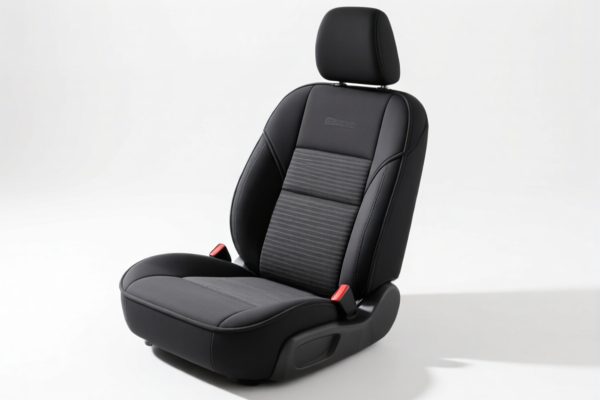
AI Analysis
🛡️ Car Seat Belt Shoulder Cover
🌐 HS Code Reference & Customs Clearance Guide | 2026 Latest Tariff Analysis | Professional Clearance Strategy
📌 I. Product Definition & Classification: What Exactly is a "Shoulder Cover"?
The Car Seat Belt Shoulder Cover (often called "Shoulder Pad" or "Belt Cushion") is an automotive interior accessory designed to enhance comfort by reducing the pressure and friction of the seat belt strap on the neck and shoulder. In international trade, its classification depends heavily on its material composition and functional integration.
Based on industry norms and the provided data, these covers are typically made of: 1. Rubber/Synthetic Rubber: Used for shock absorption and grip. 2. Textiles/Fabrics/Leather: Used for aesthetic appeal and comfort against the skin. 3. Plastics/Synthetic Materials: Used for structural components or outer shells.
⚠️ Key Distinction Point:
- If it is a standalone accessory (not permanently attached to the belt mechanism) → It is often classified under Auto Parts/Accessories (Chapter 87) or Other Manufactured Articles (Chapter 63).
- If it is considered a part of the safety system itself → It may fall under Seat Belt Components (Chapter 87).
- If it is primarily a plastic moldings used in the car interior → It may fall under Plastic Articles (Chapter 39).
📦 II. HS Code Classification Details (2026 Latest Tariff Authority Comparison)
Based on the provided <DATA>, here are the five possible classifications, ranked by logical deduction and tariff efficiency.
| HS Code | Product Description | Material Inference | Key Logic for Classification |
|---|---|---|---|
8708.99.55.00 |
Other parts and accessories for motor vehicles | Rubber (inferred) | Classified as a general auto accessory. Rubber components for vibration damping or wrapping fit here. |
8708.21.00.00 |
Parts and accessories for seat belts | Textile/Leather (inferred) | Directly linked to safety systems. Even if it's just a cover, if deemed integral to the belt function, it goes here. |
6307.90.98.91 |
Other made-up textile articles | Textile/Fabric (inferred) | Treated as an interior trim article. Fits "other made-up articles" not elsewhere specified. |
3926.90.25.00 |
Other plastic articles | Plastic/Synthetic (inferred) | Treated as an unlisted plastic article for interior use. A "catch-all" for plastic accessories. |
3926.30.50.00 |
Other plastic articles for vehicles | Plastic (inferred) | Specifically for vehicle body/connection/decorative parts. Matches plastic interior trim logic. |
🔍 Important Note:
- Misclassification Risk: Declaring a fabric cover as a plastic part (or vice versa) can lead to customs delays.
- Functional vs. Material: If the cover is sewn (textile),6307or8708.21are strong candidates. If it is molded/injected (rubber/plastic),8708.99,3926.90, or3926.30apply.
💰 III. 2026 Latest Tariff Rate Breakdown (Including Surcharges & Policy Add-ons)
✅ Applicable Country: United States (US)
✅ Country of Origin: China (CN)
✅ Effective Date: From November 10, 2025 (and subsequent imports)
🎯 1. 8708.99.55.00 —— Other Auto Parts/Accessories (Rubber/Mixed)
| Item | Detail |
|---|---|
| Base Tariff | 2.5% |
| Section 301 Surcharge | +25.0% |
| Section 122 Tariff | +10.0% |
| Total Rate | 37.5% |
| Calculation | CIF Value × 37.5% |
| De Minimis Exemption | ❌ Not Eligible (Deny) |
| Legal Basis Path | Standard Auto Parts Tariff + Section 301 + Section 122 |
📌 Interpretation:
- This is a high-cost classification.
- The 37.5% rate reflects the punitive trade measures on Chinese auto-related goods.
- Best for: Rubber-heavy covers where the primary function is vibration damping or durability.
🎯 2. 8708.21.00.00 —— Seat Belt Parts/Accessories
| Item | Detail |
|---|---|
| Base Tariff | 2.5% |
| Section 301 Surcharge | +25.0% |
| Section 122 Tariff | +10.0% |
| Total Rate | 37.5% |
| Calculation | CIF Value × 37.5% |
| De Minimis Exemption | ❌ Not Eligible (Deny) |
| Legal Basis Path | Safety Component Tariff + Section 301 + Section 122 |
📌 Interpretation:
- Even though it is a "part of the belt," the trade penalties remain high.
- Best for: Products marketed strictly as safety components rather than mere comfort accessories.
🎯 3. 6307.90.98.91 —— Other Textile Made-up Articles
| Item | Detail |
|---|---|
| Base Tariff | 7.0% |
| Section 301 Surcharge | +7.5% |
| Section 122 Tariff | +10.0% |
| Total Rate | 24.5% |
| Calculation | CIF Value × 24.5% |
| De Minimis Exemption | ❌ Not Eligible (Deny) |
| Legal Basis Path | Textile Article Tariff + Section 301 + Section 122 |
📌 Interpretation:
- Cost-Effective for Fabric Goods.
- If your shoulder covers are made of cloth, leather, or woven fabric, this is likely the cheapest legitimate option.
- Logic: It is treated as a general textile accessory (like a face mask or flag) rather than a specialized auto part.
🎯 4. 3926.90.25.00 —— Other Plastic Articles
| Item | Detail |
|---|---|
| Base Tariff | 6.5% |
| Section 301 Surcharge | +7.5% |
| Section 122 Tariff | +10.0% |
| Total Rate | 24.0% |
| Calculation | CIF Value × 24.0% |
| De Minimis Exemption | ❌ Not Eligible (Deny) |
| Legal Basis Path | Plastic Article Tariff + Section 301 + Section 122 |
📌 Interpretation:
- Lowest Tariff for Plastic.
- If the cover is made of silicone, TPE, or hard plastic, this is the optimal code.
- Logic: It is considered an "unspecified plastic article" for interior use.
🎯 5. 3926.30.50.00 —— Plastic Articles for Vehicles
| Item | Detail |
|---|---|
| Base Tariff | 5.3% |
| Section 301 Surcharge | +7.5% |
| Section 122 Tariff | +10.0% |
| Total Rate | 22.8% |
| Calculation | CIF Value × 22.8% |
| De Minimis Exemption | ❌ Not Eligible (Deny) |
| Legal Basis Path | Vehicle Plastic Trim Tariff + Section 301 + Section 122 |
📌 Interpretation:
- Lowest Overall Tariff (22.8%).
- Best for: Plastic covers that can be argued as "body/connection/decorative parts" of the vehicle.
- Risk: Must prove the product is functionally a "vehicle accessory" rather than just a consumer good.
🛠️ IV. Customs Clearance Practical Advice (Real-World Pitfall Guide)
✅ 1. Required Documentation Checklist (Non-Negotiable)
| Document | Mandatory? | Description |
|---|---|---|
| ✅ Product Specification Sheet | ✔️ | Must list material (e.g., "100% Polyester," "Silicone," "PU Leather"). |
| ✅ Material Composition Proof | ✔️ | Lab test or supplier declaration confirming % of rubber/textile/plastic. |
| ✅ Product Photos | ✔️ | Clear images showing the item, size, and how it attaches to the belt. |
| ✅ Commercial Invoice | ✔️ | Must match the HS Code selected. E.g., if 3926.90.25.00, description should be "Plastic Auto Interior Accessory." |
| ✅ Packing List | ✔️ | Detail weight and dimensions. |
| ✅ Declaration of Non-Conflict | ✔️ | State that the item is not a safety-critical component (if using 6307 or 3926). |
✅ 2. Declaration Strategy (Key Mantra)
🔥 "Material Determines Code, Function Determines Risk, Honesty Saves Money!"
| Scenario | Recommended HS Code | Reasoning |
|---|---|---|
| Fabric/Leather Cover | 6307.90.98.91 (24.5%) |
Treated as textile accessory. Lower tax than auto parts. |
| Silicone/Soft Plastic Cover | 3926.90.25.00 (24.0%) |
Treated as general plastic article. |
| Hard Plastic Trim/Clip-on | 3926.30.50.00 (22.8%) |
Treated as specific vehicle plastic part. Lowest rate. |
| Rubber Shock-absorber Type | 8708.99.55.00 (37.5%) |
Treated as auto part. Higher tax, but accurate if rubber-heavy. |
| Safety-Certified Belt Part | 8708.21.00.00 (37.5%) |
Only if it is an integral part of the belt mechanism, not just a slip-on cover. |
⚠️ Critical Warning:
- Do NOT declare a plastic cover as "Textile" to save tax. Customs will inspect the material.
- Do NOT declare a simple slip-on cover as "Seat Belt Part" (8708.21) if it has no safety function. It may be flagged for "misdeclaration of safety component."
✅ 3. Special Cases
| Situation | Advice |
|---|---|
| Hybrid Materials (e.g., Plastic frame + Fabric padding) | Declare based on Essential Character. If fabric covers >50% surface area, lean towards 6307. If plastic structure dominates, lean towards 3926. |
| OEM Custom Parts | Provide the OEM drawing. If the drawing labels it as "Interior Trim," use 3926.30.50.00. |
| Sample Shipments | Even samples are subject to the same duties. Plan for the 22.8%-37.5% cost. |
🌍 V. Global Market Customs Comparison (2026 Latest)
| Country/Region | Recommended HS Code | Est. Tariff (CN Origin) | Certification Requirements | Notes |
|---|---|---|---|---|
| 🇺🇸 USA | 3926.30.50.00 / 6307.90.98.91 |
22.8% - 24.5% | None usually required for accessories | High penalties for misclassification. |
| 🇨🇳 China | 6307.90.99.99 (Import) |
~5-7% | None | Lower import duties, but check export regulations. |
| 🇪🇺 EU | 6307.90.98 |
0-4% | CE (if electronic), otherwise general | No Section 301/122 equivalents. |
| 🇬🇧 UK | 6307.90.98 |
0-4% | UKCA (if applicable) | Post-Brexit rules apply. |
📌 Conclusion:
- USA is the most complex market due to Section 301 and 122 tariffs.
- Choosing the right material-based HS Code (3926or6307) is the only way to reduce costs significantly compared to the8708(Auto Part) codes.
📌 VI. Common Errors & Pitfall Guide (Lessons Learned)
❌ Error 1: Declaring all shoulder covers as 8708.21.00.00 (Seat Belt Parts).
👉 Consequence: You pay 37.5% instead of 22.8%. This is a 15% unnecessary cost increase.
👉 Fix: If it's just a slip-on comfort cover, argue it as a "Textile/Plastic Accessory" (6307/3926).
❌ Error 2: Declaring a plastic cover as 6307 (Textile) because it looks soft.
👉 Consequence: Customs seizure, audit, and potential fines for false declaration.
👉 Fix: Ensure material composition matches the HS Code description.
❌ Error 3: Ignoring Section 122 Tariff.
👉 Consequence: Underestimating total landed cost. The 10% surcharge applies to most Chinese imports.
👉 Fix: Always calculate Base + 301 + 122.
✅ Correct Declaration Example:
"Auto Interior Accessory: Seat Belt Shoulder Pad, Made of Silicone/Plastic, Model XYZ, Not a Safety Component."
HS Code:3926.30.50.00(if plastic structure dominant) or3926.90.25.00.
🎯 VII. Conclusion: Professional Declaration, Save Costs, Clear Pass!
🎯 Remember the Mantra:
🔹 "Plastic Covers? Aim for 3926 (22.8%). Fabric Covers? Aim for 6307 (24.5%). Avoid 8708 (37.5%) unless it's a real mechanical part!"
🔹 "HS Code Determines Tariff. A 15% Difference is Real Money."
📌 Pro Tip:
- If your product is Made in Vietnam or Mexico, you may avoid Section 301/122 tariffs, reducing rates to Base Tariff only (e.g., 5.3% for 3926.30.50.00).
- Always request an Advance Ruling from US Customs (CBP) if you are importing large volumes, to lock in the classification.
📣 Action Item:
📞 Contact your freight forwarder today.
📄 Provide material specs.
🚀 Optimize your HS Code to3926.30.50.00or6307.90.98.91for maximum savings!
✨ Professional Clearance Starts with Accurate Classification!
💼 Every percentage point saved is pure profit!
Customer Reviews
About HS Code Classification
The Harmonized System (HS) is an internationally standardized nomenclature developed by the World Customs Organization (WCO) to classify traded products. Over 200 countries use the HS system as the basis for customs tariffs, trade statistics, and import/export regulations.
Each HS code follows a hierarchical structure:
- Chapter (2 digits) — Broad category of goods (e.g., Chapter 84: Machinery and Mechanical Appliances)
- Heading (4 digits) — More specific grouping within the chapter
- Subheading (6 digits) — Internationally standardized breakdown, used by all WCO member countries
- National subdivisions (8-10 digits) — Country-specific extensions for further classification, such as US HTSUS 10-digit codes
Correct HS code classification is essential for smooth customs clearance, accurate duty payment, and compliance with trade regulations. Misclassification can lead to customs delays, overpayment of duties, or penalties.
When importing from CN to US, the applicable tariff rates may include:
- Most-Favored-Nation (MFN) rate — The standard duty rate applied to WTO members
- General rate — Applied to countries without trade agreements
- Trade remedy duties — Additional tariffs such as Section 301 (anti-dumping), Section 232 (national security), or countervailing duties
The information provided on this page is for reference purposes only. For official classification, please consult with your local customs authority or a licensed customs broker.