Car Seat Cover
CN → US| HS Code | Tariff Rate | Origin | Destination | Doc |
|---|---|---|---|---|
| 9401991085 | 17.5% | CN | US | Official Doc |
| 9401991020 | 17.5% | CN | US | Official Doc |
| 8708998180 | 12.5% | CN | US | Official Doc |
| 9401991085 | 17.5% | CN | US | Official Doc |
| 9401991020 | 17.5% | CN | US | Official Doc |
Product Images
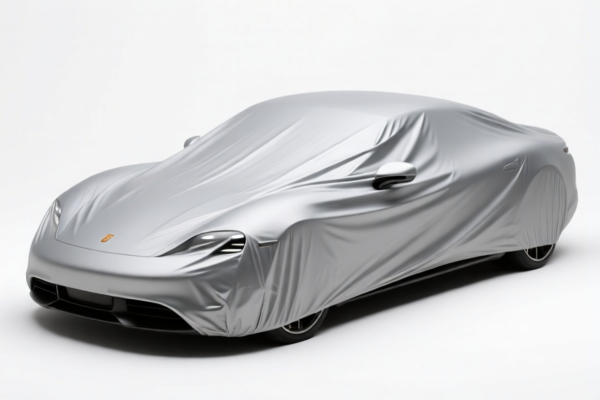
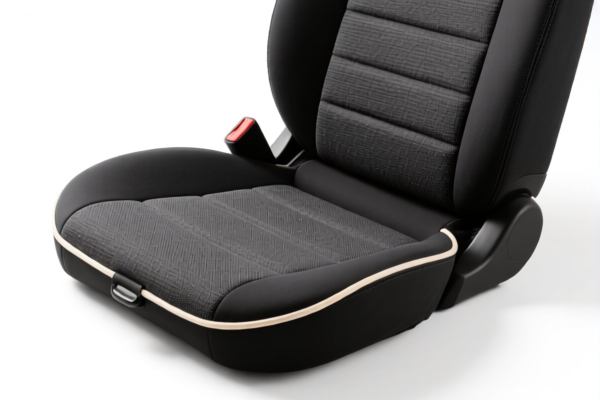

AI Analysis
🚗 Car Seat Cover: The Ultimate HS Code & Customs Clearance Guide (2026 Edition)
🌐 HS Code Reference & Clearance Strategy | 2026 Tariff Breakdown | Professional Export Strategy
📌 I. Product Definition & Classification: What Exactly is a "Car Seat Cover"?
Car Seat Covers are automotive interior accessories designed to protect, decorate, or enhance the comfort of vehicle seats. In international trade, they are not a single entity but are classified based on function, material, and degree of assembly.
Key Distinctions: 1. As "Seat Parts" (Furniture/Seat Components): If the cover is considered an integral part of the seat's structure (e.g., tightly fitted, non-removable, or replacing the original upholstery), it falls under Chapter 94 (Furniture). 2. As "Vehicle Accessories" (General Auto Parts): If the cover is a general decoration or aftermarket accessory not integral to the seat's function, it falls under Chapter 87 (Vehicles & Parts).
⚠️ Critical Classification Logic: * Material Unknown? Customs often applies the "Residual Class" (Deducted from specific materials) rule, defaulting to non-leather/non-textile cut forms for furniture parts (9401) or general auto parts (8708). * Function: Is it a replacement part for the seat (9401) or an accessory for the car (8708)?
📦 II. HS Code Classification Details (2026 Official Tariff Reference)
Based on the provided data, here are the three primary classification paths for Car Seat Covers and their logic.
| HS Code | Product Description & Logic | Applicable Scenario | Tax Rate (Total) |
|---|---|---|---|
| 9401.99.10.85 | Seat Part (Non-Textile/Non-Leather): Classified as a car seat part. Since the material is unspecified, the "Residual Class" principle applies, assuming it is not cut leather or textile fabric. | Generic seat covers where material is ambiguous or non-standard fabrics. | 17.5% |
| 9401.99.10.20 | Seat Part (Textile/Synthetic): Classified as a car seat part. Inferred as textile or synthetic material based on common manufacturing. Fits the logic of "Parts/Accessories." | Standard fabric, mesh, or synthetic leather covers that fit the seat tightly. | 17.5% |
| 8708.99.81.80 | Auto Accessory (General): Classified under "Car Accessories/Interior Decor." Typically made of textiles or synthetic leather. Fits the definition of parts and accessories in Chapter 87. | Loose-fitting covers, decorative mats, or general interior styling items. | 12.5% |
🔍 Key Insight: * 9401 Codes (17.5%): Apply when the item is treated as a replacement part for the seat itself. * 8708 Code (12.5%): Apply when the item is treated as a general car accessory (decoration/interior trim). * Material Ambiguity: If the material isn't clearly declared as leather or specific textile, customs defaults to the 9401 "Other" category, leading to higher tariffs.
💰 III. 2026 Tariff Rate Deep Dive (Detailed Breakdown)
✅ Applicable Jurisdiction: China Export / US Import Context (Implied by "122 Clause" & "7.5%" surcharge). ✅ Origin: China (CN). ✅ Effective Date: 2026 Tariff Regime.
🎯 Case A: HS Code 9401.99.10.85 & 9401.99.10.20
(Total Tax: 17.5%)
| Component | Rate | Legal Source & Logic |
|---|---|---|
| Base Tariff | 0.0% | Standard Most-Favored-Nation (MFN) rate for this subcategory. |
| Section 301 Surcharge | +7.5% | "Section 301" or "Add-on Tariff" on Chinese goods (2018-2025 extensions). |
| "122 Clause" Tariff | +10.0% | Specific policy surcharge (likely referencing a specific retaliatory or security measure). |
| 🔴 Total Effective Rate | 17.5% | 0% + 7.5% + 10% |
📌 Explanation: * These items are hit hard by Section 301 and the "122 Clause". * The 0% base is a trap; the 17.5% total is the real cost. * This applies strictly to items deemed Seat Parts (Chapter 94).
🎯 Case B: HS Code 8708.99.81.80
(Total Tax: 12.5%)
| Component | Rate | Legal Source & Logic |
|---|---|---|
| Base Tariff | 2.5% | Standard MFN rate for "Other Auto Parts/Accessories". |
| Section 301 Surcharge | 0.0% | Note: No additional 7.5% surcharge listed for this specific subcode in the provided data. |
| "122 Clause" Tariff | +10.0% | The specific 122 Clause surcharge still applies. |
| 🟠 Total Effective Rate | 12.5% | 2.5% + 0% + 10% |
📌 Explanation: * This is the preferred classification for saving costs (5% lower than the 9401 codes). * It relies on the argument that the cover is an "Interior Accessory" (Chapter 87) rather than a structural "Seat Part" (Chapter 94). * Strategy: Prove the item is a "decoration" or "accessory," not a functional seat replacement.
🛠️ IV. Practical Clearance Advice (Avoiding Pitfalls)
✅ 1. Documentation Checklist (Must-Haves)
| Document | Requirement | Why It Matters |
|---|---|---|
| Product Specs | ✔️ Material Composition (e.g., "100% Polyester") | Crucial for avoiding the "Residual Class" default to 9401.85. |
| Design Drawing | ✔️ Show fitment (Loose vs. Tight) | Proves it is an "Accessory" (8708) rather than a "Part" (9401). |
| Commercial Invoice | ✔️ Description: "Car Interior Decor / Seat Cover" | Avoid "Seat Part" in the description if aiming for 8708. |
| Photos | ✔️ Clear shots of texture & fit | Visual proof of material to justify the HS Code. |
| Packing List | ✔️ Weight/Dimensions | Helps customs verify volume vs. value for tariff calculation. |
✅ 2. Declaration Strategy (The "Save 5%" Rule)
🔥 Golden Rule: "Don't call it a 'Seat Part', call it an 'Interior Accessory'!"
| Situation | Recommended HS Code | Declaration Wording | Risk Level |
|---|---|---|---|
| Tight-fitting, OEM replacement | 9401.99.10.85 / 9401.10.20 |
"Seat Cover (Part)" | ⚠️ High Tax (17.5%) |
| Loose-fitting, Decorative | 8708.99.81.80 |
"Car Interior Seat Cover (Accessory)" | ✅ Lower Tax (12.5%) |
| Material Unclear | 9401.99.10.85 |
DO NOT guess. Declare material explicitly. | ⚠️ Risk of Audit |
📌 Warning: * If you declare "Leather" but it's synthetic, you get caught. * If you declare "Textile" but customs thinks it's "Other," you get 9401.99.10.85 (17.5%). * Tip: Always declare the specific material (e.g., "Synthetic Leather," "PU," "Polyester") to avoid the "Residual Class" penalty.
✅ 3. Special Scenarios
| Scenario | Advice |
|---|---|
| "Material Not Specified" | Never submit. Customs will default to the most expensive code (9401.99.10.85). Action: Add "100% Polyester" to the invoice. |
| "Faux Leather" | Classify under 8708.99.81.80 if it's a cover, not a part. If it's a hard seat part, it goes to 9401. |
| "Customized Fit" | If it's molded specifically for a car model (e.g., "2024 Model Y"), it looks like a "Part" → 9401. If it's "Universal," it's an "Accessory" → 8708. |
🌍 V. Global Market Comparison (2026)
| Country | Recommended Code | Est. Total Tax | Key Requirement |
|---|---|---|---|
| 🇺🇸 USA | 8708.99.81.80 |
12.5% | "122 Clause" + Base 2.5%. Avoid 9401! |
| 🇪🇺 EU | 8708.99.81.80 |
~10-15% | Varies; 9401 often treated as furniture. |
| 🇨🇳 China | 8708.99.81.80 |
Low/Zero | No Section 301 surcharge. |
📌 Conclusion: * USA is the critical market where the 5% difference (12.5% vs 17.5%) matters most due to the 122 Clause. * 8708.99.81.80 is the "Sweet Spot" for Seat Covers: 12.5% Total. * 9401 codes are "Trap Codes" for generic covers: 17.5% Total.
📌 VI. Common Mistakes & How to Avoid Them
❌ Mistake 1: Writing "Seat Part" in the description. 👉 Result: Customs forces 9401.99.10.85 (17.5%). ✅ Fix: Use "Interior Seat Cover" or "Car Accessory."
❌ Mistake 2: Leaving Material as "Mixed" or "Other." 👉 Result: Automatic default to the "Residual Class" (9401.99.10.85). ✅ Fix: Declare exact composition: "100% Nylon," "PU Leather," etc.
❌ Mistake 3: Ignoring the 122 Clause. 👉 Result: Underestimating the tariff by 10%. ✅ Fix: Always add +10% to your cost calculation for all codes listed.
✅ Correct Declaration Example:
"Car Interior Seat Cover, Universal Fit, 100% Polyester Fabric, Synthetic Leather Trim, Decorative Accessory. No. of Pcs: 500."
🎯 VII. Final Verdict: Strategic Summary
🎯 The Bottom Line:
🔹 Aim for HS Code
8708.99.81.80to save 5% (Total 12.5% vs 17.5%). 🔹 Declare Material Explicitly to avoid the "Residual Class" trap. 🔹 Avoid "Seat Part" language; use "Interior Accessory".
📌 Pro Tip:
If your customer is in the US, calculate the total landed cost including the 122 Clause (10%) and Section 301 (7.5%) for 9401 items. The cost difference is significant.
📣 Take Action Now:
📞 Contact your forwarder to confirm the material declaration. 📄 Update your Invoice to say "Car Accessory" not "Seat Part." 🚀 Secure your margins by avoiding the 17.5% penalty!
✨ Professional Clearance Starts with Precision!
💼 Your Profit Margin Depends on the 5% You Save Today!
Customer Reviews
About HS Code Classification
The Harmonized System (HS) is an internationally standardized nomenclature developed by the World Customs Organization (WCO) to classify traded products. Over 200 countries use the HS system as the basis for customs tariffs, trade statistics, and import/export regulations.
Each HS code follows a hierarchical structure:
- Chapter (2 digits) — Broad category of goods (e.g., Chapter 84: Machinery and Mechanical Appliances)
- Heading (4 digits) — More specific grouping within the chapter
- Subheading (6 digits) — Internationally standardized breakdown, used by all WCO member countries
- National subdivisions (8-10 digits) — Country-specific extensions for further classification, such as US HTSUS 10-digit codes
Correct HS code classification is essential for smooth customs clearance, accurate duty payment, and compliance with trade regulations. Misclassification can lead to customs delays, overpayment of duties, or penalties.
When importing from CN to US, the applicable tariff rates may include:
- Most-Favored-Nation (MFN) rate — The standard duty rate applied to WTO members
- General rate — Applied to countries without trade agreements
- Trade remedy duties — Additional tariffs such as Section 301 (anti-dumping), Section 232 (national security), or countervailing duties
The information provided on this page is for reference purposes only. For official classification, please consult with your local customs authority or a licensed customs broker.