Car Seat Cover Rear Seat Protector
CN → US| HS Code | Tariff Rate | Origin | Destination | Doc |
|---|---|---|---|---|
| 6307909887 | 24.5% | CN | US | Official Doc |
| 6307909891 | 24.5% | CN | US | Official Doc |
| 3926305000 | 22.8% | CN | US | Official Doc |
| 3926909989 | 22.8% | CN | US | Official Doc |
| 6307909887 | 24.5% | CN | US | Official Doc |
Product Images
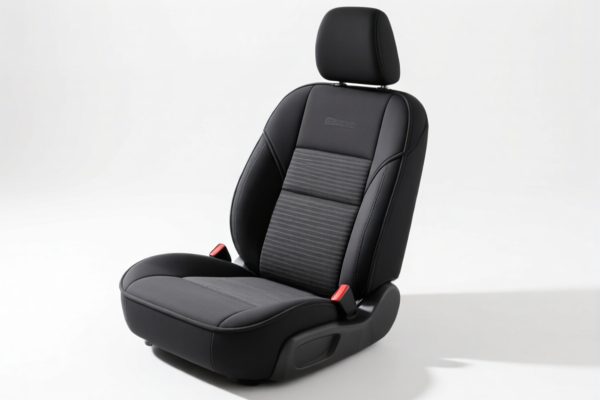
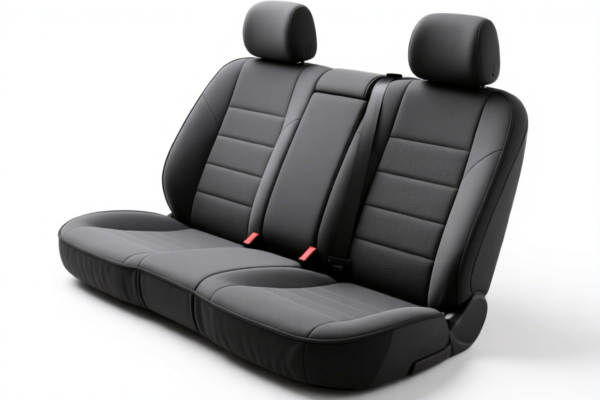
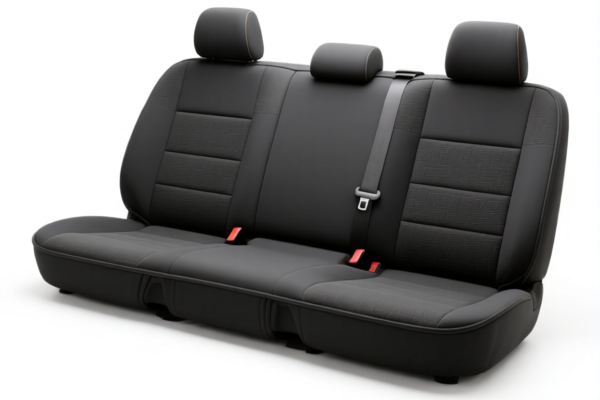
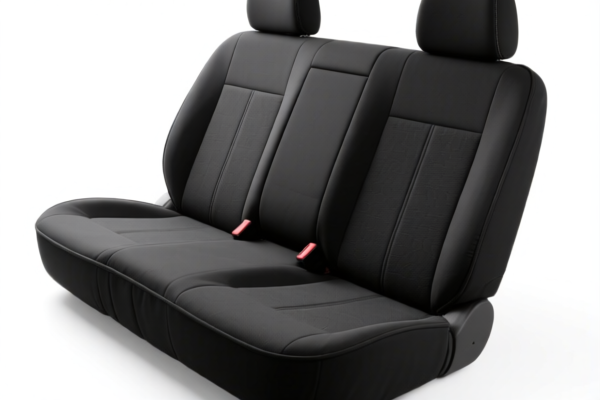
AI Analysis
🚗 Car Seat Cover & Rear Seat Protector (Vehicle Seat Covers & Backseat Protectors)
🌐 HS Code Reference & Customs Clearance Guide | 2026 Latest Tariff Analysis | Professional Entry Strategy
📌 1. Product Definition & Classification: Do You Know What You’re Importing?
Car Seat Covers and Rear Seat Protectors are essential automotive accessories designed to protect original upholstery from wear, spills, and damage. In international trade, their classification depends heavily on the material composition and intended use.
They generally fall into two main categories: * Textile/Fabric Based: Made primarily of woven fabric, polyester, cotton, or blends. These are classified as "Other Made-up Articles" of textile materials. * Plastic/Coated Fabric Based: Made of vinyl, PVC, PU leather, or plastic-coated fabrics. These are classified as "Other Articles of Plastics."
⚠️ Key Distinction Point:
- If the product is primarily textile/fabric (even if it has some plastic backing or coating) → It likely falls under Chapter 63 (Other Made-up Textile Articles).
- If the product is primarily plastic/vinyl (non-woven plastic sheets or heavily coated materials) → It likely falls under Chapter 39 (Articles of Plastics).
- Note: Automotive interior trim (like permanent dashboards) often goes to Chapter 87, but removable covers/protectors are generally treated as textile or plastic articles, NOT car parts.
📦 2. HS Code Classification Details (2026 Latest Tariff Authority Comparison)
Based on the provided data, here are the four most relevant HS Codes for Car Seat Covers and Rear Seat Protectors:
| HS Code | Product Description | Material Type | Classification Summary |
|---|---|---|---|
6307.90.98.87 |
Car Seat Covers & Protects | Textile-based | Other Made-up Articles (Textile) |
6307.90.98.91 |
Car Seat Covers & Protects | Textile/Synthetic | Other Made-up Articles (Textile) |
3926.30.50.00 |
Car Seat Covers & Protects | Plastic/Coated Fabric | Articles of Plastic (Car Parts/Accessories) |
3926.90.99.89 |
Car Seat Covers & Protects | Plastic/Synthetic Fiber | Other Articles of Plastic |
🔍 Critical Insight:
- Codes6307.90.98.87and6307.90.98.91are for fabric/cloth seat covers.
- Codes3926.30.50.00and3926.90.99.89are for vinyl, leather-like, or plastic-coated seat covers.
- Misclassification Risk: Declaring a vinyl seat cover as textile (6307) can lead to customs delays, as the material composition must match the HS code.
💰 3. 2026 Latest Tariff Rate Breakdown (Including Surcharges & Policy Add-ons)
✅ Applicable Country: United States (US)
✅ Country of Origin: China (CN)
✅ Effective Date: Current rates apply (Section 301 & 122 measures)
The total tax burden is significantly higher than the base rate due to additional tariffs on Chinese goods. Below is the detailed breakdown for each HS Code category.
🎯 1. Textile-Based Seat Covers (6307.90.98.87 & 6307.90.98.91)
These codes cover fabric, cloth, or woven textile seat covers.
| Item | Detail |
|---|---|
| Base Tariff | 7.0% (Ad Valorem) |
| Section 301 Surcharge | +7.5% (Additional tariff on Chinese goods) |
| Section 122 Tariff | +10% (Trade remedy measure) |
| Total Effective Tax Rate | 24.5% |
| Tax Calculation | CIF Value × 24.5% |
| De Minimis Exemption | ❌ Not Eligible (Generally, goods subject to Section 301/122 are excluded from the $800 de minimis rule) |
| Legal Basis Path | HTSUS:6307.90.98.87/91 → Section 301 → Section 122 |
📌 Explanation:
- The 7.0% is the standard Most Favored Nation (MFN) rate.
- The 7.5% is the Section 301 additional duty applied to a wide range of Chinese imports.
- The 10% Section 122 tariff is a specific trade remedy that may apply depending on the specific sub-heading and current enforcement guidelines.
- Total Cost Impact: For every $1,000 USD of goods, you pay $245 in duties alone.
🎯 2. Plastic/Coated Fabric Seat Covers (3926.30.50.00 & 3926.90.99.89)
These codes cover vinyl, PVC, or plastic-coated seat covers and protectors.
| Item | Detail |
|---|---|
| Base Tariff | 5.3% (Ad Valorem) |
| Section 301 Surcharge | +7.5% (Additional tariff on Chinese goods) |
| Section 122 Tariff | +10% (Trade remedy measure) |
| Total Effective Tax Rate | 22.8% |
| Tax Calculation | CIF Value × 22.8% |
| De Minimis Exemption | ❌ Not Eligible |
| Legal Basis Path | HTSUS:3926.30.50.00/99.89 → Section 301 → Section 122 |
📌 Explanation:
- The base rate for plastics (3926) is slightly lower than textiles (6307), starting at 5.3% vs 7.0%.
- However, the Section 301 (7.5%) and Section 122 (10%) surcharges remain the same.
- Total Cost Impact: For every $1,000 USD of goods, you pay $228 in duties alone.
🛠️ 4. Customs Clearance Practical Advice (Pitfall Avoidance Guide)
✅ 1. Required Documentation Checklist (Mandatory)
| Document | Must Provide | Description |
|---|---|---|
| ✅ Product Specification Sheet | ✔️ | Must specify material (e.g., "100% Polyester," "PVC-coated polyester," "Neoprene") |
| ✅ Material Composition Label | ✔️ | Photos of the label/tag inside the cover showing fabric % or plastic type |
| ✅ Product Photos (Front/Back/Detail) | ✔️ | Show stitching, elastic edges, and material texture |
| ✅ Commercial Invoice | ✔️ | Clearly state "Car Seat Cover" or "Rear Seat Protector," not just "Textile Article" |
| ✅ Packing List | ✔️ | Include net/gross weight and dimensions |
| ✅ Country of Origin Certificate | ✔️ | Must state "Made in China" to apply the correct 301/122 tariffs |
✅ 2. Declaration Tips (Key Mnemonic)
🔥 “Material First, Then Use! Don’t Misclassify, Avoid the Fee!”
| Scenario | Correct Declaration | Wrong Declaration | Consequence |
|---|---|---|---|
| Fabric Seat Cover | HS 6307.90.98.87Desc: "Textile Car Seat Cover" |
HS 3926.90.99.89Desc: "Plastic Seat Cover" |
24.5% vs 22.8% (Minor difference, but inconsistency causes delays) |
| Vinyl/Leather-like Cover | HS 3926.30.50.00Desc: "PVC-coated Car Seat Protector" |
HS 6307.90.98.87Desc: "Textile Seat Cover" |
22.8% vs 24.5% (Higher risk of customs audit for misrepresentation) |
| Generic "Car Accessory" | Must specify material & HS Code | "Car Accessory" (Vague) | Customs Hold + Potential Penalty |
| De Minimis Claim | Do NOT claim if value > $800 and from China |
Claim de minimis for all shipments | Seizure or Back-tariff (122/301 goods are excluded) |
✅ 3. Special Situations & Handling
| Situation | Handling Advice |
|---|---|
| Mixed Material Covers (e.g., Fabric with Plastic Backing) | Typically classified under Chapter 63 (Textile) if textile is the essential character. Declare as 6307.90.98.87. |
| Neoprene/Wetsuit Material | Check if classified under Chapter 39 or 60. If neoprene is coated fabric, it may still be 3926 or 6307. Provide material test report. |
| OEM/Custom Fit | Provide vehicle model (e.g., "For Toyota Camry 2022") to distinguish from generic "Universal Fit" covers, though HS code may remain the same. |
| Protective Mat vs. Cover | If it’s just a flat mat (not contoured), it may still fall under 6307 or 3926. Ensure description matches the product shape. |
🌍 5. Global Market Comparison (2026 Latest)
| Country/Region | Recommended HS Code | Tariff (China Origin) | Certification/Notes |
|---|---|---|---|
| 🇺🇸 USA | 6307.90.98.87 or 3926.30.50.00 |
24.5% or 22.8% | High Tariff! Section 301 & 122 apply. De Minimis excluded. |
| 🇨🇳 China | 6307.90.98.87 or 3926.30.50.00 |
~5-10% | Standard MFN rate, no 301/122 |
| 🇪🇺 EU | 6307.90.98.87 or 3926.30.50.00 |
~4-6% | No additional surcharges |
| 🇨🇦 Canada | 6307.90.98.87 or 3926.30.50.00 |
~5-10% | No 301/122 equivalent |
| 🇬🇧 UK | 6307.90.98.87 or 3926.30.50.00 |
~4-6% | Post-Brexit tariffs apply |
📌 Conclusion:
- The USA is the only major market with the 24.5%/22.8% effective rate due to Section 301 and 122.
- For other markets, the duty is significantly lower (5-10%).
- US Importers must factor in the extra 17.5%-17.5% surcharge into their pricing models.
📌 6. Common Mistakes & Pitfall Guide (Lessons Learned)
❌ Mistake 1: Using "Car Accessory" as the product name
👉 Consequence: Customs cannot determine HS Code → Delay + Request for More Information
❌ Mistake 2: Claiming De Minimis ($800) for Chinese Seat Covers
👉 Consequence: Rejected. Goods subject to Section 301/122 are not eligible for de minimis entry. You must file formal entry and pay full taxes.
❌ Mistake 3: Misclassifying Vinyl as Textile (or vice versa)
👉 Consequence: If the material is predominantly plastic but declared as textile, Customs may reclassify and charge the higher rate (24.5% vs 22.8%) plus penalties.
❌ Mistake 4: Ignoring Section 122 Tariff
👉 Consequence: Some brokers may only apply Section 301 (7.5%). If Section 122 (10%) also applies, you will owe an additional 10% plus interest.
✅ Correct Practice:
"Car Seat Cover, Rear Seat Protector, Material: 100% Polyester Fabric with PVC Coating, HS Code: 6307.90.98.87, Country of Origin: China"
🎯 7. Conclusion: Professional Declaration, Cost Control, Efficient Clearance!
🎯 Remember the Mnemonic:
🔹 "Material Defines Code, Tariff Defines Cost!"
🔹 "Textile is 24.5%, Plastic is 22.8% - Don't Lose Money on Misclassification!"
🔹 "No De Minimis for China! File Formal Entry!"
📌 Pro Tip:
If you are importing non-Chinese seat covers (e.g., from Vietnam, Thailand, or Mexico), you may qualify for lower or zero tariffs (e.g., 0% for ASEAN countries under certain FTAs). Always verify the Country of Origin and Tariff Preference before shipping.
📣 Immediate Action:
📞 Consult a Licensed Customs Broker + Provide Material Samples + File Pre-Ruling (if uncertain)
🚀 Ensure your Car Seat Covers clear US Customs smoothly, avoid penalties, and maximize profit margins!
✨ Professional Customs Clearance Starts with Accurate Classification!
💼 Every Dollar of Duty Saved is Pure Profit!
Customer Reviews
About HS Code Classification
The Harmonized System (HS) is an internationally standardized nomenclature developed by the World Customs Organization (WCO) to classify traded products. Over 200 countries use the HS system as the basis for customs tariffs, trade statistics, and import/export regulations.
Each HS code follows a hierarchical structure:
- Chapter (2 digits) — Broad category of goods (e.g., Chapter 84: Machinery and Mechanical Appliances)
- Heading (4 digits) — More specific grouping within the chapter
- Subheading (6 digits) — Internationally standardized breakdown, used by all WCO member countries
- National subdivisions (8-10 digits) — Country-specific extensions for further classification, such as US HTSUS 10-digit codes
Correct HS code classification is essential for smooth customs clearance, accurate duty payment, and compliance with trade regulations. Misclassification can lead to customs delays, overpayment of duties, or penalties.
When importing from CN to US, the applicable tariff rates may include:
- Most-Favored-Nation (MFN) rate — The standard duty rate applied to WTO members
- General rate — Applied to countries without trade agreements
- Trade remedy duties — Additional tariffs such as Section 301 (anti-dumping), Section 232 (national security), or countervailing duties
The information provided on this page is for reference purposes only. For official classification, please consult with your local customs authority or a licensed customs broker.