Car Seat Gap Filler Strip
CN → US| HS Code | Tariff Rate | Origin | Destination | Doc |
|---|---|---|---|---|
| 3926305000 | 22.8% | CN | US | Official Doc |
| 3926909989 | 22.8% | CN | US | Official Doc |
| 4016990500 | 20.9% | CN | US | Official Doc |
| 4016996010 | 37.5% | CN | US | Official Doc |
| 9401993580 | 35.0% | CN | US | Official Doc |
Product Images
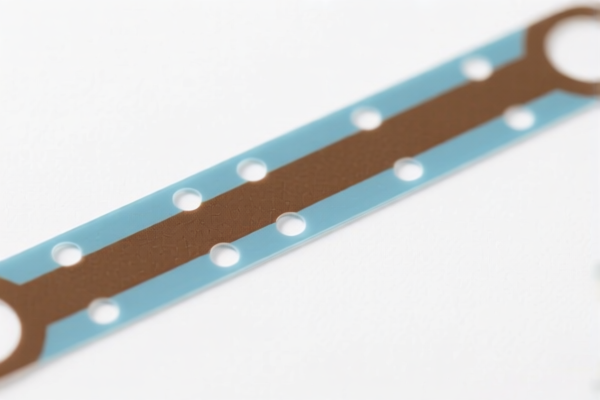
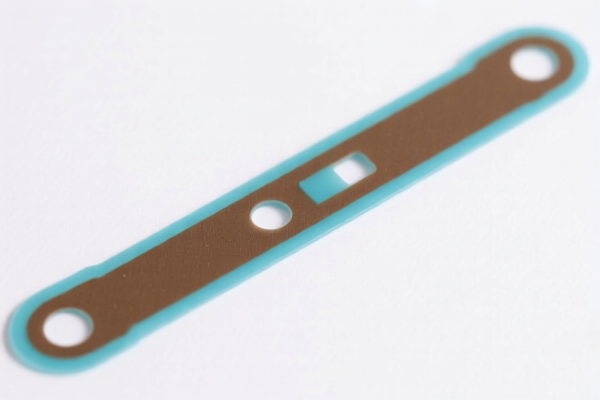
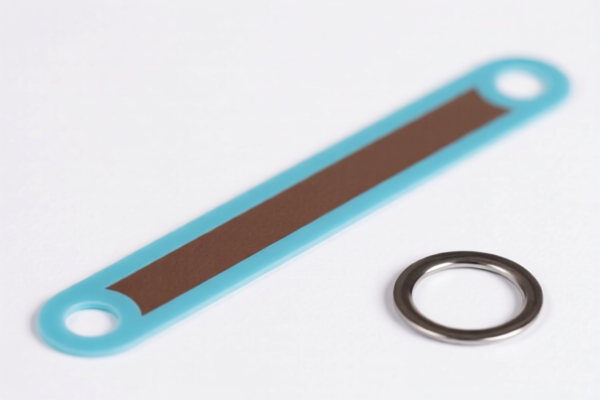
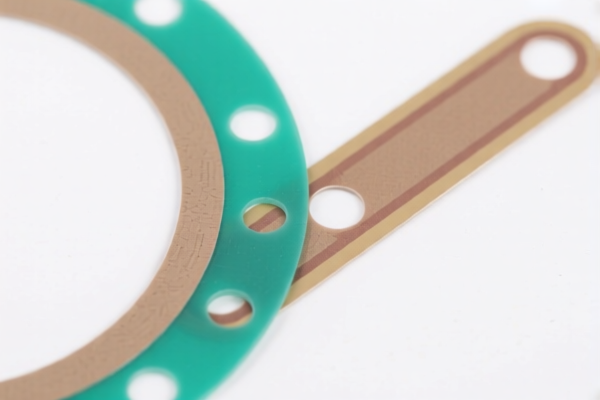
AI Analysis
🚗 Car Seat Gap Filler Strip
🌐 HS Code Reference & Customs Clearance Guide | 2026 Latest Tariff Analysis | Professional Clearance Strategy
📌 I. Product Definition & Classification: Do You Really Understand "Gap Fillers"?
A Car Seat Gap Filler Strip is an interior automotive accessory designed to bridge the dangerous or annoying space between car seats and the center console or door panels. It prevents items (phones, coins, keys) from falling into the void and blocks debris accumulation.
In international trade, classification hinges on two critical factors:
1. Material Composition: Is it plastic, rubber, or a composite?
2. Functionality: Is it considered a "part of furniture/seat" or a "general plastic/rubber article"?
⚠️ Key Distinction:
- If classified as a plastic article → Falls under Chapter 39 (3926)
- If classified as a rubber article → Falls under Chapter 40 (4016)
- If classified as a seat part → Falls under Chapter 94 (9401)
Misclassification can lead to significant tariff differences due to Section 301 and IEEPA duties on Chinese goods.
📦 II. HS Code Classification Details (2026 Latest Tariff Authority Comparison)
| HS Code | Product Description | Basis for Classification | Total Tax Rate (China Origin) |
|---|---|---|---|
3926.30.50.00 |
Articles of plastic, other than those of heading 3917 to 3921: Other: Other | Plastic Material: Inferred from common use as durable, molded plastic inserts. Fits "other plastic articles." | 22.8% |
3926.90.99.89 |
Articles of plastic and articles of other materials of heading 3901 to 3914: Other | Plastic Material: Generic "other plastic articles" when not specifically listed elsewhere. Common for unbranded/unspecified plastic fillers. | 22.8% |
4016.99.05.00 |
Other articles of vulcanized rubber other than hard rubber: Other: Other | Rubber Material: Inferred if made of sulfurized rubber or rubber-like elastic materials. Classified as "other household/personal articles." | 20.9% |
4016.99.60.10 |
Other articles of vulcanized rubber other than hard rubber: Other: Other | Rubber Material: Inferred as vulcanized rubber/plastic composite. Classified as "other rubber articles" for automotive/mechanical use. | 37.5% |
9401.99.35.80 |
Parts of seats (other than headrests): Other | Seat Part: Inferred if viewed strictly as a "part of a seat" made of plastic/rubber. Focuses on function (seating component) rather than material. | 35.0% |
🔍 Critical Note:
- The material (Plastic vs. Rubber) is the primary differentiator.
- The functional view (General Article vs. Seat Part) shifts the chapter (39/40 vs. 94).
- China-origin goods face significant additional tariffs under current trade policies.
💰 III. 2026 Latest Tariff Rate Breakdown (Including Surcharges & Policy Add-ons)
✅ Applicable Country: United States (US)
✅ Country of Origin: China (CN)
✅ Effective Date: November 10, 2025 (and subsequent imports)
🎯 1. 3926.30.50.00 & 3926.90.99.89 —— Plastic Articles (Total: 22.8%)
| Item | Details |
|---|---|
| Basic Duty Rate | 5.3% |
| Section 301 Surcharge | +7.5% (Under 122 Clause / Additional Duties) |
| IEEPA Surcharge | +10.0% (China-specific emergency powers) |
| Total Effective Rate | 22.8% |
| Tax Calculation | CIF Value × 22.8% |
| De Minimis Eligibility | ❌ No (Subject to full duty collection) |
| Legal Basis Path | IEEPA:9903.01.25 → USITC:3926.30.50.00 / 3926.90.99.89 → FOOTNOTE:301 |
📌 Explanation:
- 5.3% is the standard Most Favored Nation (MFN) rate for plastic articles.
- 7.5% is the specific Section 301 surcharge applied to many plastic consumer goods from China.
- 10% is the IEEPA surcharge for Chinese imports.
- Total: 22.8%. This is a moderate-to-high burden for low-value accessories.
🎯 2. 4016.99.05.00 —— Rubber Articles (Total: 20.9%)
| Item | Details |
|---|---|
| Basic Duty Rate | 3.4% |
| Section 301 Surcharge | +7.5% (Standard 301 rate) |
| IEEPA Surcharge | +10.0% (China-specific) |
| Total Effective Rate | 20.9% |
| Tax Calculation | CIF Value × 20.9% |
| De Minimis Eligibility | ❌ No |
| Legal Basis Path | IEEPA:9903.01.25 → USITC:4016.99.05.00 → FOOTNOTE:301 |
📌 Explanation:
- Rubber articles often enjoy a slightly lower basic rate (3.4%) than plastics.
- However, the total burden (20.9%) is comparable to plastics.
- This classification is valid only if the product is demonstrably made of vulcanized rubber or similar elastic materials.
🎯 3. 4016.99.60.10 —— Heavy Rubber/Mechanical Use (Total: 37.5%)
| Item | Details |
|---|---|
| Basic Duty Rate | 2.5% |
| Section 301 Surcharge | +25.0% (Higher tier 301 duty) |
| IEEPA Surcharge | +10.0% |
| Total Effective Rate | 37.5% |
| Tax Calculation | CIF Value × 37.5% |
| De Minimis Eligibility | ❌ No |
| Legal Basis Path | IEEPA:9903.01.25 → USITC:4016.99.60.10 → FOOTNOTE:301 |
📌 Warning:
- This classification triggers the highest Section 301 rate (25%).
- Avoid this classification unless explicitly required by customs rulings for specific mechanical rubber parts. It is significantly more expensive than the other rubber option.
🎯 4. 9401.99.35.80 —— Seat Parts (Total: 35.0%)
| Item | Details |
|---|---|
| Basic Duty Rate | 0.0% |
| Section 301 Surcharge | +25.0% |
| IEEPA Surcharge | +10.0% |
| Total Effective Rate | 35.0% |
| Tax Calculation | CIF Value × 35.0% |
| De Minimis Eligibility | ❌ No |
| Legal Basis Path | IEEPA:9903.01.25 → USITC:9401.99.35.80 → FOOTNOTE:301 |
📌 Explanation:
- Although the basic duty is 0%, the Section 301 surcharge is 25%, pushing the total to 35.0%.
- This is the second-highest rate among the options.
- Classifying a gap filler as a "seat part" rather than a "plastic/rubber article" is risky and costly.
🛠️ IV. Customs Clearance Practical Advice (Battle-Tested Pitfall Guide)
✅ 1. Preparation Checklist (Non-Negotiable)
| Document | Required | Description |
|---|---|---|
| ✅ Product Specification Sheet | ✔️ | Must explicitly state material composition (e.g., "100% PVC Plastic" or "Vulcanized Rubber"). |
| ✅ Product Photos | ✔️ | Clear images of the item, showing flexibility, texture, and any markings. |
| ✅ Commercial Invoice | ✔️ | Must use precise language: "Plastic Car Seat Gap Filler" or "Rubber Seat Spacer." |
| ✅ Packing List | ✔️ | Details quantity, weight, and dimensions. |
| ✅ Material Test Report | ✔️ | Crucial: Lab report confirming whether it is Plastic (CH 39) or Rubber (CH 40). |
✅ 2. Declaration Strategy (Key Mantras)
🔥 “Material First, Function Second, Invoice Precise, Tax Minimized!”
| Scenario | Correct Declaration | Incorrect Action |
|---|---|---|
| Product is Plastic | 3926.30.50.00 or 3926.90.99.89 |
Declare as 9401 (Seat Part) → 35% Tax |
| Product is Rubber | 4016.99.05.00 |
Declare as 4016.99.60.10 → 37.5% Tax |
| Material Unknown | Provide Test Report | Guessing → High Risk of Audit/Seizure |
| OEM/Private Label | Use generic term "Gap Filler" | Use brand-specific names that might confuse classification |
📌 Recommendation:
- Plastic Gap Fillers: Aim for3926.30.50.00(22.8%).
- Rubber Gap Fillers: Aim for4016.99.05.00(20.9%).
- Avoid9401and4016.99.60.10unless absolutely necessary, as the tax burden is significantly higher (35%+).
✅ 3. Special Handling Cases
| Situation | Handling Advice |
|---|---|
| Hybrid Materials (Plastic + Fabric) | If fabric is structural, it may change classification. However, if plastic/rubber is dominant, stick to CH 39/40. Provide material breakdown. |
| Gift Sets with Phone Holders | If bundled, declare as the principal item (Gap Filler). If separate, declare separately to avoid complex composite rules. |
| Pre-Cut Rolls vs. Pre-Formed Strips | Pre-formed strips are easier to classify as "Articles." Rolls might be classified as raw materials, but finished gap fillers are typically "Articles." |
🌍 V. Global Market Comparison (2026 Latest)
| Country/Region | Recommended HS Code | Tax Rate (China Origin) | Certification Requirements | Notes |
|---|---|---|---|---|
| 🇺🇸 USA | 3926.30.50.00 (Plastic) |
22.8% | None specific (General) | Highest duty due to 301+IEEPA |
| 🇪🇺 EU | 3926.90.99 |
~5-6% | CE, REACH | Much lower duty |
| 🇨🇳 China | 3926.30.50.00 |
~5-10% | CCC (if applicable) | Domestic duty is low |
| 🇯🇵 Japan | 3926.90.90 |
~5-6% | JIS | Low duty |
| 🇬🇧 UK | 3926.90.90 |
~5-6% | UKCA | Low duty |
📌 Conclusion:
- The US market is uniquely punitive for Chinese-made plastic/rubber automotive accessories due to the 22.8% to 37.5% total tariff burden.
- For other markets, the tax impact is minimal.
- US importers must calculate profitability carefully with these added costs.
📌 VI. Common Errors & Pitfall Guide (Blood & Tears Lessons)
❌ Error 1: Declaring Plastic Gap Fillers as 9401.99.35.80 (Seat Parts)
👉 Consequence: Tax jumps from 22.8% to 35.0%.
👉 Why: Customs views "Gap Fillers" as general plastic articles, not essential seat components.
❌ Error 2: Not Specifying Material in Invoice
👉 Consequence: Customs may apply the highest default rate or hold shipment for inspection.
👉 Fix: Always write "Polyvinyl Chloride (PVC) Plastic" or "Vulcanized Rubber."
❌ Error 3: Misidentifying Rubber as Plastic (or Vice versa)
👉 Consequence: If audited and material is found to be different, penalties + back duties apply.
👉 Fix: Use lab reports to substantiate material.
❌ Error 4: Ignoring IEEPA 10% Surcharge
👉 Consequence: Underestimating landed cost by 10%.
👉 Fix: Always add 10% to base + 301 duty for China-origin goods.
✅ Correct Approach:
"Car Seat Gap Filler Strip, Plastic, Black, Model XYZ, 100% PVC"
🎯 VII. Conclusion: Precise Classification Saves Money!
🎯 Remember the Mantra:
🔹 "Plastic is 22.8%, Rubber is 20.9%, Seat Part is 35.0%!"
🔹 "Material determines Chapter, 301 determines Price, IEEPA adds the Final Blow!"
🔹 "Declare Plastic/Rubber, Avoid Seat Parts, Save Thousands on Duties!"
📌 Pro Tip:
If your product can be clearly defined as Rubber (4016.99.05.00 at 20.9%), it is cheaper than Plastic (3926.30.50.00 at 22.8%).
However, if you can prove it is a Plastic Article, the difference is marginal.
Do NOT use 9401 (Seat Parts) unless you have a strong legal ruling, as the 35.0% tax is unjustifiably high for this simple accessory.
📣 Immediate Action:
📞 Contact a Customs Broker + Provide Material Test Report + Declare "Plastic Article" (3926)
🚀 Minimize Duty, Maximize Profit, Clear Customs Smoothly!
✨ Professional Clearance Starts with Accurate Classification!
💼 Every Percent of Duty is Money in Your Pocket!
Customer Reviews
About HS Code Classification
The Harmonized System (HS) is an internationally standardized nomenclature developed by the World Customs Organization (WCO) to classify traded products. Over 200 countries use the HS system as the basis for customs tariffs, trade statistics, and import/export regulations.
Each HS code follows a hierarchical structure:
- Chapter (2 digits) — Broad category of goods (e.g., Chapter 84: Machinery and Mechanical Appliances)
- Heading (4 digits) — More specific grouping within the chapter
- Subheading (6 digits) — Internationally standardized breakdown, used by all WCO member countries
- National subdivisions (8-10 digits) — Country-specific extensions for further classification, such as US HTSUS 10-digit codes
Correct HS code classification is essential for smooth customs clearance, accurate duty payment, and compliance with trade regulations. Misclassification can lead to customs delays, overpayment of duties, or penalties.
When importing from CN to US, the applicable tariff rates may include:
- Most-Favored-Nation (MFN) rate — The standard duty rate applied to WTO members
- General rate — Applied to countries without trade agreements
- Trade remedy duties — Additional tariffs such as Section 301 (anti-dumping), Section 232 (national security), or countervailing duties
The information provided on this page is for reference purposes only. For official classification, please consult with your local customs authority or a licensed customs broker.