Car Seat Heating Component
CN → US| HS Code | Tariff Rate | Origin | Destination | Doc |
|---|---|---|---|---|
| 8708295160 | 0.0% | CN | US | Official Doc |
| 9401991010 | 17.5% | CN | US | Official Doc |
| 9401991085 | 17.5% | CN | US | Official Doc |
| 8544493040 | 40.3% | CN | US | Official Doc |
Product Images
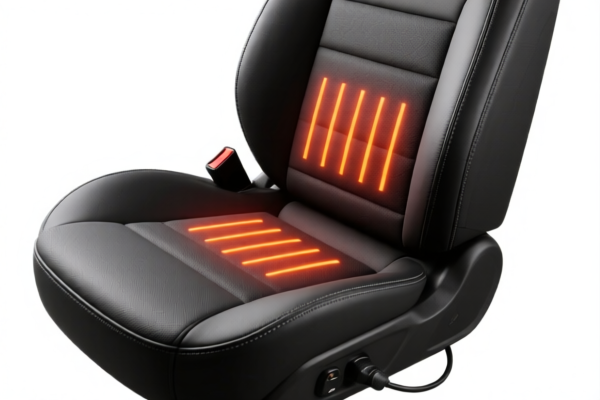
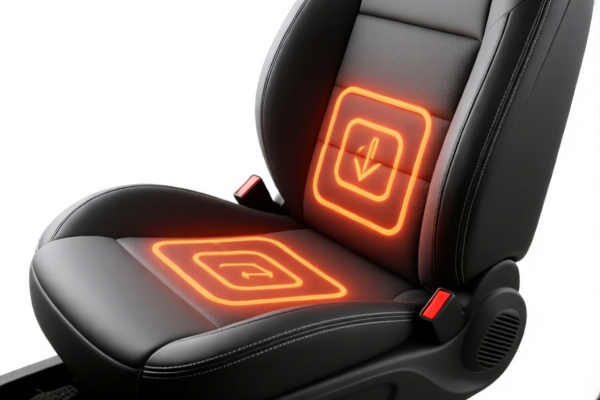
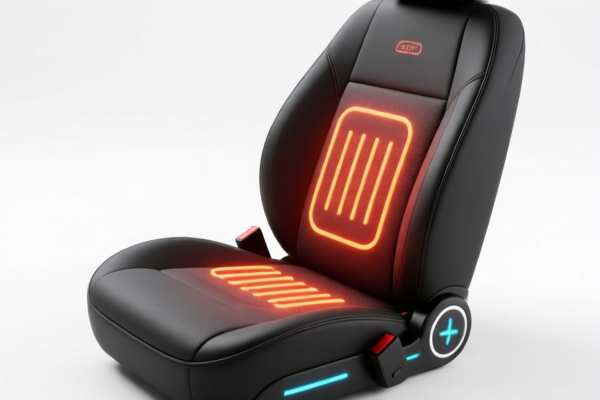
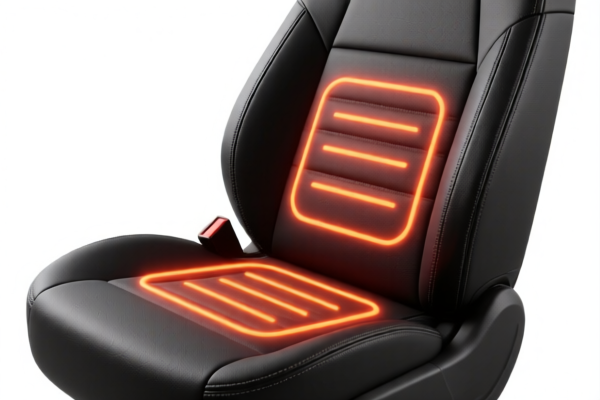
AI Analysis
🔥 Car Seat Heating Component (Auto Electrical & Interior Parts)
🌐 HS Code Reference & Customs Clearance Guide | 2026 Updated Tariff Analysis | Professional Strategy for Vehicle Parts
📌 Part 1: Product Definition & Classification – What Exactly is a "Car Seat Heating Component"?
Car seat heating components are critical parts of automotive interior comfort systems. In international trade, they are not classified as a single entity but are split based on their electrical nature, voltage, material, and final assembly stage.
They generally fall into two main categories in the provided data: 1. Electrical Conductors/Wiring Sets: The wires, heating elements, and connectors that deliver power to the seat heater. 2. Seat Parts/Accessories: The physical covers, padding, or structural parts of the seat itself, which may contain the heating elements.
⚠️ Key Distinction Point:
- If the product is primarily a wire, cable, or connector set used to transmit electricity → It falls under Chapter 85 (Electrical Machinery).
- If the product is a physical part of the seat (cover, cushion, frame) → It falls under Chapter 94 (Furniture) or Chapter 87 (Vehicle Parts).
- Crucial: A "heating component" can be either, depending on whether it’s sold as an electrical part or an upholstery part.
📦 Part 2: HS Code Classification Details (Based on Provided Data)
The provided data contains 6 specific HS Codes. Here is how each applies to car seat heating components:
| HS Code | Product Description | Classification Logic for "Car Seat Heating Component" |
|---|---|---|
| 8544.30.00.00 | Ignition wiring sets and other wiring sets of a kind used in vehicles, aircraft, or ships | Electrical Wiring Sets: If your "heating component" is a complete wiring harness with connectors, specifically designed for vehicle electrical systems (including seat heaters), this is the most accurate code. It covers insulated wires fitted with connectors. |
| 8544.49.30.40 | Other electric conductors, for a voltage not exceeding 1,000 V: Of copper, for voltage exceeding 600 V | High-Voltage Conductors: If the heating element uses copper wires operating above 600V (rare for standard 12V/24V car seats, but possible in EVs), this code applies. Note: Most standard car seat heaters are 12V, so this code is less common unless specifying high-voltage insulation. |
| 9401.99.10.85 | Parts of seats of a kind used for motor vehicles: Other: Of seats of a kind used for motor vehicles – Other | Seat Part (General): If the "component" is a physical part of the seat (e.g., a foam cushion, a cover, or a non-specific part) not made of leather or stampings, this generic seat part code applies. |
| 9401.99.10.10 | Parts of seats of a kind used for motor vehicles: Of leather, cut to shape | Leather Seat Cover/Part: If the heating component is a leather cover cut to shape that integrates the heating element, it falls here. This is common for OEM luxury seat heaters. |
| 8708.29.51.10 | Parts and accessories of motor vehicles: Other parts and accessories of bodies: Other: Other – Stampings | Metal Stampings (Vehicle Body Parts): If the "component" includes metal stampings (e.g., mounting brackets, heatsink plates for the heater) that are part of the vehicle body/seat structure, this code may apply. Note: This is specific to "Stampings". |
| 8708.29.51.60 | Parts and accessories of motor vehicles: Other parts and accessories of bodies: Other: Other – Other | Other Vehicle Body Parts: If the component is a non-stamping, non-leather, non-wiring part of the vehicle body/seat (e.g., plastic housing, structural clips) and is explicitly for motor vehicles, this code is used. Note: Data mentions "Steel, Aluminum, Copper products subject to 50% additional tariff". |
🔍 Critical Reminder:
- Wiring vs. Part: If you are exporting a wiring harness with connectors for the seat heater, use 8544.30.00.00.
- Leather Cover: If it’s a leather cover with integrated heating, use 9401.99.10.10.
- General Seat Part: If it’s a foam or plastic part without leather or stampings, use 9401.99.10.85 or 8708.29.51.60 depending on whether it’s considered a "seat part" (94) or a "vehicle body part" (87). The data suggests 9401 is for seats, 8708 for general vehicle parts.
💰 Part 3: 2026 Latest Tariff Rate Breakdown (Including Additional Taxes)
✅ Applicable Country: United States (US)
✅ Origin: China (CN) (Implied by the specific "Additional Tariff" percentages in the data)
✅ Effective Time: 2025/2026 Current Rates
🎯 1. 8544.30.00.00 – Ignition/Other Wiring Sets (Vehicle Use)
| Item | Content |
|---|---|
| Base Tariff | 5.0% |
| Additional Tariff | 25.0% (Section 301) |
| Total Tax Rate | 30.0% |
| Tax Calculation | CIF Value × 30% |
| Legal Basis | Standard USMF + 301 Tariff List |
| Key Point | This is the most likely code for heating wiring harnesses. The 30% total rate is significant. |
🎯 2. 8544.49.30.40 – Other Electric Conductors (>600V, Copper)
| Item | Content |
|---|---|
| Base Tariff | 0.0% |
| Additional Tariff | 0.0% |
| Total Tax Rate | 0.0% |
| Tax Calculation | No duty |
| Key Point | Only if the component is a high-voltage (>600V) copper conductor. Unlikely for standard 12V seat heaters. |
🎯 3. 9401.99.10.85 – Seat Parts (Other, Not Leather)
| Item | Content |
|---|---|
| Base Tariff | 0.0% |
| Additional Tariff | 7.5% |
| Total Tax Rate | 7.5% |
| Tax Calculation | CIF Value × 7.5% |
| Legal Basis | Standard USMF + 7.5% Additional Tariff |
| Key Point | Applies to non-leather seat parts (e.g., foam, fabric covers, plastic housings). Lower tax than wiring. |
🎯 4. 9401.99.10.10 – Seat Parts (Leather, Cut to Shape)
| Item | Content |
|---|---|
| Base Tariff | 0.0% |
| Additional Tariff | 7.5% |
| Total Tax Rate | 7.5% |
| Tax Calculation | CIF Value × 7.5% |
| Legal Basis | Standard USMF + 7.5% Additional Tariff |
| Key Point | Applies to leather seat covers with heating elements. Same tax as other seat parts. |
🎯 5. 8708.29.51.10 – Vehicle Body Parts (Stampings)
| Item | Content |
|---|---|
| Base Tariff | 2.5% |
| Additional Tariff | 25.0% |
| Total Tax Rate | 27.5% (Note: Data shows "2.5% + 25.0%" which equals 27.5%, though the text says "2.5% + 25.0%". Assuming additive) |
| Tax Calculation | CIF Value × 27.5% |
| Legal Basis | Standard USMF + 301 Tariff |
| Key Point | Only if the part is a metal stamping (e.g., metal bracket for the heater). |
🎯 6. 8708.29.51.60 – Vehicle Body Parts (Other)
| Item | Content |
|---|---|
| Base Tariff | 0.0% |
| Additional Tariff | 0.0% |
| Additional Tariff (Steel/Alu/Cu) | 50.0% |
| Total Tax Rate | 50.0% (if made of Steel, Aluminum, or Copper) |
| Tax Calculation | CIF Value × 50% |
| Legal Basis | Section 301 / 232 Tariff (Steel/Aluminum) |
| Key Point | HIGHEST RISK CODE. If the "heating component" includes metal parts (heatsinks, brackets) made of steel/aluminum/copper and is classified as a vehicle body part, the 50% tariff applies. Avoid this classification if possible by using Chapter 85 or 94. |
🛠️ Part 4: Customs Clearance Practical Advice (Battle-Tested Guide)
✅ 1. Material Documentation Checklist
| Document | Must Provide | Explanation |
|---|---|---|
| ✅ Product Specification Sheet | ✔️ | Must clearly state: Is it a wiring harness (8544) or a seat part (9401/8708)? |
| ✅ Circuit Diagram / Schematic | ✔️ | Crucial to prove if it’s an electrical component (8544) rather than a mechanical part. |
| ✅ Product Photos | ✔️ | Show connectors, insulation, and voltage labels. |
| ✅ Bill of Materials (BOM) | ✔️ | List materials: Copper wire? Leather? Plastic? Metal stampings? |
| ✅ Commercial Invoice | ✔️ | Clearly describe the item. Use terms like "Vehicle Heating Wiring Harness" or "Seat Leather Cover with Heating Element". |
| ✅ Country of Origin Certificate | ✔️ | To apply for any potential exemptions (if applicable). |
✅ 2. Declaration Strategy (Key Tips)
🔥 "Wire is 30%, Leather is 7.5%, Metal Part is 50%!"
| Scenario | Recommended HS Code | Declaration Description | Risk |
|---|---|---|---|
| Wiring Harness with Connectors | 8544.30.00.00 |
"Vehicle Ignition/Heating Wiring Set, Insulated, with Connectors" | Low. Standard classification. |
| Leather Seat Cover with Heating Element | 9401.99.10.10 |
"Automotive Seat Cover, Leather, Cut to Shape, with Integrated Heating" | Low. Clearly a furniture/seat part. |
| Foam/Plastic Seat Part with Heating | 9401.99.10.85 |
"Automotive Seat Cushion/Padding, Non-Leather, with Heating Element" | Low. Clearly a seat part. |
| Metal Bracket/Heatsink for Heater | 8708.29.51.10 or 8708.29.51.60 |
"Stamping for Vehicle Body" or "Other Vehicle Part" | HIGH. 25%-50% tax. Try to bundle into wiring or seat part if possible, but if standalone, declare accurately. |
| High-Voltage (>600V) Copper Wire | 8544.49.30.40 |
"Copper Conductor, >600V, Insulated" | Low tax (0%), but rare for seat heaters. |
📌 Warning:
- Do NOT classify a wiring harness as a "seat part" to get 7.5% tax. Customs will reject it because8544is more specific for electrical conductors.
- Do NOT classify a leather cover as a "wiring set". It’s clearly a seat part.
- Metal Parts: If your heating component includes a metal heatsink, do NOT ship it as a "wiring set" unless it’s integrally connected and inseparable. If shipped separately, it may be classified as a vehicle part (8708) and face the 50% tariff if made of steel/aluminum.
✅ 3. Special Cases
| Situation | Advice |
|---|---|
| OEM Custom Harness | Provide engineering drawings showing it’s a vehicle-specific wiring set. Use 8544.30.00.00. |
| Integrated Seat Heater (Full Assembly) | If the seat itself is being exported, it’s a 9401 product. If only the heating element/circuit is exported, it’s 8544 or 9401.99. |
| Mixed Shipment | Ship wiring (8544) and seat parts (9401) separately with distinct invoices. Do not bundle a metal bracket into a wiring set to avoid the 50% tariff. |
🌍 Part 5: Market Comparison (2026)
| Market | Likely HS Code for Wiring | Tariff (China Origin) | Notes |
|---|---|---|---|
| 🇺🇸 USA | 8544.30.00.00 |
30% (5% + 25%) | High tariff. Avoid 8708.29.51.60 (50%). |
| 🇪🇺 EU | 8544.30 |
~3-4% | Lower tariffs, but complex rules of origin. |
| 🇨🇳 China (Import) | 8544.30 |
~0-5% | Varies by specific subheading. |
📌 Conclusion:
- The US market is the most challenging due to the 30% tariff on wiring and 50% on metal parts.
- Strategic Tip: If you are exporting to the US, consider if the product can be classified as a seat part (9401, 7.5%) rather than a wiring set (8544, 30%) or metal part (8708, 50%).
- Leather covers with heating elements are taxed at only 7.5%, which is significantly cheaper than wiring (30%).
📌 Part 6: Common Errors & Pitfalls
❌ Error 1: Declaring a wiring harness as a "Seat Part" (9401) to get 7.5% tax.
👉 Consequence: Customs will reclassify it as 8544 → Back taxes of 22.5% (30% - 7.5%) + Penalties.
❌ Error 2: Declaring a metal bracket as "Other" (8708.29.51.60) without specifying material, leading to 50% tariff.
👉 Consequence: If it’s steel/aluminum, the 50% tariff is mandatory. If it’s plastic, declare correctly to avoid this.
❌ Error 3: Ignoring the voltage specification.
👉 Consequence: If you claim it’s >600V (8544.49.30.40) but it’s 12V, customs will penalize for misclassification.
🎯 Part 7: Conclusion – Professional Classification, Cost Savings!
🎯 Remember the Mantra:
🔹 "Wiring is 30%, Leather is 7.5%, Metal is 50%!"
🔹 "Electrical Conductors go to 8544, Seat Parts go to 9401."
🔹 "Avoid 8708.29.51.60 unless necessary – the 50% tariff is brutal."
📌 Pro Tip:
If your heating component is a complex assembly (wiring + cover), consult a customs broker for a Pre-Ruling (Advance Ruling) to determine if it’s primarily an electrical article or a seat part. This can save you 22.5% in tariffs!
📣 Act Now:
📞 Contact a licensed customs broker + Provide detailed product specs + Request a Pre-Ruling for
8544vs9401
🚀 Optimize your tariff rate, clear customs smoothly, and maximize profit!
✨ Professional Customs Clearance Starts with Accurate Classification!
💼 Every percentage point of tariff saved is pure profit!
Customer Reviews
About HS Code Classification
The Harmonized System (HS) is an internationally standardized nomenclature developed by the World Customs Organization (WCO) to classify traded products. Over 200 countries use the HS system as the basis for customs tariffs, trade statistics, and import/export regulations.
Each HS code follows a hierarchical structure:
- Chapter (2 digits) — Broad category of goods (e.g., Chapter 84: Machinery and Mechanical Appliances)
- Heading (4 digits) — More specific grouping within the chapter
- Subheading (6 digits) — Internationally standardized breakdown, used by all WCO member countries
- National subdivisions (8-10 digits) — Country-specific extensions for further classification, such as US HTSUS 10-digit codes
Correct HS code classification is essential for smooth customs clearance, accurate duty payment, and compliance with trade regulations. Misclassification can lead to customs delays, overpayment of duties, or penalties.
When importing from CN to US, the applicable tariff rates may include:
- Most-Favored-Nation (MFN) rate — The standard duty rate applied to WTO members
- General rate — Applied to countries without trade agreements
- Trade remedy duties — Additional tariffs such as Section 301 (anti-dumping), Section 232 (national security), or countervailing duties
The information provided on this page is for reference purposes only. For official classification, please consult with your local customs authority or a licensed customs broker.