Car Seat Storage Bag
CN → US| HS Code | Tariff Rate | Origin | Destination | Doc |
|---|---|---|---|---|
| 6307909891 | 24.5% | CN | US | Official Doc |
| 4202924500 | 55.0% | CN | US | Official Doc |
| 4202923900 | 52.6% | CN | US | Official Doc |
Product Images

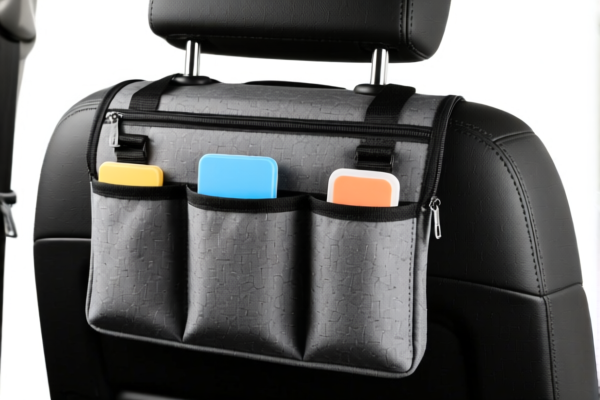
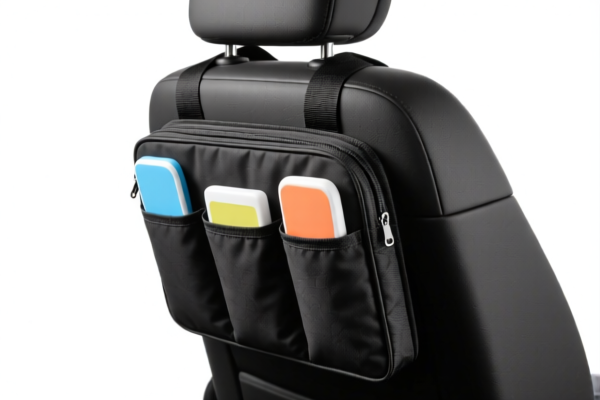
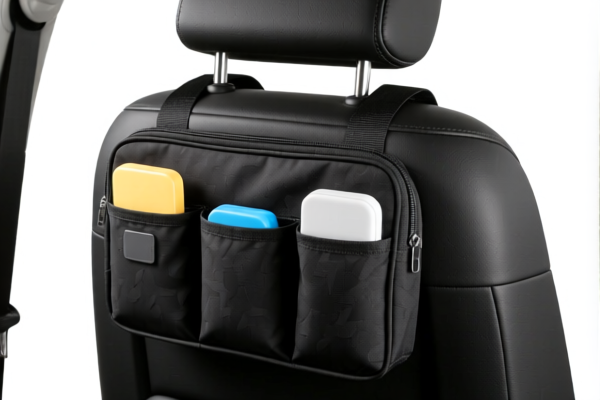
AI Analysis
🚗 Car Seat Storage Bag (Automotive Accessories)
🌐 HS Code Reference & Clearance Guide | 2026 Latest Tariff Analysis | Professional Customs Strategy
📌 I. Product Definition & Classification: Do You Really Understand "Car Seat Storage Bags"?
A Car Seat Storage Bag is an accessory designed to organize, protect, or transport car seats (infant safety seats, convertible seats, or booster seats). In international trade, its classification depends heavily on its primary function and material composition.
There are two main logical pathways for classification: 1. As a General Accessory/Container: If the bag is primarily for storage/organization and doesn't fit specific "travel bag" definitions, it may fall under general textile or plastic articles. 2. As a Specialized Bag: If it is specifically designed for travel, sports, or carrying equipment, it may fall under Chapter 42 (Articles of Leather; Travel Goods, Handbags).
⚠️ Key Distinction:
- If the bag is a simple textile/plastic pouch without a rigid structure or specific "travel gear" designation → Look at Chapter 63 (Other Made-Up Textile Articles).
- If the bag is a structured carrier, tote, or specialized travel case made of textile/plastic sheeting → Look at Chapter 42 (Travel Goods).
📦 II. HS Code Classification Details (2026 Latest Tariff Authority Comparison)
| HS Code | Product Description | Application Scenario | Material/Logic |
|---|---|---|---|
6307.90.98.91 |
Other made-up textile articles, not specified elsewhere | Generic storage pouch, simple fabric bag, non-structured organizer | ✅ Matches "Made-up Article" category. No material conflict. Often used for general-purpose textile bags. |
4202.92.45.00 |
Travel, sports, and similar bags; outer surface of textile materials or plastic sheets | Structured bag specifically for sports/travel equipment, including car seat carriers | ✅ Matches "Bag" category. Designed for travel/sports. Outer material is textile or plastic sheet. |
4202.92.39.00 |
Other travel, sports, and similar bags; outer surface of textile materials | General textile bags for luggage/equipment that don't fit specific sub-headings | ✅ Matches "Bag" category. Textile outer surface. Broader "Other" classification. |
🔍 Key Reminder:
- Chapter 63 (6307...) is often a "fallback" for made-up textile articles that aren't specifically bags. It has a lower tax burden but requires proof that the item is not a "travel/sports bag." - Chapter 42 (4202...) is stricter for "bags." If the bag has zippers, handles, and a clear function as a carrier for a car seat (viewed as sports/travel equipment), customs may force Chapter 42, leading to higher taxes.
💰 III. 2026 Latest Tariff Rate Details (Including Surcharges & Policy Add-ons)
✅ Applicable Country: United States (US)
✅ Origin: China (CN)
✅ Effective Date: From November 10, 2025 onwards (including subsequent imports)
🎯 1. 6307.90.98.91 — Other Made-Up Textile Articles (Storage Bag)
| Item | Details |
|---|---|
| Basic Tariff | 7.0% |
| Section 301 Surcharge | +7.5% (Standard 301) |
| Section 122 Surcharge | +10.0% (Specific to this HS code/category in some interpretations or recent updates) |
| Total Tax Rate | 24.5% |
| Tax Calculation | CIF Value × 24.5% |
| De Minimis Eligibility | ❌ Denied (De Minimis waiver not applicable for Section 301/122 goods from China) |
| Legal Basis Path | HTSUS:6307.90.98.91 → USITC:Section 301 Footnote → IEEPA:Section 122 Add-on |
📌 Explanation:
- This is the most cost-effective option if the bag can be legally classified as a "general made-up article" rather than a specialized "travel bag." - Total 24.5% is significantly lower than Chapter 42 rates. - Warning: If customs determines this is actually a "travel bag," you may be reassigned to Chapter 42, resulting in a massive tax hike.
🎯 2. 4202.92.45.00 — Travel/Sports Bags (Textile/Plastic Outer)
| Item | Details |
|---|---|
| Basic Tariff | 20.0% |
| Section 301 Surcharge | +25.0% |
| Section 122 Surcharge | +10.0% |
| Total Tax Rate | 55.0% |
| Tax Calculation | CIF Value × 55.0% |
| De Minimis Eligibility | ❌ Denied |
| Legal Basis Path | HTSUS:4202.92.45.00 → USITC:Section 301 Footnote → IEEPA:Section 122 Add-on |
📌 Explanation:
- This classification applies if the bag is deemed a specialized travel or sports accessory. - Total 55.0% is very high. This includes the standard 301 tariff (25%) plus other add-ons.
🎯 3. 4202.92.39.00 — Other Travel/Sports Bags (Textile Outer)
| Item | Details |
|---|---|
| Basic Tariff | 17.6% |
| Section 301 Surcharge | +25.0% |
| Section 122 Surcharge | +10.0% |
| Total Tax Rate | 52.6% |
| Tax Calculation | CIF Value × 52.6% |
| De Minimis Eligibility | ❌ Denied |
| Legal Basis Path | HTSUS:4202.92.39.00 → USITC:Section 301 Footnote → IEEPA:Section 122 Add-on |
📌 Explanation:
- Slightly lower than4202.92.45.00but still extremely high due to the 25% Section 301 surcharge. - This is a "catch-all" for textile bags that don't fit specific sub-categories but are still "travel/sports" bags.
🛠️ IV. Customs Clearance Practical Advice (Battle-Tested Pitfall Avoidance)
✅ 1. Preparation Checklist (Mandatory)
| Document | Required | Explanation |
|---|---|---|
| ✅ Product Specification Sheet | ✔️ | Detailed description: dimensions, material (e.g., 600D Polyester, PVC-coated), presence of padding, zippers, handles. |
| ✅ Product Photos | ✔️ | Clear images of the bag, including interior, exterior, labels, and how the car seat fits inside. |
| ✅ Commercial Invoice | ✔️ | Must clearly state: "Car Seat Storage Bag" or "Car Seat Carrier Bag." Avoid vague terms like "Accessory." |
| ✅ Bill of Lading/Air Waybill | ✔️ | Ensure package dimensions and weight match the invoice. |
| ✅ Material Declaration | ✔️ | Explicitly state outer material (e.g., "100% Polyester") and lining. |
✅ 2. Declaration Strategy (Key Mantras)
🔥 "Describe Function, Not Just Form. Be Precise, Avoid Ambiguity!"
| Scenario | Correct Declaration | Incorrect Practice |
|---|---|---|
| Soft, Simple Pouch | "Textile Storage Pouch for Car Seats" → Aim for 6307.90.98.91 | Declaring as "Travel Bag" → Triggers 55% tax |
| Structured Carrier with Handles | "Structured Car Seat Travel Carrier" → Likely 4202.92.45.00 | Trying to declare as "Pouch" → High risk of audit/reclassification |
| Plastic Sheet Bag | "Plastic Sheet Storage Bag" → Check if 6307 or 4202 applies based on structure | Confusing material with function |
| Bundle Sale | Do Not Split | If sold with car seat, declare separately but ensure HTS codes match their individual nature |
✅ 3. Special Handling Tips
| Situation | Recommendation |
|---|---|
| Customs Audit Risk | If declaring 6307.90.98.91, be prepared to prove the bag is not a "travel bag." Emphasize its storage/organizational function over "travel." |
| Material Changes | If the bag uses leather accents, it may fall under 4203 (Leather articles), which has different rates. Stick to textile/plastic for the examples above. |
| Pre-Ruling Application | For large volumes, apply for an ACE Pre-Ruling from US CBP. This locks in the HS code (and tax rate) for 5 years, providing certainty. |
| Section 122 Specifics | Ensure the product description aligns with the "Section 122" definition if applicable. Some general accessories are exempt, but bags are often targeted. |
🌍 V. Global Market Comparison (2026 Latest)
| Country/Region | Recommended HS Code | Tariff | Certification | Notes |
|---|---|---|---|---|
| 🇺🇸 United States | 6307.90.98.91 (if possible) |
24.5% | None specific | Critical: Avoid Chapter 42 to save 30%+ in taxes. |
| 🇨🇳 China | 6307.90.98.91 |
~10-15% | None | Lower baseline tax. |
| 🇪🇺 EU | 6307.90.98 |
~6% | CE (if applicable) | No Section 301 equivalent. |
| 🇬🇧 UK | 6307.90.98 |
~6% | None | Post-Brexit rules apply. |
📌 Conclusion:
- The US market is the most challenging due to the 25% Section 301 tariff + 10% Section 122 surcharge on many textile/bag items. - Strategy: Argue for6307.90.98.91(24.5%) over4202.92.45.00(55.0%). The difference is 30.5% in tax liability. - Justification: Emphasize the item is a storage/organizational pouch for a specific item (car seat), not a general-purpose travel bag.
📌 VI. Common Mistakes & Pitfall Guide (Lessons Learned)
❌ Mistake 1: Declaring a structured, zipped bag with handles as "Storage Pouch" (6307)
👉 Consequence: Customs reclassifies it as a "Travel Bag" (4202) → Tax jumps from 24.5% to 55% + Penalties!
❌ Mistake 2: Using vague descriptions like "Car Accessory Bag"
👉 Consequence: CBP assigns a default, often higher, HS code → Delays and Uncertainty.
❌ Mistake 3: Ignoring the "Section 122" add-on
👉 Consequence: Underpayment of duty → Audit, Back Taxes, and Interest.
❌ Mistake 4: Assuming all textile bags are exempt from Section 301
👉 Consequence: Most textile bags from China are subject to 301 tariffs. Check the specific HTS footnote.
✅ Correct Approach:
"Car Seat Storage Bag, Made of 600D Polyester, with Zipper Closure and Handles, For Organization and Protection, Not a Travel Carrier."
HS Code:6307.90.98.91
Total Tax: 24.5%
🎯 VII. Conclusion: Professional Declaration, Save Money, Ensure Compliance!
🎯 Remember the Mantra:
🔹 "Function Over Form: Storage vs. Travel."
🔹 "24.5% vs. 55%: The $30,000 Difference per $100k Shipment."
🔹 "Document Everything: Photos, Specs, and Clear Descriptions."
📌 Pro Tip:
If your storage bags are originating from Vietnam or Malaysia, you may qualify for IEEPA Exemptions or lower Section 301 rates.
Recommendation: Always apply for an ACE Pre-Ruling before shipping large quantities to the US to lock in the lower 6307.90.98.91 rate and avoid costly reclassifications.
📣 Take Action Now:
📞 Consult with a licensed customs broker
📸 Provide high-resolution product images
📝 Apply for an HS Code Pre-Ruling with US CBP
🚀 Ensure Smooth Clearance, Maximize Profit, and Avoid Surprises!
✨ Professional Clearance Starts with Accurate Classification!
💼 Every Dollar of Tariff Saved is Pure Profit!
Customer Reviews
About HS Code Classification
The Harmonized System (HS) is an internationally standardized nomenclature developed by the World Customs Organization (WCO) to classify traded products. Over 200 countries use the HS system as the basis for customs tariffs, trade statistics, and import/export regulations.
Each HS code follows a hierarchical structure:
- Chapter (2 digits) — Broad category of goods (e.g., Chapter 84: Machinery and Mechanical Appliances)
- Heading (4 digits) — More specific grouping within the chapter
- Subheading (6 digits) — Internationally standardized breakdown, used by all WCO member countries
- National subdivisions (8-10 digits) — Country-specific extensions for further classification, such as US HTSUS 10-digit codes
Correct HS code classification is essential for smooth customs clearance, accurate duty payment, and compliance with trade regulations. Misclassification can lead to customs delays, overpayment of duties, or penalties.
When importing from CN to US, the applicable tariff rates may include:
- Most-Favored-Nation (MFN) rate — The standard duty rate applied to WTO members
- General rate — Applied to countries without trade agreements
- Trade remedy duties — Additional tariffs such as Section 301 (anti-dumping), Section 232 (national security), or countervailing duties
The information provided on this page is for reference purposes only. For official classification, please consult with your local customs authority or a licensed customs broker.