Car Seatbelt Shoulder Cover
CN → US| HS Code | Tariff Rate | Origin | Destination | Doc |
|---|---|---|---|---|
| 8708995500 | 37.5% | CN | US | Official Doc |
| 6307909891 | 24.5% | CN | US | Official Doc |
| 8708210000 | 37.5% | CN | US | Official Doc |
| 3926902500 | 24.0% | CN | US | Official Doc |
| 3926305000 | 22.8% | CN | US | Official Doc |
Product Images
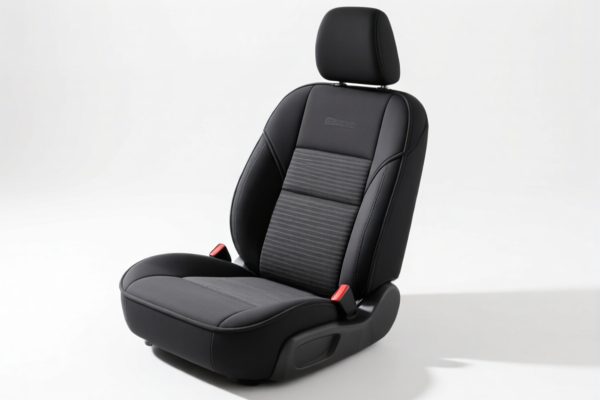
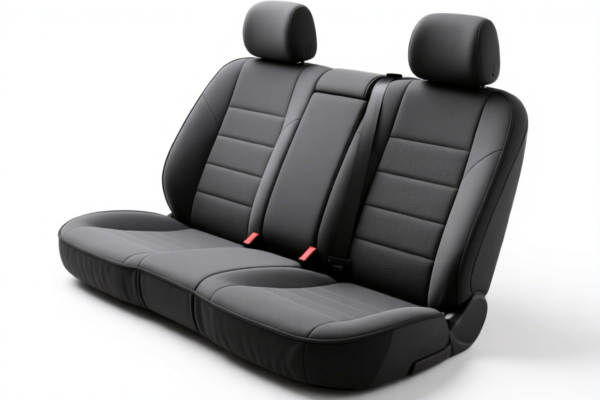
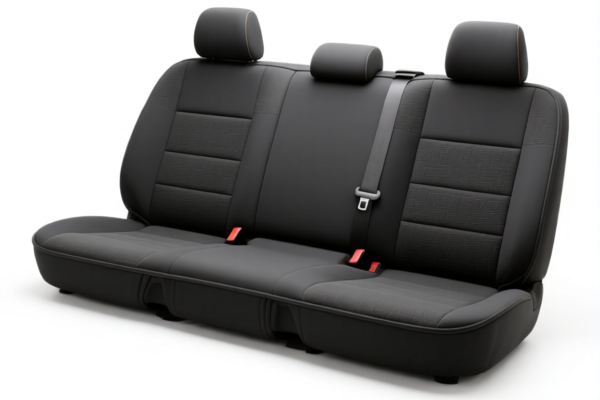
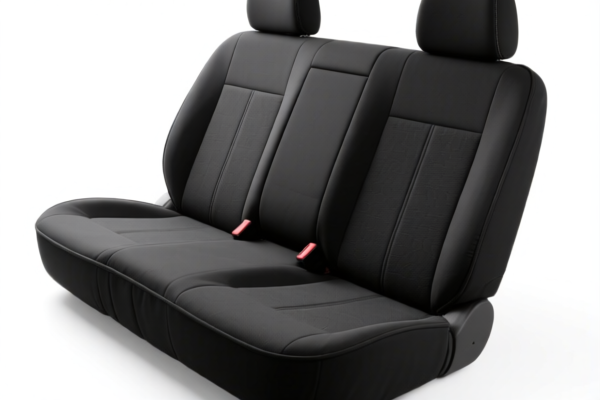
AI Analysis
🚗 Car Seatbelt Shoulder Cover
🌐 HS Code Reference & Customs Clearance Guide | 2026 Latest Tariff Analysis | Professional Clearance Strategy
📌 I. Product Definition & Classification: Do You Really Understand "Shoulder Covers" for Car Seatbelts?
A Car Seatbelt Shoulder Cover (also known as seatbelt pad or comfort cover) is an accessory designed to enhance the comfort of the seatbelt strap where it crosses the driver or passenger's shoulder. In international trade, its classification depends heavily on material composition, intended use, and whether it is considered a general automotive accessory, an interior trim component, or a safety system part.
Based on common sense and material inference, these covers are typically made of rubber, textile, leather, or plastic/synthetic materials. This leads to four primary HS Code possibilities, each with distinct tariff implications.
📦 II. HS Code Classification Details (2026 Latest Tariff Authority Cross-Reference)
| HS Code | Product Description | Application Scenario | Inferred Material | Logic |
|---|---|---|---|---|
8708.99.55.00 |
Accessories/Parts of motor vehicles (not elsewhere specified) | General comfort accessory attached to seatbelt | Rubber | Fits "Other accessories" definition |
6307.90.98.91 |
Other made-up textile articles | Interior decoration/trim item | Textile Fiber | Fits "Other made-up articles" category |
8708.21.00.00 |
Body parts and accessories (safety belts) | Safety belt accessory | Textile/Leather | Fits "Body parts and accessories" logic |
3926.90.25.00 |
Other articles of plastic | Interior accessory component | Plastic/Synthetic | Fits "Other plastic articles not specified" |
3926.30.50.00 |
Other plastic articles for vehicles | Body connection/decorative part | Plastic | Fits "Body-use" plastic article catch-all |
🔍 Key Distinction Point:
- If it is purely a comfort pad with no safety function → Likely 8708 (Auto Accessories) or 6307 (Textile).
- If it is considered integral to the safety belt system → Likely 8708.21 (Safety Belt Parts).
- If made of plastic and used for interior/body attachment → Likely 3926 (Plastic Articles).
💰 III. 2026 Latest Tariff Rate Breakdown (Including Surcharges, Policy Add-ons)
✅ Applicable Country: United States (US)
✅ Origin: China (CN)
✅ Effective Date: From Nov 10, 2025 (inclusive of subsequent imports)
🎯 1. 8708.99.55.00 —— Rubber/Material-Based Auto Accessories
| Item | Content |
|---|---|
| Base Tariff | 2.5% (ad valorem) |
| USITC Surcharge | +25.0% (Section 301 Duties) |
| 122 Clause Duty | +10.0% (USMCA/Regional Rule Check) |
| Total Tariff Rate | 37.5% |
| Tax Calculation | CIF Value × 37.5% |
| De Minimis Exemption | ❌ Not Available |
| Legal Basis Path | USITC:8708.99.55.00 → Section 301 Footnote → 122 Clause Application |
📌 Explanation:
- This code classifies the shoulder cover as a general automotive accessory (often based on rubber or mixed materials).
- The 25% Section 301 duty is a major cost driver for Chinese auto parts.
- The 10% additional duty applies due to specific trade clauses (122).
- Total 37.5% is a high tariff, requiring careful cost planning.
🎯 2. 6307.90.98.91 —— Textile-Made Interior Accessories
| Item | Content |
|---|---|
| Base Tariff | 7.0% (ad valorem) |
| USITC Surcharge | +7.5% (Section 301 or specific textile surcharge) |
| 122 Clause Duty | +10.0% |
| Total Tariff Rate | 24.5% |
| Tax Calculation | CIF Value × 24.5% |
| De Minimis Exemption | ❌ Not Available |
| Legal Basis Path | USITC:6307.90.98.91 → Textile Surcharge → 122 Clause |
📌 Note:
- If the product is primarily textile/fabric, this code is the most favorable among the high-tariff options.
- The base tariff is higher (7.0%) than auto parts, but the surcharge is lower (7.5% vs 25%), resulting in a lower total rate (24.5%).
- Suitable for fabric or knitted seatbelt covers.
🎯 3. 8708.21.00.00 —— Safety Belt Parts/Accessories
| Item | Content |
|---|---|
| Base Tariff | 2.5% (ad valorem) |
| USITC Surcharge | +25.0% (Section 301 Duties) |
| 122 Clause Duty | +10.0% |
| Total Tariff Rate | 37.5% |
| Tax Calculation | CIF Value × 37.5% |
| De Minimis Exemption | ❌ Not Available |
| Legal Basis Path | USITC:8708.21.00.00 → Safety Belt Parts → Section 301 → 122 Clause |
📌 Important:
- This code explicitly covers parts and accessories for safety belts.
- Even if it’s just a "cover," if declared as a safety belt part, it falls under this high-surtax category.
- Same as8708.99.55.00, the total rate is 37.5%.
🎯 4. 3926.90.25.00 —— Other Plastic Articles (Interior Use)
| Item | Content |
|---|---|
| Base Tariff | 6.5% (ad valorem) |
| USITC Surcharge | +7.5% |
| 122 Clause Duty | +10.0% |
| Total Tariff Rate | 24.0% |
| Tax Calculation | CIF Value × 24.0% |
| De Minimis Exemption | ❌ Not Available |
| Legal Basis Path | USITC:3926.90.25.00 → Plastic Articles → Surcharge → 122 Clause |
📌 Tip:
- If the shoulder cover has plastic components (e.g., buckle housing, stiffeners) or is primarily plastic/synthetic, this code may apply.
- Total rate 24.0% is competitive compared to rubber/textile auto parts.
🎯 5. 3926.30.50.00 —— Plastic Articles for Vehicles (Body/Decorative)
| Item | Content |
|---|---|
| Base Tariff | 5.3% (ad valorem) |
| USITC Surcharge | +7.5% |
| 122 Clause Duty | +10.0% |
| Total Tariff Rate | 22.8% |
| Tax Calculation | CIF Value × 22.8% |
| De Minimis Exemption | ❌ Not Available |
| Legal Basis Path | USITC:3926.30.50.00 → Plastic for Body Use → Surcharge → 122 Clause |
📌 Best Option?:
- This code offers the lowest total tariff (22.8%) among all options.
- Suitable for plastic-decorative interior accessories that are not strictly safety-critical.
- Requires strong evidence that the item is a plastic decorative/connection part, not a safety belt component.
🛠️ IV. Customs Clearance Practical Advice (Actionable Pitfall Guide)
✅ 1. Prepare Document Checklist (Non-Negotiable)
| Document | Required | Notes |
|---|---|---|
| ✅ Product Specification Sheet | ✔️ | Must detail material (rubber/textile/plastic), dimensions, weight |
| ✅ Material Composition Report | ✔️ | Critical for distinguishing between 8708 (37.5%) and 3926/6307 (22.8-24.5%) |
| ✅ Product Photos | ✔️ | Clear images showing usage (attached to seatbelt) |
| ✅ Commercial Invoice | ✔️ | Accurate description: e.g., "Plastic Seatbelt Comfort Cover" or "Textile Seatbelt Pad" |
| ✅ Packing List | ✔️ | Show unit weight and quantity |
| ✅ HS Code Pre-Ruling | ✔️ | Highly Recommended to lock in the lower tax rate |
✅ 2. Declaration Tips (Key Mantras)
🔥 "Material Dictates Code, Code Dictates Tax!"
| Scenario | Correct Declaration | Risk of Wrong Declaration |
|---|---|---|
| Plastic Decorative Cover | 3926.30.50.00 (22.8%) |
If misclassified as 8708.21, tax jumps to 37.5% |
| Textile/Fabric Cover | 6307.90.98.91 (24.5%) |
If misclassified as 8708.99, tax jumps to 37.5% |
| Rubber/Mixed Accessory | 8708.99.55.00 (37.5%) |
Highest tax bracket; avoid if possible |
| Safety Belt Part | 8708.21.00.00 (37.5%) |
High tax; only use if functionally critical |
📌 Critical Advice:
- Avoid declaring as "Safety Belt Part" (8708.21) unless necessary, due to the 25% surcharge.
- Opt for3926or6307if the product is primarily plastic or textile, respectively, to save ~13% in taxes.
✅ 3. Special Case Handling
| Scenario | Handling Advice |
|---|---|
| Multi-material Product | Declare based on principal material (e.g., if 60% plastic, use 3926) |
| OEM Custom Covers | Provide design drawings to prove it’s a decorative/comfort item, not a safety component |
| Sample Imports | Use De Minimis if value < $800 and not from China; otherwise, full tax applies |
| Bulk Imports | Apply for Section 301 Exclusions if available (check USITC list annually) |
🌍 V. Global Market Comparison (2026 Latest)
| Country/Region | Recommended HS Code | Tariff Rate | Certification | Notes |
|---|---|---|---|---|
| 🇺🇸 USA | 3926.30.50.00 |
22.8% (Lowest) | None | High tariffs for auto parts (8708) |
| 🇨🇳 China | 8708.21.00.00 |
5% | CCC | No surcharges for domestic trade |
| 🇪🇺 EU | 6307.90.98.91 |
4% | CE/RoHS | Moderate textile duties |
| 🇬🇧 UK | 8708.99.55.00 |
5% | UKCA | Post-Brexit rules apply |
| 🇦🇺 Australia | 3926.90.25.00 |
5% | RCM | No surcharges |
📌 Conclusion:
- USA is the most challenging market due to Section 301 and 122 Clause duties.
- Optimizing HS Code selection (choosing3926or6307over8708) can save up to 14.7% in tariffs.
📌 VI. Common Mistakes & Pitfall Guide (Lessons Learned)
❌ Mistake 1: Declaring all seatbelt covers as 8708.21.00.00 (Safety Belt Parts)
👉 Consequence: Unnecessary 37.5% tax when 3926 (22.8%) or 6307 (24.5%) applies.
❌ Mistake 2: Ignoring material composition in the declaration
👉 Consequence: Customs audit → Back taxes + Penalties.
❌ Mistake 3: Assuming "Auto Accessory" always means 8708
👉 Consequence: Missed opportunity for lower tariff codes under 3926 (Plastics) or 6307 (Textiles).
✅ Correct Practice:
"Plastic Seatbelt Comfort Cover, Decorative, No Safety Function, Model XYZ, Material: ABS Plastic + Fabric Lining"
🎯 VII. Conclusion: Precision Classification = Maximum Savings!
🎯 Remember the Mantra:
🔹 "Not all seatbelt covers are auto parts. Material matters!"
🔹 "Plastic/Textile = Lower Tax. Rubber/Safety = Higher Tax."
🔹 "Save $10,000 by choosing3926over8708!"
📌 Pro Tip:
If your product is 100% plastic or textile and has no safety certification requirements, insist on 3926.30.50.00 (22.8%) or 6307.90.98.91 (24.5%).
Consider applying for an Advance Ruling (USCBP) to lock in the lower tax rate before shipment.
📣 Act Now:
📞 Contact a professional customs broker + Provide material specs + Request HS Code Pre-Ruling
🚀 Clear customs smoothly, reduce costs, and boost your profit margins!
✨ Professional Clearance Starts with Accurate Classification!
💼 Every dollar saved in tariffs is pure profit!
Customer Reviews
About HS Code Classification
The Harmonized System (HS) is an internationally standardized nomenclature developed by the World Customs Organization (WCO) to classify traded products. Over 200 countries use the HS system as the basis for customs tariffs, trade statistics, and import/export regulations.
Each HS code follows a hierarchical structure:
- Chapter (2 digits) — Broad category of goods (e.g., Chapter 84: Machinery and Mechanical Appliances)
- Heading (4 digits) — More specific grouping within the chapter
- Subheading (6 digits) — Internationally standardized breakdown, used by all WCO member countries
- National subdivisions (8-10 digits) — Country-specific extensions for further classification, such as US HTSUS 10-digit codes
Correct HS code classification is essential for smooth customs clearance, accurate duty payment, and compliance with trade regulations. Misclassification can lead to customs delays, overpayment of duties, or penalties.
When importing from CN to US, the applicable tariff rates may include:
- Most-Favored-Nation (MFN) rate — The standard duty rate applied to WTO members
- General rate — Applied to countries without trade agreements
- Trade remedy duties — Additional tariffs such as Section 301 (anti-dumping), Section 232 (national security), or countervailing duties
The information provided on this page is for reference purposes only. For official classification, please consult with your local customs authority or a licensed customs broker.