Car Shock Absorber
CN → US| HS Code | Tariff Rate | Origin | Destination | Doc |
|---|---|---|---|---|
| 8708801300 | 37.5% | CN | US | Official Doc |
| 4016995500 | 37.5% | CN | US | Official Doc |
| 8708801600 | 12.5% | CN | US | Official Doc |
| 4016993000 | 35.0% | CN | US | Official Doc |
Product Images
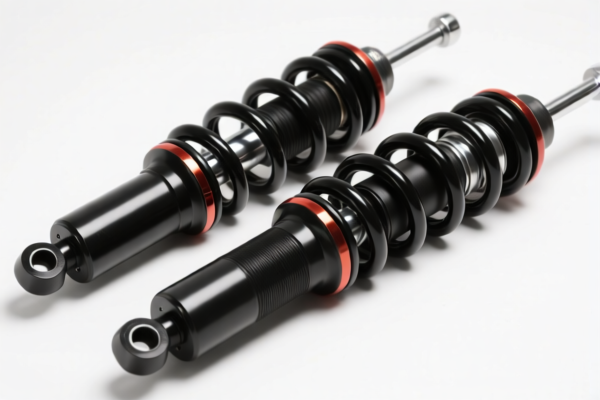
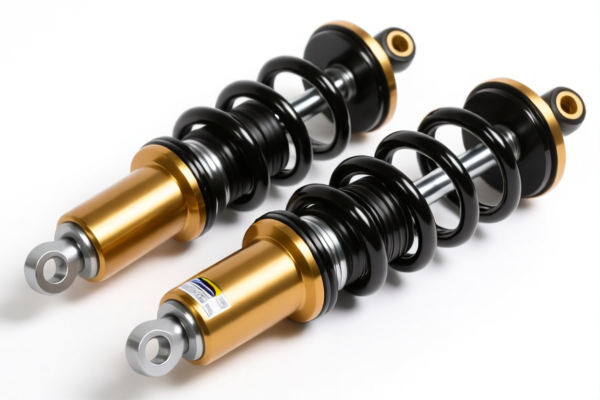
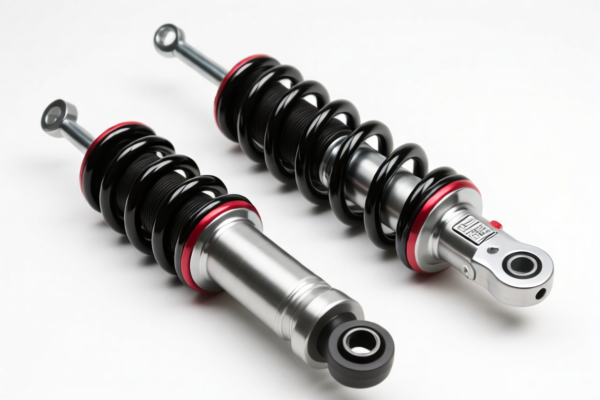
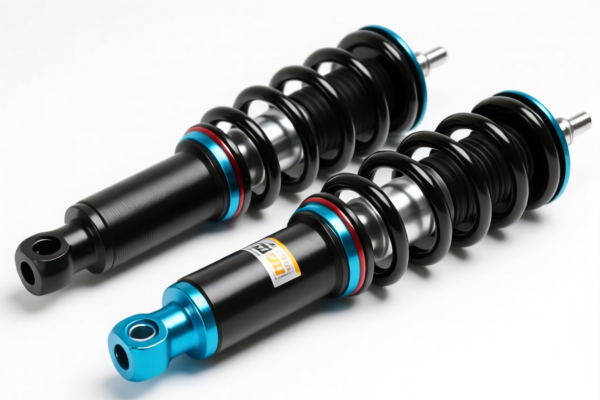
AI Analysis
🚗 Car Shock Absorbers (Automotive Suspension Components)
🌐 HS Code Reference & Customs Clearance Guide | 2026 Latest Tariff Analysis | Professional Clearance Strategy
📌 Part 1: Product Definition & Classification: Do You Really Understand "Shock Absorbers"?
Car shock absorbers are core components of a vehicle's suspension system. In international trade, they are primarily classified based on their functional role within the vehicle or their material composition. However, the most accurate and common classification aligns them with the chassis parts of motor vehicles, specifically under heading 8708.
⚠️ Key Distinction:
- If the shock absorber is intended for use in motor vehicles (cars, trucks, SUVs) → It falls under Chapter 87 (Vehicles), specifically 8708.80 (Suspension systems and parts thereof).
- If classified by material (e.g., rubber-metal composites) under Chapter 40 → It is a fallback/substitute classification that may carry different tariff implications and requires stronger justification.
- Crucial Note: The U.S. Customs and Border Protection (CBP) generally prefers classification under 8708.80 for complete automotive shock absorbers because their primary function and identity are tied to the vehicle's suspension system, not merely their material makeup.
📦 Part 2: HS Code Classification Details (2026 Latest Tariff Authority Comparison)
| HS Code | Product Description | Applicability | Material/Functional Logic |
|---|---|---|---|
8708.80.13.00 |
Shock absorbers for motor vehicles | ✅ Primary Classification | Directly matches "Suspension systems and parts (including shock absorbers)" in classification notes. Purpose and function are identical. |
8708.80.16.00 |
Other suspension system parts | ✅ Alternative for Vehicles | Directly corresponds to "Suspension systems (including shock absorbers)". Purpose and form are consistent. |
4016.99.55.00 |
Other articles of vulcanized rubber (non-hard) | ⚠️ Fallback/Alternative | Matches "Shock control articles" in purpose. Since shock absorbers often contain rubber/metal, there is no material conflict. Reasonable inference but less specific than 8708. |
4016.99.30.00 |
Other vulcanized rubber articles | ⚠️ Fallback/Alternative | Matches "Shock products" in purpose. Based on common sense, shock absorbers are made of rubber/metal, so no material conflict with "Natural Rubber." Fits the logic of a residual category. |
🔍 Critical Reminder:
- Preferred Classification:8708.80series is the most accurate for automotive shock absorbers because it reflects the end-use (vehicle suspension).
- Material-Based Classification:4016.99series is used if the shock absorber is not clearly identifiable as a vehicle part or if declared as a generic "rubber product." This can lead to different tariff treatments.
- Do Not Split: Do not declare shock absorbers as "rubber parts" and "metal parts" separately if they are assembled units. They must be declared as a single functional unit.
💰 Part 3: 2026 Latest Tariff Rate Breakdown (Including Additional Duties & Policy Surcharges)
✅ Applicable Country: United States (US)
✅ Country of Origin: China (CN)
✅ Effective Date: From November 10, 2025 (and subsequent imports)
🎯 1. 8708.80.13.00 —— Shock Absorbers for Motor Vehicles (Primary Classification)
| Item | Content |
|---|---|
| Base Tariff | 2.5% |
| Section 301 Additional Tariff | +25.0% |
| Section 122 Tariff | +10.0% |
| Total Effective Rate | 37.5% |
| Tax Calculation | CIF Value × 37.5% |
| De Minimis Exemption Available? | ❌ No (deny_de_minimis) |
| Legal Basis Path | USITC:8708.80.13.00 → SECTION_301:8708.80.13.00 → SECTION_122:8708.80.13.00 |
📌 Explanation:
- The 25% Section 301 tariff is applied to most Chinese-origin automotive parts under HTS 8708.
- The 10% Section 122 tariff is an additional surcharge on certain Chinese goods, including automotive components.
- Total of 37.5% is a significant cost burden. Proper classification is critical to avoid overpayment or compliance risks.
🎯 2. 8708.80.16.00 —— Other Suspension System Parts (Alternative Vehicle Classification)
| Item | Content |
|---|---|
| Base Tariff | 2.5% |
| Section 301 Additional Tariff | +0.0% |
| Section 122 Tariff | +10.0% |
| Total Effective Rate | 12.5% |
| Tax Calculation | CIF Value × 12.5% |
| De Minimis Exemption Available? | ❌ No (deny_de_minimis) |
| Legal Basis Path | USITC:8708.80.16.00 → SECTION_122:8708.80.16.00 |
📌 Important Note:
- This code has a 0% Section 301 tariff, resulting in a much lower total rate of 12.5%.
- However, it is a "Other" category under 8708.80, so it must be justified that the shock absorber does not fit specifically into8708.80.13.00(which is often reserved for specific types like heavy-duty or passenger car shock absorbers).
- Strategy: If your product qualifies for8708.80.16.00, it saves 25 percentage points in tariffs compared to8708.80.13.00. Consult a customs broker to confirm eligibility.
🎯 3. 4016.99.55.00 —— Other Articles of Vulcanized Rubber (Material-Based Classification)
| Item | Content |
|---|---|
| Base Tariff | 2.5% |
| Section 301 Additional Tariff | +25.0% |
| Section 122 Tariff | +10.0% |
| Total Effective Rate | 37.5% |
| Tax Calculation | CIF Value × 37.5% |
| De Minimis Exemption Available? | ❌ No (deny_de_minimis) |
| Legal Basis Path | USITC:4016.99.55.00 → SECTION_301:4016.99.55.00 → SECTION_122:4016.99.55.00 |
📌 Warning:
- This classification is less preferred for automotive shock absorbers because it ignores the primary function (vehicle suspension).
- CBP may challenge this classification if the product is clearly designed for motor vehicles.
- The tariff burden is high (37.5%), similar to the primary vehicle part classification, but with higher risk of audit or reclassification.
🎯 4. 4016.99.30.00 —— Other Vulcanized Rubber Articles (Fallback Material Classification)
| Item | Content |
|---|---|
| Base Tariff | 0.0% |
| Section 301 Additional Tariff | +25.0% |
| Section 122 Tariff | +10.0% |
| Total Effective Rate | 35.0% |
| Tax Calculation | CIF Value × 35.0% |
| De Minimis Exemption Available? | ❌ No (deny_de_minimis) |
| Legal Basis Path | USITC:4016.99.30.00 → SECTION_301:4016.99.30.00 → SECTION_122:4016.99.30.00 |
📌 Caution:
- While the base tariff is 0%, the 35% total rate is still high due to additional surcharges.
- This code is considered a "residual" category for rubber products. Using it for automotive shock absorbers may raise red flags with CBP unless the product is not clearly identifiable as a vehicle part.
- Risk: Higher likelihood of customs inquiries or penalties for incorrect classification.
🛠️ Part 4: Customs Clearance Practical Advice (Battle-Tested Pitfall Guide)
✅ 1. Documentation Checklist (Non-Negotiable)
| Document | Required | Explanation |
|---|---|---|
| ✅ Product Specification Sheet | ✔️ | Must include model number, dimensions, weight, intended vehicle type (e.g., passenger car, truck), and mounting details. |
| ✅ Technical Drawing/Exploded View | ✔️ | To prove it is a complete shock absorber assembly, not just a rubber bushing or metal rod. |
| ✅ Product Photos (with Nameplate) | ✔️ | Clear images showing the brand, model, and any OEM markings. |
| ✅ Commercial Invoice | ✔️ | Must explicitly state: "Shock Absorber for Motor Vehicle Suspension System" and avoid vague terms like "Rubber Part." |
| ✅ Packing List | ✔️ | Show unit composition. Do not list "shock absorber" as "rubber + metal" unless declared as a disassembled kit (which is rare). |
| ✅ Certificate of Origin (CO) | ✔️ | If claiming preferential treatment or proving origin to avoid certain sanctions, but note that Section 301/122 apply to CN origin. |
✅ 2. Declaration Strategy (Key Mnemonics)
🔥 “Function First, Name Precise, Don’t Split, Don’t Guess!”
| Scenario | Correct Declaration | Incorrect Practice |
|---|---|---|
| Complete Shock Absorber for Car | 8708.80.13.00 or 8708.80.16.00 |
Misdeclare as 4016.99 → Risk of audit & back taxes |
| Shock Absorber + Mounting Kit | Declare as One Unit under 8708.80 |
Splitting into "Rubber Mount" + "Metal Shock" → Higher combined tax |
| Aftermarket vs. OEM | Same HS Code | No distinction in HS classification based on origin brand |
| Used/Refurbished Shock Absorbers | Still 8708.80 |
Used goods are not exempt from Section 301/122 |
✅ 3. Special Case Handling
| Situation | Handling Advice |
|---|---|
| OEM vs. Aftermarket | Classification is based on function, not brand. Both use 8708.80. |
| Heavy-Duty Truck Shock Absorbers | Verify if they fall under 8708.80.13.00 (often used for general passenger/light truck) or 8708.80.16.00. Check CBP rulings. |
| Electronic/Air Shock Absorbers | Still 8708.80 because the primary function is suspension. Electronic control is ancillary. |
| Components Sold Separately | If only the rubber boot or metal tube is shipped, it might be classified differently (e.g., 4016.99 or 7318). But complete units must be 8708.80. |
🌍 Part 5: Global Market Comparison (2026 Latest)
| Country/Region | Recommended HS Code | Tariff (China Origin) | Certification Required | Notes |
|---|---|---|---|---|
| 🇺🇸 United States | 8708.80.13.00 |
37.5% (incl. S301+122) | DOT Safety Standards (if applicable) | High tariffs due to S301 & 122. 8708.80.16.00 is cheaper (12.5%). |
| 🇨🇳 China | 8708.80.13.00 |
0% (Import Duty) | CCC (if applicable) | No additional surcharges for domestic consumption. |
| 🇪🇺 European Union | 8708.80 |
4.5% | ECE R16 (for roadworthiness) | No Section 301/122 equivalent. Standard MFN rate applies. |
| 🇬🇧 United Kingdom | 8708.80 |
4.5% | UKCA Marking | Post-Brexit rules align with EU for most auto parts. |
| 🇲🇽 Mexico | 8708.80 |
0% (USMCA) | NOM Certification | If assembled in Mexico under USMCA, can be duty-free to US. |
📌 Conclusion:
- USA is the most costly market for Chinese-origin shock absorbers due to Section 301 (25%) and Section 122 (10%) surcharges.
- EU/UK/Mexico are significantly cheaper alternatives if supply chains can be diversified.
- Strategy: If possible, consider transshipment or assembly in Mexico (under USMCA) to mitigate US tariffs.
📌 Part 6: Common Mistakes & Pitfall Guide (Lessons from the Field)
❌ Mistake 1: Declaring shock absorbers as "Rubber Bushings" (4016.99)
👉 Consequence: CBP reclassifies to 8708.80 and charges 37.5% + penalties for misdeclaration.
❌ Mistake 2: Using 8708.80.13.00 for all shock absorbers without verifying if 8708.80.16.00 is more appropriate
👉 Consequence: Overpaying 25% in tariffs if the product actually fits the "Other" category.
❌ Mistake 3: Not providing technical drawings
👉 Consequence: CBP may classify under the worst-case scenario or delay clearance for additional documentation.
❌ Mistake 4: Assuming "Used" shock absorbers are exempt from Section 301
👉 Consequence: Section 301 applies to all Chinese-origin goods in the list, regardless of condition.
✅ Correct Practice:
"Automotive Shock Absorber, Model XYZ, for Passenger Car Suspension, Complete Unit, OEM Part Number 12345, Made in China"
🎯 Part 7: Conclusion: Professional Declaration, Save Time & Money!
🎯 Remember These Mantras:
🔹 “Function over Material: Shock Absorbers are Auto Parts, Not Just Rubber.”
🔹 “Check8708.80.16.00to Save 25% if Eligible.”
🔹 “37.5% Tax in the US is Painful: Plan Ahead.”
📌 Pro Tip:
If your shock absorbers are assembled in Mexico or third countries (not China), you may avoid Section 301/122 tariffs.
Consider applying for a Binding Tariff Information (BTI) or Advance Ruling from CBP to lock in the correct HS code and rate before shipping.
📣 Immediate Action:
📞 Consult a licensed customs broker + Provide technical specs + Request HS Code Advance Ruling
🚀 Ensure your car shock absorbers pass smoothly, legally, and cost-effectively!
✨ Professional clearance starts with accurate classification!
💼 Every percentage point of tariff matters—optimize your supply chain today!
Customer Reviews
About HS Code Classification
The Harmonized System (HS) is an internationally standardized nomenclature developed by the World Customs Organization (WCO) to classify traded products. Over 200 countries use the HS system as the basis for customs tariffs, trade statistics, and import/export regulations.
Each HS code follows a hierarchical structure:
- Chapter (2 digits) — Broad category of goods (e.g., Chapter 84: Machinery and Mechanical Appliances)
- Heading (4 digits) — More specific grouping within the chapter
- Subheading (6 digits) — Internationally standardized breakdown, used by all WCO member countries
- National subdivisions (8-10 digits) — Country-specific extensions for further classification, such as US HTSUS 10-digit codes
Correct HS code classification is essential for smooth customs clearance, accurate duty payment, and compliance with trade regulations. Misclassification can lead to customs delays, overpayment of duties, or penalties.
When importing from CN to US, the applicable tariff rates may include:
- Most-Favored-Nation (MFN) rate — The standard duty rate applied to WTO members
- General rate — Applied to countries without trade agreements
- Trade remedy duties — Additional tariffs such as Section 301 (anti-dumping), Section 232 (national security), or countervailing duties
The information provided on this page is for reference purposes only. For official classification, please consult with your local customs authority or a licensed customs broker.