Car Starter
CN → US| HS Code | Tariff Rate | Origin | Destination | Doc |
|---|---|---|---|---|
| 8504409520 | 35.0% | CN | US | Official Doc |
| 8504407007 | 35.0% | CN | US | Official Doc |
| 8507100090 | 38.5% | CN | US | Official Doc |
| 8518402000 | 35.0% | CN | US | Official Doc |
Product Images
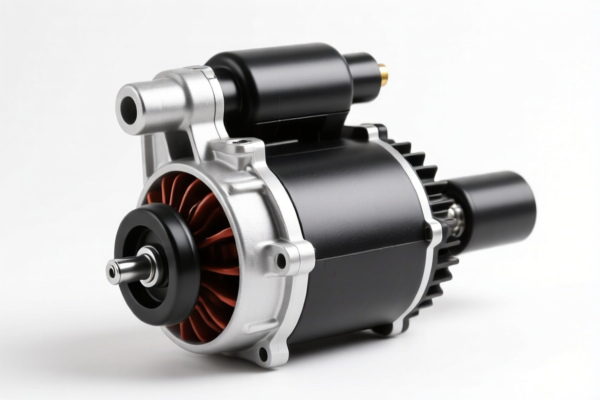
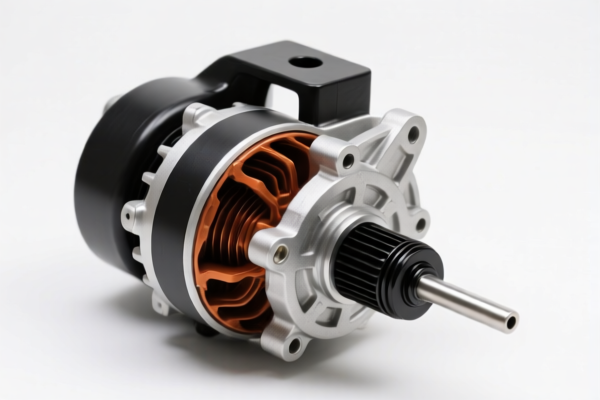
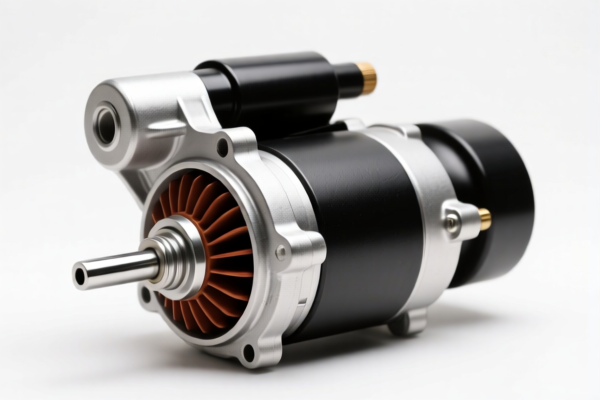
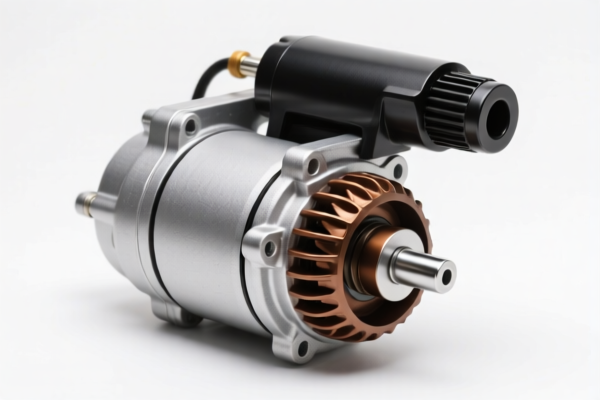
AI Analysis
🔋 Car Starter (Emergency Power Supply / Jump Starter Pack)
🌐 HS Code Reference & Customs Clearance Guide | 2026 Latest Tariff Analysis | Professional Clearance Strategy
📌 I. Product Definition & Classification: What Exactly is a "Car Starter"?
In international trade, the term "Car Starter" usually refers to a Portable Emergency Power Supply or Jump Starter Pack. It is a portable device used to start a vehicle’s internal combustion engine when the main battery is dead.
Depending on the internal composition, power output function, and primary purpose, this product falls into different HS Code categories. Misclassification can lead to significant tariff differences (0% vs 3.5% base duty) and compliance risks.
⚠️ Key Distinction Point:
- Is it primarily a Power Supply/Converter (DC-DC or DC-AC conversion for starting)? → Chapter 85.04
- Is it primarily a Battery (Lead-acid or Lithium-ion storage)? → Chapter 85.07
- Does it involve specific Audio/Electronic amplification components? (Rare but possible for complex units) → Chapter 85.18
📦 II. HS Code Classification Details (Based on Provided Data)
| HS Code | Product Description | Application Scenario | Tax Rate (Total) |
|---|---|---|---|
8504.40.95.20 |
Static Converters (Power Supply Class) DC voltage conversion output function. |
Portable jump starters focused on DC-DC power conversion for engine cranking. | 35.0% |
8504.40.70.07 |
Static Converters (Power Supply Class) Provides power, typically 50W–150W range. |
Compact jump starters with specific low-power output profiles. | 35.0% |
8507.10.00.90 |
Electrical Accumulators (Batteries) Core material: Lead-acid or Lithium-ion. Used for engine starting. |
Units classified primarily by their energy storage capacity (battery type) rather than conversion function. | 38.5% |
8518.40.20.00 |
Audio Amplifiers / Electronic Devices Involves power conversion and amplification applications. |
Niche cases where the device is categorized under electronic amplification devices (less common for standard starters). | 35.0% |
🔍 Important Note:
- The most common classifications are 8504 (Converter/Power Supply) and 8507 (Battery).
- 8507 has a higher total tax burden due to the 3.5% base duty, whereas 8504 has 0% base duty.
- 8518 is generally an unusual classification for standard jump starters unless specific electronic amplification features are dominant.
💰 III. 2026 Latest Tariff Rate Breakdown (Including Surcharges & Policy Add-ons)
✅ Applicable Country: United States (US)
✅ Origin: China (CN)
✅ Effective Time: 2025/2026 (Including subsequent imports)
🎯 1. 8504.40.95.20 & 8504.40.70.07 —— Static Converters (Power Supply Class)
| Item | Content |
|---|---|
| Base Duty Rate | 0.0% (ad valorem) |
| Section 301 Surcharge | +25.0% |
| Section 122 Tariff | +10.0% |
| Total Rate | 35.0% |
| Tax Calculation | CIF Value × 35% |
| De Minimis Eligibility | ❌ Not Eligible (Due to Section 301 & 122) |
| Legal Basis Path | 301:8504.40 → 122:8504 → USITC:8504.40.x |
📌 Explanation:
- "Base Duty 0%": The Harmonized Tariff Schedule (HTSUS) assigns 0% base duty to these converter codes.
- "Section 301 Surcharge +25%": Applied to all Chinese-origin goods in this category under US Trade Law Section 301.
- "Section 122 Tariff +10%": Additional 10% tariff imposed on specific import categories under Section 122 of the Trade Expansion Act.
- Total 35%: This is the landed duty cost before other fees.
🎯 2. 8507.10.00.90 —— Electrical Accumulators (Batteries)
| Item | Content |
|---|---|
| Base Duty Rate | 3.5% (ad valorem) |
| Section 301 Surcharge | +25.0% |
| Section 122 Tariff | +10.0% |
| Total Rate | 38.5% |
| Tax Calculation | CIF Value × 38.5% |
| De Minimis Eligibility | ❌ Not Eligible |
| Legal Basis Path | 301:8507 → 122:8507 → USITC:8507.10.00 |
📌 Explanation:
- "Base Duty 3.5%": Batteries are subject to a small base import duty.
- "Total 38.5%": This is 3.5% higher than the converter classification due to the base duty.
- Strategic Implication: If the product can be legally classified as a "Converter" (8504) rather than a "Battery" (8507), it saves 3.5% on the CIF value. However, customs may challenge this if the battery component is the dominant feature.
🎯 3. 8518.40.20.00 —— Audio Amplifiers / Electronic Devices
| Item | Content |
|---|---|
| Base Duty Rate | 0.0% |
| Section 301 Surcharge | +25.0% |
| Section 122 Tariff | +10.0% |
| Total Rate | 35.0% |
| Tax Calculation | CIF Value × 35% |
| Legal Basis Path | 301:8518 → 122:8518 → USITC:8518.40.20 |
📌 Note:
- Same total rate as 8504, but classification is less common for standard car starters. Use only if the device’s primary function is electronic amplification.
🛠️ IV. Customs Clearance Operational Advice (Practical Pitfall Avoidance)
✅ 1. Required Documentation Checklist (Non-negotiable)
| Document | Required | Description |
|---|---|---|
| ✅ Product Specification Sheet | ✔️ | Must detail: Input/Output Voltage, Max Current, Battery Capacity (mAh/Wh), Chemistry (Li-ion/Lead-acid). |
| ✅ Circuit Diagram / Structure Photo | ✔️ | To prove whether it functions primarily as a Converter (8504) or Battery (8507). |
| ✅ Product Photos (Label/Marquee) | ✔️ | Clear view of model number, brand, and safety warnings (e.g., "Lithium-ion Battery"). |
| ✅ Third-Party Test Reports | ✔️ | FCC (for electronics), UN38.3 (for lithium batteries), MSDS. |
| ✅ Commercial Invoice | ✔️ | Clearly state: "Portable Car Jump Starter / Emergency Power Supply". Avoid vague terms like "Electronic Device". |
| ✅ Packing List | ✔️ | Detail contents: Main unit, jumper cables, USB cables, carrying case. |
✅ 2. Classification Strategy & Declaration Tips
🔥 "Function Dictates Code, Battery Alone Isn't Enough, 8504 is Cheaper, But Prove the Conversion!"
| Scenario | Recommended HS Code | Why? |
|---|---|---|
| Lithium-ion Jump Starter (with PD/QC charging, DC-DC boost) | 8504.40.x | Functions as a power supply/converter. Lower base duty (0%). |
| Lead-Acid Battery Pack (heavy, purely for starting) | 8507.10.x | Classified as an electrical accumulator. Higher base duty (3.5%). |
| Hybrid Device (Jump Starter + Power Bank + Flashlight) | 8504.40.x | Emphasize the power conversion and multi-function output aspects. |
| Device with Audio Amplifier (rare, e.g., car entertainment starter) | 8518.40.20.00 | Only if amplification is the primary technical feature. |
⚠️ Warning:
- Do NOT simply declare as "Battery" if it has complex circuitry for voltage conversion. Customs may reclassify it to 8504, leading to delays.
- Do NOT declare as "Converter" if it is a simple battery pack with no conversion electronics. Customs may classify it as 8507, leading to underpayment penalties.
✅ 3. Special Cases & Handling
| Situation | Handling Advice |
|---|---|
| Lithium Batteries (Li-ion) | UN38.3 Test Report & MSDS are mandatory for air/sea freight. Failure = Rejection. |
| OEM/ODM Products | Provide client authorization letters. Ensure the declared model matches the patent/design. |
| Combined Shipping | If shipping "Jump Starters + Cables + Case", declare as a set. Do not split into "Battery" and "Accessories" separately unless necessary. |
| Origin Marking | Clearly mark "Made in China" on the product and packaging. Essential for 301 & 122 tariff application. |
🌍 V. Global Market Comparison (2026 Overview)
| Market | Recommended HS Code | Total Tax (CN Origin) | Key Certifications |
|---|---|---|---|
| 🇺🇸 USA | 8504.40.95.20 / 8507.10.00.90 |
35.0% (Converter) / 38.5% (Battery) | FCC, UL, UN38.3, DOE |
| 🇪🇺 EU | 8507.60 / 8504.40 |
0%~6% (VAT varies) | CE, RoHS, REACH, UN38.3 |
| 🇨🇳 China | 8507.60 / 8504.40 |
0%~5% (Import Duty) | CCC (if applicable) |
| 🇦🇺 Australia | 8507.60 / 8504.40 |
5% + GST | RCM, AS/NZS Standards |
📌 Conclusion:
- The USA is the most complex due to Section 301 (+25%) and Section 122 (+10%).
- Europe and Australia have much lower tariffs but stricter safety/certification requirements (CE, RCM).
- Classification Optimization: In the US, aiming for 8504 (35%) saves 3.5% compared to 8507 (38.5%), but requires strong technical justification.
📌 VI. Common Errors & Pitfalls (Lessons Learned)
❌ Error 1: Declaring a Lithium Jump Starter as "Power Bank" (8507.60) without specifying it’s for car starting.
👉 Consequence: Customs may question the utility. If deemed a "Battery," tax is 38.5%. If deemed a "Converter," 35%. Inconsistency leads to audits.
❌ Error 2: Ignoring UN38.3 for Lithium Batteries.
👉 Consequence: Shipment Rejection or Destruction at the US port. No exceptions.
❌ Error 3: Failing to mark "Made in China" clearly.
👉 Consequence: Seizure and fines. The 35-38.5% tariffs apply only to Chinese origin.
❌ Error 4: Splitting a single Jump Starter kit into multiple HS codes (e.g., Battery vs. Cable).
👉 Consequence: Higher total duty due to separate calculations and potential misclassification of accessories.
✅ Correct Approach:
"Portable Lithium-ion Car Emergency Jump Starter, 12V, 5000mAh, with DC-DC Conversion Module, FCC Certified, Model XYZ, Made in China."
🎯 VII. Conclusion: Precise Classification, Smooth Customs, Higher Profits!
🎯 Remember the Golden Rules:
🔹 "Converter = 35%, Battery = 38.5% in the US."
🔹 "Lithium Needs UN38.3, No Exception!"
🔹 "Clear 'Made in China' Label, Avoid Seizure."
📌 Pro Tip:
If your product can technically be classified under 8504 (Converter) due to its advanced power management circuitry, choose 8504. It saves 3.5% on every shipment.
For large volumes, consider applying for an Advance Ruling from US Customs (CBP) to lock in the HS Code and avoid future disputes.
📣 Immediate Action:
📞 Contact a Licensed Customs Broker
📄 Prepare UN38.3 & MSDS for Lithium Products
🏷️ Ensure Accurate "Made in China" Marking
🚀 Optimize Your HS Code to Save 3.5% – 10% in Tariffs!
✨ Professional Clearance Starts with Accurate Classification!
💼 Every Percent Saved is Pure Profit!
Customer Reviews
About HS Code Classification
The Harmonized System (HS) is an internationally standardized nomenclature developed by the World Customs Organization (WCO) to classify traded products. Over 200 countries use the HS system as the basis for customs tariffs, trade statistics, and import/export regulations.
Each HS code follows a hierarchical structure:
- Chapter (2 digits) — Broad category of goods (e.g., Chapter 84: Machinery and Mechanical Appliances)
- Heading (4 digits) — More specific grouping within the chapter
- Subheading (6 digits) — Internationally standardized breakdown, used by all WCO member countries
- National subdivisions (8-10 digits) — Country-specific extensions for further classification, such as US HTSUS 10-digit codes
Correct HS code classification is essential for smooth customs clearance, accurate duty payment, and compliance with trade regulations. Misclassification can lead to customs delays, overpayment of duties, or penalties.
When importing from CN to US, the applicable tariff rates may include:
- Most-Favored-Nation (MFN) rate — The standard duty rate applied to WTO members
- General rate — Applied to countries without trade agreements
- Trade remedy duties — Additional tariffs such as Section 301 (anti-dumping), Section 232 (national security), or countervailing duties
The information provided on this page is for reference purposes only. For official classification, please consult with your local customs authority or a licensed customs broker.