Car Toy
CN → US| HS Code | Tariff Rate | Origin | Destination | Doc |
|---|---|---|---|---|
| 9503000071 | 10.0% | CN | US | Official Doc |
| 9503000073 | 10.0% | CN | US | Official Doc |
| 9503000090 | 10.0% | CN | US | Official Doc |
| 9503000073 | 10.0% | CN | US | Official Doc |
| 9503000071 | 10.0% | CN | US | Official Doc |
Product Images
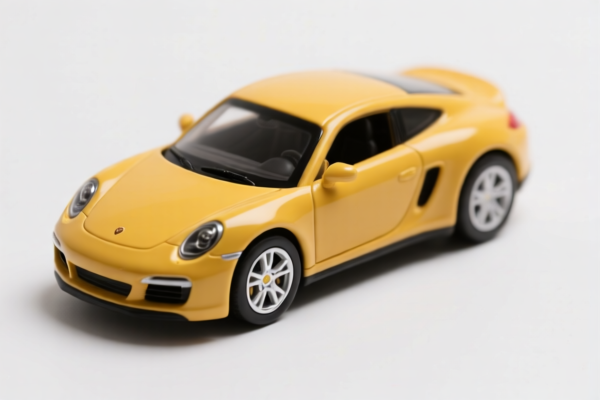
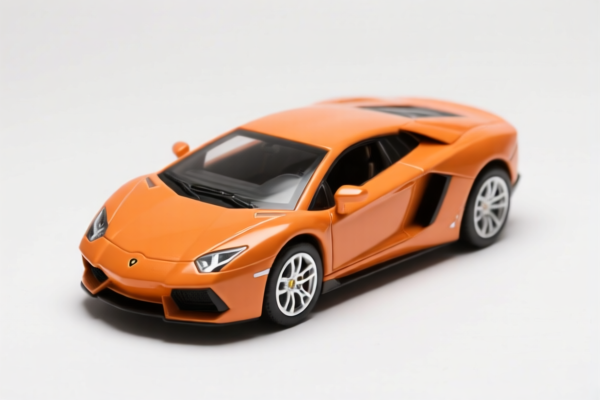
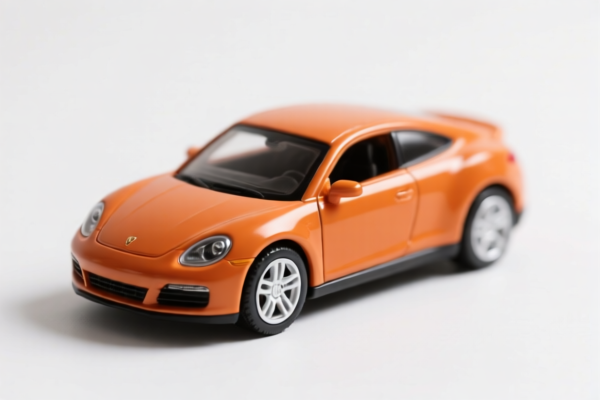
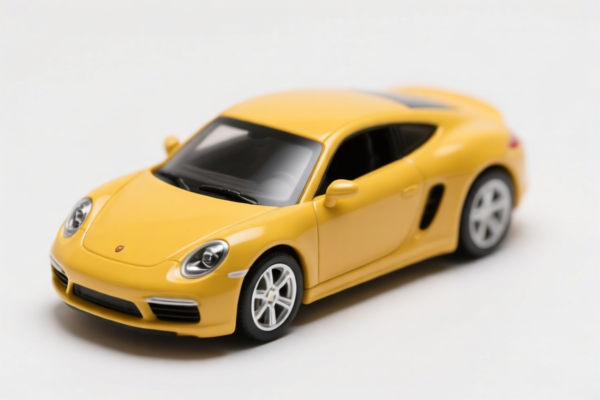
AI Analysis
🚗 Car Toy (Toys for Children)
🌐 HS Code Reference & Customs Clearance Guide | 2026 Latest Tariff Analysis | Professional Clearance Strategy
📌 1. Product Definition & Classification: What Exactly is a "Car Toy"?
In international trade, "Car Toys" are not a single monolithic category but are split based on form factor and function. The key distinction lies in whether the toy is a ride-on/wheeled vehicle (like a tricycle or scooter) or a static/dynamic model (like a train or miniature car).
Ride-on/Wheeled Toys: Includes tricycles, scooters, pedal cars, and ride-on vehicles. These fall under specific sub-headings for "wheeled toys designed to be ridden." Model/Miniature Toys: Includes toy trains, scaled-down car replicas, and action figures. These fall under "constructed models" and other toys.
⚠️ Critical Distinction Point:
- If the item is a vehicle designed to be ridden (has wheels, pedals, or handlebars for propulsion) → Often归类 to 9503.00.00.71 or similar wheeled toy codes.
- If the item is a static model or rolling model (like a die-cast car or train) → Often归类 to 9503.00.00.73 or 9503.00.00.90 (parts/pieces).
📦 2. HS Code Classification Matrix (2026 Latest Tariff Data)
Based on the provided data, here is the breakdown for Car Toys, Train Toys, and Parts:
| HS Code | Product Description | Summary & Logic | Total Tax Rate |
|---|---|---|---|
9503.00.00.71 |
Wheeled Toys (Tricycles, Scooters, Pedal Cars, Ride-on Cars) | Matches morphology and use: toys designed to be ridden on wheels. | 10.0% |
9503.00.00.73 |
Model Toys (Toy Trains, Miniature Cars, Scaled Models) | Matches morphology and use: toys for ages 3-12, scaled models, and similar entertainment models. | 10.0% |
9503.00.00.90 |
Parts & Accessories (For Tricycles, Scooters, Pedal Cars, etc.) | Fits the definition of parts/accessories for wheeled toys defined in the heading. | 10.0% |
🔍 Key Insight:
- Code.71is for Ride-on/Wheeled toys.
- Code.73is for Models/Static toys (like trains or die-cast cars).
- Code.90is for Parts of the above toys.
- All three carry the same total tax burden in this dataset.
💰 3. 2026 Latest Tariff Rate Breakdown (Detailed)
✅ Applicable Market: United States (US)
✅ Origin: China (CN)
✅ Total Tax Rate: 10.0%
✅ Effective Date: Current (Includes Section 301/122 implications)
🎯 Universal Tax Structure for All Listed HS Codes
| Component | Rate | Description |
|---|---|---|
| Base Tariff | 0.0% | Standard MFN (Most Favored Nation) rate for many toys. |
| Section 301 / "122 Clause" Additional Tariff | +10.0% | Additional tariff imposed on Chinese goods (specifically referenced as "122 Clause Tariff" in the data). |
| Total Tax Rate | 10.0% | Sum of Base + Additional. |
📌 Detailed Explanation:
- Base Tariff (0%): The World Trade Organization (WTO) baseline tariff for toys is often zero or very low.
- Additional Tariff (10%): This is the critical cost driver. The data explicitly states a 10% additional tariff under the "122 Clause" (likely referring to specific Section 301 actions or recent US trade measures against Chinese products).
- No De Minimis Exemption: For these codes, the 10% additional tariff applies regardless of shipment value. Small packages are NOT exempt from this additional duty.
🛠️ 4. Customs Clearance Practical Advice (Avoiding Pitfalls)
✅ 1. Correct Classification is Key
Misclassifying a ride-on car as a model train (or vice versa) can lead to audits, even if the tax rate is the same in this specific dataset. Always align the HS Code with the physical form:
- Ride-on/Pedal Car → Use 9503.00.00.71
- Toy Train/Die-cast Car/Model → Use 9503.00.00.73
- Spare Parts/Tires/Chassis → Use 9503.00.00.90
⚠️ Risk: If you declare a ride-on car as
.73(Model), customs may flag it for misdeclaration. While the tax is the same, accuracy prevents delays.
✅ 2. Documentation Requirements
| Document | Requirement | Notes |
|---|---|---|
| Product Photos | ✔️ Mandatory | Must clearly show the toy, wheels, scale, and any branding. |
| Age Recommendation | ✔️ Mandatory | Must state "3+ years" or similar to justify HS Code 9503 (Toys). |
| Material Composition | ✔️ Recommended | Plastic, Metal, Wood, etc. (Affects safety standards like CPC). |
| Commercial Invoice | ✔️ Mandatory | Clearly describe item as "Toy Car" or "Toy Train," not "Vehicle" or "Automobile Part." |
✅ 3. Critical Warning: "Car Toy" vs. "Automobile Part"
- DO NOT classify children’s toy cars under 8708 (Parts of Motor Vehicles).
- MUST classify under 9503 (Toys).
- Reason: If classified under 8708, the tariff could be 25% or higher (Section 301 on auto parts), and it would require different safety certifications (DOT/NHTSA vs. CPSC). The data confirms 9503 is the correct category with 10% total tax.
✅ 4. Safety Compliance (Non-Tariff Barrier)
Even though the tariff is only 10%, US Customs (CBP) and CPSC (Consumer Product Safety Commission) strictly enforce safety standards: - CPC (Children’s Product Certificate): Required for all toys marketed to children 12 and under. - ASTM F963: Must meet US toy safety standards (choking hazards, lead content, flammability). - Failure to provide CPC → Goods will be detained or rejected, regardless of correct HS Code.
🌍 5. Summary Table for Quick Reference
| HS Code | Product Type | Base Tax | Add. Tax | Total Tax | Key Usage |
|---|---|---|---|---|---|
9503.00.00.71 |
Wheeled Ride-On Toys | 0% | +10% | 10.0% | Tricycles, Scooters, Pedal Cars |
9503.00.00.73 |
Model/Static Toys | 0% | +10% | 10.0% | Toy Trains, Die-Cast Cars, Scaled Models |
9503.00.00.90 |
Parts & Accessories | 0% | +10% | 10.0% | Wheels, Seats, Chassis for Above |
📌 6. Common Mistakes & Pitfalls (Lessons Learned)
❌ Mistake 1: Declaring a "Remote Control Car" as an Electronics Item (8543)
👉 Result: Wrong HS Code. RC Cars are still toys (9503).
👉 Consequence: Potential misclassification audit.
❌ Mistake 2: Ignoring the "122 Clause" 10% Tax
👉 Result: Underestimating landed cost.
👉 Consequence: Profit margin erosion. Always budget for 10% additional duty on Chinese-origin toys.
❌ Mistake 3: Missing the CPC (Children’s Product Certificate)
👉 Result: Goods held at US Port.
👉 Consequence: Storage fees, return shipping, or destruction. Tariff is low, but compliance cost is high.
✅ Correct Approach:
“Toy Car, Plastic, For Ages 3+, CPC Certified, HS Code 9503.00.00.71/73”
🎯 7. Conclusion: Smart Clearance for Car Toys
🎯 Key Takeaway:
- Tax is Uniform: All listed toy categories carry a 10% total tax (0% Base + 10% Additional).
- Classification Matters: Use .71 for ride-on, .73 for models, .90 for parts.
- Compliance is Critical: Ensure CPC Certification and CPSC compliance to avoid detention.
🔹 “Accurate HS Code + CPC Certificate = Smooth Clearance”
🔹 “Don’t Let ‘Toy’ Mean ‘Low Risk’ – Tariffs and Safety Are Strict”
📌 Pro Tip:
If your toys are originating from Vietnam, Mexico, or Malaysia, you may be eligible for exemptions from the 10% additional tariff.
- Action: Verify Rules of Origin and apply for Pre-Ruling if shifting supply chains.
📣 Immediate Action:
📞 Verify CPC Certification status before shipment.
📝 Use precise HS Codes (.71, .73, .90) to avoid customs queries.
🚀 Plan for 10% total duty in your landed cost calculation.
✨ Precise Classification, Predictable Costs, Successful Clearance!
💼 Your Toy Business Deserves Professional Customs Strategy!
Customer Reviews
About HS Code Classification
The Harmonized System (HS) is an internationally standardized nomenclature developed by the World Customs Organization (WCO) to classify traded products. Over 200 countries use the HS system as the basis for customs tariffs, trade statistics, and import/export regulations.
Each HS code follows a hierarchical structure:
- Chapter (2 digits) — Broad category of goods (e.g., Chapter 84: Machinery and Mechanical Appliances)
- Heading (4 digits) — More specific grouping within the chapter
- Subheading (6 digits) — Internationally standardized breakdown, used by all WCO member countries
- National subdivisions (8-10 digits) — Country-specific extensions for further classification, such as US HTSUS 10-digit codes
Correct HS code classification is essential for smooth customs clearance, accurate duty payment, and compliance with trade regulations. Misclassification can lead to customs delays, overpayment of duties, or penalties.
When importing from CN to US, the applicable tariff rates may include:
- Most-Favored-Nation (MFN) rate — The standard duty rate applied to WTO members
- General rate — Applied to countries without trade agreements
- Trade remedy duties — Additional tariffs such as Section 301 (anti-dumping), Section 232 (national security), or countervailing duties
The information provided on this page is for reference purposes only. For official classification, please consult with your local customs authority or a licensed customs broker.