Car Tray
CN → US| HS Code | Tariff Rate | Origin | Destination | Doc |
|---|---|---|---|---|
| 8708998000 | 0.0% | CN | US | Official Doc |
| 8708998180 | 12.5% | CN | US | Official Doc |
| 7326908688 | 87.9% | CN | US | Official Doc |
| 7326190080 | 87.9% | CN | US | Official Doc |
Product Images
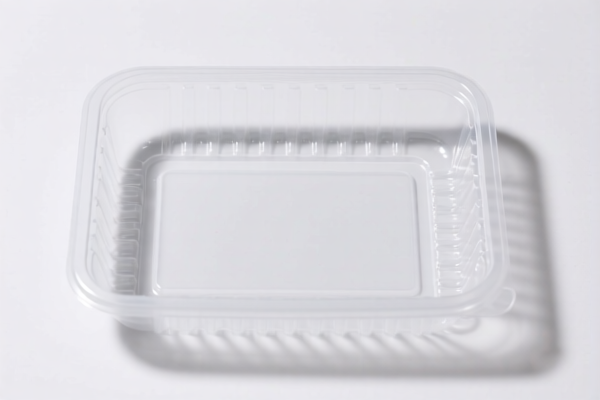
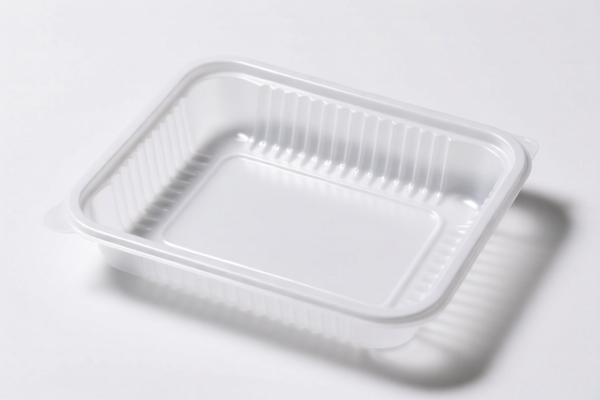
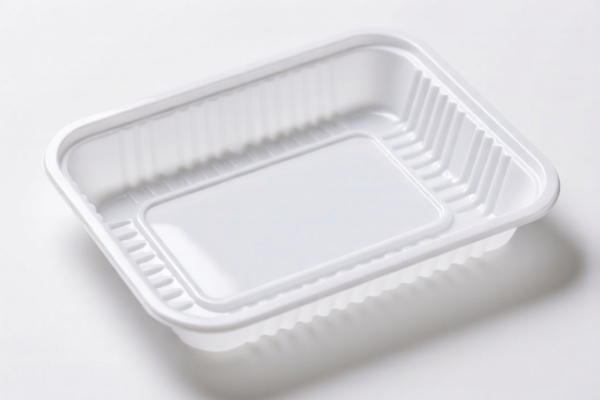
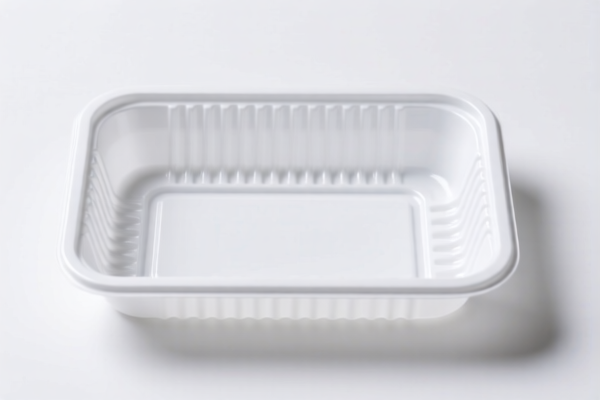
AI Analysis
🚗 Car Tray (Automotive Interior Accessories)
🌐 HS Code Reference & Customs Clearance Guide | 2026 Latest Tariff Analysis | Professional Level Strategy
📌 I. Product Definition & Classification: Do You Really Know What a "Car Tray" Is?
A Car Tray is a versatile storage or organizational accessory designed for the interior of motor vehicles. In international trade, it is typically classified not as a "part of the vehicle" (which would imply mechanical integration), but as a general article of iron or steel or a part/accessory of other types, depending on its material and specific design.
The key distinction lies in whether the item is: 1. Forged/Stamped Metal Tray: A simple tray made of steel/iron, stamped into shape, often used in the trunk or backseat for organization. 2. Complex Assembly: If it contains complex mechanical parts, electronics, or is specifically molded for a specific car model (OEM part), it might fall under "Parts of Motor Vehicles."
Based on the provided data, the primary classification focuses on general metal articles (HS 7326) rather than specific motor vehicle parts (HS 8708), likely because "Car Tray" is often considered a general utility item rather than a critical safety or mechanical component.
⚠️ Key Distinction Point:
- If the tray is a simple stamped metal sheet used for storage → It is an "Article of Iron or Steel" (HS 7326).
- If it is a specialized, fitted component that replaces a factory part → It might be a "Part of Motor Vehicle" (HS 8708), but this is less common for generic "trays" and carries higher risk of "Failed to retrieve tax information" if not precisely defined.
📦 II. HS Code Classification Details (2026 Latest Tariff Authority Comparison)
| HS Code | Product Description | Applicable Scenario | Material/Workmanship |
|---|---|---|---|
7326.90.86.88 |
Other articles of iron or steel: Other: Other: Other: Other | Generic storage trays, organizer trays made of iron/steel, not specifically designed as a critical vehicle part | ✅ Steel/Iron, General Article |
7326.19.00.80 |
Other articles of iron or steel: Forged or stamped, but not further worked: Other | Trays that are stamped out of metal sheets without additional complex shaping | ✅ Steel/Iron, Stamped |
8708.99.80.00 |
Parts and accessories of motor vehicles (8701-8705): Other parts and accessories: Other | Ambiguous: Used if the tray is deemed a specific "accessory" for a car, but tax info is missing | ⚠️ High Risk / Unknown Tax |
8708.99.81.80 |
Parts and accessories of motor vehicles (8701-8705): Other parts and accessories: Other: Other | Ambiguous: Specific sub-category for car parts, but again, less common for simple trays | ⚠️ High Risk / Unknown Tax |
🔍 Key Reminder:
- Most generic "Car Trays" (storage, organizer) are classified under HS 7326 because they are considered "general articles of iron or steel" rather than "parts" essential to the operation of the vehicle.
- Do NOT misclassify a simple metal tray as a "Motor Vehicle Part" (HS 8708) unless it is a certified OEM replacement part with specific engineering integration. This avoids the "Failed to retrieve tax information" error and potential customs delays.
💰 III. 2026 Latest Tariff Rate Detail (Including Surcharges, Policy Add-ons)
✅ Applicable Country: United States (US)
✅ Origin: China (CN)
✅ Effective Date: 2025 Nov 10 (and subsequent imports)
🎯 1. 7326.90.86.88 — Other Articles of Iron or Steel (Other)
| Item | Content |
|---|---|
| Base Tariff | 2.9% (ad valorem) |
| Section 301 Surtax | +25.0% |
| Steel/Aluminum/Copper Surtax | +50.0% (Specific surcharge for steel products) |
| Total Tariff | 77.9% |
| Calculation Basis | CIF Value × 77.9% |
| De Minimis Eligible? | ❌ No (De Minimis exemption does not apply to Section 301/Steel surtaxes) |
| Legal Basis Path | Section 301: 25% → Steel Surcharge: 50% → HTSUS: 7326.90.86.88 |
📌 Explanation:
- The 77.9% rate is extremely high. It combines the Base Tariff (2.9%), the Section 301 Surtax (25%), and the Steel Surtax (50%).
- Why 50% Steel Surcharge? Because the product is classified as an "Article of Iron or Steel," it triggers the additional steel-related tariff.
- Critical Impact: This tariff significantly impacts profit margins. Sellers must calculate costs carefully.
🎯 2. 7326.19.00.80 — Other Articles of Iron or Steel (Forged or Stamped)
| Item | Content |
|---|---|
| Base Tariff | 2.9% (ad valorem) |
| Section 301 Surtax | +25.0% |
| Steel/Aluminum/Copper Surtax | +50.0% (Specific surcharge for steel products) |
| Total Tariff | 77.9% |
| Calculation Basis | CIF Value × 77.9% |
| De Minimis Eligible? | ❌ No (De Minimis exemption does not apply to Section 301/Steel surtaxes) |
| Legal Basis Path | Section 301: 25% → Steel Surcharge: 50% → HTSUS: 7326.19.00.80 |
📌 Note:
- Same tariff rate as above (77.9%).
- Whether "Stamped" or "Other," if it’s an iron/steel article, it incurs the 50% Steel Surcharge on top of the 25% Section 301 and 2.9% Base.
- Do not assume that "Stamped" goods are exempt from steel surcharges.
⚠️ 3. 8708.99.80.00 & 8708.99.81.80 — Parts of Motor Vehicles
| Item | Content |
|---|---|
| Tax Information | Error / Failed to Retrieve |
| Total Tariff | Error |
| Risk Level | 🔴 High |
📌 Warning:
- If you classify the Car Tray under HS 8708, you may face customs delays due to "Failed to retrieve tax information."
- The system cannot verify the applicable tariffs (Base + Surtax) for these specific sub-codes in the provided data.
- Recommendation: Avoid these codes unless you have specific, verified documentation proving they are "Parts of Motor Vehicles" under a different, clear sub-heading with known tariffs. For generic trays, HS 7326 is the safer, clearer path, even with the high tariff.
🛠️ IV. Customs Clearance Practical Advice (Battlefield Pitfall Guide)
✅ 1. Required Documentation Checklist (Non-negotiable)
| Document | Must Provide | Description |
|---|---|---|
| ✅ Product Specifications | ✔️ | Material (e.g., "Stamped Steel"), Dimensions, Weight, Usage (Storage/Organization) |
| ✅ Product Photos | ✔️ | Clear images showing the tray, its shape, and lack of complex mechanical parts |
| ✅ Commercial Invoice | ✔️ | Description: "Steel Car Storage Tray, Stamped, for Automotive Interior Organization" |
| ✅ Packing List | ✔️ | Item count, gross/net weight, packaging type |
| ✅ Material Declaration | ✔️ | Confirm it is "Iron or Steel" to justify HS 7326 classification |
| ✅ Origin Certificate | ✔️ | If applicable, for potential duty drawbacks (though unlikely for China origin under 77.9%) |
✅ 2. Declaration Tips (Key Mnemonic)
🔥 “Steel Tray, Not Car Part; 77.9% Tax, Avoid Error Heart!”
| Scenario | Correct Declaration | Wrong Practice |
|---|---|---|
| Generic Metal Tray | 7326.90.86.88 or 7326.19.00.80 |
Misdeclare as "Car Part" (HS 8708) → Tax Retrieval Error |
| Plastic Car Tray | Not in Data | Do not force Steel HS Code; use appropriate plastic code |
| Trays with Electronics | Not in Data | Must reclassify; simple steel code is invalid |
| Stamped Metal Sheet | 7326.19.00.80 |
Over-complicate as "Forged" if it’s just stamped |
✅ 3. Special Cases Handling
| Scenario | Handling Advice |
|---|---|
| OEM Custom Trays | If designed specifically for one car model, still classify as HS 7326 unless it’s a certified "Part" (e.g., dashboard insert). Provide engineering drawings to prove it’s a general article. |
| Mixed Materials | If the tray has plastic inserts, declare as Iron/Steel if the metal component is the main value/structure. If plastic is dominant, reclassify (but not covered in this data). |
| De Minimis Claim | ❌ Cannot use De Minimis for HS 7326 under Section 301/Steel Surtax. Must declare formally with full tax payment. |
| Audit Risk | High scrutiny on "Steel" goods. Ensure material is indeed steel/iron, not aluminum (which may have different surtax rules). |
🌍 V. Global Market Comparison (2026 Latest)
| Country/Region | Recommended HS Code | Tariff (China Origin) | Certification | Notes |
|---|---|---|---|---|
| 🇺🇸 USA | 7326.90.86.88 |
77.9% (2.9% + 25% + 50%) | None specific | High tariff due to steel surtax |
| 🇨🇳 China | 7326.90.86.88 |
~6.8% (Import) | N/A | Lower domestic tariff |
| 🇪🇺 EU | 7326.90.95 |
5.6% (Est.) | CE (if applicable) | No Section 301 equivalent |
| 🇬🇧 UK | 7326.90.95 |
5.6% (Est.) | UKCA | Post-Brexit rules apply |
| 🇨🇦 Canada | 7326.90.90 |
5.0% (Est.) | N/A | No steel surtax like US |
📌 Conclusion:
- The US is the most expensive market for steel car trays due to the 50% Steel Surcharge + 25% Section 301.
- Consider supply chain diversification (e.g., production in Southeast Asia) if targeting the US market, as products from non-China origins may avoid the 25% Section 301 (but may still face steel surtaxes depending on country).
📌 VI. Common Errors & Pitfalls (Blood Lessons)
❌ Error 1: Classifying a simple metal tray as "Part of Motor Vehicle" (HS 8708)
👉 Consequence: Tax retrieval error, customs hold, delays, and potential misclassification fines.
✅ Fix: Use HS 7326 for general metal articles.
❌ Error 2: Assuming De Minimis applies
👉 Consequence: Package seized, taxes owed + penalties. De Minimis does not apply to Section 301 or Steel Surtax.
✅ Fix: Declare formally and pay 77.9% tariff.
❌ Error 3: Ignoring the Steel Surcharge
👉 Consequence: Underpayment of duties by 50%.
✅ Fix: Always include the 50% steel surtax in cost calculations for iron/steel articles from China.
❌ Error 4: Vague Product Description ("Car Accessory")
👉 Consequence: Customs unable to classify, leading to random audit.
✅ Fix: Use precise description: "Stamped Steel Car Storage Tray, General Use, Not a Specific Vehicle Part."
🎯 VII. Conclusion: Professional Declaration, Cost Control, Risk Mitigation
🎯 Remember the Mnemonic:
🔹 “Steel Tray, 77.9%; Not Car Part, Avoid Error!”
🔹 “Base 2.9, Section 301 is 25, Steel Surtax 50, Total 77.9, Pay Up!”
📌 Tip:
If your Car Tray is made of Plastic or Rubber, this data does not apply. You must find the appropriate HS Code for plastic/rubber articles (e.g., HS 3926 or HS 4016), which likely has lower tariffs.
If you must use Iron/Steel, prepare for 77.9% in the US market. Consider pricing strategies or supply chain shifts accordingly.
📣 Immediate Action:
📞 Contact a licensed customs broker to confirm classification.
📊 Calculate landed cost including 77.9% tariff.
🚀 Ensure your commercial invoice clearly states "Iron or Steel Article" to support HS 7326 classification.
✨ Professional Customs Clearance Starts with Accurate Classification!
💼 Your Margins Are Worth Protecting with Precise Tariff Calculation!
Customer Reviews
About HS Code Classification
The Harmonized System (HS) is an internationally standardized nomenclature developed by the World Customs Organization (WCO) to classify traded products. Over 200 countries use the HS system as the basis for customs tariffs, trade statistics, and import/export regulations.
Each HS code follows a hierarchical structure:
- Chapter (2 digits) — Broad category of goods (e.g., Chapter 84: Machinery and Mechanical Appliances)
- Heading (4 digits) — More specific grouping within the chapter
- Subheading (6 digits) — Internationally standardized breakdown, used by all WCO member countries
- National subdivisions (8-10 digits) — Country-specific extensions for further classification, such as US HTSUS 10-digit codes
Correct HS code classification is essential for smooth customs clearance, accurate duty payment, and compliance with trade regulations. Misclassification can lead to customs delays, overpayment of duties, or penalties.
When importing from CN to US, the applicable tariff rates may include:
- Most-Favored-Nation (MFN) rate — The standard duty rate applied to WTO members
- General rate — Applied to countries without trade agreements
- Trade remedy duties — Additional tariffs such as Section 301 (anti-dumping), Section 232 (national security), or countervailing duties
The information provided on this page is for reference purposes only. For official classification, please consult with your local customs authority or a licensed customs broker.