Car Vacuum Cleaner
CN → US| HS Code | Tariff Rate | Origin | Destination | Doc |
|---|---|---|---|---|
| 8508190000 | 35.0% | CN | US | Official Doc |
| 8508600000 | 35.0% | CN | US | Official Doc |
Product Images
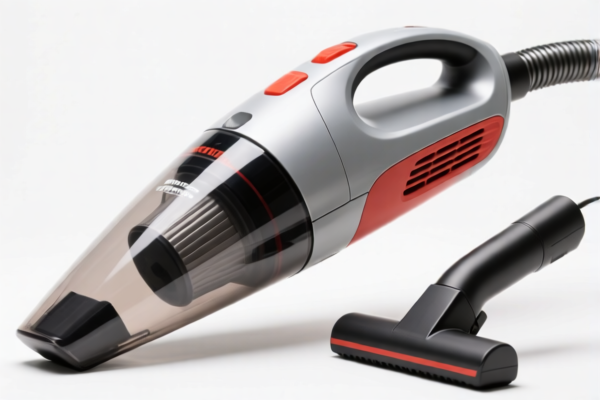
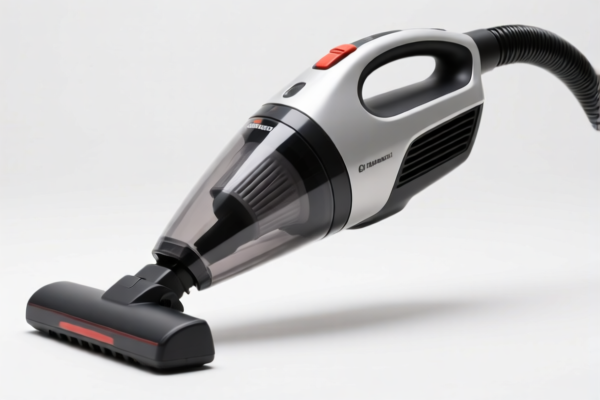
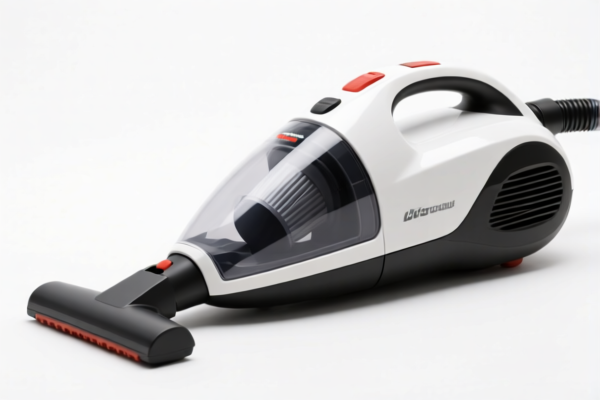

AI Analysis
🚗 Car Vacuum Cleaner (Vacuum Cleaners; Parts Thereof)
🌐 HS Code Reference & Customs Clearance Guide | 2026 Latest Tariff Analysis | Professional通关 Strategy
📌 I. Product Definition & Classification: What Exactly is a "Car Vacuum Cleaner"?
Car vacuum cleaners are portable or semi-portable cleaning devices designed specifically for the interior of vehicles. They are categorized under Chapter 85 (Electrical machinery and equipment) as "Vacuum cleaners; parts thereof."
The critical distinction lies in power source integration and intended use: 1. Self-Contained Electric Motor Models: These units have their own built-in motor and battery/plug-in power supply. They are classified based on whether they are "specialized" or "general." 2. Other Vacuum Cleaners: This category often catches models that might be considered accessories or specialized variants not strictly defined as standard household/portable units with self-contained motors in the specific sub-heading logic.
⚠️ Key Distinction Point:
- If the device has a self-contained electric motor (even if it’s a 12V car plug model), it typically falls under 8508.19.
- If the device is classified under "Other vacuum cleaners" (potentially due to specific structural definitions or exclusions in certain jurisdictions regarding portability vs. permanence), it may fall under 8508.60.
Note: The provided data distinguishes these two specific codes with vastly different tax implications.
📦 II. HS Code Classification Details (2026 Latest Tariff Authority Comparison)
| HS Code | Product Description | Applicable Scenario | Key Feature |
|---|---|---|---|
8508.19.00.00 |
Vacuum cleaners; parts thereof: With self-contained electric motor: Other | Standard car vacuums with built-in motor, battery, or 12V plug-in units | ✅ Self-Contained Motor |
8508.60.00.00 |
Vacuum cleaners; parts thereof: Other vacuum cleaners | Specialized, non-standard, or non-self-contained motor variants | ✅ Other (Non-8508.19) |
🔍 Critical Reminder:
- 8508.19.00.00 is the common classification for most handheld or upright car vacuums with internal motors.
- 8508.60.00.00 is a residual category for "Other vacuum cleaners." In the context of the provided data, this category has 0% additional tax, making it significantly more favorable for clearance if the product structure allows for this classification.
- Do not confuse with household vacuums (8508.11/12/19). Car vacuums are often grouped under "Other" (8508.19) unless specifically exempted or categorized elsewhere.
💰 III. 2026 Latest Tariff Rate Breakdown (Including Additional Taxes)
✅ Applicable Country: United States (US)
✅ Origin: China (CN)
✅ Effective Date: Current 2026 Tariff Schedule
🎯 1. 8508.19.00.00 —— Vacuum Cleaners with Self-Contained Electric Motor (Other)
| Item | Content |
|---|---|
| Basic Tariff | 0.0% (Ad Valorem) |
| Additional Tariff (Section 301) | +25.0% |
| Total Tariff | 25.0% |
| Tax Calculation | CIF Value × 25% |
| De Minimis Eligibility | ❌ No (Deny De Minimis for Section 301 items) |
| Legal Basis | Section 301 Tariff Action 1 of 2018 (List 3/4A typically) |
📌 Explanation:
- Base Rate 0%: The standard Most Favored Nation (MFN) rate for this subheading is 0%.
- Section 301 Tax 25%: This is a punitive tariff imposed on many Chinese-made electrical goods.
- Total Cost Impact: You must pay 25% of the declared value in additional duties. This is a high-cost item for US importers.
🎯 2. 8508.60.00.00 —— Other Vacuum Cleaners
| Item | Content |
|---|---|
| Basic Tariff | 0.0% (Ad Valorem) |
| Additional Tariff | 0.0% |
| Total Tariff | 0.0% |
| Tax Calculation | CIF Value × 0% = $0 |
| De Minimis Eligibility | ✅ Yes (Potentially eligible if under $800, subject to CBP rules) |
| Legal Basis | No Section 301 liability for this specific residual code |
📌 Explanation:
- 0% Total Tariff: This is a major advantage.
- If your car vacuum cleaner can be legally classified under 8508.60, you avoid the 25% penalty.
- This code is often used for products that do not fit the strict definition of "self-contained motor" vacuums or are considered "other" specialized cleaning devices.
🛠️ IV. Customs Clearance Practical Advice (Battle-Tested Pitfall Guide)
✅ 1. Documentation Checklist (Mandatory)
| Document | Required | Notes |
|---|---|---|
| ✅ Product Specifications | ✔️ | Must detail power source (12V, Battery, AC), motor type, and voltage. |
| ✅ Photos of Product | ✔️ | Show the motor housing, plug type (car lighter socket vs. wall plug), and labels. |
| ✅ Commercial Invoice | ✔️ | Clearly describe as "Portable Car Vacuum Cleaner" or "Automotive Cleaning Device." |
| ✅ Packing List | ✔️ | Itemize accessories (nozzles, hoses) separately if they might be classified differently. |
| ✅ Origin Certificate | ✔️ | Proves CN origin for Section 301 application. |
✅ 2. Classification Strategy (Critical Tips)
🔥 "Motor Check: If Self-Contained, Watch the 25%; If 'Other,' Save the Cash!"
| Scenario | Recommended HS Code | Tariff Rate | Risk Level |
|---|---|---|---|
| Standard 12V Car Vacuum (Internal motor) | 8508.19.00.00 |
25% | ⚠️ High Cost |
| Hydraulic/Pneumatic Car Vacuum (No electric motor) | 8508.60.00.00 |
0% | ✅ Low Cost |
| Electric Car Vacuum with external power supply only | 8508.60.00.00? |
0% | ⚠️ Needs Legal Review |
| Accessories Only (Hoses, Filters) | 8508.91.00.00 |
0% + 25%? | ⚠️ Verify Parts List |
📌 Key Insight:
- If your product is purely electric with a built-in motor, CBP will likely enforce 8508.19.00.00 and the 25% tax.
- If your product uses a car's existing power outlet to run a peripheral device (and is structurally defined as "other"), or uses non-electric power (e.g., pneumatic), argue for 8508.60.00.00.
- Do not misdeclare a 25% item as 0% to save money; this leads to audits, fines, and seizure.
✅ 3. Special Circumstances
| Situation | Advice |
|---|---|
| Battery-Powered Cars Vacs | Still considered "self-contained electric motor" → 8508.19 → 25% |
| 12V Plug-In Vacuums | Connected to car power, but has internal motor → 8508.19 → 25% |
| Wireless Vacuum with Base Charger | The vacuum unit itself is self-contained → 8508.19 → 25% |
| Pneumatic Car Vacuum (Air-powered) | No electric motor → 8508.60 → 0% |
🌍 V. Global Market Comparison (2026)
| Country/Region | Recommended HS Code | Tariff (China Origin) | Remarks |
|---|---|---|---|
| 🇺🇸 USA | 8508.19.00.00 |
25% | High duty due to Section 301 |
| 🇺🇸 USA | 8508.60.00.00 |
0% | Lower duty if classified correctly |
| 🇨🇳 China | 8508.19.00.00 |
10-13% | Import duty only, no 301 tax |
| 🇪🇺 EU | 8508.19.00.00 |
0-4.5% | Generally lower duties, no 301 |
| 🇬🇧 UK | 8508.19.00.00 |
0-4.5% | Post-Brexit tariffs vary |
📌 Conclusion:
- The USA is the most expensive market for car vacuums with self-contained motors due to the 25% Section 301 tariff.
- EU and UK offer significantly lower tariff barriers (often 0-4.5%).
- Consider supply chain diversification (e.g., sourcing from Vietnam or Mexico) if targeting the US market to avoid the 25% tax, as these countries may be exempt from Section 301.
📌 VI. Common Mistakes & Pitfalls (Lessons Learned)
❌ Mistake 1: Declaring a 12V electric car vacuum as "Parts of Vehicle" (8708)
👉 Result: Misclassification, fines, and potential seizure. Car vacuums are electrical appliances, not vehicle parts.
❌ Mistake 2: Assuming all "Small Appliances" are 0% duty
👉 Result: Ignorance of Section 301. Many electrical appliances from China are on the 25% list.
❌ Mistake 3: Using "Household Vacuum" description for Car Vacuum
👉 Result: CBP may still classify it under 8508.19 (Other) if it has a self-contained motor, triggering the 25% tax.
✅ Correct Approach:
"Portable Car Vacuum Cleaner, 12V DC, Corded, with Internal Motor, Model XYZ"
Declare accurately. If possible, design products that qualify for 8508.60 (e.g., pneumatic or specific non-self-contained types) to save 25%.
🎯 VII. Conclusion: Professional Classification Saves Money!
🎯 Key Takeaway:
🔹 "Electric Motor? 25% Tax. No Motor or 'Other'? 0% Tax."
🔹 "Check the Motor: Self-contained = 8508.19 = 25%. Other = 8508.60 = 0%."
📌 Recommendation:
1. Audit your Product: Does it have a self-contained electric motor?
2. Consult a Specialist: If you claim 8508.60, ensure your product structure supports it (e.g., no internal motor, or specific exemption).
3. Cost-Benefit Analysis: If you must use 8508.19, factor the 25% duty into your pricing. Consider third-country manufacturing (e.g., Vietnam) for the US market to bypass the Section 301 tariff.
📣 Action Now:
📞 Contact Customs Broker: Provide detailed technical specs for an Advance Ruling.
📦 Review Supply Chain: If targeting the US, explore non-CN origins to avoid the 25% penalty.
✨ Precision in Classification, Profit in Clearance!
💼 Don't Let 25% Tax Eat Your Margins!
Customer Reviews
About HS Code Classification
The Harmonized System (HS) is an internationally standardized nomenclature developed by the World Customs Organization (WCO) to classify traded products. Over 200 countries use the HS system as the basis for customs tariffs, trade statistics, and import/export regulations.
Each HS code follows a hierarchical structure:
- Chapter (2 digits) — Broad category of goods (e.g., Chapter 84: Machinery and Mechanical Appliances)
- Heading (4 digits) — More specific grouping within the chapter
- Subheading (6 digits) — Internationally standardized breakdown, used by all WCO member countries
- National subdivisions (8-10 digits) — Country-specific extensions for further classification, such as US HTSUS 10-digit codes
Correct HS code classification is essential for smooth customs clearance, accurate duty payment, and compliance with trade regulations. Misclassification can lead to customs delays, overpayment of duties, or penalties.
When importing from CN to US, the applicable tariff rates may include:
- Most-Favored-Nation (MFN) rate — The standard duty rate applied to WTO members
- General rate — Applied to countries without trade agreements
- Trade remedy duties — Additional tariffs such as Section 301 (anti-dumping), Section 232 (national security), or countervailing duties
The information provided on this page is for reference purposes only. For official classification, please consult with your local customs authority or a licensed customs broker.