Car Wash Machine
CN → US| HS Code | Tariff Rate | Origin | Destination | Doc |
|---|---|---|---|---|
| 8424209000 | 35.0% | CN | US | Official Doc |
| 8509805095 | 14.2% | CN | US | Official Doc |
| 8509801000 | 10.0% | CN | US | Official Doc |
| 8424899000 | 36.8% | CN | US | Official Doc |
| 8479899585 | 37.5% | CN | US | Official Doc |
| 8424309000 | 35.0% | CN | US | Official Doc |
Product Images
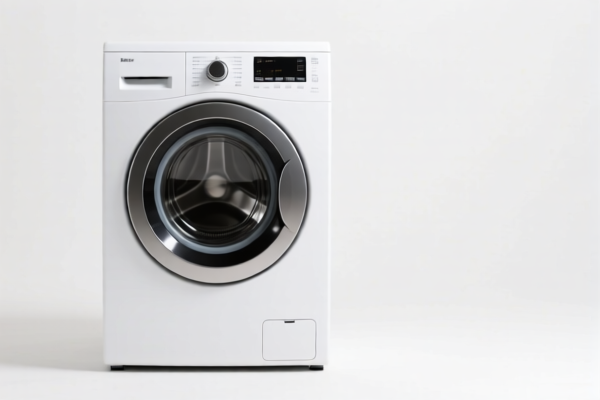
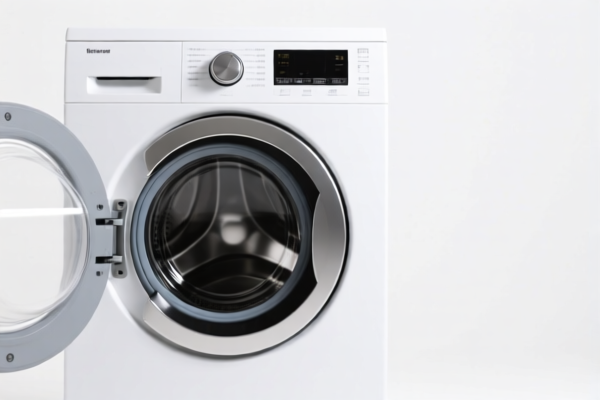
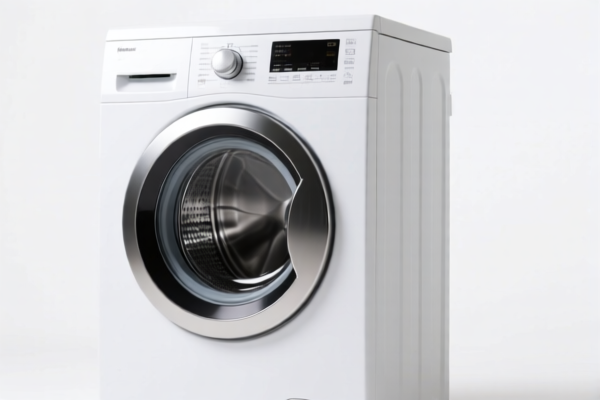
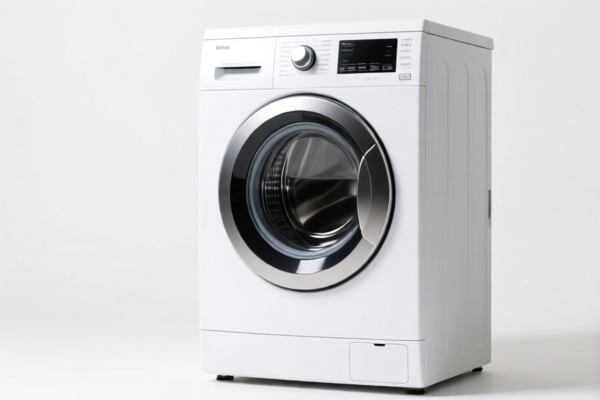
AI Analysis
🚿 Car Wash Machine (High-Pressure Washers & Cleaning Systems)
🌐 HS Code Reference & Customs Clearance Guide | 2026 Latest Tariff Analysis | Professional Customs Strategy
📌 I. Product Definition & Classification: What Exactly is a "Car Wash Machine"?
A "Car Wash Machine" in international trade is a broad term that can refer to two distinct categories of equipment. The classification depends heavily on how it is powered and its specific mechanism.
- Mechanical Sprayers (Non-Electric): Devices that use water pressure, air, or steam to spray, disperse, or jet liquids. These fall under Chapter 84 (Machinery).
- Electric Household/Portable Appliances: Devices with built-in electric motors designed for household or portable cleaning. These fall under Chapter 85 (Electrical Machinery).
⚠️ Key Distinction Point:
- If it is a standalone mechanical pump system (often industrial or commercial) without a dedicated "household appliance" housing → Chapter 84.
- If it is a plug-in portable unit with an electric motor, often marketed for home use (pressure washers) → Chapter 85.
📦 II. HS Code Classification Details (2026 Latest Tariff Authority Reference)
Based on the provided data, here are the six possible classifications for Car Wash Machines/Cleaners, with their corresponding tax implications.
| HS Code | Product Description | Logic/Reasoning | Total Tax Rate |
|---|---|---|---|
8424.20.90.00 |
Mechanical Sprayers (General) | Belongs to mechanical appliances for spraying/dispersing liquids. Fits the definition of "guns and similar appliances." | 35.0% |
8509.80.50.95 |
Electric Portable Appliance (Other) | Contains an electric motor; classified as a "Household/Portable Electric Appliance" under the "Other" category. | 14.2% |
8509.80.10.00 |
Electric Small Machinery (Other) | Electric motor-driven household/small electric machinery. Fits the "catch-all" logic for "other appliances." | 10.0% |
8424.89.90.00 |
Mechanical Sprayers (Other) | Mechanical appliance for jetting/dispersing liquids. Fits the general definition of mechanical appliances in this subheading. | 36.8% |
8479.89.95.85 |
Cleaning Machinery (Other) | Cleaning machine matched with ultrasonic cleaning equipment. Treated as a general term for such cleaning devices. | 37.5% |
8424.30.90.00 |
Steam/Jet Machines | Mechanical appliance for jetting/dispersing liquids. Fits the description of "Steam or sand-blasting machines and similar jet machines." | 35.0% |
🔍 Critical Insight:
- Chapter 85 (Electric) codes (8509...) generally offer significantly lower tariffs (10.0% - 14.2%) compared to Chapter 84 (Mechanical) codes (8424...,8479...) which range from 35.0% to 37.5%.
- Choosing the wrong HS Code can result in paying ~25% more in duties.
💰 III. 2026 Latest Tariff Rate Breakdown (Including Surcharges & Policy Add-ons)
✅ Applicable Country: United States (US)
✅ Origin: China (CN)
✅ Effective Time: Post-November 10, 2025 (for subsequent imports)
🎯 1. 8509.80.10.00 — Electric Small Machinery (Best Case)
| Item | Details |
|---|---|
| Base Tariff | 0.0% (ad valorem) |
| Section 301 Surcharge | 0.0% |
| IEEPA Surcharge | +10% (Targeting China/HK products) |
| Total Tax Rate | 10.0% |
| Calculation | CIF Value × 10% |
| De Minimis Eligibility | ❌ No (deny_de_minimis applies to Section 301/IEEPA goods from China) |
| Legal Path | IEEPA:9903.01.24 → USITC:8509.80.10.00 |
📌 Explanation:
- This is the most cost-effective classification if the product is clearly an electric household/portable appliance.
- Why 0% Base? The base MFN rate is 0%.
- Why +10%? The IEEPA surcharge applies to all goods from China under this subheading.
- Note: If you can prove it fits this "catch-all" electric category, you save ~25-27% compared to mechanical classifications.
🎯 2. 8509.80.50.95 — Electric Portable Appliance (Other)
| Item | Details |
|---|---|
| Base Tariff | 4.2% |
| Section 301 Surcharge | 0.0% |
| IEEPA Surcharge | +10% |
| Total Tax Rate | 14.2% |
| Calculation | CIF Value × 14.2% |
| De Minimis Eligibility | ❌ No |
| Legal Path | IEEPA:9903.01.24 → USITC:8509.80.50.95 |
📌 Explanation:
- Slightly higher than the "Other" electric category due to a 4.2% base tariff.
- Still significantly cheaper than Chapter 84 options.
🎯 3. 8424.20.90.00 & 8424.30.90.00 — Mechanical Sprayers / Jet Machines
| Item | Details |
|---|---|
| Base Tariff | 0.0% |
| Section 301 Surcharge | +25% |
| Section 122 Surcharge | +10% |
| Total Tax Rate | 35.0% |
| Calculation | CIF Value × 35.0% |
| De Minimis Eligibility | ❌ No |
| Legal Path | IEEPA:9903.01.25 → USITC:8424.20.90.00 / 8424.30.90.00 → FOOTNOTE:9903.88.01 |
📌 Explanation:
- High Penalty Zone.
- 301 Tariff (25%): Applies to mechanical goods from China.
- 122 Tariff (10%): Additional surcharge for specific mechanical categories.
- Result: A 35% duty burden. Do not misclassify an electric washer as a mechanical one.
🎯 4. 8424.89.90.00 — Mechanical Sprayers (Other)
| Item | Details |
|---|---|
| Base Tariff | 1.8% |
| Section 301 Surcharge | +25% |
| Section 122 Surcharge | +10% |
| Total Tax Rate | 36.8% |
| Calculation | CIF Value × 36.8% |
| De Minimis Eligibility | ❌ No |
| Legal Path | IEEPA:9903.01.25 → USITC:8424.89.90.00 → FOOTNOTE:9903.88.01 |
📌 Explanation:
- Even higher than the standard 35% due to the 1.8% base tariff.
- Avoid this if possible.
🎯 5. 8479.89.95.85 — Cleaning Machinery (Ultrasonic/General)
| Item | Details |
|---|---|
| Base Tariff | 2.5% |
| Section 301 Surcharge | +25% |
| Section 122 Surcharge | +10% |
| Total Tax Rate | 37.5% |
| Calculation | CIF Value × 37.5% |
| De Minimis Eligibility | ❌ No |
| Legal Path | IEEPA:9903.01.25 → USITC:8479.89.95.85 → FOOTNOTE:9903.88.01 |
📌 Explanation:
- Highest Tariff Rate in the list.
- Only use this if the machine is a specialized industrial cleaning unit (e.g., ultrasonic) and cannot be classified as a simple sprayer or electric appliance.
🛠️ IV. Customs Clearance Practical Advice (Avoid Pitfalls)
✅ 1. Essential Documentation Checklist
| Document | Required? | Notes |
|---|---|---|
| ✅ Product Specs | ✔️ | Must specify: Electric vs. Gas/Mechanical, Voltage, Flow Rate (GPM), Pressure (PSI). |
| ✅ Motor Details | ✔️ | Crucial for 8509 classification. Include motor type, wattage, and voltage. |
| ✅ Product Photos | ✔️ | Show the unit, control panel, hose connections, and branding. |
| ✅ Instruction Manual | ✔️ | Helps prove "Household/Portable" intent. |
| ✅ Commercial Invoice | ✔️ | Clearly state "Electric Pressure Washer" or "Mechanical Car Wash Machine." |
| ✅ Origin Certificate | ✔️ | Needed to confirm Chinese origin (triggering IEEPA/301). |
✅ 2. Classification Strategy (Key Mnemonics)
🔥 “Electric = 8509 (Low Tax), Mechanical = 8424 (High Tax)”
| Scenario | Correct HS Code | Wrong Code | Consequence |
|---|---|---|---|
| Plug-in Electric Pressure Washer | 8509.80.10.00 (10%) |
8424.20.90.00 |
Overpay 25% |
| Gas-Powered or Pump-Only System | 8424.20.90.00 (35%) |
8509.80.10.00 |
Under-declare & Get Audited |
| Industrial Ultrasonic Cleaner | 8479.89.95.85 (37.5%) |
8509.80.10.00 |
Misclassification |
| Car Wash Gun (No Pump) | 8424.20.90.00 (35%) |
8509.80.10.00 |
Error: No Motor |
📌 Important:
- If the device has a built-in electric motor and is designed for portable/household use, INSIST on8509.80.10.00or8509.80.50.95.
- If it is a standalone pump connected to a separate motor, or a gas-powered unit, it MUST be8424or8479.
✅ 3. Special Case Handling
| Scenario | Handling Advice |
|---|---|
| OEM Electric Washer | Provide circuit diagrams and motor specs to prove it’s an "electrical machine." |
| Kit Sales (Washer + Hose + Nozzle) | Declare as a complete unit under the main machine’s HS Code. Do not split. |
| Industrial Car Wash System | If it’s a full booth with conveyor, it may fall under 8424 or 8479. Consult customs broker. |
| Portable “Battery-Powered” Sprayer | Likely 8509 if it’s a self-contained unit. |
🌍 V. Global Market Comparison (2026 Latest)
| Country/Region | Recommended HS Code | Tariff (China Origin) | Certification | Remarks |
|---|---|---|---|---|
| 🇺🇸 USA | 8509.80.10.00 |
10% (IEEPA only) | ETL/UL (if applicable) | Best Option. Avoid 8424 (35%). |
| 🇪🇺 EU | 8424.20.90 |
~0-3% (Duty) + VAT | CE Mark | No Section 301/IEEPA. |
| 🇨🇳 China | 8424.20.90 |
~0-3% | CCC (if electric) | Low import duty. |
| 🇬🇧 UK | 8424.20.90 |
~0-5% | UKCA | Post-Brexit rules apply. |
📌 Conclusion:
- The USA has the most punitive tariffs on Chinese mechanical washing equipment due to Section 301 (25%) + IEEPA (10%).
- Classification is everything. A $100 electric washer classified as8509pays $10 duty. Classified as8424, it pays $35 duty.
📌 VI. Common Mistakes & Pitfalls (Lessons Learned)
❌ Mistake 1: Calling an electric pressure washer a "Mechanical Sprayer"
👉 Result: Paying 35% tax instead of 10%.
💡 Fix: Highlight "Electric Motor" in product description.
❌ Mistake 2: Misclassifying a gas-powered washer as "Electric"
👉 Result: Customs rejection, penalties, and forced reclassification.
💡 Fix: Be honest. Gas units must go to 8424 or 8479.
❌ Mistake 3: Ignoring the IEEPA 10% Surcharge
👉 Result: Budget miscalculation.
💡 Fix: Factor in the 10% IEEPA for ALL Chinese-origin goods, even if Base Duty is 0%.
✅ Correct Practice:
"Electric Pressure Washer, 1800W, 1500 PSI, Portable, Model XYZ, Certified ETL"
→ Declared as8509.80.10.00.
🎯 VII. Conclusion: Precision Saves Money!
🎯 Remember the Golden Rule:
🔹 “Electric Motor = 8509 = 10-14% Tax”
🔹 “Mechanical/Gas = 8424 = 35-37% Tax”
🔹 “One Step Wrong = $25 Duty Penalty!”
📌 Pro Tip:
If your product is borderline (e.g., a heavy-duty industrial electric cleaner), consider applying for an Advance Ruling from US Customs. It costs nothing but can save thousands in potential duties.
📣 Take Action Now:
📞 Provide Motor Specs + Photos → Get Pre-Classified
🚀 Ensure Smooth Clearance, Lower Costs, Higher Profit!
✨ Professional Customs Clearance Starts with the Right HS Code!
💼 Every Percent Matters!
Customer Reviews
About HS Code Classification
The Harmonized System (HS) is an internationally standardized nomenclature developed by the World Customs Organization (WCO) to classify traded products. Over 200 countries use the HS system as the basis for customs tariffs, trade statistics, and import/export regulations.
Each HS code follows a hierarchical structure:
- Chapter (2 digits) — Broad category of goods (e.g., Chapter 84: Machinery and Mechanical Appliances)
- Heading (4 digits) — More specific grouping within the chapter
- Subheading (6 digits) — Internationally standardized breakdown, used by all WCO member countries
- National subdivisions (8-10 digits) — Country-specific extensions for further classification, such as US HTSUS 10-digit codes
Correct HS code classification is essential for smooth customs clearance, accurate duty payment, and compliance with trade regulations. Misclassification can lead to customs delays, overpayment of duties, or penalties.
When importing from CN to US, the applicable tariff rates may include:
- Most-Favored-Nation (MFN) rate — The standard duty rate applied to WTO members
- General rate — Applied to countries without trade agreements
- Trade remedy duties — Additional tariffs such as Section 301 (anti-dumping), Section 232 (national security), or countervailing duties
The information provided on this page is for reference purposes only. For official classification, please consult with your local customs authority or a licensed customs broker.