Car Water Pump
CN → US| HS Code | Tariff Rate | Origin | Destination | Doc |
|---|---|---|---|---|
| 8409915085 | 37.5% | CN | US | Official Doc |
| 8409999190 | 37.5% | CN | US | Official Doc |
| 8413309090 | 37.5% | CN | US | Official Doc |
| 8708991600 | 35.0% | CN | US | Official Doc |
| 8708994100 | 35.0% | CN | US | Official Doc |
Product Images
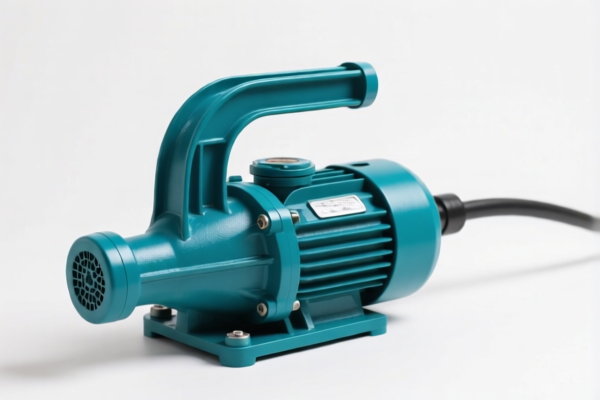
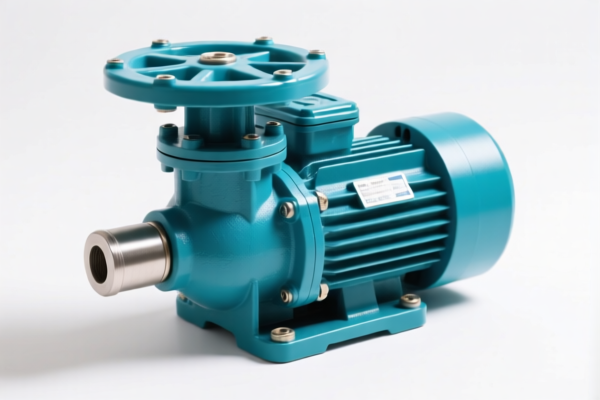
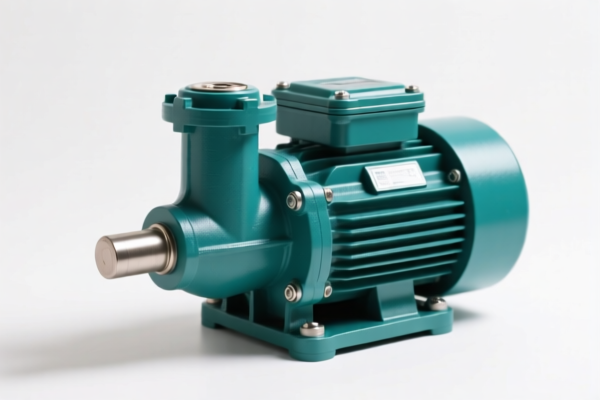
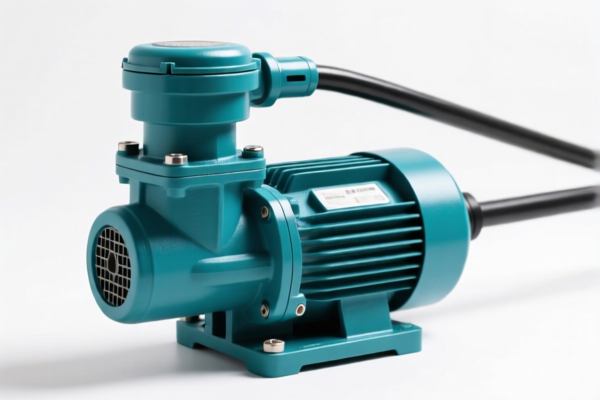
AI Analysis
💧 Car Water Pump (Automotive Cooling System Component)
🌐 HS Code Reference & Customs Clearance Guide | 2026 Latest Tariff Analysis | Professional-Level Clearance Strategy
📌 I. Product Definition & Classification: What Exactly Is a "Car Water Pump"?
A Car Water Pump is a critical mechanical component in an internal combustion engine’s cooling system. Its primary function is to circulate coolant (a mixture of water and antifreeze) through the engine block and radiator to regulate temperature.
In international trade, the classification of a water pump depends heavily on functional specificity and intended use: 1. As a General Fluid Pump: If viewed purely as a mechanical device for moving liquid, it falls under Chapter 84 (Nuclear reactors, boilers, machinery and mechanical appliances). 2. As an Auto Part: If viewed specifically as a spare part for motor vehicles, it falls under Chapter 87 (Vehicles other than railway or tramway rolling-stock, and parts and accessories thereof).
⚠️ Critical Distinction:
- Is it a standalone pump unit intended for general industrial or other vehicle use? → Chapter 84
- Is it explicitly designed and marketed as a replacement part for a specific automotive engine (e.g., engine cooling)? → Chapter 87
📦 II. HS Code Classification Details (2026 Latest Tariff Authority Comparison)
Based on the provided data, here are the five potential HS Codes, their logical justifications, and corresponding tax implications.
| HS Code | Product Description & Logic | Applicability Scenario | Total Tax Rate |
|---|---|---|---|
8413.30.90.90 |
Engine Cooling Medium Pump: Classified as a pump for moving liquids other than fuel or lubricating oil. This code applies when the pump is classified by its mechanical function as a fluid mover, excluding fuel/lubrication pumps. | Standalone pump unit; general industrial use; or when the specific auto-part nature is not the primary classification basis. | 37.5% |
8708.99.16.00 |
Motor Vehicle Part (Cooling System): Classified as a part and accessory of a motor vehicle. Specifically covers parts of the power transmission/cooling system. | Direct replacement part for automotive engines; marketed specifically as "Auto Water Pump." | 35.0% |
8708.99.41.00 |
Motor Vehicle Part (Power Transmission/Cooling): Similar to above, but categorized under "Other Parts of Tractors" or broader "Other Motor Vehicle Parts" depending on specific national sub-classification logic for powertrain/cooling components. | Auto parts where the specific sub-heading for "cooling system parts" under 8708 points to this code. | 35.0% |
8409.91.50.85 |
Engine Part (Miscellaneous): Classified as a part suitable for use solely or principally with internal combustion piston engines. Assumes metallic/composite material consistent with engine internals. | Engine-specific spare part; used when the pump is considered an integral engine component rather than a general vehicle accessory. | 37.5% |
8409.99.91.90 |
Engine Part (Cooling System): Classified as a part of internal combustion engines, specifically for cooling systems, excluding connecting rods. | Engine assembly parts; when the pump is sold as part of an engine rebuild kit or engine-specific spare part line. | 37.5% |
🔍 Key Insight:
- Chapter 87 (8708.xx) generally offers a lower total tax rate (35.0%) compared to Chapter 84 (37.5%) for automotive applications.
- Why? The US trade policy (Section 301 & IEEPA) applies add-on tariffs to all Chinese-origin goods, but the base rate differs.
- 8708: Base 0% + 25% (301) + 10% (IEEPA) = 35%
- 8409/8413: Base 2.5% + 25% (301) + 10% (IEEPA) = 37.5%
- Strategic Choice: If the product is clearly an auto part, 8708 is more cost-effective.
💰 III. 2026 Latest Tariff Rate Breakdown (Including Add-ons & Policy Surcharges)
✅ Applicable Country: United States (US)
✅ Origin: China (CN)
✅ Effective Date: November 10, 2025 (and subsequent imports)
🎯 1. Codes with 35.0% Total Tax
(HS Codes: 8708.99.16.00, 8708.99.41.00)
| Item | Content |
|---|---|
| Base Duty Rate | 0.0% (Ad Valorem) |
| USITC Add-on Duty (Section 301) | +25.0% |
| IEEPA Add-on Duty (China-Specific) | +10.0% (Applicable to Chinese/HK products from Nov 10, 2025) |
| Total Effective Rate | 35.0% |
| Tax Calculation | CIF Value × 35% |
| De Minimis Exemption | ❌ Not Applicable (Deny de minimis for these categories) |
| Legal Authority Path | USITC:8708.99.16.00 → FOOTNOTE:9903.88.01 + IEEPA:9903.01.24/25 |
📌 Explanation:
- These codes fall under "Parts and Accessories of Motor Vehicles".
- The 0% base rate is crucial because add-on tariffs are calculated on the total value.
- Section 301 (25%) and IEEPA (10%) are叠加 (stacked), leading to a high but slightly lower total than Chapter 84 codes.
🎯 2. Codes with 37.5% Total Tax
(HS Codes: 8413.30.90.90, 8409.91.50.85, 8409.99.91.90)
| Item | Content |
|---|---|
| Base Duty Rate | 2.5% (Ad Valorem) |
| USITC Add-on Duty (Section 301) | +25.0% |
| IEEPA Add-on Duty (China-Specific) | +10.0% |
| Total Effective Rate | 37.5% |
| Tax Calculation | CIF Value × 37.5% |
| De Minimis Exemption | ❌ Not Applicable |
| Legal Authority Path | USITC:84xx.xx.xx → FOOTNOTE:9903.88.01 + IEEPA:9903.01.24/25 |
📌 Explanation:
- These codes fall under "Machinery" or "Engine Parts".
- The 2.5% base rate adds a small extra cost compared to the 0% base in Chapter 87.
- Recommendation: Avoid these codes if the product is clearly an auto part, as it results in 2.5% higher duty.
🛠️ IV. Customs Clearance Practical Advice (Real-World Pitfall Avoidance)
✅ 1. Documentation Checklist (Essential)
| Document | Must Provide | Explanation |
|---|---|---|
| ✅ Product Specification Sheet | ✔️ | Must state: "Water Pump for Automotive Engine Cooling System." Include flow rate, pressure, material (e.g., cast iron, aluminum). |
| ✅ Application/Compatibility List | ✔️ | List of vehicle makes/models (e.g., "For Toyota Camry 2020-2023"). This proves it is an auto part (Chapter 87) rather than a general pump. |
| ✅ Product Photos | ✔️ | Clear images showing the pump, mounting flanges, and any branding. |
| ✅ Commercial Invoice | ✔️ | Must clearly describe the item as "Automotive Water Pump" and include HS Code. |
| ✅ Packing List | ✔️ | Detail contents to ensure no accessories are declared separately (which could trigger higher rates). |
| ✅ Certificate of Origin (CO) | ✔️ | Confirm origin is China to accurately apply IEEPA/301 duties. |
✅ 2. Declaration Strategy (Key Mantras)
🔥 “Auto Part First, General Pump Last. Specify Vehicle, Save 2.5%!”
| Scenario | Correct Declaration | Risk of Wrong Declaration |
|---|---|---|
| Clearly Auto-Specific Pump | 8708.99.16.00 or 8708.99.41.00 |
If declared as 8413 or 8409 → Higher Tax (37.5%) |
| General Industrial Pump | 8413.30.90.90 |
If declared as 8708 but not for cars → Misclassification Risk |
| Engine Rebuild Kit | 8409.91.50.85 or 8409.99.91.90 |
If declared as 8708 → Possible Rejection (if not auto-specific) |
| Complete Cooling System Kit | Declare Main Item (Pump) as 8708 |
Splitting kit into multiple parts → Complexity & Potential Higher Tax |
✅ 3. Special Cases & Handling
| Situation | Handling Advice |
|---|---|
| OEM vs. Aftermarket | Both can be classified under 8708 if they are auto parts. Provide brand/compatibility info to support 8708. |
| Electric Water Pumps | Still likely 8708 if for auto cooling. Ensure description emphasizes "Automotive Application." |
| Mixed Shipment | If shipping auto pumps + non-auto pumps, separate declarations are mandatory. Do not mix 8708 and 8413 in one line item. |
| Pre-Ruling Application | Highly Recommended. Apply for an Advance Ruling from CBP to confirm 8708.99.16.00 for your specific pump model. This locks in the 35% rate and prevents audits. |
🌍 V. Global Market Comparison (2026 Latest)
| Country/Region | Recommended HS Code | Duty Rate (China Origin) | Certification Requirements | Notes |
|---|---|---|---|---|
| 🇺🇸 USA | 8708.99.16.00 |
35.0% | No specific auto cert required for customs | IEEPA 10% + 301 25% applies |
| 🇨🇳 China | 8411.99.00.00 (Approx.) |
~5-10% | CCC (if applicable) | Lower base duty, no 301/IEEPA |
| 🇪🇺 EU | 8708.99.00 |
0% (if under 1000EUR) | CE, REACH | No major add-on duties for auto parts |
| 🇦🇺 Australia | 8708.99.00 |
5% | RCM (if electrical) | Competitive rate |
| 🇯🇵 Japan | 8708.99.00 |
0% (if FTAA) | PSE (if electrical) | Free trade agreement may apply |
📌 Conclusion:
- The US is the most challenging market for auto parts from China due to 301 and IEEPA tariffs.
- Maximizing the use of Chapter 87 (Auto Parts) saves 2.5% compared to Chapter 84 (Machinery).
- Always declare "Automotive Water Pump" with vehicle compatibility to support Chapter 87 classification.
📌 VI. Common Mistakes & Pitfall Guide (Lessons Learned)
❌ Mistake 1: Declaring as "Fluid Pump" (8413) instead of "Auto Part" (8708)
👉 Result: Pay 37.5% instead of 35.0%. Unnecessary cost increase.
❌ Mistake 2: Failing to provide Vehicle Compatibility List
👉 Result: CBP may doubt the auto-part classification and reclassify to Chapter 84 or even Chapter 8499 (Other), leading to audits and penalties.
❌ Mistake 3: Not declaring IEEPA/301 applicability
👉 Result: Customs flags the shipment for origin verification. Delayed clearance and potential fines.
❌ Mistake 4: Using vague descriptions like "Pump" or "Water Circulator"
👉 Result: High risk of misclassification. Always use "Automotive Water Pump for Engine Cooling."
✅ Correct Declaration Example:
"Automotive Water Pump, Cast Iron, For Engine Cooling, Compatible with Toyota Camry 2018-2022, Model WP-12345, Origin: China"
🎯 VII. Conclusion: Precision Classification Saves Money!
🎯 Remember This Mantra:
🔹 "Auto Part? Use 8708 (35%). General Pump? Use 8413 (37.5%)."
🔹 "Compatibility List is Key. Without it, You Pay More!"
🔹 "301 + IEEPA = 35% Min. Don't Add Base Duty if You Don't Have To."
📌 Pro Tip:
If you are importing large volumes, consider applying for a Section 301 Exclusion if your specific product model was eligible during the exclusion periods. Although many exclusions have expired, check the latest CBP notices.
Also, Pre-Arrival Rulings are your best friend. Spend a few hundred dollars on a ruling application to save thousands in overpaid duties and clearance delays.
📣 Immediate Action:
📞 Contact a licensed US Customs Broker
📦 Prepare Product Specs + Vehicle Compatibility List
🚀 Apply for Advance Ruling for HS Code8708.99.16.00
💼 Smart Classification = Higher Profit Margins!
✨ Professional Clearance Starts with Accurate Classification!
💼 Every Percentage Point Counts in International Trade!
Customer Reviews
About HS Code Classification
The Harmonized System (HS) is an internationally standardized nomenclature developed by the World Customs Organization (WCO) to classify traded products. Over 200 countries use the HS system as the basis for customs tariffs, trade statistics, and import/export regulations.
Each HS code follows a hierarchical structure:
- Chapter (2 digits) — Broad category of goods (e.g., Chapter 84: Machinery and Mechanical Appliances)
- Heading (4 digits) — More specific grouping within the chapter
- Subheading (6 digits) — Internationally standardized breakdown, used by all WCO member countries
- National subdivisions (8-10 digits) — Country-specific extensions for further classification, such as US HTSUS 10-digit codes
Correct HS code classification is essential for smooth customs clearance, accurate duty payment, and compliance with trade regulations. Misclassification can lead to customs delays, overpayment of duties, or penalties.
When importing from CN to US, the applicable tariff rates may include:
- Most-Favored-Nation (MFN) rate — The standard duty rate applied to WTO members
- General rate — Applied to countries without trade agreements
- Trade remedy duties — Additional tariffs such as Section 301 (anti-dumping), Section 232 (national security), or countervailing duties
The information provided on this page is for reference purposes only. For official classification, please consult with your local customs authority or a licensed customs broker.