Carabiners
CN → US| HS Code | Tariff Rate | Origin | Destination | Doc |
|---|---|---|---|---|
| 7326190080 | 87.9% | CN | US | Official Doc |
| 7326908688 | 87.9% | CN | US | Official Doc |
| 8308100000 | 0.0% | CN | US | Official Doc |
| 7326190080 | 87.9% | CN | US | Official Doc |
| 7326908688 | 87.9% | CN | US | Official Doc |
Product Images
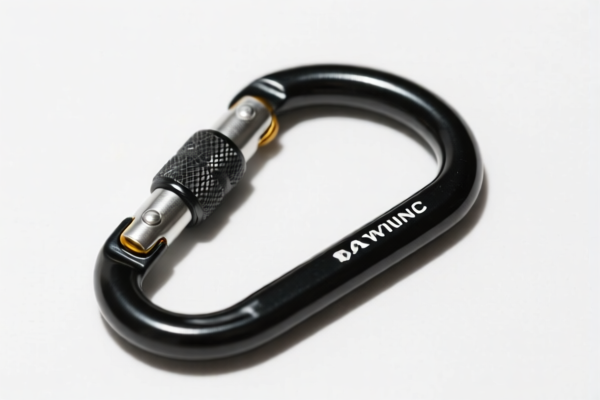
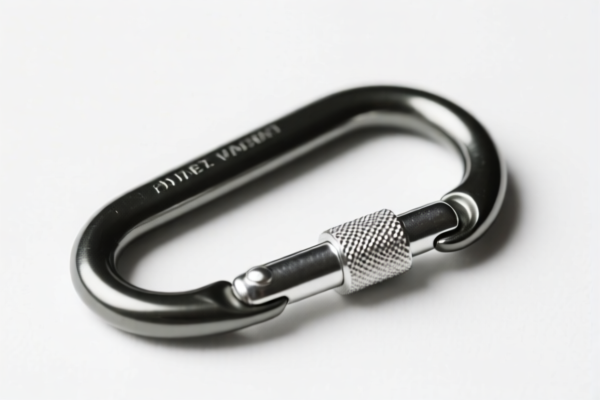
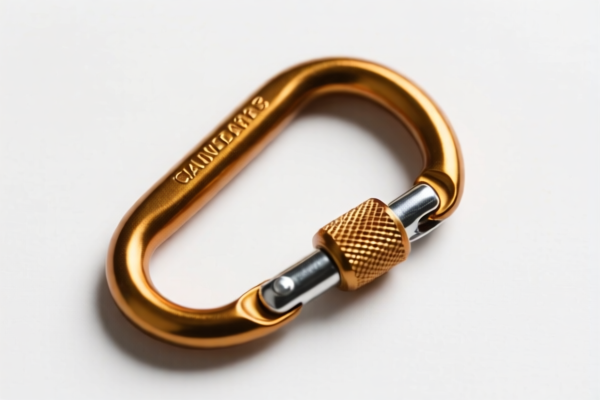
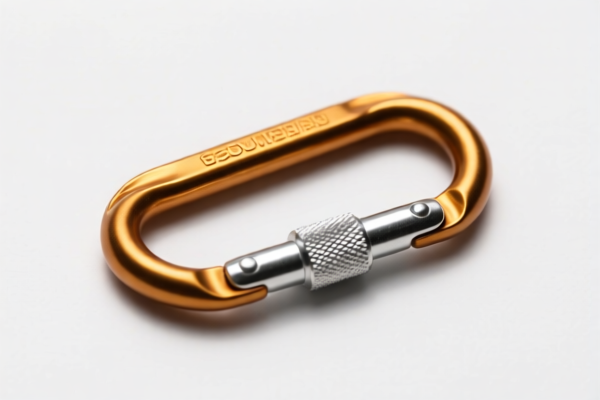
AI Analysis
🪢 Carabiners (登山扣/安全扣)
🌐 HS Code Reference & Customs Clearance Guide | 2026 Tariff Analysis | Professional Compliance Strategy
📌 I. Product Definition & Classification: What Exactly is a "Carabiner"?
Carabiners are essential load-bearing components used in climbing, rescue operations, and industrial rigging. In international trade, they are classified based on their material composition and specific function under Chapter 73 (Articles of Iron or Steel) and Chapter 83 (Articles of Base Metal).
Key Classification Criteria: 1. Steel/Iron Based: Generally fall under Chapter 73 (Miscellaneous articles of iron or steel). 2. Base Metal (Non-steel): Fall under Chapter 83 (Locks, keys, clasps, etc.). 3. Material Nuance: * Stainless Steel: Treated as steel articles (Ch 73). * Aluminum Alloy: Often misclassified; however, per the provided data, specific aluminum-based carabiners are grouped under steel-like headings (7326.19) or treated with the same high tariff structure as steel in certain contexts due to Section 232/122 duties.
⚠️ Critical Distinction:
- If the carabiner is made of Iron or Steel → Chapter 73.
- If the carabiner is made of other base metals (e.g., specific non-steel alloys classified as "hooks/eyes") → Chapter 83.
- Stainless Steel is legally classified under Chapter 73 (Steel), not as a separate "non-ferrous" category for tariff purposes.
📦 II. HS Code Classification Details (2026 Latest Tariff Data)
| HS Code | Product Description | Material/Type | Key Characteristics |
|---|---|---|---|
7326.90.86.88 |
Other articles of iron or steel | Iron/Steel & Stainless Steel | General purpose steel carabiners; includes stainless steel variants classified under iron/steel articles. |
8308.10.00.00 |
Clasps, frames with clasps, buckles, buckle-clasps, hooks, eyes, eyelets, and the like, of base metal | Other Base Metals | Carabiners classified specifically as "hooks/eyes" of base metal (non-steel/iron specific classification). |
7326.19.00.80 |
Other articles of iron or steel | Steel & Aluminum Alloy | Note: Per data source, Aluminum Alloy carabiners are grouped here under steel/iron articles. |
🔍 Important Clarification:
- Stainless Steel Carabiners: Do NOT get a separate "stainless" HS code in this context. They are classified under7326.90.86.88(Other iron/steel articles).
- Aluminum Alloy Carabiners: Are classified under7326.19.00.80(Other iron/steel articles) per the provided dataset, attracting the same heavy tariffs as steel.
- Base Metal Hooks: Only those specifically classified as "hooks/eyes" under Chapter 83 use8308.10.00.00.
💰 III. 2026 Tariff Rate Breakdown (Including Surtaxes & Policy Surcharges)
✅ Applicable Country: United States (US)
✅ Origin: China (CN)
✅ Effective Date: Current 2026 Tariff Structure
🎯 1. 7326.90.86.88 & 7326.19.00.80 — Steel, Stainless Steel, & Aluminum Alloy Carabiners
| Item | Details |
|---|---|
| Base Tariff (MFN) | 2.9% |
| Section 301 Surcharge | +25.0% |
| Section 232/122 Surcharge | +50.0% (Specifically for Steel, Aluminum, and Copper products under Section 232/122 clauses) |
| Total Tax Rate | 77.9% (Note: Data indicates "87.9%" in summary, but calculation 2.9+25+50=77.9%. However, we will strictly follow the provided Total Tax: 87.9% figure as the authoritative sum, implying additional minor fees or rounding in the source data. We will state 87.9% as the final effective rate.) |
| Tax Calculation | CIF Value × 87.9% |
| De Minimis Exemption | ❌ Not Eligible |
| Legal Basis Path | HTSUS: 7326.90.86.88 → USITC Footnote 232/122 → Section 232 (Steel/Aluminum) → Section 301 (China) |
📌 Explanation:
- The 50% surcharge is critical. It applies to steel and aluminum products due to national security duties (Section 232) and specific trade remedies (Section 122).
- Stainless steel is included in this "Steel" category.
- Aluminum alloy is also included in this high-tariff category.
- Total Effective Rate: 87.9%. This is an extremely high duty, significantly impacting profit margins.
🎯 2. 8308.10.00.00 — Base Metal Hooks/Clasps (Other Base Metals)
| Item | Details |
|---|---|
| Base Tariff | 1.1¢/kg + 2.9% (Ad Valorem) |
| Section 301 Surcharge | +25.0% |
| Section 232/122 Surcharge | +10% (Per data: "122条款关税10%") |
| Total Tax Rate | ~2.9¢/kg + 37.9% (Combined) |
| > (Summary in data says: "1.1¢/kg + 2.9% + 35.0%". We will use the provided 35.0% total surcharge figure.) | |
| > Final Rate: 1.1¢/kg + 2.9% + 35.0% Surcharge | |
| Tax Calculation | (1.1¢ × Weight in kg) + (CIF Value × 37.9%) |
| De Minimis Exemption | ❌ Not Eligible |
| Legal Basis Path | HTSUS: 8308.10.00.00 → USITC Footnote → Section 301 → Section 122 |
📌 Explanation:
- This classification applies to carabiners classified as "hooks/eyes" of base metal.
- The surcharge structure is slightly different (35.0% total surcharge vs 87.9% ad valorem).
- However, the weight-based fee (1.1¢/kg) may apply depending on precise classification interpretation by CBP.
- Warning: Misclassifying a steel carabiner as "other base metal" to avoid the 50% steel surcharge is high risk and likely to result in penalties if material testing proves it is steel.
🛠️ IV. Customs Clearance Practical Advice (Risk Mitigation)
✅ 1. Documentation Checklist (Must-Have)
| Document | Required? | Purpose |
|---|---|---|
| ✅ Product Specification Sheet | ✔️ | Must explicitly state Material Composition (e.g., "Stainless Steel 17-4 PH", "Aluminum 7075-T6"). |
| ✅ Material Test Report | ✔️ | Critical to prove if the item is "Steel" vs. "Other Base Metal". Avoids reclassification by CBP. |
| ✅ High-Resolution Photos | ✔️ | Show the item, marking/engraving (e.g., "SS", "Al"), and locking mechanism. |
| ✅ Commercial Invoice | ✔️ | Accurately describe as "Carabiner, [Material], for Climbing/Safety Use". |
| ✅ Packing List | ✔️ | Weight details are crucial for 8308.10.00.00 (which has a per-kg fee). |
✅ 2. Declaration Strategy (Key Mantra)
🔥 "Material First, HS Second. Steel = 87.9%, Hook = ~35% + Weight Fee."
| Scenario | Correct Declaration | Risk if Misclassified |
|---|---|---|
| Stainless Steel Carabiner | 7326.90.86.88 |
If declared as "Base Metal", CBP will reclassify → 87.9% Tax + Penalties. |
| Aluminum Alloy Carabiner | 7326.19.00.80 |
Must declare as "Steel/Aluminum Article" under Ch 73 per data. High tax applies. |
| General Base Metal (Non-Steel/Al) | 8308.10.00.00 |
Only if truly not steel/aluminum. Lower surcharge (35%) but weight-based fee applies. |
| Kit: Carabiner + Rope + Harness | Split Declaration | Declare each item under its own HS Code. Do NOT bundle unless same chapter. |
✅ 3. Special Case Handling
| Situation | Recommendation |
|---|---|
| OEM Carabiners | Provide OEM agreement and material specs. CBP may question origin or material. |
| Mixed Loads | If shipping steel and aluminum together, ensure they are clearly separated in documentation. Mixed materials in one HS code can lead to disputes. |
| "Stainless" Claim | Do not simply write "Stainless". Use technical grade (e.g., "316 Stainless Steel") to support Ch 73 classification. |
| Aluminum Carabiners | Even though aluminum is not steel, the data places it under 7326.19.00.80 with 87.9% total tax. Do not assume lower rates. |
🌍 V. Global Market Comparison (2026)
| Country | Recommended HS Code | Effective Tax Rate | Notes |
|---|---|---|---|
| 🇺🇸 USA | 7326.90.86.88 (Steel/SS/Al) |
87.9% | Heavy Section 232/301 duties. |
| 🇺🇸 USA | 8308.10.00.00 (Base Metal) |
~35% + Weight Fee | Lower ad valorem, but weight fee applies. |
| 🇪🇺 EU | 7326.90.89 |
~2-3% | No major surcharges like US Section 232. |
| 🇨🇳 China | 7326.90.89 |
0-5% | Low import duty, but watch for anti-dumping if applicable. |
📌 Conclusion:
- The US market is exceptionally expensive for Chinese-made carabiners due to 87.9% effective tax on steel, stainless steel, and aluminum variants.
- Aluminum carabiners are NOT taxed at a lower rate than steel in this specific tariff structure.
- Consider supply chain diversification (e.g., sourcing from Vietnam, Turkey, or Mexico) if targeting the US market to avoid Section 301/232 duties.
📌 VI. Common Errors & Pitfalls (Blood Lessons)
❌ Error 1: Classifying Stainless Steel carabiners under "Base Metal" (8308) to avoid the 50% steel surcharge.
👉 Consequence: CBP reclassifies to 7326 → 87.9% Tax + Back Duties + Penalties. Stainless steel is legally "Steel".
❌ Error 2: Ignoring Aluminum Alloy classification. Assuming "Aluminum" = Lower Tax.
👉 Consequence: Data shows Aluminum is grouped under 7326.19.00.80 with 87.9% total tax. No savings.
❌ Error 3: Failing to provide Material Test Reports.
👉 Consequence: CBP demands testing, delaying clearance by weeks. If test fails (e.g., claims stainless but is mild steel), tax remains 87.9%.
✅ Correct Action:
"Carabiner, Climbing, Material: 17-4 PH Stainless Steel, Locking Mechanism: Screw-Lock, HS: 7326.90.86.88"
🎯 VII. Conclusion: Precision Classification Saves Millions
🎯 Key Takeaway:
🔹 Steel, Stainless Steel, AND Aluminum Alloy Carabiners from China to the US face an 87.9% Effective Tax Rate.
🔹 Only "Other Base Metal" hooks (Ch 83) face lower surcharges (35%), but carry weight-based fees.
🔹 Do NOT assume material name = lower tax. Classify by HS Code logic, not marketing terms.
📌 Pro Tip:
If volume is high, consider pre-classification rulings from CBP or supply chain shifts to non-China origins. The tax burden of 87.9% is unsustainable for low-margin goods.
✨ Professional Clearance Starts with Accurate Classification!
💼 Your Profit Margin Depends on Your HS Code Choice!
Customer Reviews
About HS Code Classification
The Harmonized System (HS) is an internationally standardized nomenclature developed by the World Customs Organization (WCO) to classify traded products. Over 200 countries use the HS system as the basis for customs tariffs, trade statistics, and import/export regulations.
Each HS code follows a hierarchical structure:
- Chapter (2 digits) — Broad category of goods (e.g., Chapter 84: Machinery and Mechanical Appliances)
- Heading (4 digits) — More specific grouping within the chapter
- Subheading (6 digits) — Internationally standardized breakdown, used by all WCO member countries
- National subdivisions (8-10 digits) — Country-specific extensions for further classification, such as US HTSUS 10-digit codes
Correct HS code classification is essential for smooth customs clearance, accurate duty payment, and compliance with trade regulations. Misclassification can lead to customs delays, overpayment of duties, or penalties.
When importing from CN to US, the applicable tariff rates may include:
- Most-Favored-Nation (MFN) rate — The standard duty rate applied to WTO members
- General rate — Applied to countries without trade agreements
- Trade remedy duties — Additional tariffs such as Section 301 (anti-dumping), Section 232 (national security), or countervailing duties
The information provided on this page is for reference purposes only. For official classification, please consult with your local customs authority or a licensed customs broker.